Artwork
Monuments in the Cathedral, Salamanca
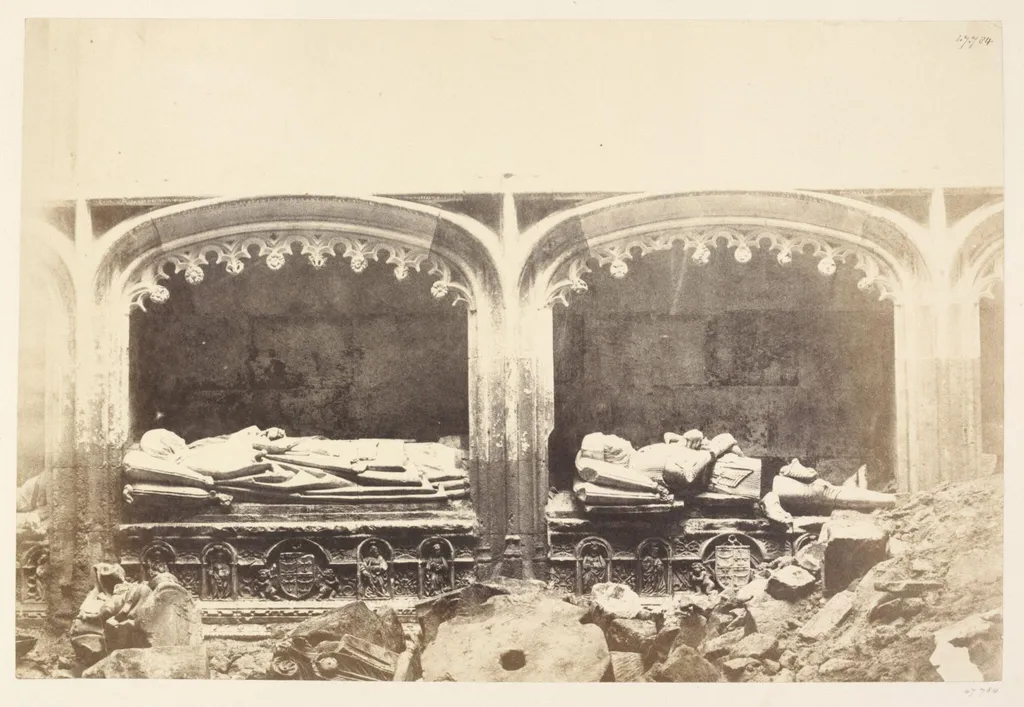
Monuments in the Cathedral, Salamanca is a photographic photography by the Impressionist artist Charles Clifford. It dates from 1853 and is held in the collection of the Victoria and Albert Museum.
About this work
Overview
Its muted tones and soft focus reflect early photographic limitations, yet it retains detail in the carved surfaces and architectural context.
A sepia-toned photograph from 1853 by Charles Clifford captures two stone sarcophagi within a dimly lit niche of Salamanca Cathedral. The image, mounted and preserved, belongs to a series of fifty-one photographs documenting Spanish religious architecture and sculpture. Its muted tones and soft focus reflect early photographic limitations, yet it retains detail in the carved surfaces and architectural context.
Subject & Meaning
The two reclining figures, carved into the lids of the sarcophagi, are likely representations of deceased clergy or nobility, common in medieval ecclesiastical burial practices. The draped cloths suggest ritual covering, while the shadowed form within the left coffin implies an additional layer of symbolic presence. The engravings on the lids—abstract and figural—may denote religious iconography or familial emblems, though their exact meaning remains unverified.
Technique & Style
Clifford employed wet-plate collodion photography, a technique demanding long exposures and careful handling. The resulting image exhibits a soft contrast, with grainy textures enhancing the sense of age and decay. The composition centers the sarcophagi within the arched niche, using natural light filtering from unseen sources to model the stone surfaces and cast deep shadows across the worn floor.
History & Provenance
The photograph was acquired by the Victoria and Albert Museum on June 26, 1866, from M. Balchon, a collector of Spanish visual records. It formed part of a curated set intended to preserve documentation of Spain’s ecclesiastical heritage during a period of political and religious upheaval. Its survival and cataloging reflect 19th-century efforts to systematically archive cultural artifacts.
Context
In the mid-19th century, European photographers like Clifford traveled Spain to record its medieval monuments amid rising interest in national heritage. Salamanca Cathedral, a Gothic structure with Romanesque elements, housed numerous tombs of bishops and patrons. Clifford’s images served scholarly and antiquarian audiences, offering visual evidence before modern restoration altered these spaces.
Legacy
This photograph remains a key record of the cathedral’s interior as it appeared before 20th-century conservation. Its quiet documentation of decay and detail contrasts with later, more polished archival images. It contributes to ongoing studies of 19th-century photographic practice and the evolving perception of Spain’s religious art in the age of industrial reproduction.
Artist & collection
Artist
Charles Clifford’s photographs freeze the details of Spanish architecture in the 1850s and 60s.

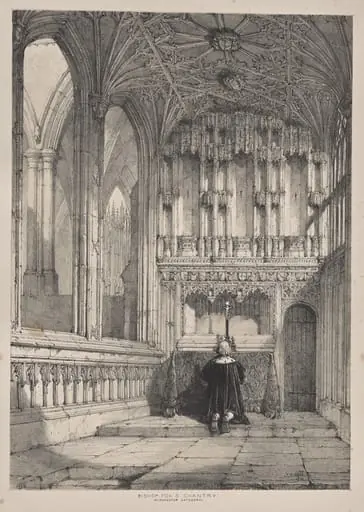 Architecture of the Middle Ages: Bishop Fox's Chantry, Winchester Cathedral
 The Savage Memorial Table Tomb, Elmley Castle Church, Worcestershire
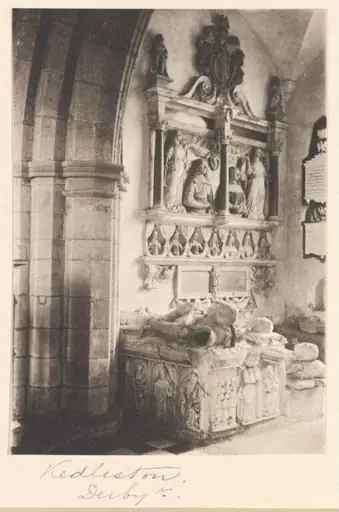 National Photographic Record and Survey
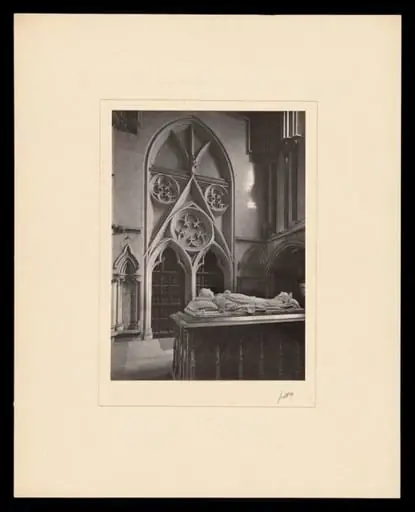 York Minster, North Transept
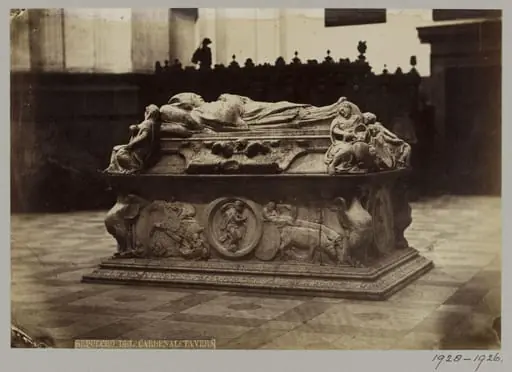 Tomb of Cardinal Tavera in the Hospital de Tavera in Toledo
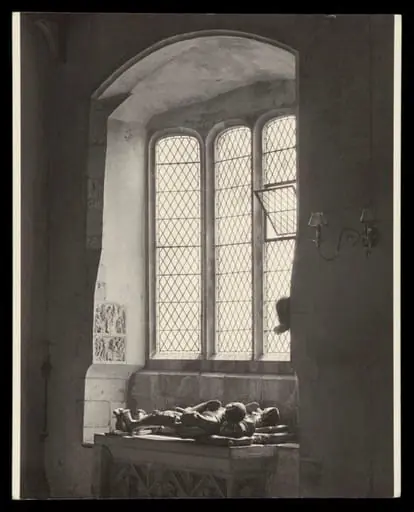 Culpeper Monument, St. Mary's, Goudhoust, Kent
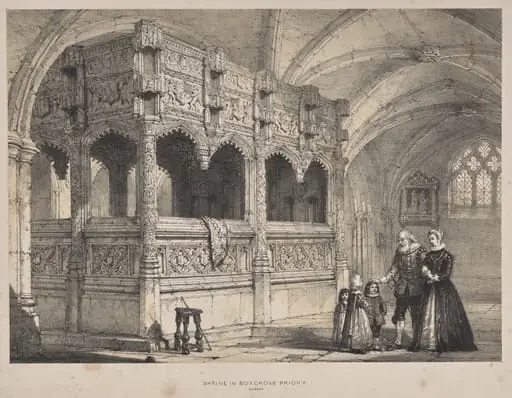 Architecture of the Middle Ages: Shrine of the Countess de la Warre in Boxgrove Priory, Sussex
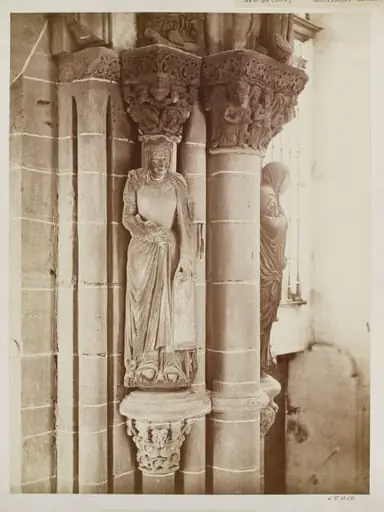 Cathedral, Santiago, Spain, Portico de la Gloria, Sculpture on responding pier
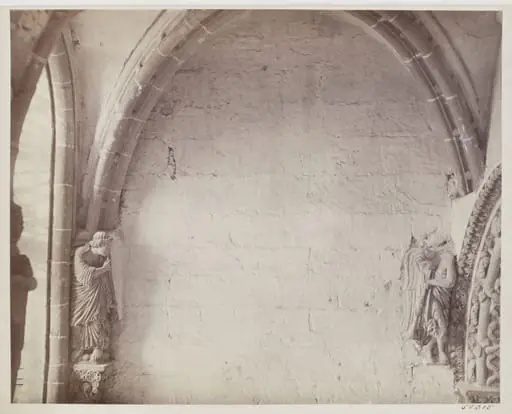 Cathedral, Santiago, Spain, Portico de la Gloria, Sculpture on North wall
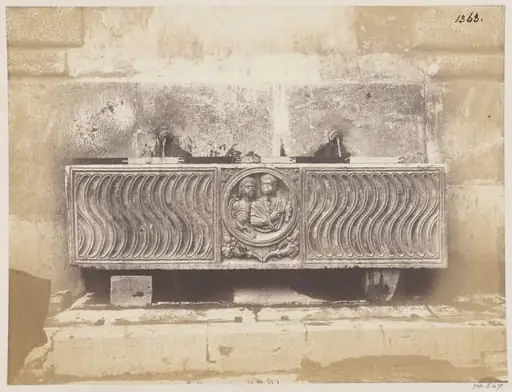 Sculpture - Sarcophagus of the fourth century made into a fountain, near the Church of S. Maria, in the Piazza del Popolo
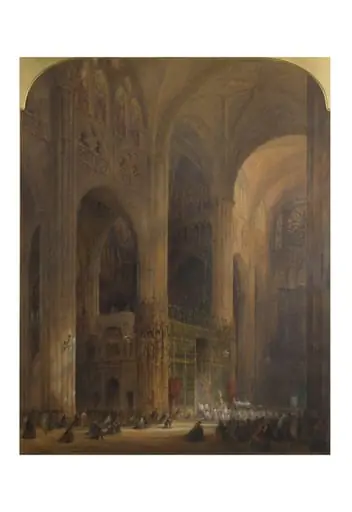 Toledo Cathedral : Interior