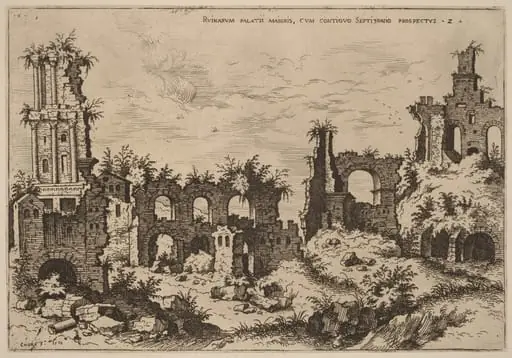
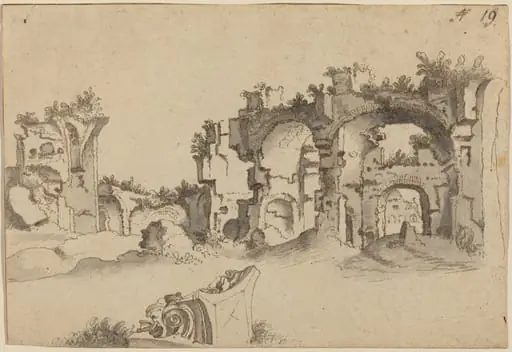
Artwork
Ruins on the Palatine, Looking toward the Baths of Caracalla
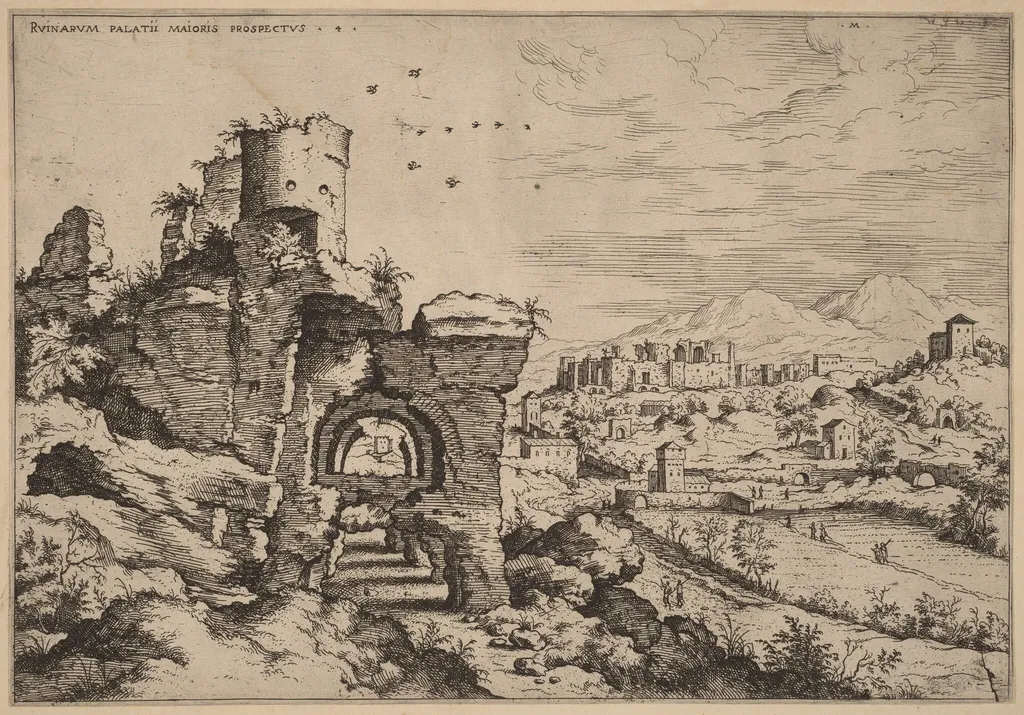
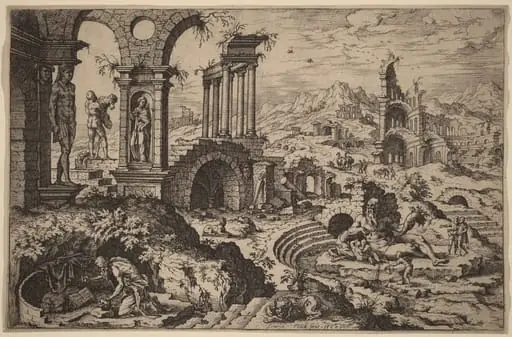
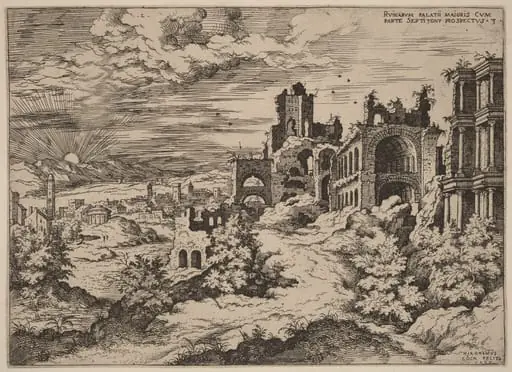
Ruins on the Palatine, Looking toward the Baths of Caracalla is an ink print by the Renaissance artist Hieronymus Cock. It dates from 1550 and is held in the collection of the National Gallery of Art.
About this work
Overview
Cock, known for his influential print workshop, helped elevate printmaking as a commercial and artistic medium in northern Europe.
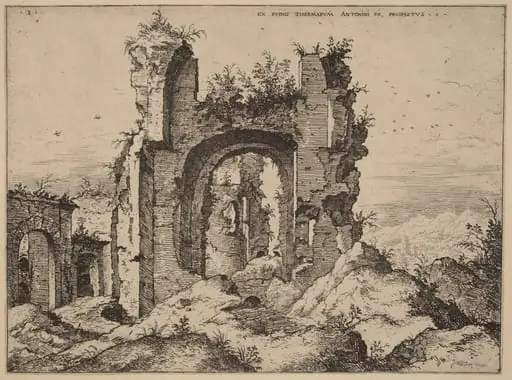
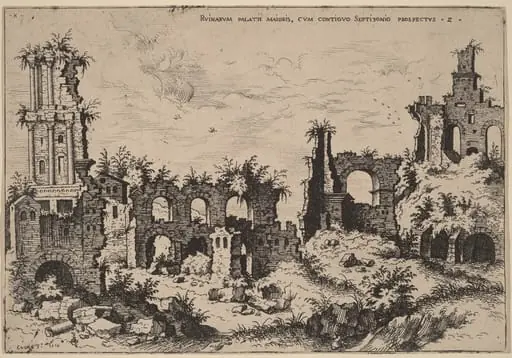
Created around 1550 by the Flemish artist and publisher Hieronymus Cock, this etching on laid paper captures a view of ancient Roman ruins on the Palatine Hill, with the distant Baths of Caracalla visible in the background. Cock, known for his influential print workshop, helped elevate printmaking as a commercial and artistic medium in northern Europe. The work reflects a growing Renaissance interest in antiquity, rendered through precise linear technique rather than color.
Subject & Meaning
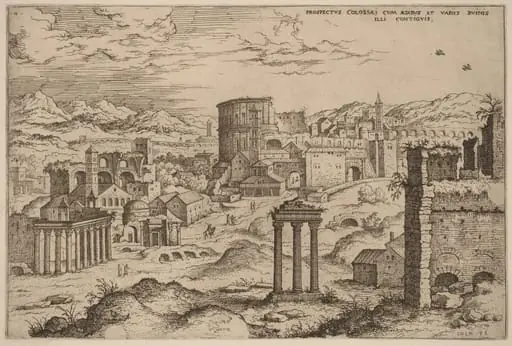
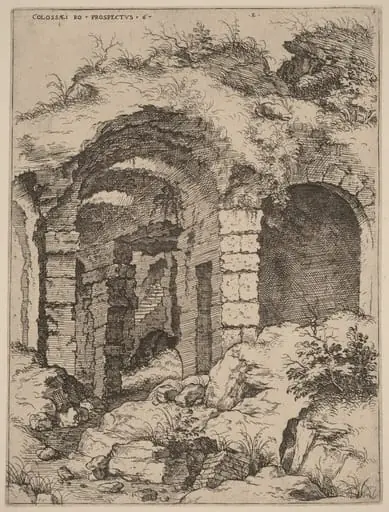
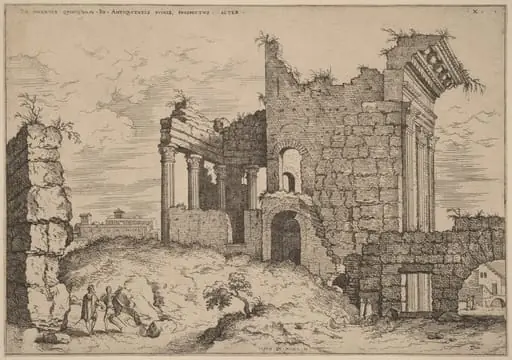
The scene portrays the decay of imperial Rome, with a crumbling structure on the Palatine Hill crowned by an archway and overgrown with vegetation. A staircase leads upward, suggesting human passage through time-worn spaces. In the distance, the Baths of Caracalla rise faintly against a hazy horizon of mountains and clouds. The composition evokes quiet contemplation of empire’s passage, not grandeur or ruin as spectacle, but as a naturalized part of the landscape.
Technique & Style
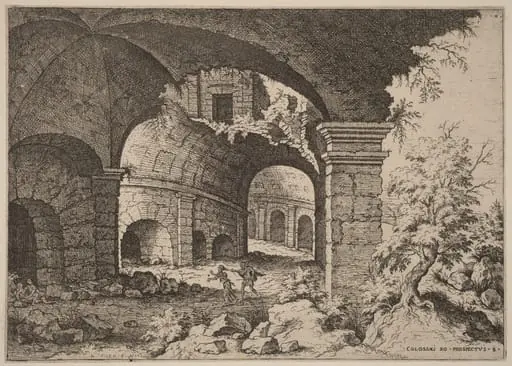
Cock employed fine, controlled etching lines to model form and atmosphere. Dense hatching creates shadow and texture in the ruins, while sparser lines suggest distance and light in the sky and hills. The use of varying line weight and spacing generates depth without tonal gradation, characteristic of northern Renaissance printmaking. Birds in flight and scattered foliage add subtle movement, reinforcing the scene’s stillness and solitude.
History & Provenance
The print was produced during Cock’s active years as a publisher in Antwerp, where he distributed works by artists across Europe. Though the exact provenance of this specific impression is undocumented, it aligns with his broader output of topographical views of Roman antiquities, often made for collectors and scholars. Such prints circulated widely, contributing to the northern European fascination with classical ruins as subjects of study and aesthetic reflection.
Context
In mid-16th-century Europe, interest in Roman ruins surged among humanists and artists seeking models for architecture and moral reflection. Cock’s etching fits within a genre of antiquarian views, often based on firsthand observation or earlier drawings. Unlike later romanticized depictions, this work presents ruins with restrained realism, reflecting a scholarly rather than sentimental engagement with the past.
Legacy
Cock’s prints, including this one, helped standardize the visual language of classical ruins in northern art. His workshop’s distribution network ensured these images reached a broad audience, influencing how later generations perceived ancient Rome. While not widely celebrated today, his role in disseminating topographical etchings laid groundwork for the development of landscape printmaking and archaeological illustration in the following centuries.
Artist & collection
Artist
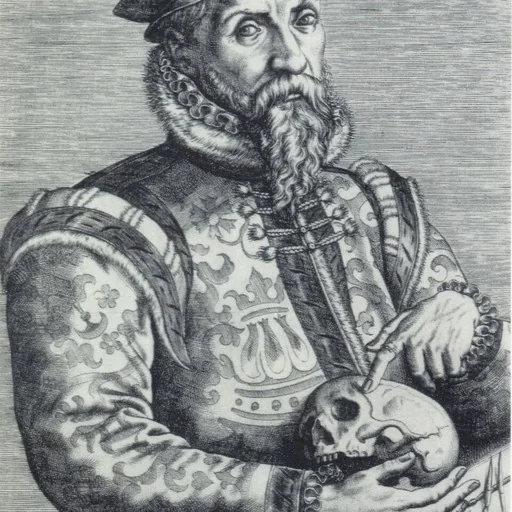
Hieronymus Cock, or Hieronymus Wellens de Cock, (1518 – 3 October 1570) was a Flemish painter and etcher as well as a publisher and distributor of prints.