Artwork
Saint Jerome in a Landscape with Ruins
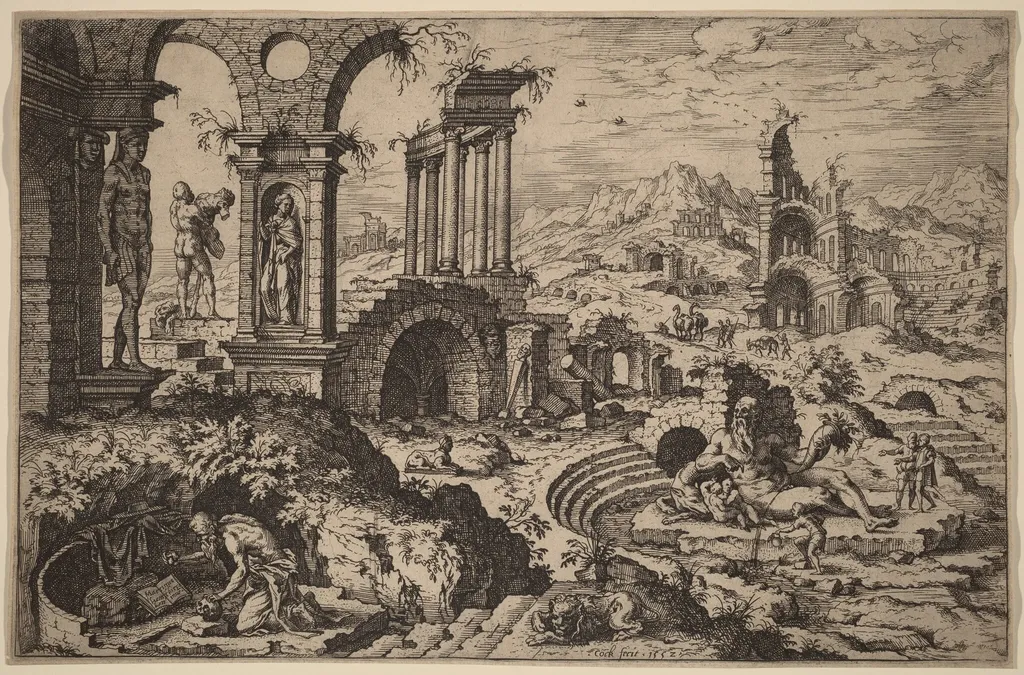
Saint Jerome in a Landscape with Ruins is an ink print by the Renaissance artist Hieronymus Cock. It dates from 1552 and is held in the collection of the National Gallery of Art.
About this work
Overview
Saint Jerome in a Landscape with Ruins is an etching created by Hieronymus Cock in 1552. The work is executed on laid paper and represents a significant example of printmaking from the mid-16th century.
Subject & Meaning
The etching depicts Saint Jerome, a scholarly hermit, in a landscape filled with classical ruins. The scene combines a religious theme with detailed landscape imagery, reflecting the artistic interests of the period.
Technique & Style
Cock's use of etching technique allows for intricate details, such as the texture of stone walls and the folds of the saint's robes. The interplay of light and shadow creates a sense of atmosphere, drawing attention to the saint.
History & Provenance
Hieronymus Cock, a Flemish painter, etcher, and print publisher, ran a major publishing house in Antwerp. His work contributed to the industrialization of printmaking during the Renaissance.
Context
The work reflects the Renaissance interest in combining religious themes with classical motifs and detailed landscape imagery, characteristic of the period's artistic developments.
Artist & collection
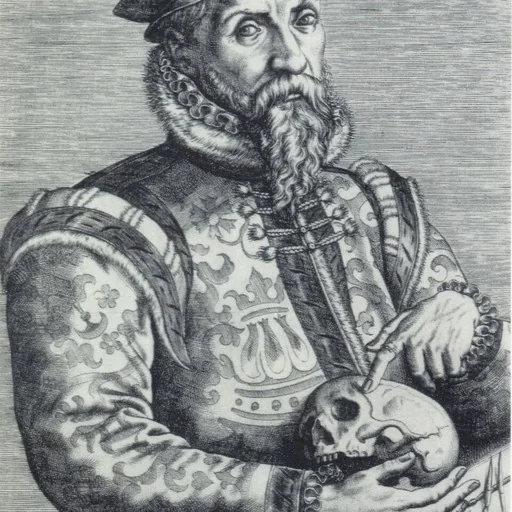
Artist
Hieronymus Cock, or Hieronymus Wellens de Cock, (1518 – 3 October 1570) was a Flemish painter and etcher as well as a publisher and distributor of prints.

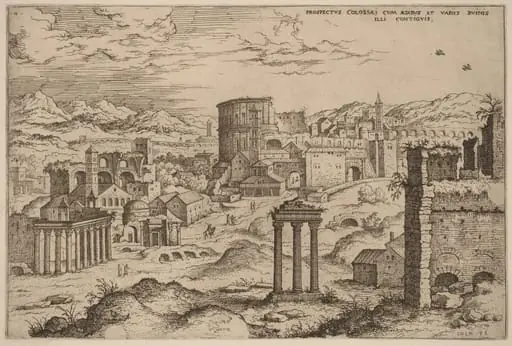
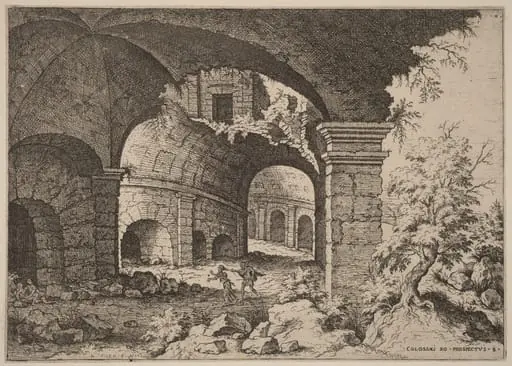
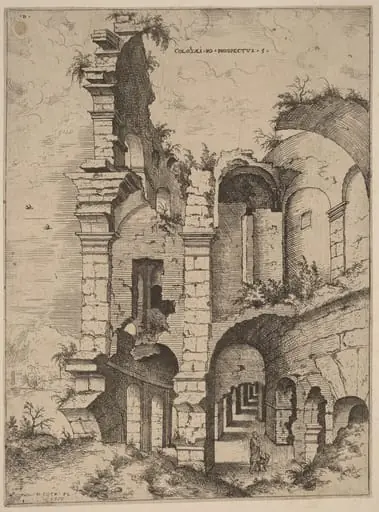
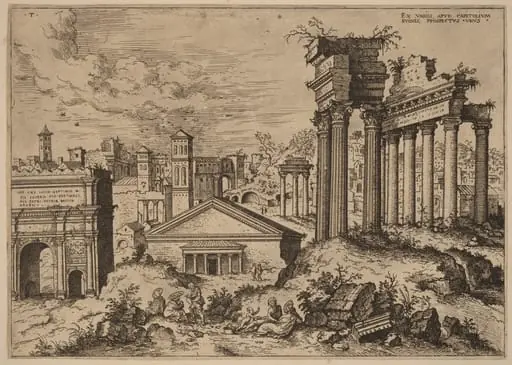 View of the Forum from the Base of the Capitol
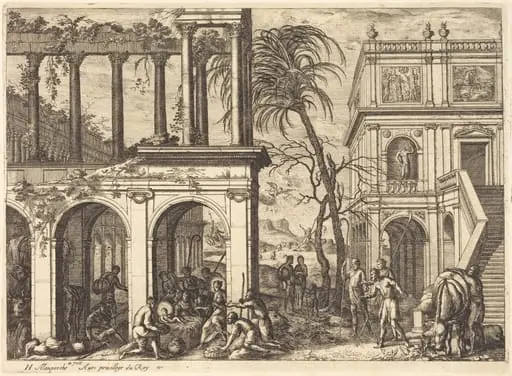 The Adoration of the Shepherds
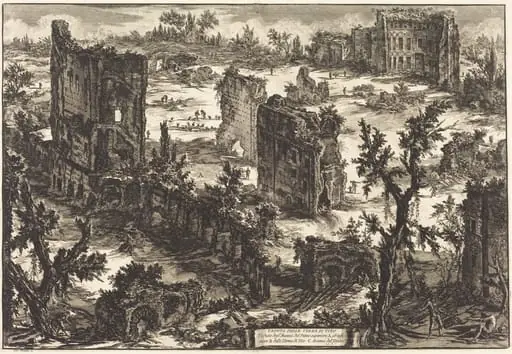 Veduta delle Terme di Tito
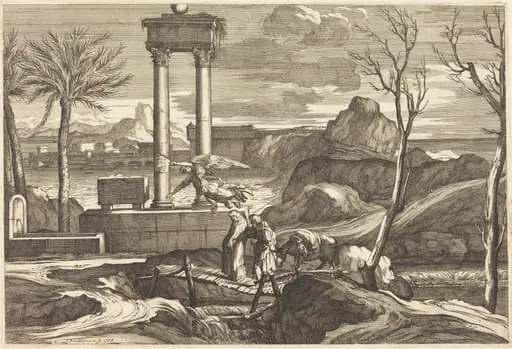 The Flight into Egypt
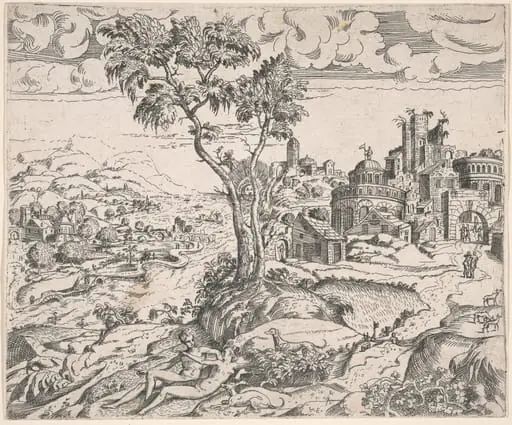 Imaginary Landscape with an Amorous Couple
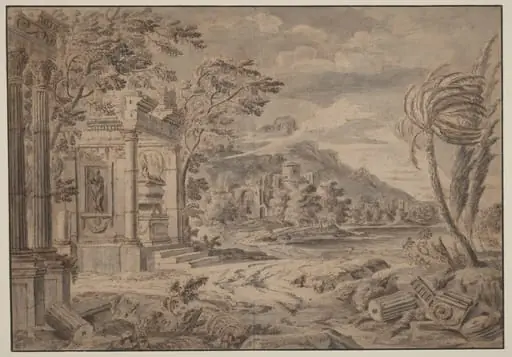 Antique Ruins along a Mountain Coast
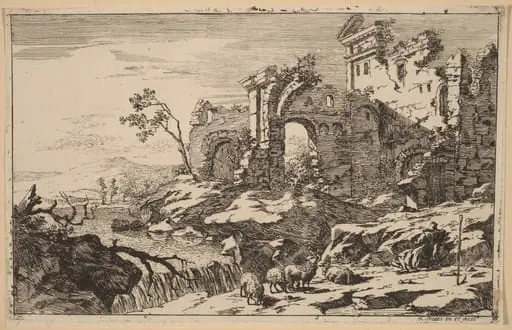 Sleeping Shepherd
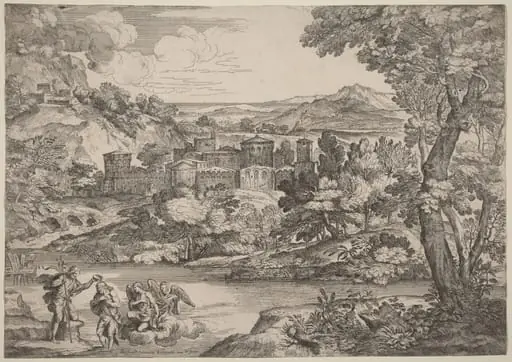 The Baptism of Christ, Set in a Mountainous Landscape
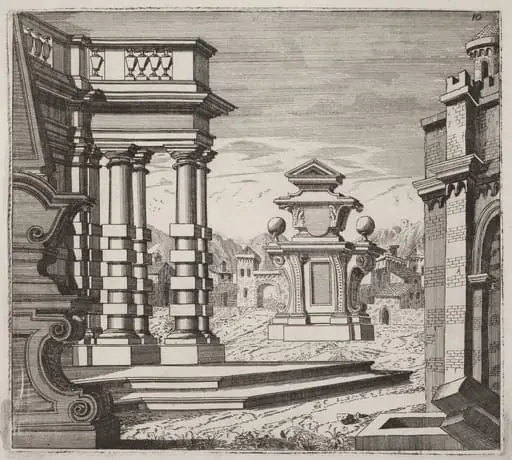 Architectural Fantasy with Portals and Monuments
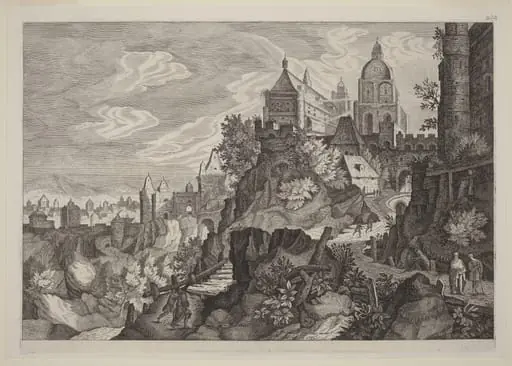 Rocky Landscape in Bohemia
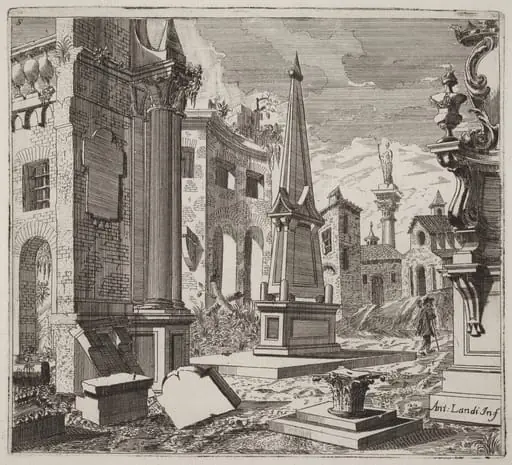 Fantastic Townscape with Ruins
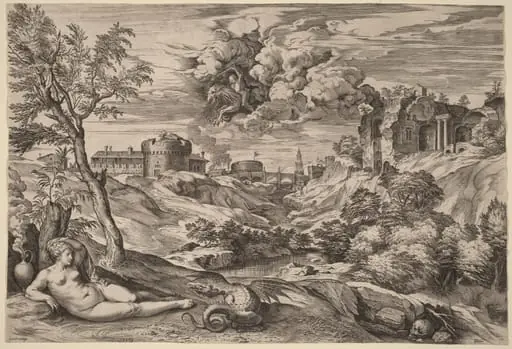 Landscape with Roger Liberating Angelica