Artwork
View of the Forum
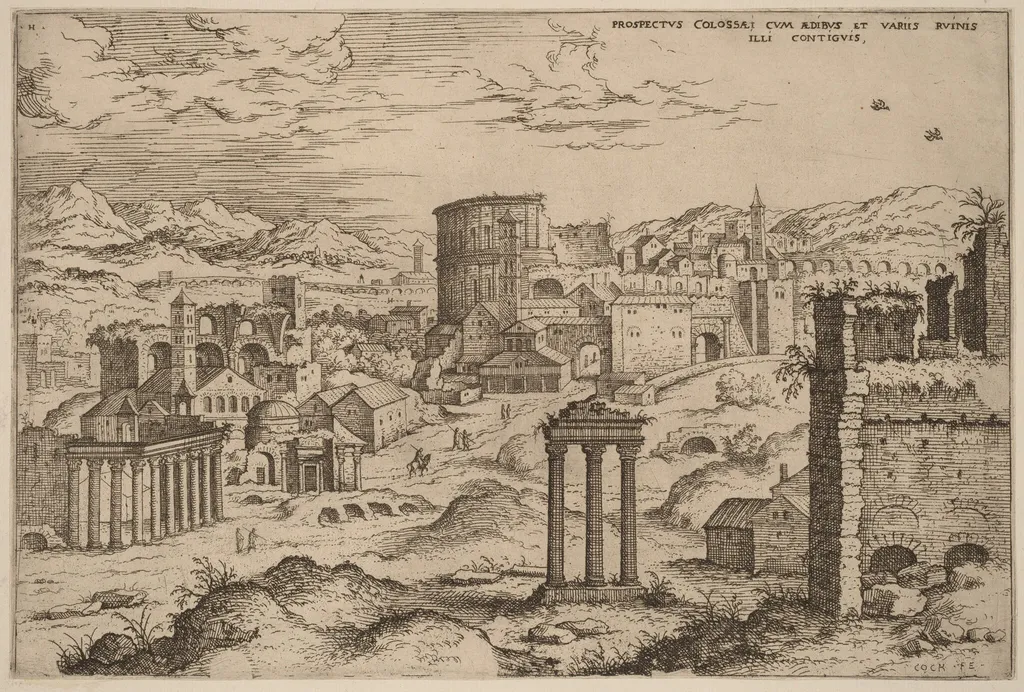
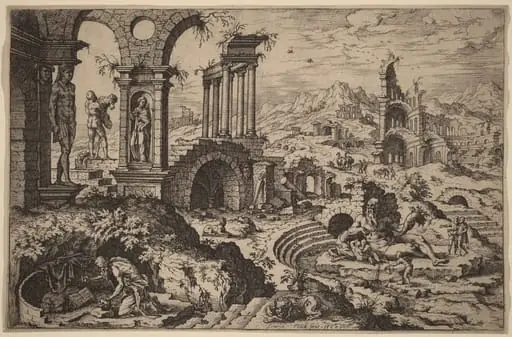
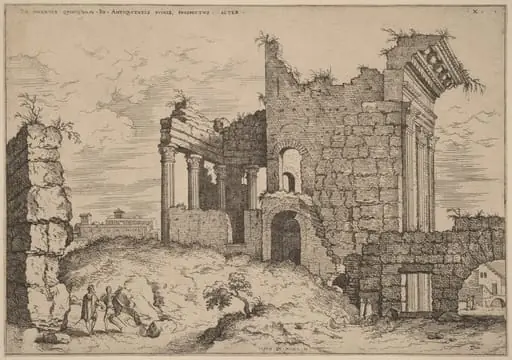
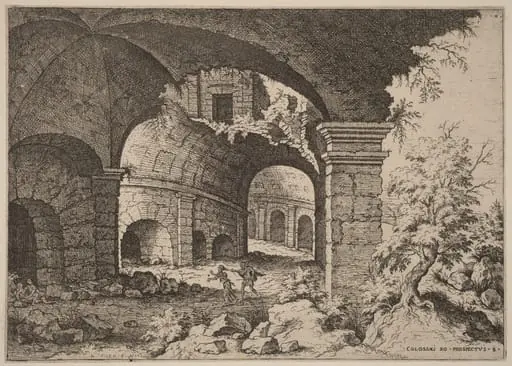
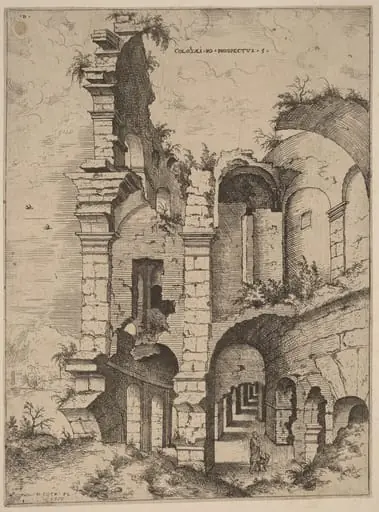
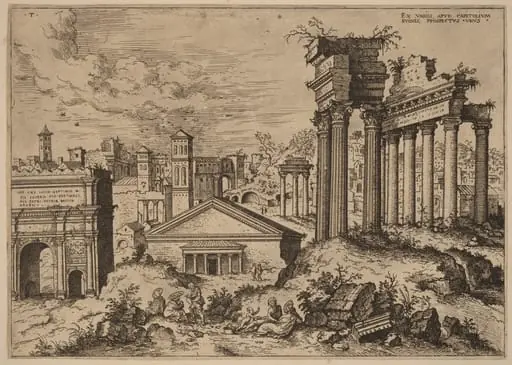
View of the Forum is an ink print by the Renaissance artist Hieronymus Cock. It dates from 1550 and is held in the collection of the National Gallery of Art.
About this work
Overview
Cock, a Flemish printmaker and publisher, produced this work as part of a broader effort to disseminate visual knowledge of antiquity across northern Europe.
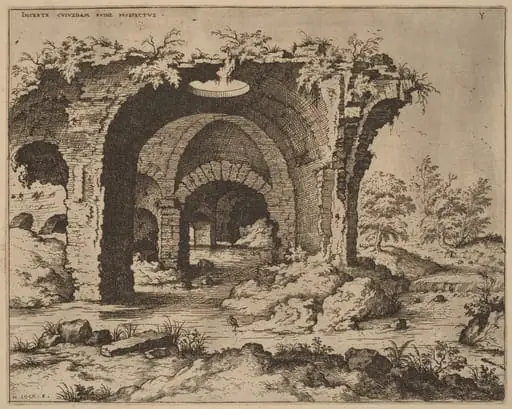
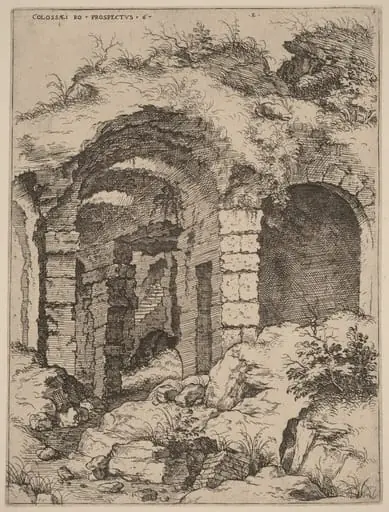
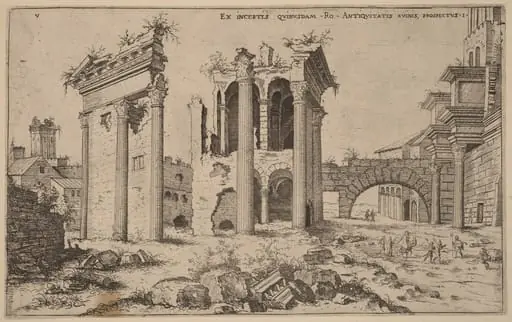
Created around 1550 by Hieronymus Cock, this etching on laid paper presents a detailed depiction of ancient Roman ruins, likely intended as a topographical record rather than a fictional scene. Cock, a Flemish printmaker and publisher, produced this work as part of a broader effort to disseminate visual knowledge of antiquity across northern Europe. The print’s precision and clarity reflect the growing interest in classical archaeology during the mid-16th century.
Subject & Meaning
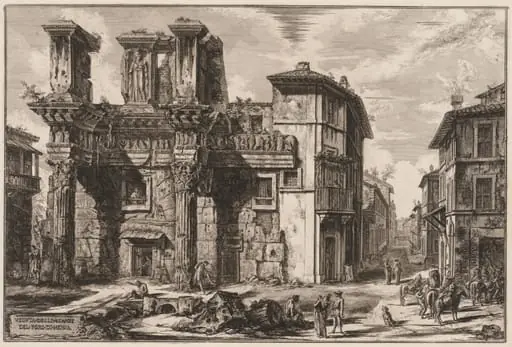
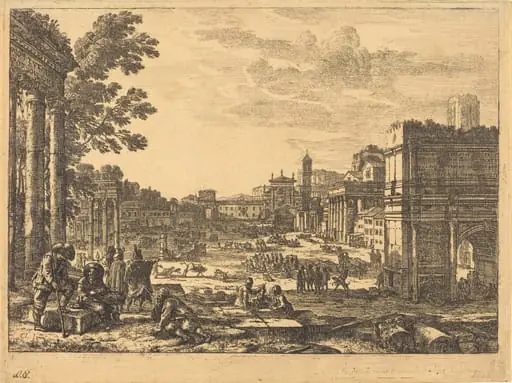
The scene, labeled 'Prospectus Colossaei,' portrays the remains of what was once a major Roman urban center. Dominated by collapsed columns, fractured arches, and weathered walls, the ruins suggest both grandeur and decay. Tiny human figures moving among the stones emphasize the scale of the architecture and hint at the passage of time, framing the ruins not as mere relics but as spaces still inhabited and observed.
Technique & Style
Cock employed fine, controlled etching lines to render every fissure, shadow, and texture in the stonework. The use of laid paper, with its subtle chain lines, enhances the tactile quality of the image. Sharp contrasts between light and dark give the ruins a sculptural depth, while the dense composition avoids empty space, creating a sense of overwhelming historical accumulation. The technique prioritizes accuracy over ornamentation.
History & Provenance
Produced through Cock’s Antwerp publishing house, this print was part of a series documenting ancient sites, circulated widely among scholars, artists, and collectors. Its survival in multiple impressions suggests it was in demand as both an artistic object and a reference tool. Cock’s commercial network helped transform such prints from private curiosities into accessible educational materials across Europe.
Context
In mid-16th-century Europe, interest in classical antiquity was intensifying, fueled by humanist scholarship and the rise of archaeological inquiry. Prints like this one served as visual documents for those unable to travel to Rome or other ruin sites. Cock’s work aligned with broader efforts to map, record, and preserve the physical legacy of antiquity, bridging art and emerging scientific documentation.
Legacy
Cock’s etching contributed to the standardization of architectural representation in print, influencing later topographical and antiquarian publications. Its detailed rendering of ruins set a precedent for how classical sites were visually interpreted in the centuries that followed. Though not widely known today, it remains a key example of how printmaking shaped early modern understandings of history and place.
Artist & collection
Artist
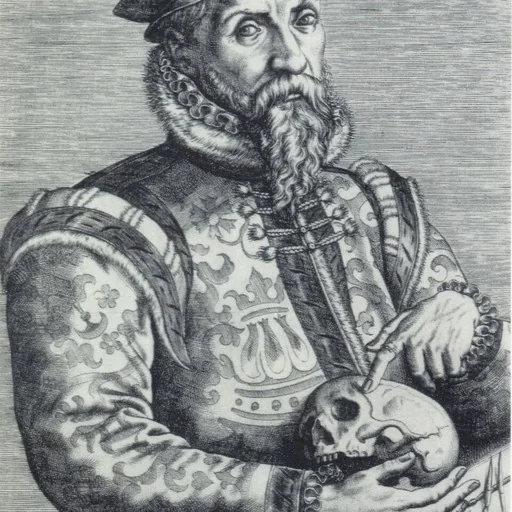
Hieronymus Cock, or Hieronymus Wellens de Cock, (1518 – 3 October 1570) was a Flemish painter and etcher as well as a publisher and distributor of prints.