Artwork
Strachină lucrată în manieră Kuty, de formă tronconică, modelată la roată; decor naturalist amplasat pe toată suprafața vasului organizat în două registre despărțite de linii circulare concentrice realizate cu cornul; central prezintă un motiv avimorf: pasăre; în registrul de la extremitatea vasului sunt desenate motive geometrice semiovoidale realizate cu linii curbe și despărțite de grupuri de trei liniuțe; cromatică: fond alb dat de angobă, decor cu galben, verde și brun. Pe exterior este ștampilat numele meșterului cu majusculă și caractere italice: Colibaba.
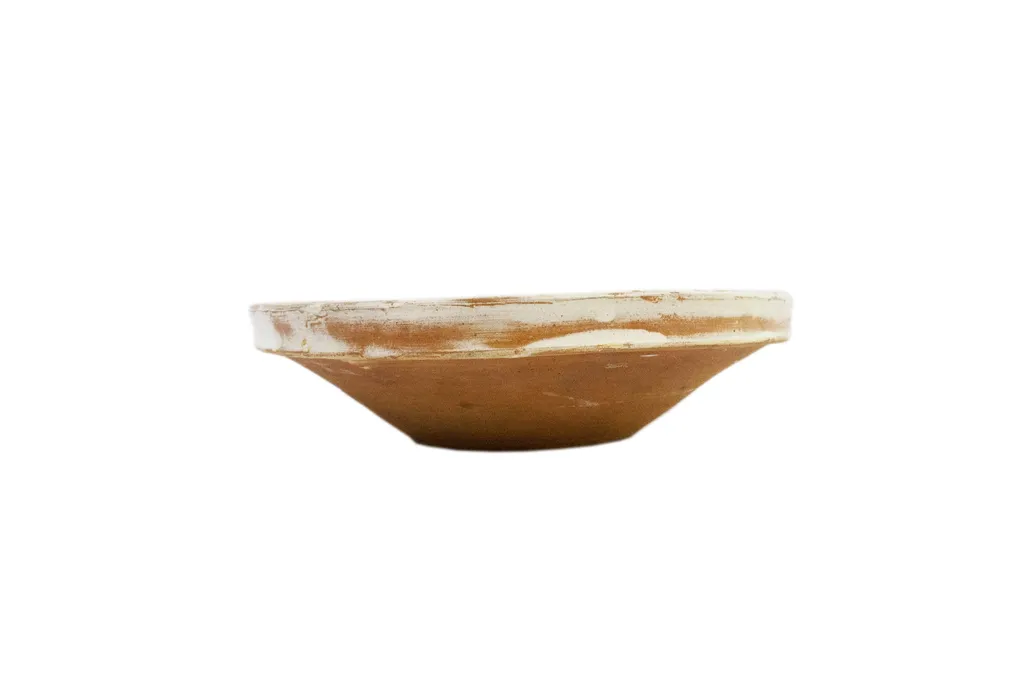
Strachină lucrată în manieră Kuty, de formă tronconică, modelată la roată; decor naturalist amplasat pe toată suprafața vasului organizat în două registre despărțite de linii circulare concentrice realizate cu cornul; central prezintă un motiv avimorf: pasăre; în registrul de la extremitatea vasului sunt desenate motive geometrice semiovoidale realizate cu linii curbe și despărțite de grupuri de trei liniuțe; cromatică: fond alb dat de angobă, decor cu galben, verde și brun. Pe exterior este ștampilat numele meșterului cu majusculă și caractere italice: Colibaba. is a photography by Colibaba Constantin. It dates from 1973 and is held in the collection of the National Museum of Bukovina. This conical ceramic vessel was wheel-thrown and fired in the Kuty tradition, a regional style from the Carpathians.
About this work
Overview
This conical ceramic vessel was wheel-thrown and fired in the Kuty tradition, a regional style from the Carpathians.
This conical ceramic vessel was wheel-thrown and fired in the Kuty tradition, a regional style from the Carpathians. Its form is simple yet refined, with a rounded base and gently sloping walls. The surface bears traces of wear along the rim, suggesting regular use. A faint white slip covers most of the body, providing a pale ground for painted decoration. The maker’s name, 'Colibaba,' is stamped in italicized uppercase letters on the exterior.
Subject & Meaning
The central motif is a stylized bird, rendered in naturalistic outline, possibly symbolizing a messenger between earthly and spiritual realms. Below it, geometric semiovoid shapes encircle the lower register, separated by groups of three fine lines. These patterns may reflect local cosmological or calendrical systems, though their precise symbolic meaning remains unrecorded. The bird, as the only figurative element, stands out as the focal point of the composition.
Technique & Style
The vessel was formed on a potter’s wheel and coated with a white engobe before painting. Decorative lines were applied using a bird’s quill, creating fluid, precise contours. Colors—yellow, green, and brown—were derived from mineral pigments and fired onto the surface. Concentric circles, drawn with a horn tool, divide the decoration into two horizontal bands. The style blends naturalistic imagery with abstract geometry, characteristic of mid-20th century Kuty revival practices.
History & Provenance
Created in 1973 by Colibaba Constantin, this piece emerged during a period of renewed interest in traditional Romanian ceramic techniques. It was produced in the village of Kuty, where artisans were reviving ancestral methods. The vessel entered the collection of the Museum of Ethnography shortly after its creation, preserved as an example of postwar folk craft revitalization. Its maker’s stamp ensures attribution, a rare practice among regional potters of the time.
Context
This piece belongs to a late 20th-century movement in which Romanian artisans sought to preserve and reinterpret rural pottery traditions. The Kuty style, once nearly lost, was being systematically documented and revived under cultural preservation initiatives. Colibaba Constantin was among the few potters who maintained the use of natural pigments and hand-carved tools. His work bridged folk memory and contemporary craft education, resisting industrial homogenization.
Legacy
Colibaba Constantin’s signed vessels, including this one, became reference points for later generations of ceramicists studying regional techniques. The Museum of Ethnography’s retention of the piece underscores its role as a documented artifact of cultural continuity. While not widely reproduced, its design elements influenced pedagogical programs in rural craft schools, ensuring that the Kuty aesthetic remained visible in ethnographic discourse.
Artist & collection
Artist
Constantin Colibaba made colorful folk pottery following the Kuty and Rădăuți styles.
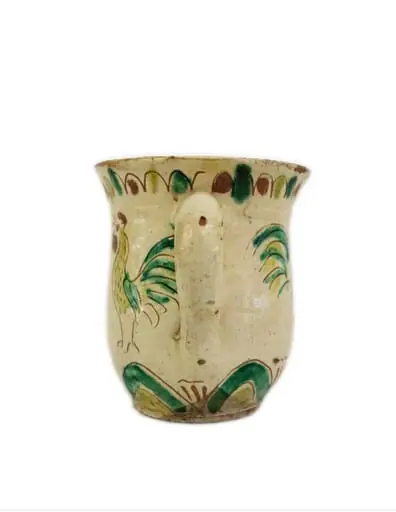 Căniță lucrată în manieră Kuty, de formă cilindrică, bombată la mijloc, modelată la roată; prezintă o toartă pentru prindere; decor geometrizant organizat la extremități: la bază semicercuri despărțite de linii curbe iar spre gura vasului un șir de semiovaluri alternând cromatic; pe restul suprafeței apar motive avimorfe: cocoșul alternând cu sabie și halebardă întretăiate; cromatică: fond alb dat de angobă, decor cu verde, galben și cărămiziu.
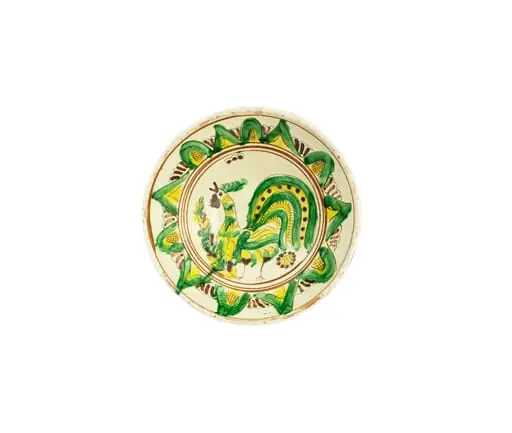 Strachină lucrată în manieră Kuty, de formă tronconică, modelată la roată; decor naturalist amplasat pe toată suprafața vasului organizat în două registre despărțite de linii circulare concentrice realizate cu cornul; central prezintă un motiv avimorf: cocoș; în registrul de la extremitatea vasului sunt desenate motive geometrice unghiulare alternând cu motive semiovoidale realizate cu linii drepte, linii curbe și hașuri; cromatică: fond alb dat de angobă, decor cu galben, verde și brun. Pe exterior este ștampilat numele meșterului cu majusculă și caractere italice: Colibaba.
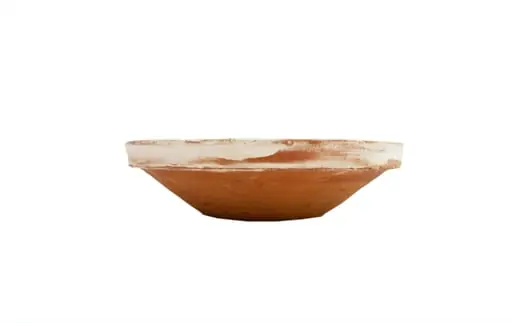 Strachină lucrată în manieră Kuty, de formă tronconică, modelată la roată; decor geometrizant și naturalist amplasat pe toată suprafața vasului organizat în două registre despărțite de linii circulare realizate cu cornul: central prezintă un motiv fitomorf: plantă în ghiveci cu trei inflorescențe: lalea și floarea soarelui; spre marginea vasului un registru cu motive geometrice unghiulare, despărțite de grupuri de liniuțe; cromatică: fond alb dat de angobă, decor realizat cu verde, galben, negru și cărămiziu. Pe exterior este imprimată ștampila cu numele meșterului scris cu majusculă și caractere italice: Colibaba.
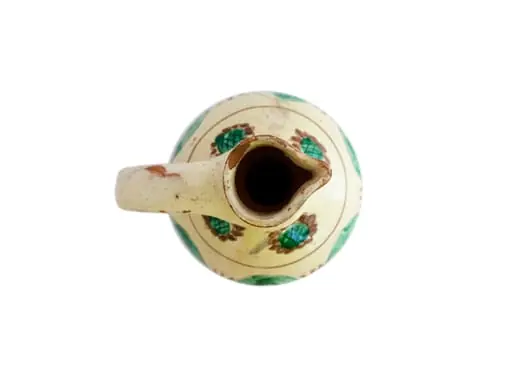 Ulcior lucrat în manieră Kuty, de formă cilindrică bombat la mijloc și cu gât îngust, modelat la roată; prezintă o toartă pentru prindere și un lob pentru turnarea lichidelor realizat prin impresiune cu degetul; decor geometrizat organizat în trei registre, despărțite de linii circulare realizate cu cornul: în registrul inferior apar motive geometrice unghiulare despărțite de grupuri de liniuțe; în registrul din mijloc motive geometrice semicirculare despărțite de grupuri de liniuțe și realizate cu linii curbe și hașuri, spre gâtul vasului un registru cu motive astrale: soare realizate cu cercuri, hașuri și puncte de culoare; cromatică: fond alb dat de angobă, decor realizat cu verde, galben și cărămiziu.
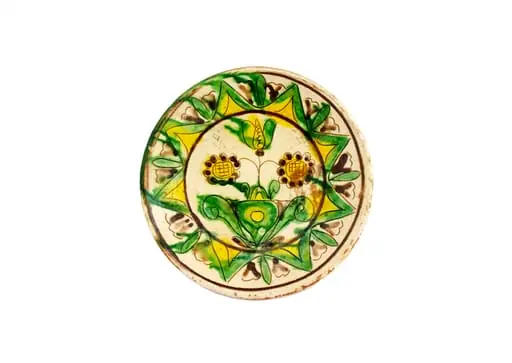 Farfurie lucrată în manieră Kuty, de formă tronconică, modelată la roată; decor geometrizat amplasat pe toată suprafața vasului organizat în două registre despărțite de linii circulare concentrice realizate cu cornul; central prezintă un motiv fitomorf: lalea într-un ghiveci cu trei inflorescențe; în registrul de la extremitatea vasului sunt desenate motive geometrice unghiulare realizate cu linii drepte despărțite de grupuri de liniuțe; cromatică: fond alb dat de angobă, decor cu galben, verde, brun. Pe exterior este imprimată ștampila cu numele meșterului scris cu majusculă și caractere italice: Colibaba.
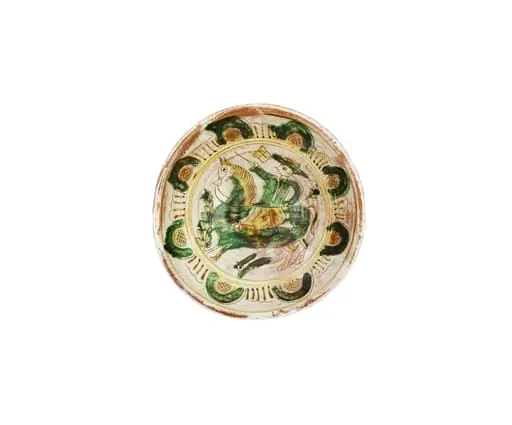 Strachină lucrată în manieră Kuty, de formă tronconică, modelată la roată; decor geometrizat amplasat pe toată suprafața vasului organizat în două registre despărțite de linii circulare concentrice realizate cu cornul; central prezintă un motiv antropomorf: cavaler cu sabia în mână încălecat pe cal; în registrul de la extremitatea vasului sunt desenate motive geometrice semicirculare realizate cu linii curbe și hașuri, despărțite de grupuri de câte patru linii; cromatică: fond alb dat de angobă, decor cu galben, verde, cărămiziu. Pe exterior este ștampilat numele meșterului cu majuscule de tipar: COLIBABA.
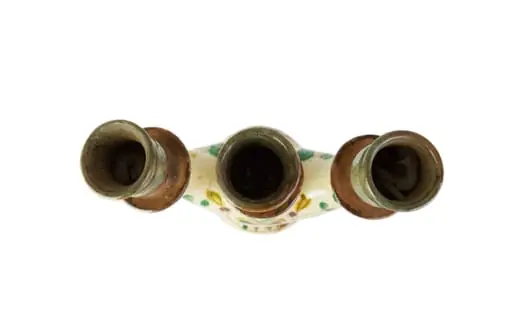 Sfeșnic lucrat în manieră Kuty, cu trei brațe pentru suportul lumânărilor, modelat la roată; prezintă decor naturalist pe cele trei brațe realizat cu motive fitomorfe: floarea soarelui, laleaua și frunze de diferite dimensiuni; pe piciorul sfeșnicului sunt desenate motive geometrice: alveole, linii drepte, triunghiuri și motive astrale: soare; suporturile pentru lumânări sunt trei discuri așezate peste cilindrele din care sunt lucrate brațele sfeșnicului; cromatică: fond alb, decor realizat cu galben, verde, cărămiziu. Pe interiorul piciorului de susținere apare semnătua autorului incizată, cu majusculă și litere de mână: Colibaba C-tin.
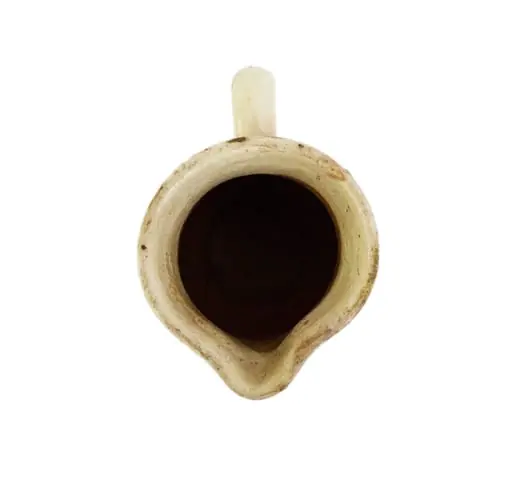 Căniță lucrată în manieră Kuty de formă cilindrică, bombată la mijloc, modelată la roată; prezintă o toartă pentru prindere și lob pentru turnarea lichidelor realizat prin impresiune cu degetele; decor geometrizant organizat în două registre despărțite de linii drepte: cele două registre sunt realizate cu semicercuri, linii curbe și hașuri; spre gura vasului un șir de semiovaluri alternând cromatic; cromatică: fond alb dat de angobă, decor cu verde, galben și cărămiziu.
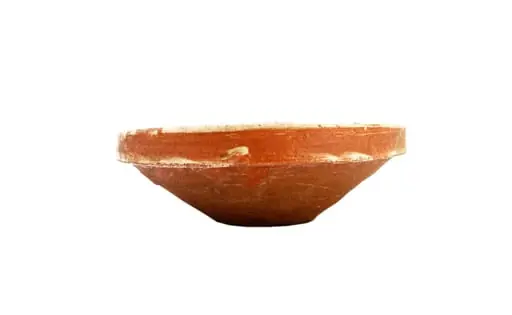 Strachină lucrată în manieră Kuty, de formă tronconică, modelată la roată; decor geometrizat și naturalist organizat în două registre despărțite de linii circulare realizate cu cornul; central prezintă un motiv fitomorf: floare înconjurată de motive geometrice cercuri alternând cromatic delimitate de linii drepte; spre marginea vasului linii drepte circulare și vălurite realizate cu cornul alternând cu linii drepte realizate cu pensonul; cromatică: fond alb dat de angobă, decor realizat cu verde, cărămiziu și galben.
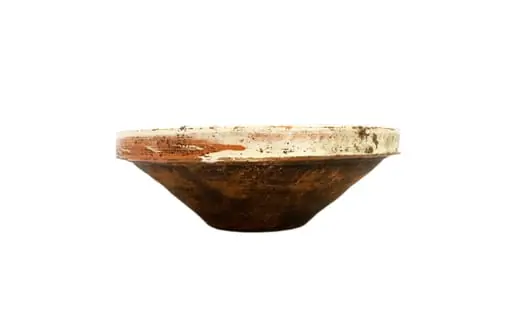 Strachină de formă tronconică, modelată la roată; decor geometrizat și naturalist realizat cu linii circulare de diferite mărimi alternând cu linii vălurite realizate cu pensonul; central prezintă un motiv fitomorf: floare realizat cu linii curbe și puncte de culoare; cromatică: fond alb dat de angobă, decor realizat cu verde și cărămiziu.
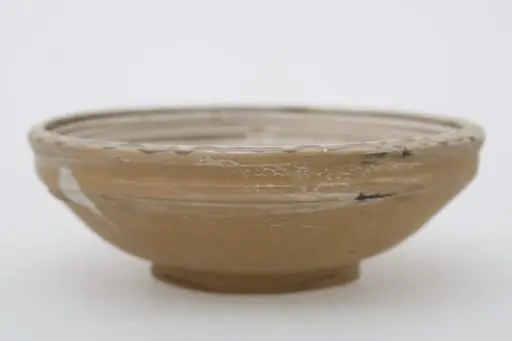 Recipient din lut de uz casnic, nesmălțuit, angobat, de formă tronconică, cu buza dreaptă și înaltă. Pe pereții interiori, vasul este decorat cu motive geometrice și florale: un șir de flori stilizate urmate spre buză de linii concentrice, pictate cu cornul și cu pensula. În centrul vasului este pictată o spirală delimitate de cercuri maro. Buza vasului este ornată cu o linie ondulată. Cromatică: fond: alb; motive: gri; maro închis; maro deschis.
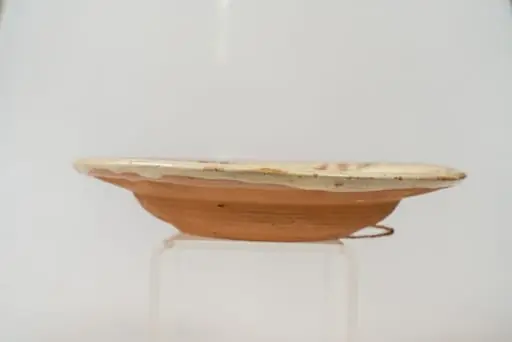 Farfurie adâncă, cu buza răsfrântă; piesa este modelată la roata olarului și angobată cu humă albă pe fața interioară. Decorul, realizat cu pigmenți, prin pictare cu cornul și cu pensula, se compune din motive decorative geometrice: linie spiralată de culoare maro, înscrisă într-un cerc format dintr-o linie groasă verde - amplasate central, pe fundul farfuriei; șase grupuri de motive decorative formate dintr-o linie ușor ondulată având de o parte și de alta cercuri realizate cu contur maro și umplute cu culorile maro și verde, sugerând niște spice de grâu - amplasate pe buza farfuriei, între două linii sub formă de cerc, de culoare maro. Cromatica: alb, maro, siena arsă, verde. Fața decorată a farfuriei este acoperită cu un strat de smalț transparent.