Artwork
Strachină lucrată în manieră Kuty, de formă tronconică, modelată la roată; decor geometrizant și naturalist amplasat pe toată suprafața vasului organizat în două registre despărțite de linii circulare realizate cu cornul: central prezintă un motiv fitomorf: plantă în ghiveci cu trei inflorescențe: lalea și floarea soarelui; spre marginea vasului un registru cu motive geometrice unghiulare, despărțite de grupuri de liniuțe; cromatică: fond alb dat de angobă, decor realizat cu verde, galben, negru și cărămiziu. Pe exterior este imprimată ștampila cu numele meșterului scris cu majusculă și caractere italice: Colibaba.
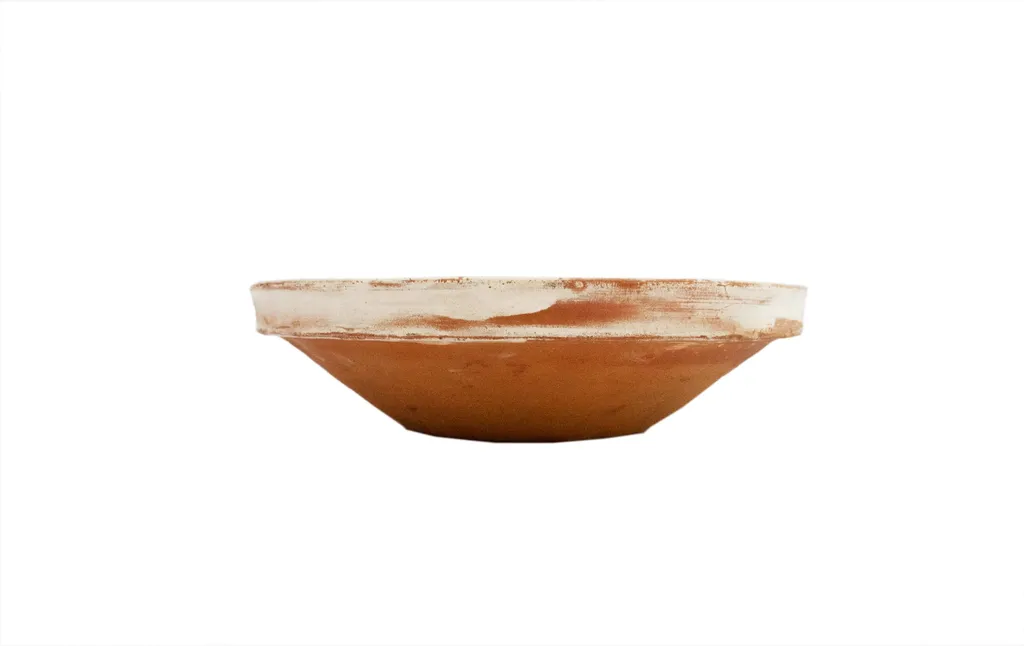
Strachină lucrată în manieră Kuty, de formă tronconică, modelată la roată; decor geometrizant și naturalist amplasat pe toată suprafața vasului organizat în două registre despărțite de linii circulare realizate cu cornul: central prezintă un motiv fitomorf: plantă în ghiveci cu trei inflorescențe: lalea și floarea soarelui; spre marginea vasului un registru cu motive geometrice unghiulare, despărțite de grupuri de liniuțe; cromatică: fond alb dat de angobă, decor realizat cu verde, galben, negru și cărămiziu. Pe exterior este imprimată ștampila cu numele meșterului scris cu majusculă și caractere italice: Colibaba. is a photography by Colibaba Constantin. It dates from 1973 and is held in the collection of the National Museum of Bukovina.
About this work
Overview
This ceramic vessel, created by Colibaba Constantin in 1973, is a tronconic (truncated conical) strachină, shaped on a wheel. Its design combines geometric and naturalistic elements across its entire surface, divided into two registers by circular lines applied with a tool.
Subject & Meaning
The composition's meaning is not explicitly stated, but the naturalistic and geometric elements may symbolize harmony between nature and human craftsmanship.
The central register features a phytomorphic motif: a potted plant with three inflorescences, identifiable as a tulip and a sunflower. The second register, near the vessel's edge, comprises angular geometric motifs separated by sets of small lines. The composition's meaning is not explicitly stated, but the naturalistic and geometric elements may symbolize harmony between nature and human craftsmanship.
Technique & Style
The vessel's white background is achieved with angobă (a type of slip), while the decor employs a palette of green, yellow, black, and brick-red. The style is characterized as Kuty, a traditional Romanian ceramic technique. The exterior bears the maker's name, 'Colibaba', stamped in uppercase italic characters.
History & Provenance
Created in 1973 by Colibaba Constantin, the strachină is part of the collection at the Museum of Ethnography.
Context
As a Kuty-style ceramic, this piece reflects traditional Romanian pottery practices, blending functional form with decorative elements. The use of specific motifs and colors may also tie into regional or cultural symbolism prevalent at the time of its creation.
Legacy
While specific impact or influence of this piece on broader ceramic art or Romanian cultural heritage is not detailed, it contributes to the documented work of Colibaba Constantin, available for further exploration through the artist's portfolio.
Artist & collection
Artist
Constantin Colibaba made colorful folk pottery following the Kuty and Rădăuți styles.
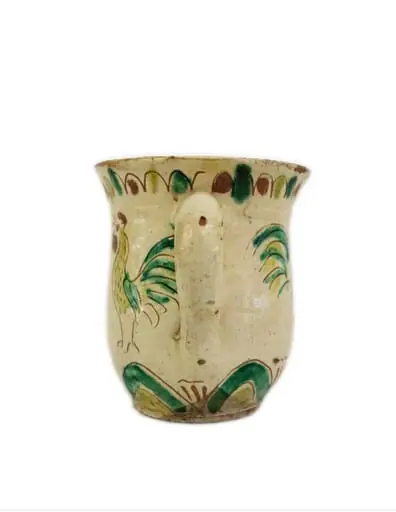 Căniță lucrată în manieră Kuty, de formă cilindrică, bombată la mijloc, modelată la roată; prezintă o toartă pentru prindere; decor geometrizant organizat la extremități: la bază semicercuri despărțite de linii curbe iar spre gura vasului un șir de semiovaluri alternând cromatic; pe restul suprafeței apar motive avimorfe: cocoșul alternând cu sabie și halebardă întretăiate; cromatică: fond alb dat de angobă, decor cu verde, galben și cărămiziu.
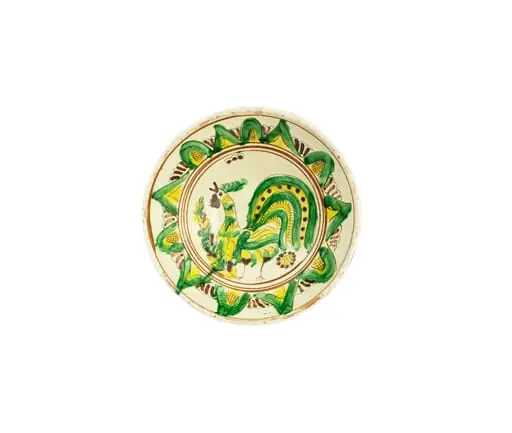 Strachină lucrată în manieră Kuty, de formă tronconică, modelată la roată; decor naturalist amplasat pe toată suprafața vasului organizat în două registre despărțite de linii circulare concentrice realizate cu cornul; central prezintă un motiv avimorf: cocoș; în registrul de la extremitatea vasului sunt desenate motive geometrice unghiulare alternând cu motive semiovoidale realizate cu linii drepte, linii curbe și hașuri; cromatică: fond alb dat de angobă, decor cu galben, verde și brun. Pe exterior este ștampilat numele meșterului cu majusculă și caractere italice: Colibaba.
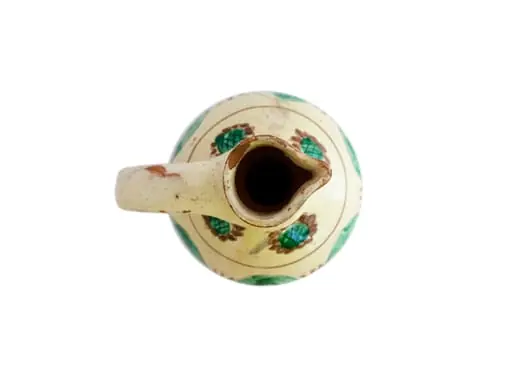 Ulcior lucrat în manieră Kuty, de formă cilindrică bombat la mijloc și cu gât îngust, modelat la roată; prezintă o toartă pentru prindere și un lob pentru turnarea lichidelor realizat prin impresiune cu degetul; decor geometrizat organizat în trei registre, despărțite de linii circulare realizate cu cornul: în registrul inferior apar motive geometrice unghiulare despărțite de grupuri de liniuțe; în registrul din mijloc motive geometrice semicirculare despărțite de grupuri de liniuțe și realizate cu linii curbe și hașuri, spre gâtul vasului un registru cu motive astrale: soare realizate cu cercuri, hașuri și puncte de culoare; cromatică: fond alb dat de angobă, decor realizat cu verde, galben și cărămiziu.
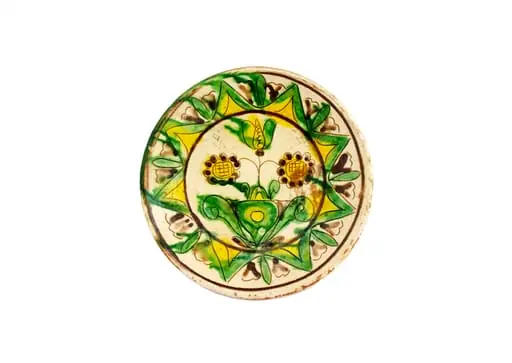 Farfurie lucrată în manieră Kuty, de formă tronconică, modelată la roată; decor geometrizat amplasat pe toată suprafața vasului organizat în două registre despărțite de linii circulare concentrice realizate cu cornul; central prezintă un motiv fitomorf: lalea într-un ghiveci cu trei inflorescențe; în registrul de la extremitatea vasului sunt desenate motive geometrice unghiulare realizate cu linii drepte despărțite de grupuri de liniuțe; cromatică: fond alb dat de angobă, decor cu galben, verde, brun. Pe exterior este imprimată ștampila cu numele meșterului scris cu majusculă și caractere italice: Colibaba.
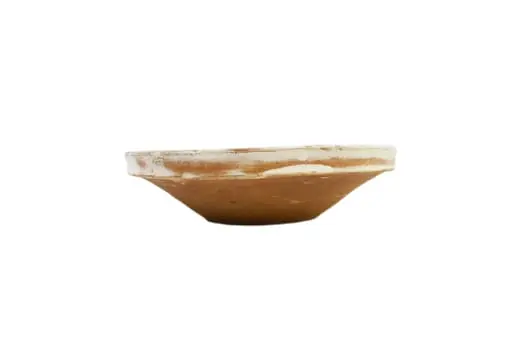 Strachină lucrată în manieră Kuty, de formă tronconică, modelată la roată; decor naturalist amplasat pe toată suprafața vasului organizat în două registre despărțite de linii circulare concentrice realizate cu cornul; central prezintă un motiv avimorf: pasăre; în registrul de la extremitatea vasului sunt desenate motive geometrice semiovoidale realizate cu linii curbe și despărțite de grupuri de trei liniuțe; cromatică: fond alb dat de angobă, decor cu galben, verde și brun. Pe exterior este ștampilat numele meșterului cu majusculă și caractere italice: Colibaba.
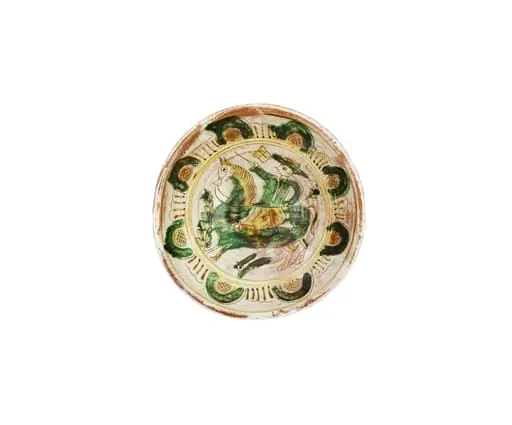 Strachină lucrată în manieră Kuty, de formă tronconică, modelată la roată; decor geometrizat amplasat pe toată suprafața vasului organizat în două registre despărțite de linii circulare concentrice realizate cu cornul; central prezintă un motiv antropomorf: cavaler cu sabia în mână încălecat pe cal; în registrul de la extremitatea vasului sunt desenate motive geometrice semicirculare realizate cu linii curbe și hașuri, despărțite de grupuri de câte patru linii; cromatică: fond alb dat de angobă, decor cu galben, verde, cărămiziu. Pe exterior este ștampilat numele meșterului cu majuscule de tipar: COLIBABA.
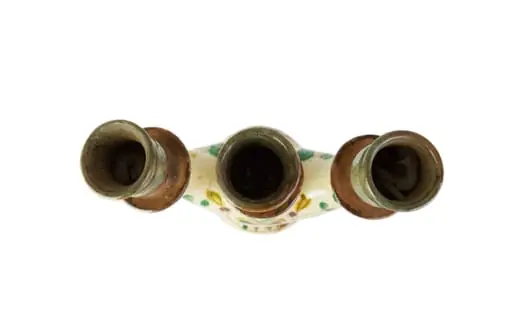 Sfeșnic lucrat în manieră Kuty, cu trei brațe pentru suportul lumânărilor, modelat la roată; prezintă decor naturalist pe cele trei brațe realizat cu motive fitomorfe: floarea soarelui, laleaua și frunze de diferite dimensiuni; pe piciorul sfeșnicului sunt desenate motive geometrice: alveole, linii drepte, triunghiuri și motive astrale: soare; suporturile pentru lumânări sunt trei discuri așezate peste cilindrele din care sunt lucrate brațele sfeșnicului; cromatică: fond alb, decor realizat cu galben, verde, cărămiziu. Pe interiorul piciorului de susținere apare semnătua autorului incizată, cu majusculă și litere de mână: Colibaba C-tin.
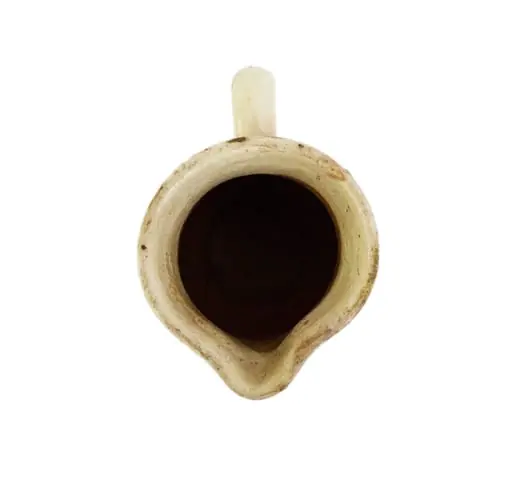 Căniță lucrată în manieră Kuty de formă cilindrică, bombată la mijloc, modelată la roată; prezintă o toartă pentru prindere și lob pentru turnarea lichidelor realizat prin impresiune cu degetele; decor geometrizant organizat în două registre despărțite de linii drepte: cele două registre sunt realizate cu semicercuri, linii curbe și hașuri; spre gura vasului un șir de semiovaluri alternând cromatic; cromatică: fond alb dat de angobă, decor cu verde, galben și cărămiziu.
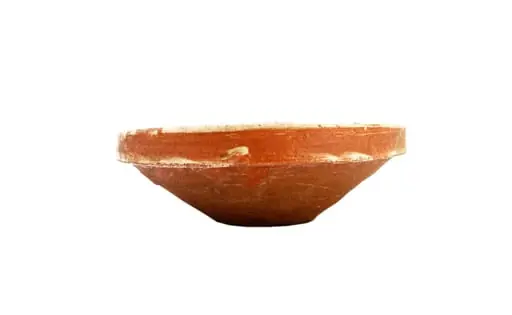 Strachină lucrată în manieră Kuty, de formă tronconică, modelată la roată; decor geometrizat și naturalist organizat în două registre despărțite de linii circulare realizate cu cornul; central prezintă un motiv fitomorf: floare înconjurată de motive geometrice cercuri alternând cromatic delimitate de linii drepte; spre marginea vasului linii drepte circulare și vălurite realizate cu cornul alternând cu linii drepte realizate cu pensonul; cromatică: fond alb dat de angobă, decor realizat cu verde, cărămiziu și galben.
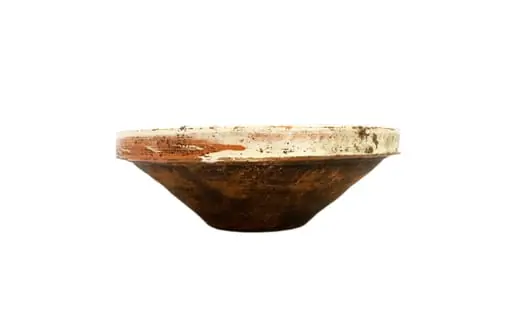 Strachină de formă tronconică, modelată la roată; decor geometrizat și naturalist realizat cu linii circulare de diferite mărimi alternând cu linii vălurite realizate cu pensonul; central prezintă un motiv fitomorf: floare realizat cu linii curbe și puncte de culoare; cromatică: fond alb dat de angobă, decor realizat cu verde și cărămiziu.
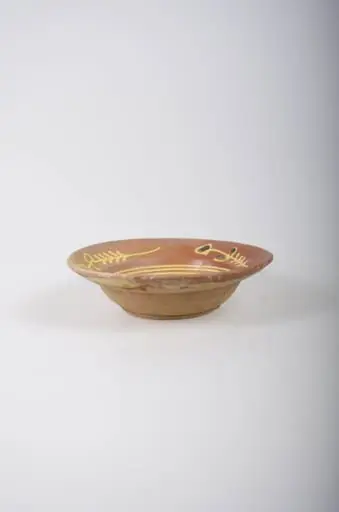 Vasul este realizat din lut și are forma tronconică. Fundul acestuia este plat, iar buza evazată. Obiectul este smalțuit. Decorul este realizat din motive vegetale și geometrice după cum urmează: o spirală și trei crenguțe dispuse pe partea superioară. În interiorul spiralei se află redată o altă crenguță. Cromatica este reprezentată de fond cărămiziu, iar motivele sunt pictate cu culorile verde și galben.
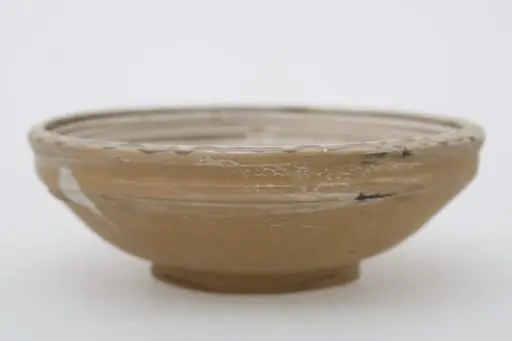 Recipient din lut de uz casnic, nesmălțuit, angobat, de formă tronconică, cu buza dreaptă și înaltă. Pe pereții interiori, vasul este decorat cu motive geometrice și florale: un șir de flori stilizate urmate spre buză de linii concentrice, pictate cu cornul și cu pensula. În centrul vasului este pictată o spirală delimitate de cercuri maro. Buza vasului este ornată cu o linie ondulată. Cromatică: fond: alb; motive: gri; maro închis; maro deschis.
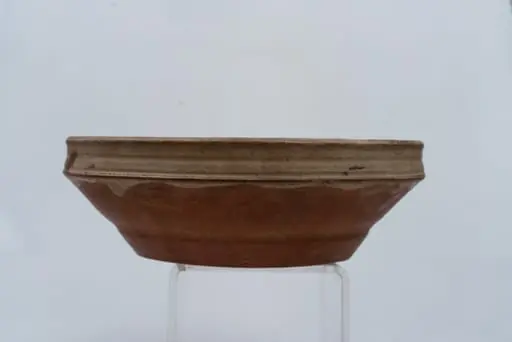 Farfurie adâncă de tip castron, cu buză verticală, ușor profilată. Este angobată pe fața interioară și pe exteriorul buzei cu un strat de angobă albă. Decorul este realizat prin pictare cu cornul și se compune din trei motive pictate central pe fundul vasului, sugerând crenguțe de brad de culoare verde, dispuse în formă de triunghi și încadrate într-un cerc de culoare maro. Registrul decorativ de pe peretele vasului, imediat sub buză, se compune din patru grupuri de motive formate din linii paralele crescătoare și descrescătoare de culoare verde, încadrate între linii circulare subțiri de culoare maro. Buza vasului este decorată pe exterior cu două linii circulare realizate prin incizare, iar fundul vasului este marcat cu o dungă incizată. Cromatica: alb, verde, maro. Suprafața ornamentată este acoperită cu un strat de smalț transparent.