Artwork
Strachină lucrată în manieră Kuty, de formă tronconică, modelată la roată; decor naturalist amplasat pe toată suprafața vasului organizat în două registre despărțite de linii circulare concentrice realizate cu cornul; central prezintă un motiv avimorf: cocoș; în registrul de la extremitatea vasului sunt desenate motive geometrice unghiulare alternând cu motive semiovoidale realizate cu linii drepte, linii curbe și hașuri; cromatică: fond alb dat de angobă, decor cu galben, verde și brun. Pe exterior este ștampilat numele meșterului cu majusculă și caractere italice: Colibaba.
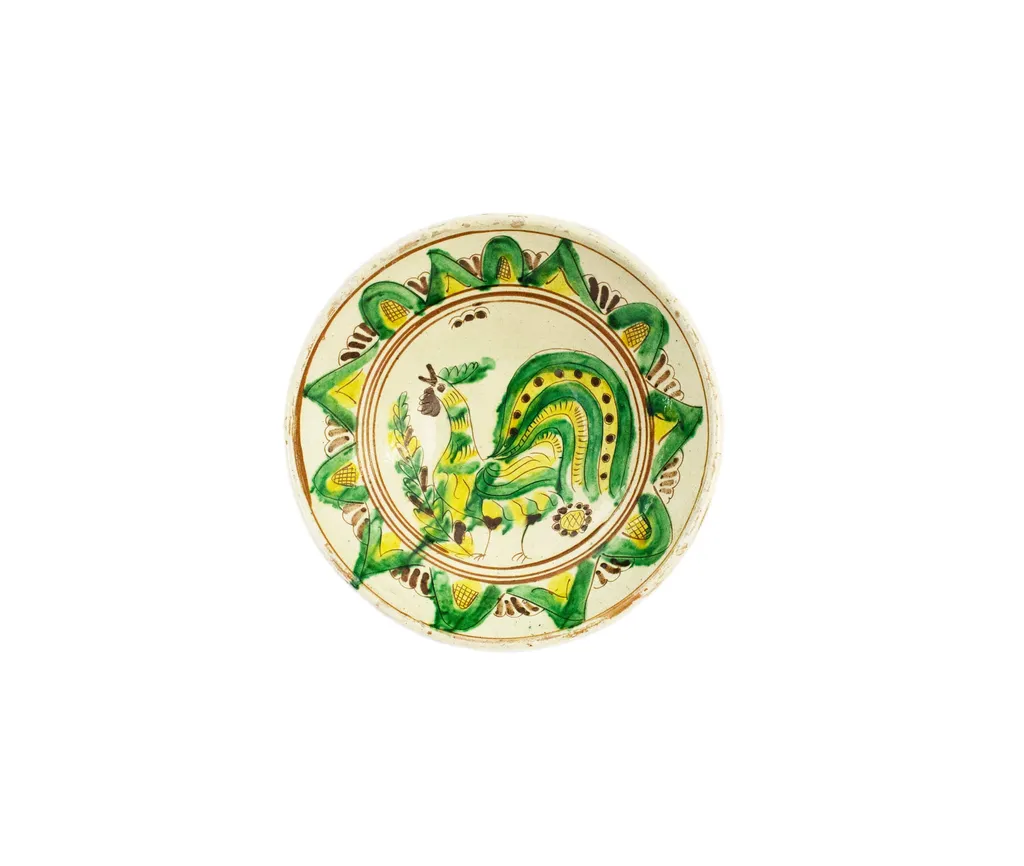
Strachină lucrată în manieră Kuty, de formă tronconică, modelată la roată; decor naturalist amplasat pe toată suprafața vasului organizat în două registre despărțite de linii circulare concentrice realizate cu cornul; central prezintă un motiv avimorf: cocoș; în registrul de la extremitatea vasului sunt desenate motive geometrice unghiulare alternând cu motive semiovoidale realizate cu linii drepte, linii curbe și hașuri; cromatică: fond alb dat de angobă, decor cu galben, verde și brun. Pe exterior este ștampilat numele meșterului cu majusculă și caractere italice: Colibaba. is a photography by Colibaba Constantin. It dates from 1970 and is held in the collection of the National Museum of Bukovina.
About this work
Overview
Strachină lucrată în manieră Kuty is a ceramic piece crafted in 1970 by Colibaba Constantin, now part of the collection at the Museum of Ethnography. Characterized by its tronconic form and wheel-modeling technique, the work showcases a blend of naturalistic and geometric decoration across its surface.
Subject & Meaning
The central motif features a naturalistic rooster, set amidst greenery, while the outer register contrasts with angular geometric shapes alternating with semiovoidal patterns. The symbolism of the rooster, often associated with vigilance and pride in folk cultures, suggests themes of traditional values.
Technique & Style
Executed with a combination of wheel-modeling and hand-painting, the piece exhibits thick, uneven brushstrokes indicative of handmade craftsmanship. The decorative elements were achieved using a corn tool for circular lines, with a palette of yellow, green, and brown on a white engobe background.
History & Provenance
Created in 1970 by Colibaba Constantin, the piece bears the artist's signature in bold, italic letters on the exterior. It is currently housed at the Museum of Ethnography, highlighting its recognition within the realm of ethnographic and folk art.
Context
The work reflects the Kuty style, a tradition that blends folkloric motifs with precise ceramic techniques, common in certain regional pottery practices. The choice of a rooster as a central motif aligns with the emphasis on agricultural and symbolic animals in folk art.
Legacy
As part of the Museum of Ethnography's collection, Strachină lucrată în manieră Kuty contributes to the preservation and visibility of traditional ceramic arts, specifically the Kuty style, for future generations and scholarly study.
Artist & collection
Artist
Constantin Colibaba made colorful folk pottery following the Kuty and Rădăuți styles.
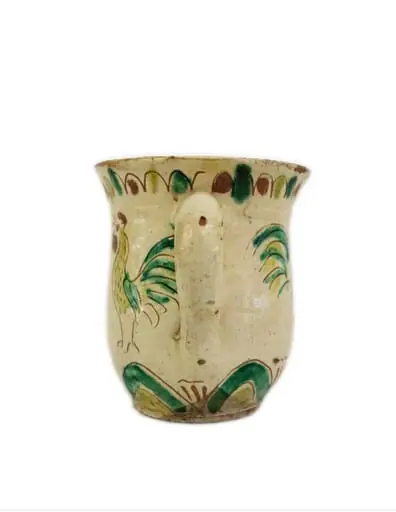 Căniță lucrată în manieră Kuty, de formă cilindrică, bombată la mijloc, modelată la roată; prezintă o toartă pentru prindere; decor geometrizant organizat la extremități: la bază semicercuri despărțite de linii curbe iar spre gura vasului un șir de semiovaluri alternând cromatic; pe restul suprafeței apar motive avimorfe: cocoșul alternând cu sabie și halebardă întretăiate; cromatică: fond alb dat de angobă, decor cu verde, galben și cărămiziu.
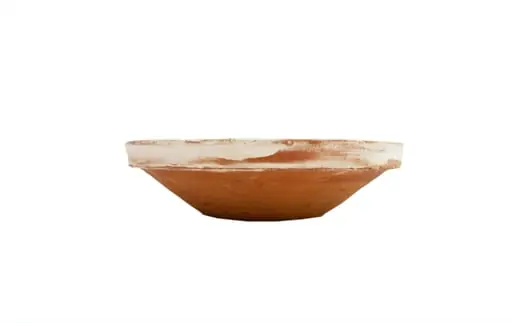 Strachină lucrată în manieră Kuty, de formă tronconică, modelată la roată; decor geometrizant și naturalist amplasat pe toată suprafața vasului organizat în două registre despărțite de linii circulare realizate cu cornul: central prezintă un motiv fitomorf: plantă în ghiveci cu trei inflorescențe: lalea și floarea soarelui; spre marginea vasului un registru cu motive geometrice unghiulare, despărțite de grupuri de liniuțe; cromatică: fond alb dat de angobă, decor realizat cu verde, galben, negru și cărămiziu. Pe exterior este imprimată ștampila cu numele meșterului scris cu majusculă și caractere italice: Colibaba.
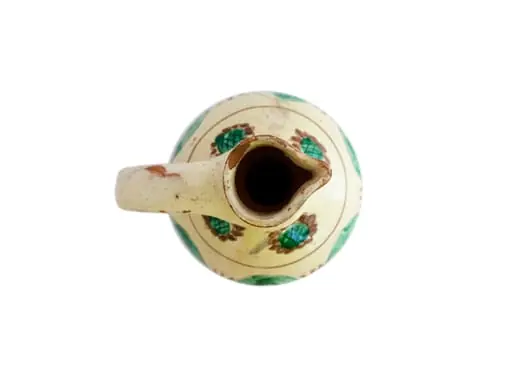 Ulcior lucrat în manieră Kuty, de formă cilindrică bombat la mijloc și cu gât îngust, modelat la roată; prezintă o toartă pentru prindere și un lob pentru turnarea lichidelor realizat prin impresiune cu degetul; decor geometrizat organizat în trei registre, despărțite de linii circulare realizate cu cornul: în registrul inferior apar motive geometrice unghiulare despărțite de grupuri de liniuțe; în registrul din mijloc motive geometrice semicirculare despărțite de grupuri de liniuțe și realizate cu linii curbe și hașuri, spre gâtul vasului un registru cu motive astrale: soare realizate cu cercuri, hașuri și puncte de culoare; cromatică: fond alb dat de angobă, decor realizat cu verde, galben și cărămiziu.
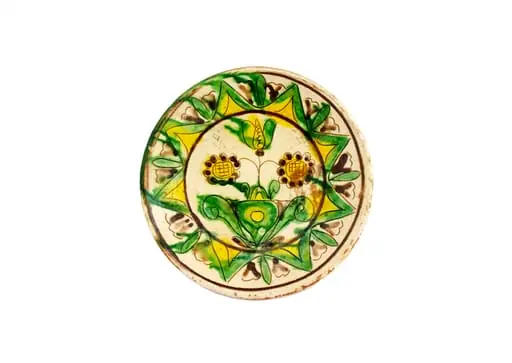 Farfurie lucrată în manieră Kuty, de formă tronconică, modelată la roată; decor geometrizat amplasat pe toată suprafața vasului organizat în două registre despărțite de linii circulare concentrice realizate cu cornul; central prezintă un motiv fitomorf: lalea într-un ghiveci cu trei inflorescențe; în registrul de la extremitatea vasului sunt desenate motive geometrice unghiulare realizate cu linii drepte despărțite de grupuri de liniuțe; cromatică: fond alb dat de angobă, decor cu galben, verde, brun. Pe exterior este imprimată ștampila cu numele meșterului scris cu majusculă și caractere italice: Colibaba.
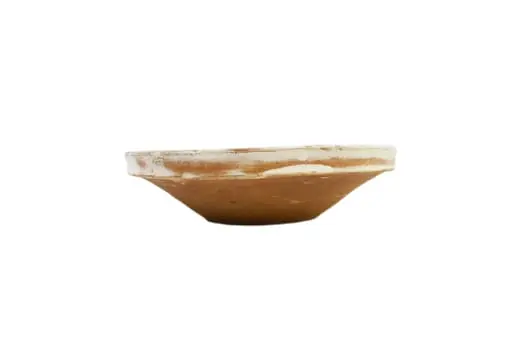 Strachină lucrată în manieră Kuty, de formă tronconică, modelată la roată; decor naturalist amplasat pe toată suprafața vasului organizat în două registre despărțite de linii circulare concentrice realizate cu cornul; central prezintă un motiv avimorf: pasăre; în registrul de la extremitatea vasului sunt desenate motive geometrice semiovoidale realizate cu linii curbe și despărțite de grupuri de trei liniuțe; cromatică: fond alb dat de angobă, decor cu galben, verde și brun. Pe exterior este ștampilat numele meșterului cu majusculă și caractere italice: Colibaba.
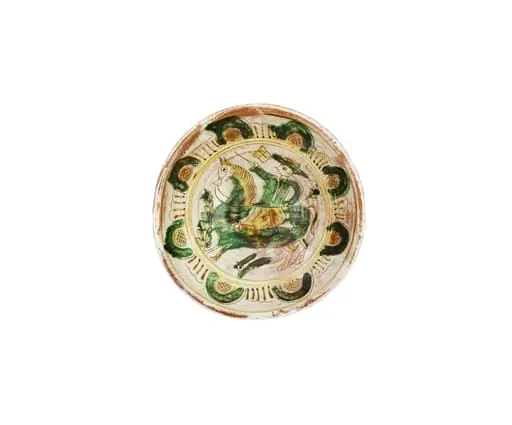 Strachină lucrată în manieră Kuty, de formă tronconică, modelată la roată; decor geometrizat amplasat pe toată suprafața vasului organizat în două registre despărțite de linii circulare concentrice realizate cu cornul; central prezintă un motiv antropomorf: cavaler cu sabia în mână încălecat pe cal; în registrul de la extremitatea vasului sunt desenate motive geometrice semicirculare realizate cu linii curbe și hașuri, despărțite de grupuri de câte patru linii; cromatică: fond alb dat de angobă, decor cu galben, verde, cărămiziu. Pe exterior este ștampilat numele meșterului cu majuscule de tipar: COLIBABA.
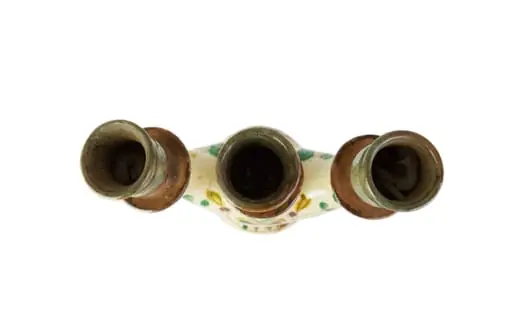 Sfeșnic lucrat în manieră Kuty, cu trei brațe pentru suportul lumânărilor, modelat la roată; prezintă decor naturalist pe cele trei brațe realizat cu motive fitomorfe: floarea soarelui, laleaua și frunze de diferite dimensiuni; pe piciorul sfeșnicului sunt desenate motive geometrice: alveole, linii drepte, triunghiuri și motive astrale: soare; suporturile pentru lumânări sunt trei discuri așezate peste cilindrele din care sunt lucrate brațele sfeșnicului; cromatică: fond alb, decor realizat cu galben, verde, cărămiziu. Pe interiorul piciorului de susținere apare semnătua autorului incizată, cu majusculă și litere de mână: Colibaba C-tin.
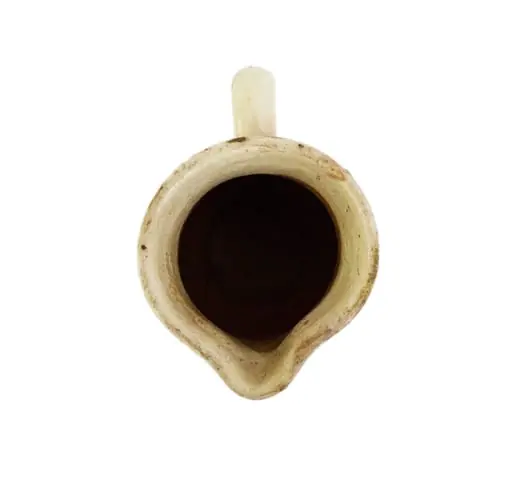 Căniță lucrată în manieră Kuty de formă cilindrică, bombată la mijloc, modelată la roată; prezintă o toartă pentru prindere și lob pentru turnarea lichidelor realizat prin impresiune cu degetele; decor geometrizant organizat în două registre despărțite de linii drepte: cele două registre sunt realizate cu semicercuri, linii curbe și hașuri; spre gura vasului un șir de semiovaluri alternând cromatic; cromatică: fond alb dat de angobă, decor cu verde, galben și cărămiziu.
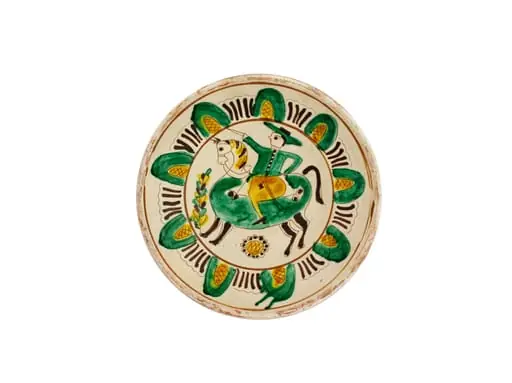 Strachină lucrată în manieră Kuty, de formă tronconică, modelată la roată; decor geometrizat și naturalist amplasat pe toată suprafața vasului organizat în două registre despărțite de linii circulare realizate cu cornul: central prezintă un motiv antropomorf: călăreț cu sabia în mână încălecat pe cal și motive fitomorfe: floarea soarelui și brăduț; spre marginea vasului un registru cu motive geometrice semiovoidale realizate cu linii curbe și hașuri, despărțite de grupuri de liniuțe; cromatică: fond alb dat de angobă, decor realizat cu verde, galben, brun și cărămiziu. Pe exterior este imprimată ștampila cu numele meșterului scris cu majusculă și caractere italice: Colibaba.
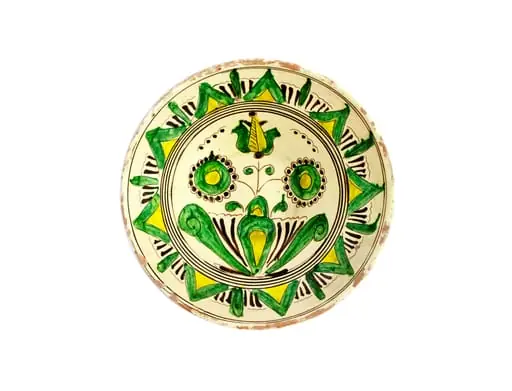 Strachină lucrată în manieră Kuty, de formă tronconică, modelată la roată; decor geometrizat și naturalist organizat în două registre despărțite de linii circulare realizate cu cornul; central prezintă un motiv fitomorf: lalea cu trei inflorescențe așezată într-un ghiveci; spre marginea vasului motive geometrice unghiulare realizate cu linii drepte, despărțite de grupuri de liniuțe; cromatică: fond alb dat de angobă, decor realizat cu verde, brun și galben. Pe exterior este imprimată ștampila cu numele meșterului scris cu majusculă și caractere italice: Colibaba.
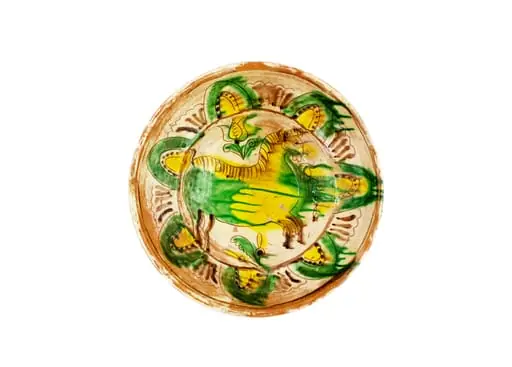 Strachină lucrată în manieră Kuty, de formă tronconică, modelată la roată; decor geometrizat și naturalist amplasat pe toată suprafața vasului organizat în două registre despărțite de linii circulare realizate cu cornul: central prezintă un motiv zoomorf: animal, înconjurat de motive fitomorfe: flori de lalea și frunze; spre marginea vasului un registru cu motive geometrice semiovoidale realizate cu linii curbe și puncte, despărțite de grupuri de liniuțe; cromatică: fond alb dat de angobă, decor realizat cu verde, galben și brun. Pe exterior este imprimată ștampila cu numele meșterului scris cu majusculă și caractere italice: Colibaba.
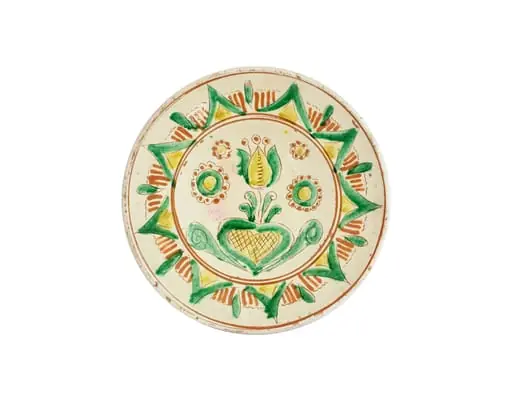 Farfurie lucrată în manieră Kuty, de formă tronconică, modelată la roată; decor geometrizant și naturalist amplasat pe toată suprafața vasului organizat în două registre despărțite de linii circulare realizate cu cornul: central prezintă un motiv fitomorf: lalea în ghiveci și motive astrale: soare realizate cu cercuri, linii curbe și puncte de culoare; spre marginea vasului un registru cu motive geometrice unghiulare, despărțite de grupuri de liniuțe; cromatică: fond alb dat de angobă, decor realizat cu verde, galben și cărămiziu.
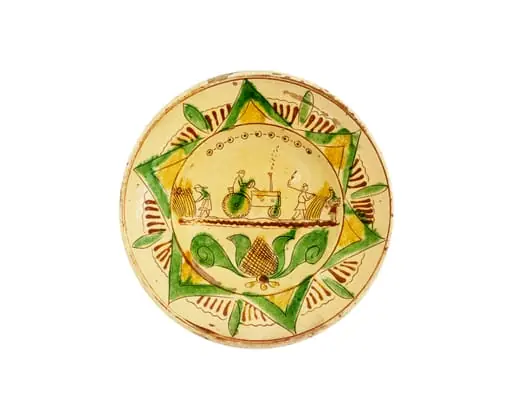 Farfurie lucrată în manieră Kuty, de formă tronconică, modelată la roată; decor geometrizat și naturalist amplasat pe toată suprafața vasului organizat în două registre despărțite de linii circulare realizate cu cornul: central prezintă la partea superioară motive antropomorfe: personaje în diferite ipostaze la muncile agrare și un tractor, la partea inferioară un motiv fitomorf: lalea realizată cu linii curbe și hașuri; spre marginea vasului un registru cu motive geometrice unghiulare despărțite de grupuri de liniuțe; cromatică: fond alb dat de angobă, decor realizat cu verde, galben și cărămiziu.
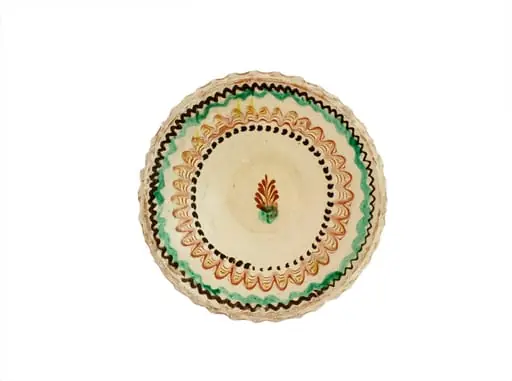 Strachină cu marginea zimțată, de formă tronconică, modelată la roată; decor geometrizant realizat cu linii circulare concentrice peste care sunt suprapuse linii curbe; spre centrul vasului decorul se continuă cu un șir de puncte de culoare, iar spre gura vasului decorul se termină cu două linii vălurite una pictată cu pensonul, cealaltă realizată cu cornul; central prezintă un motiv fitomorf: crenguța de brad; cromatică: fond alb, decor realizat cu verde, cărămiziu și brun. Pe exteriorul vasului este imprimată ștampila cu numele meșterului scris cu majuscule de tipar: COLIBABA.
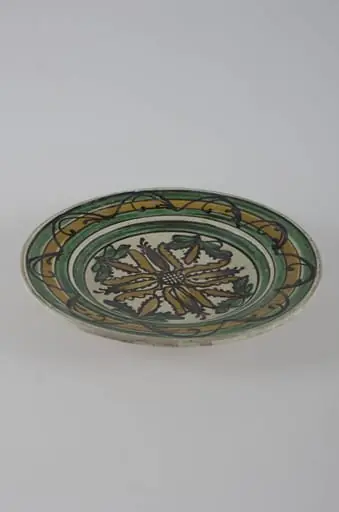 Vas de formă tronconică aplatizat cu decor amplasat pe toată suprafața; ordonat în registre; decor geometrizant; motive geometrice propriu-zise: cercul, semicercul; motive fitomorfe: frunza; motive florale: lalea stilizată. Cromatică: fond: alb; motive: verde; portocaliu.