Artwork
Căniță lucrată în manieră Kuty de formă cilindrică, bombată la mijloc, modelată la roată; prezintă o toartă pentru prindere și lob pentru turnarea lichidelor realizat prin impresiune cu degetele; decor geometrizant organizat în două registre despărțite de linii drepte: cele două registre sunt realizate cu semicercuri, linii curbe și hașuri; spre gura vasului un șir de semiovaluri alternând cromatic; cromatică: fond alb dat de angobă, decor cu verde, galben și cărămiziu.
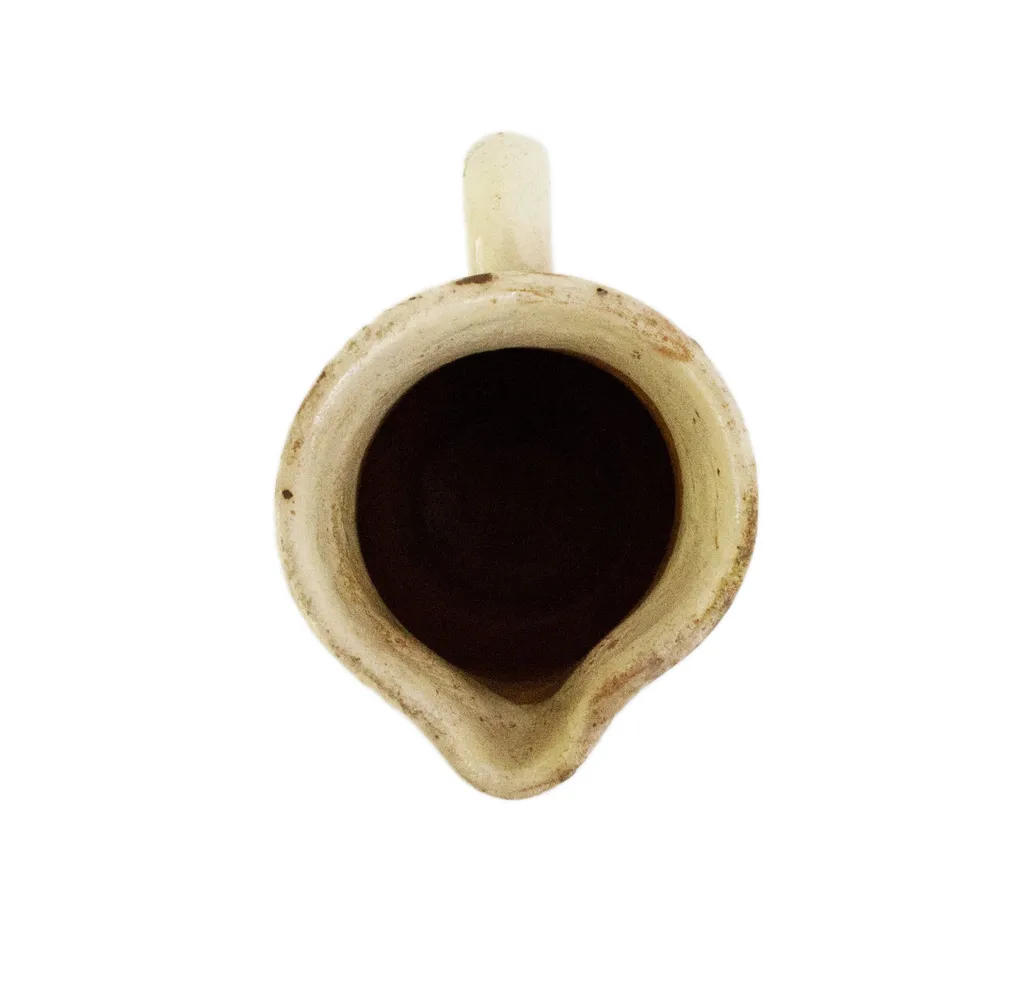
Căniță lucrată în manieră Kuty de formă cilindrică, bombată la mijloc, modelată la roată; prezintă o toartă pentru prindere și lob pentru turnarea lichidelor realizat prin impresiune cu degetele; decor geometrizant organizat în două registre despărțite de linii drepte: cele două registre sunt realizate cu semicercuri, linii curbe și hașuri; spre gura vasului un șir de semiovaluri alternând cromatic; cromatică: fond alb dat de angobă, decor cu verde, galben și cărămiziu. is a photography by Colibaba Constantin. It dates from 1967 and is held in the collection of the National Museum of Bukovina.
About this work
Overview
The surface is coated in a pale engobe, providing a light ground for painted decoration in green, yellow, and brick-red hues.
This cylindrical ceramic vessel, crafted in the Kuty style, dates to 1967 and was made by Colibaba Constantin. Its form is subtly bulbous at the center, shaped on a wheel, with a single handle and a spout formed by finger impressions. The surface is coated in a pale engobe, providing a light ground for painted decoration in green, yellow, and brick-red hues. The overall appearance is restrained, emphasizing handwork over ornamentation.
Subject & Meaning
The vessel likely served a domestic function, possibly for storing or pouring liquids. Its decoration lacks figurative elements, instead relying on abstract geometric patterns that reflect regional ceramic traditions. The alternating semiovals along the rim may signal a boundary or transition, a common motif in folk pottery to denote functional or symbolic thresholds in daily use.
Technique & Style
The pot was wheel-thrown and finished with finger-pressed details for the spout and handle. Decoration was applied in two horizontal bands separated by straight lines, using semicircles, curved strokes, and hatched lines. The color palette—white engobe with green, yellow, and reddish-brown pigments—was applied with care but without precision, preserving the tactile quality of handmade ceramics typical of the Kuty tradition.
History & Provenance
Created in 1967 by Romanian artist Colibaba Constantin, this piece is part of a broader effort to document and preserve regional ceramic practices. It entered the collection of the Museum of Ethnography shortly after its making, where it remains as an example of late 20th-century folk-inspired craftsmanship within a modern artistic context.
Context
This vessel emerges from a period in Romania when artists revisited rural craft techniques as a means of cultural preservation. The Kuty style, rooted in Transylvanian folk pottery, was being reinterpreted by urban artisans like Constantin. The piece reflects neither pure tradition nor avant-garde innovation, but a quiet dialogue between the two.
Legacy
The piece contributes to the documented lineage of Romanian ceramic revival movements. While not widely exhibited, it stands as a representative example of how mid-century artists engaged with vernacular forms without romanticizing them. Its modest scale and unadorned presence continue to inform contemporary studies of material culture in Eastern Europe.
Artist & collection
Artist
Constantin Colibaba made colorful folk pottery following the Kuty and Rădăuți styles.
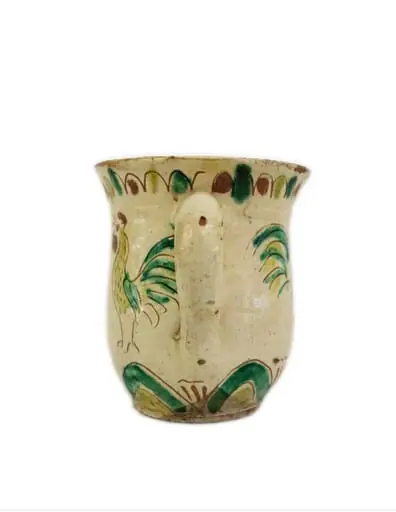 Căniță lucrată în manieră Kuty, de formă cilindrică, bombată la mijloc, modelată la roată; prezintă o toartă pentru prindere; decor geometrizant organizat la extremități: la bază semicercuri despărțite de linii curbe iar spre gura vasului un șir de semiovaluri alternând cromatic; pe restul suprafeței apar motive avimorfe: cocoșul alternând cu sabie și halebardă întretăiate; cromatică: fond alb dat de angobă, decor cu verde, galben și cărămiziu.
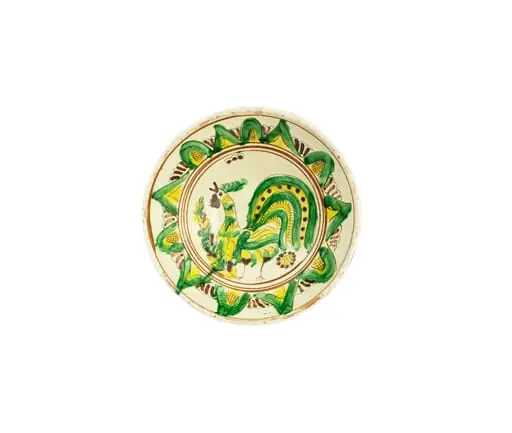 Strachină lucrată în manieră Kuty, de formă tronconică, modelată la roată; decor naturalist amplasat pe toată suprafața vasului organizat în două registre despărțite de linii circulare concentrice realizate cu cornul; central prezintă un motiv avimorf: cocoș; în registrul de la extremitatea vasului sunt desenate motive geometrice unghiulare alternând cu motive semiovoidale realizate cu linii drepte, linii curbe și hașuri; cromatică: fond alb dat de angobă, decor cu galben, verde și brun. Pe exterior este ștampilat numele meșterului cu majusculă și caractere italice: Colibaba.
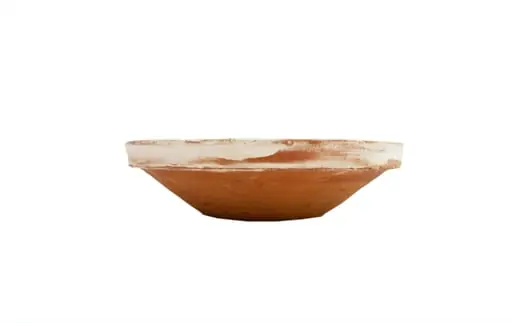 Strachină lucrată în manieră Kuty, de formă tronconică, modelată la roată; decor geometrizant și naturalist amplasat pe toată suprafața vasului organizat în două registre despărțite de linii circulare realizate cu cornul: central prezintă un motiv fitomorf: plantă în ghiveci cu trei inflorescențe: lalea și floarea soarelui; spre marginea vasului un registru cu motive geometrice unghiulare, despărțite de grupuri de liniuțe; cromatică: fond alb dat de angobă, decor realizat cu verde, galben, negru și cărămiziu. Pe exterior este imprimată ștampila cu numele meșterului scris cu majusculă și caractere italice: Colibaba.
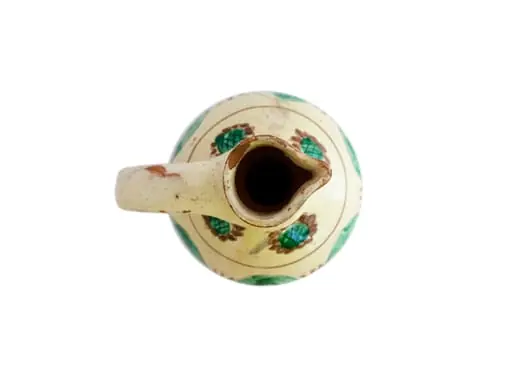 Ulcior lucrat în manieră Kuty, de formă cilindrică bombat la mijloc și cu gât îngust, modelat la roată; prezintă o toartă pentru prindere și un lob pentru turnarea lichidelor realizat prin impresiune cu degetul; decor geometrizat organizat în trei registre, despărțite de linii circulare realizate cu cornul: în registrul inferior apar motive geometrice unghiulare despărțite de grupuri de liniuțe; în registrul din mijloc motive geometrice semicirculare despărțite de grupuri de liniuțe și realizate cu linii curbe și hașuri, spre gâtul vasului un registru cu motive astrale: soare realizate cu cercuri, hașuri și puncte de culoare; cromatică: fond alb dat de angobă, decor realizat cu verde, galben și cărămiziu.
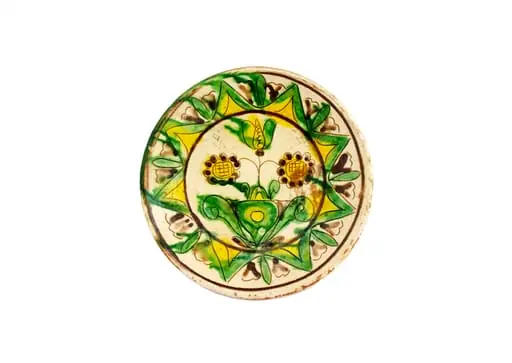 Farfurie lucrată în manieră Kuty, de formă tronconică, modelată la roată; decor geometrizat amplasat pe toată suprafața vasului organizat în două registre despărțite de linii circulare concentrice realizate cu cornul; central prezintă un motiv fitomorf: lalea într-un ghiveci cu trei inflorescențe; în registrul de la extremitatea vasului sunt desenate motive geometrice unghiulare realizate cu linii drepte despărțite de grupuri de liniuțe; cromatică: fond alb dat de angobă, decor cu galben, verde, brun. Pe exterior este imprimată ștampila cu numele meșterului scris cu majusculă și caractere italice: Colibaba.
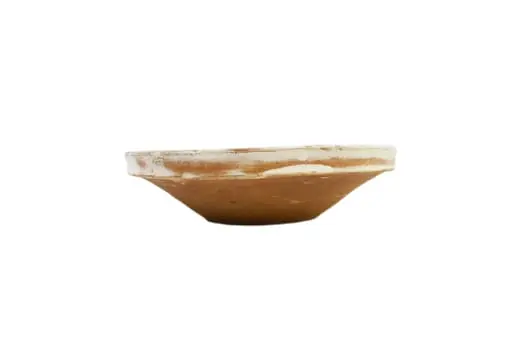 Strachină lucrată în manieră Kuty, de formă tronconică, modelată la roată; decor naturalist amplasat pe toată suprafața vasului organizat în două registre despărțite de linii circulare concentrice realizate cu cornul; central prezintă un motiv avimorf: pasăre; în registrul de la extremitatea vasului sunt desenate motive geometrice semiovoidale realizate cu linii curbe și despărțite de grupuri de trei liniuțe; cromatică: fond alb dat de angobă, decor cu galben, verde și brun. Pe exterior este ștampilat numele meșterului cu majusculă și caractere italice: Colibaba.
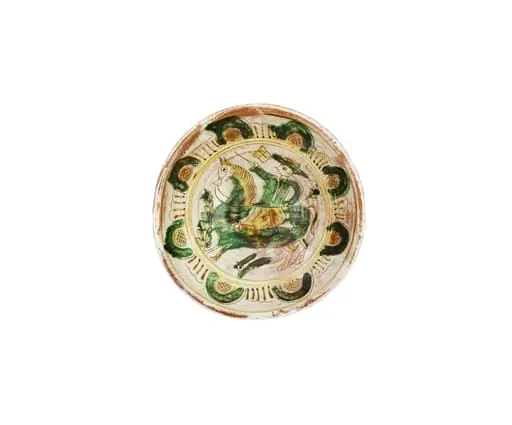 Strachină lucrată în manieră Kuty, de formă tronconică, modelată la roată; decor geometrizat amplasat pe toată suprafața vasului organizat în două registre despărțite de linii circulare concentrice realizate cu cornul; central prezintă un motiv antropomorf: cavaler cu sabia în mână încălecat pe cal; în registrul de la extremitatea vasului sunt desenate motive geometrice semicirculare realizate cu linii curbe și hașuri, despărțite de grupuri de câte patru linii; cromatică: fond alb dat de angobă, decor cu galben, verde, cărămiziu. Pe exterior este ștampilat numele meșterului cu majuscule de tipar: COLIBABA.
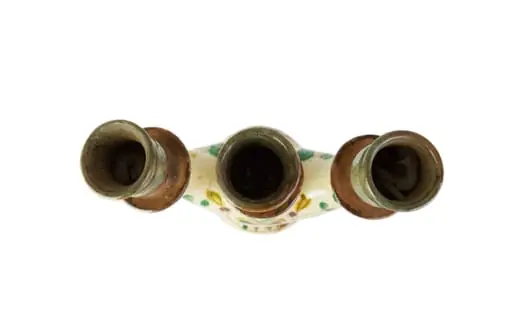 Sfeșnic lucrat în manieră Kuty, cu trei brațe pentru suportul lumânărilor, modelat la roată; prezintă decor naturalist pe cele trei brațe realizat cu motive fitomorfe: floarea soarelui, laleaua și frunze de diferite dimensiuni; pe piciorul sfeșnicului sunt desenate motive geometrice: alveole, linii drepte, triunghiuri și motive astrale: soare; suporturile pentru lumânări sunt trei discuri așezate peste cilindrele din care sunt lucrate brațele sfeșnicului; cromatică: fond alb, decor realizat cu galben, verde, cărămiziu. Pe interiorul piciorului de susținere apare semnătua autorului incizată, cu majusculă și litere de mână: Colibaba C-tin.
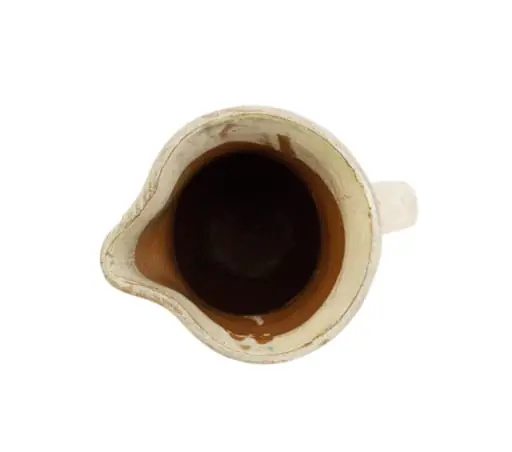 Cană de formă cilindrică, bombată la mijloc, modelată la roată; prezintă o toartă pentru prindere și lob pentru turnarea lichidelor realizat prin impresiune cu degetul; decor geometrizant realizat în registre: spre baza vasului linii circulare întrerupte de linii drepte dispuse perpendicular și puncte, mărginite de un șir de puncte; două șiruri de motive astrale: soare, realizate cu puncte de culoare pe mijlocul și spre extremitatea superioară a vasului, despărțite de o linie vălurită (șarul) în alveolele căreia sunt dispuse puncte; cromatică: fond alb și cărămiziu, decor realizat cu alb, verde, cărămiziu și brun. Pe exteriorul vasului este stampilat numele meșterului cu majusculă și caractele italice: Colibaba.
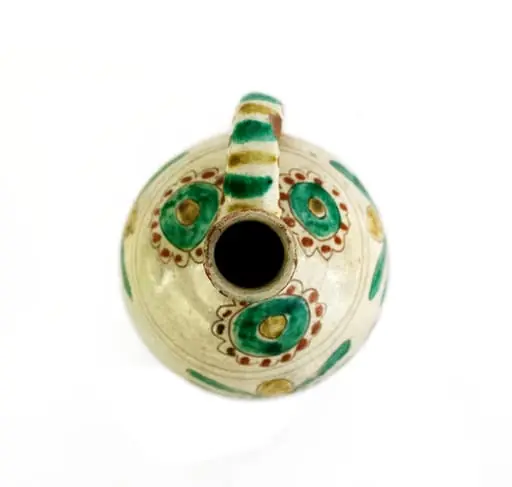 Ulcior de formă cilindrică, bombat la mijloc, lucrat în manieră Kuty, modelat la roată; prezintă o toartă pentru prindere și gât îngust; decor naturalist amplasat pe toată suprafața și organizat în două registre despărțite de linii drepte: la bază un registru cu motive fitomorfe despărțite de semicercuri; registrul superior prezintă motive astrale: soare realizate cu crecuri, linii vălurite și puncte de culoare; pe toartă prezintă puncte și linii colorate; cromatică: fond alb dat de angobă, decor cu cărămiziu, verde, galben.
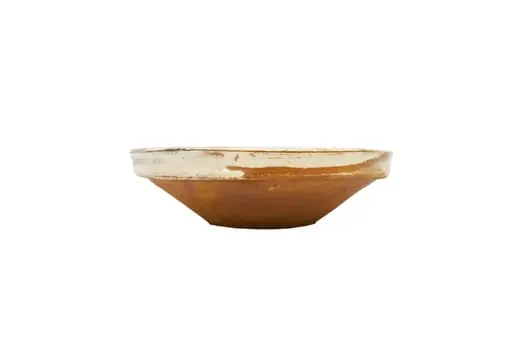 Strachină lucrată în manieră Kuty, de formă tronconică, modelată la roată; decor naturalist amplasat pe toată suprafața vasului organizat în două registre despărțite de linii circulare concentrice realizate cu cornul; central prezintă un motiv zoomorf: animal fantastic; în registrul de la extremitatea vasului sunt desenate motive fitomorfe: flori de lalea despărțite de grupuri de liniuțe; cromatică: fond alb dat de angobă, decor cu galben, verde și brun. Pe exterior este ștampilat numele meșterului cu majusculă și caractere italice: Colibaba.
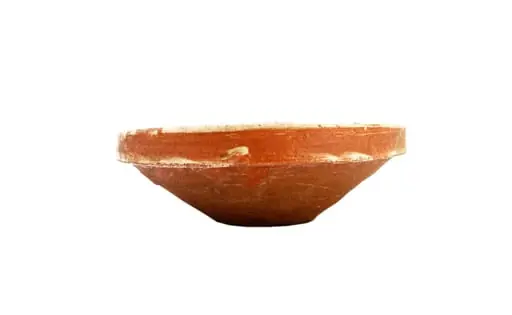 Strachină lucrată în manieră Kuty, de formă tronconică, modelată la roată; decor geometrizat și naturalist organizat în două registre despărțite de linii circulare realizate cu cornul; central prezintă un motiv fitomorf: floare înconjurată de motive geometrice cercuri alternând cromatic delimitate de linii drepte; spre marginea vasului linii drepte circulare și vălurite realizate cu cornul alternând cu linii drepte realizate cu pensonul; cromatică: fond alb dat de angobă, decor realizat cu verde, cărămiziu și galben.
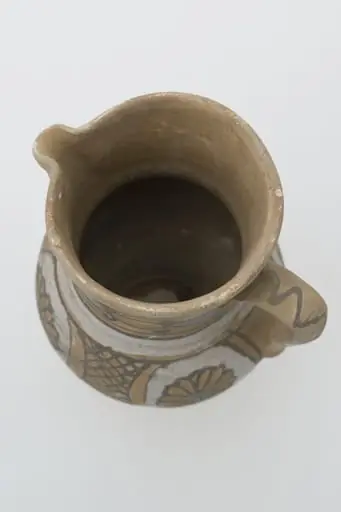 Cană de vin de formă bitronconică cu gâtul lung și buză dreaptă cu cioc. Registrele ornamentale se succed de jos în sus, delimitate de cercuri concentrice, și prezintă pe corpul vasului motive florale și geometrice sub formă de hașură întrerupte de partea de sus de o zonă cerc alb mai gros și mai apoi continuat cu cercuri concentrice ce delimitează de mijloc și de sub buză două cercuri albe groase (angoba). Cromatică: fond: alb; cărămiziu; motive: maro; gri; albastru.
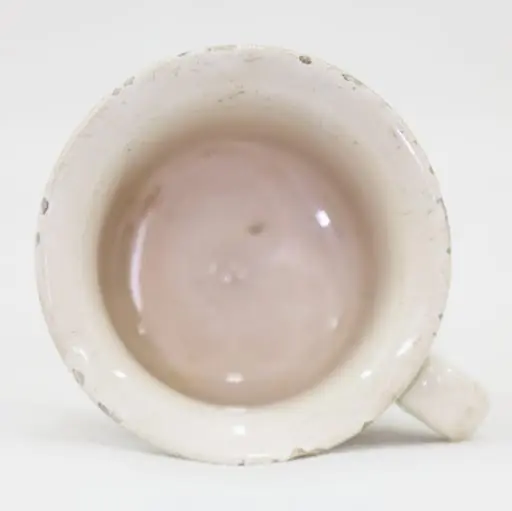 Piesa are o formă relativ cilindrică, cu buza ușor evazată și toartă plină. Sub buză și la bază, câte un cerc concentric. Decorul pictat dispune de motive florale și vegetale (flori și frunze). Cromatică: alb (fondul), verzui (decorul).
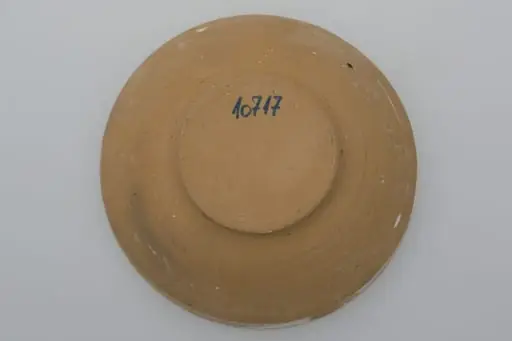 Recipient din lut de uz casnic, nesmălțuit, angobat, de formă circulară, cu profil tronconic, cu buza dreaptă și înaltă. Pe pereții interiori, vasul este decorat cu cornul, cu motive geometrice și florale: un contur de floare urmat de un șir de flori mici stilizate. Spre gura strachinii, la interior, sunt prezente linii concentrice, maro. În centrul vasului este pictată o spirală. Buza vasului este ornată cu o linie ondulată. Cromatică: fond: alb; motive: gri, maro închis, maro deschis.