Artwork
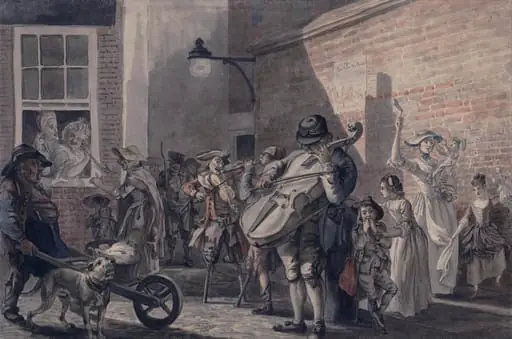
A Group at a Church Porch
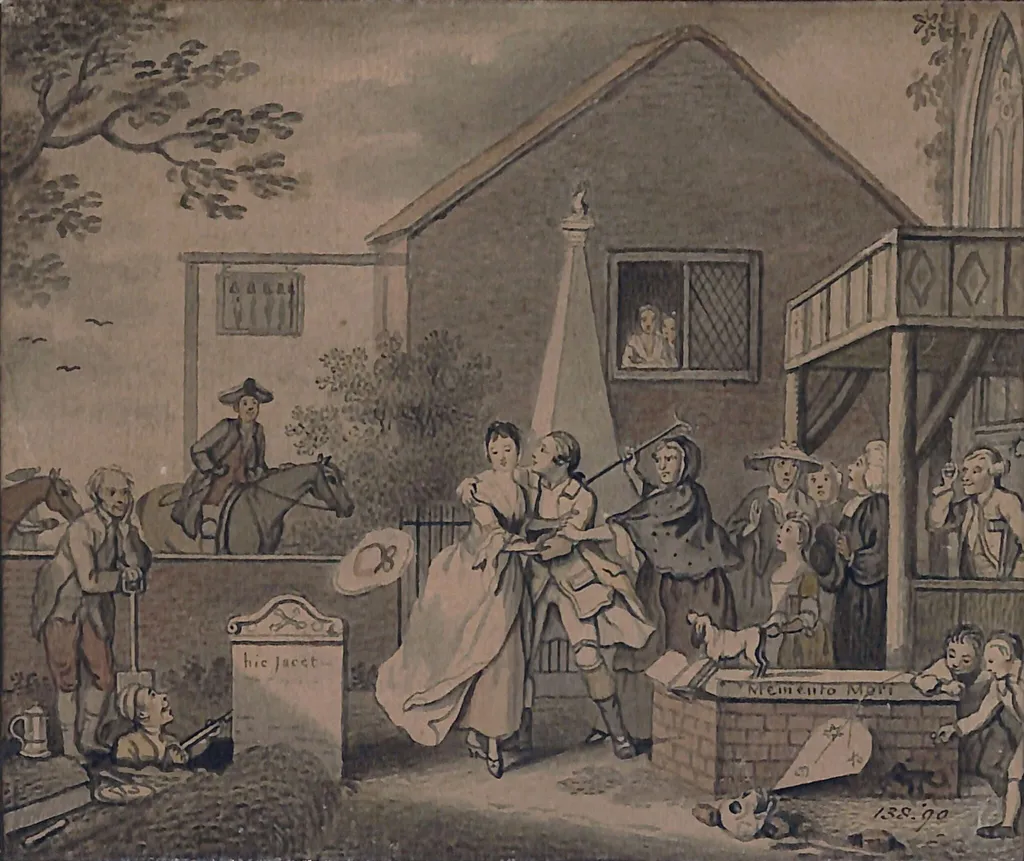
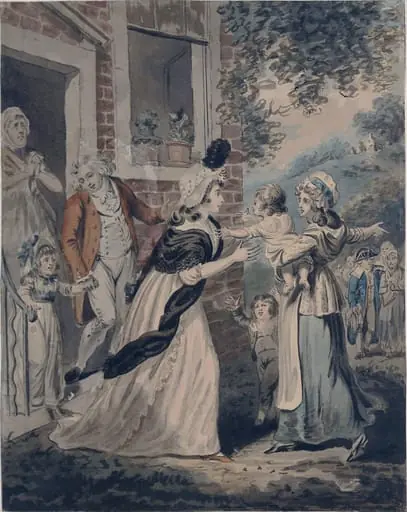
A Group at a Church Porch is a drawing by the Romanticist artist Collet. It dates from 1750 and is held in the collection of the Victoria and Albert Museum.
About this work
Overview
The scene is neither ceremonial nor formal, but quietly observational, reflecting ordinary human presence within a devotional setting.
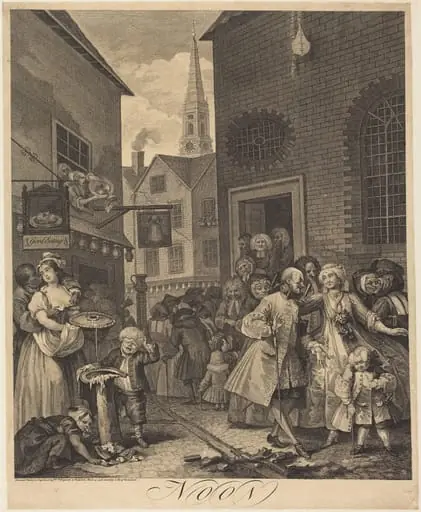
This ink drawing, dated 1750 and signed by Collet, portrays a momentary assembly of individuals on the exterior of a church. Rendered in a delicate linear style, the composition captures everyday life in a sacred space, emphasizing the intersection of religious architecture and communal activity. The scene is neither ceremonial nor formal, but quietly observational, reflecting ordinary human presence within a devotional setting.
Subject & Meaning
The figures gather loosely near the church steps—conversing, leaning, and playing—suggesting a pause in daily routines. A woman and man engage in quiet dialogue, while children amuse themselves in the dirt. A tombstone in the foreground bears the Latin inscriptions 'hic jacet' and 'memento mori,' serving as a quiet moral counterpoint to the lively scene. These phrases evoke the transience of life, subtly framing the gathering within a broader contemplation of mortality.
Technique & Style
Executed in fine ink lines, the drawing employs subtle shading and precise contours to distinguish figures and architecture. The artist avoids heavy detail, instead suggesting texture and depth through economical strokes. The composition is unstructured yet balanced, with figures distributed naturally across the space. The use of negative space around the tombstone draws attention to its inscription, reinforcing its symbolic weight without overt drama.
History & Provenance
The drawing is attributed to Collet, an artist active in the mid-18th century, though little is known of his broader oeuvre. Its survival suggests it was preserved as a study or personal record rather than a commissioned work. The piece entered the collection of the Victoria and Albert Museum, where it remains accessible as part of a broader archive of British graphic art from the period.
Context
In 18th-century England, church porches were social hubs—places for post-service conversation, announcements, and informal gatherings. Depictions of such scenes were uncommon in fine art, making this drawing a rare glimpse into vernacular life. The inclusion of a tombstone reflects a cultural preoccupation with mortality, common in Protestant devotional practice, where reminders of death served as moral instruction.
Legacy
This drawing contributes to a modest but significant body of 18th-century observational sketches that document everyday religious life. Unlike grand historical or religious paintings, it offers an unembellished view of communal behavior. Its preservation in a major museum underscores its value as a record of social customs and the quiet, unremarkable moments that defined daily existence in the period.
Artist & collection
Artist
Collet made careful drawings in the late 1700s, pencil lines catching everyday scenes with quiet curiosity.