Artwork
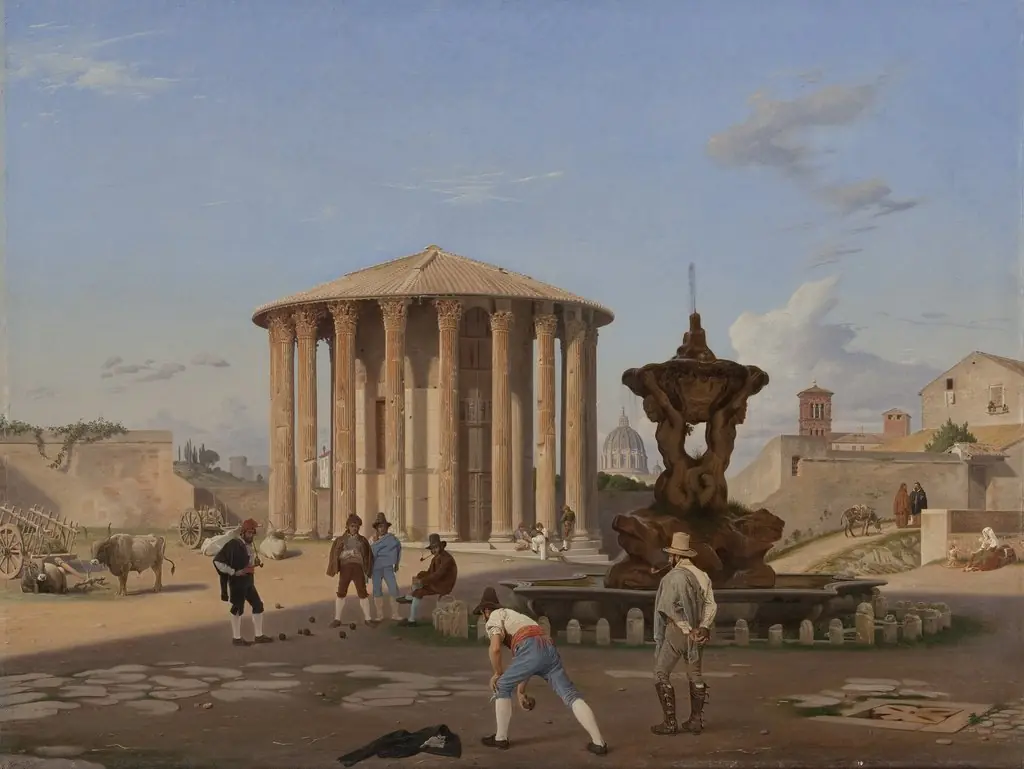
Study of a Roman Playing Morra
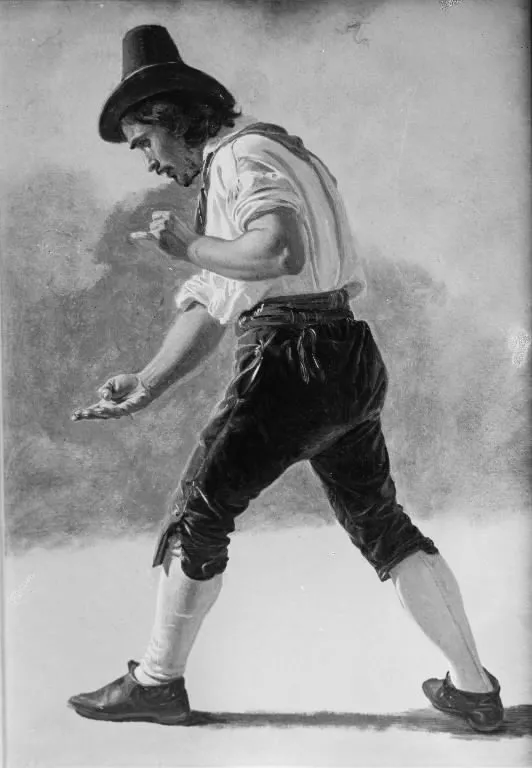
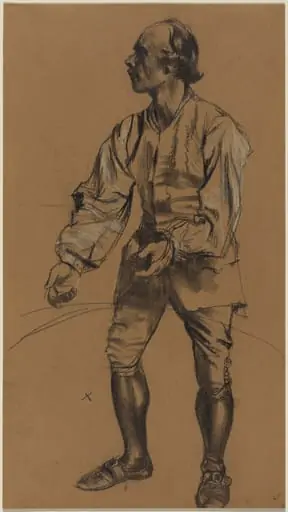
Study of a Roman Playing Morra is an oil painting by the Realist artist Constantin Hansen. It dates from 1837 and is held in the collection of the Statens Museum for Kunst.
About this work
Overview
Created in 1837 by Constantin Hansen, a prominent painter of Denmark’s Golden Age, this oil work records a solitary figure absorbed in the Italian hand game known as morra. The canvas belongs to the Statens Museum for Kunst, where it is displayed among the artist’s varied output that includes historical scenes and portraiture.
Subject & Meaning
The central character, dressed in a white shirt, dark trousers and a hat, stands with his legs apart, his gaze fixed on his hands as he prepares to play morra. The gesture—one hand closed, the other open palm upward—captures the moment of anticipation inherent in the quick‑counting game, emphasizing concentration and chance.
Technique & Style
Hansen employs a restrained palette and subtle chiaroscuro to model the figure, allowing light to carve the face and hands from a muted background. This handling of light and shadow imparts a three‑dimensional presence, while the overall realism aligns the work with the mid‑19th‑century Realist tendency toward everyday subjects.
History & Provenance
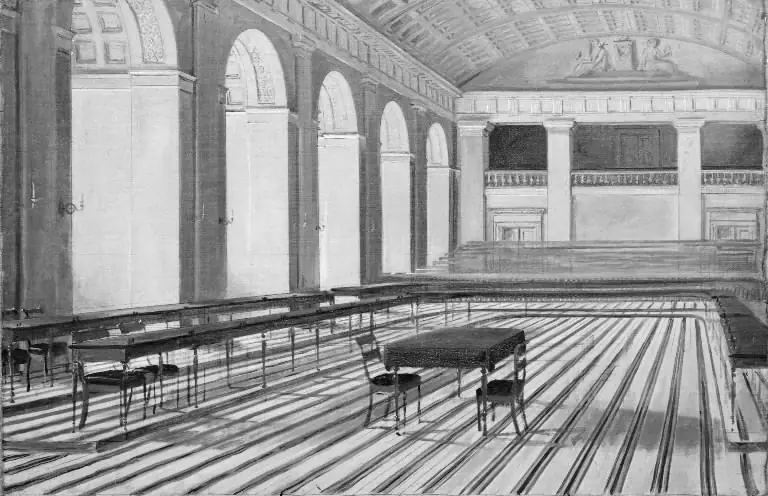
The painting entered the collection of Denmark’s national gallery, Statens Museum for Kunst, where it remains part of the institution’s representation of the Golden Age. Its acquisition reflects the museum’s effort to preserve works that illustrate Hansen’s range beyond his large historical compositions, such as the later *The Danish Constituent Assembly*.
Artist & collection
Artist
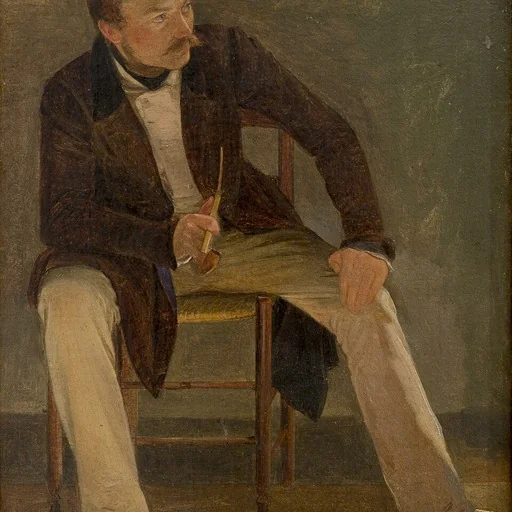
Carl Christian Constantin Hansen (Constantin Hansen) (3 November 1804 – 29 March 1880) was one of the painters associated with the Golden Age of Danish Painting.