Artwork
Francis Bacon
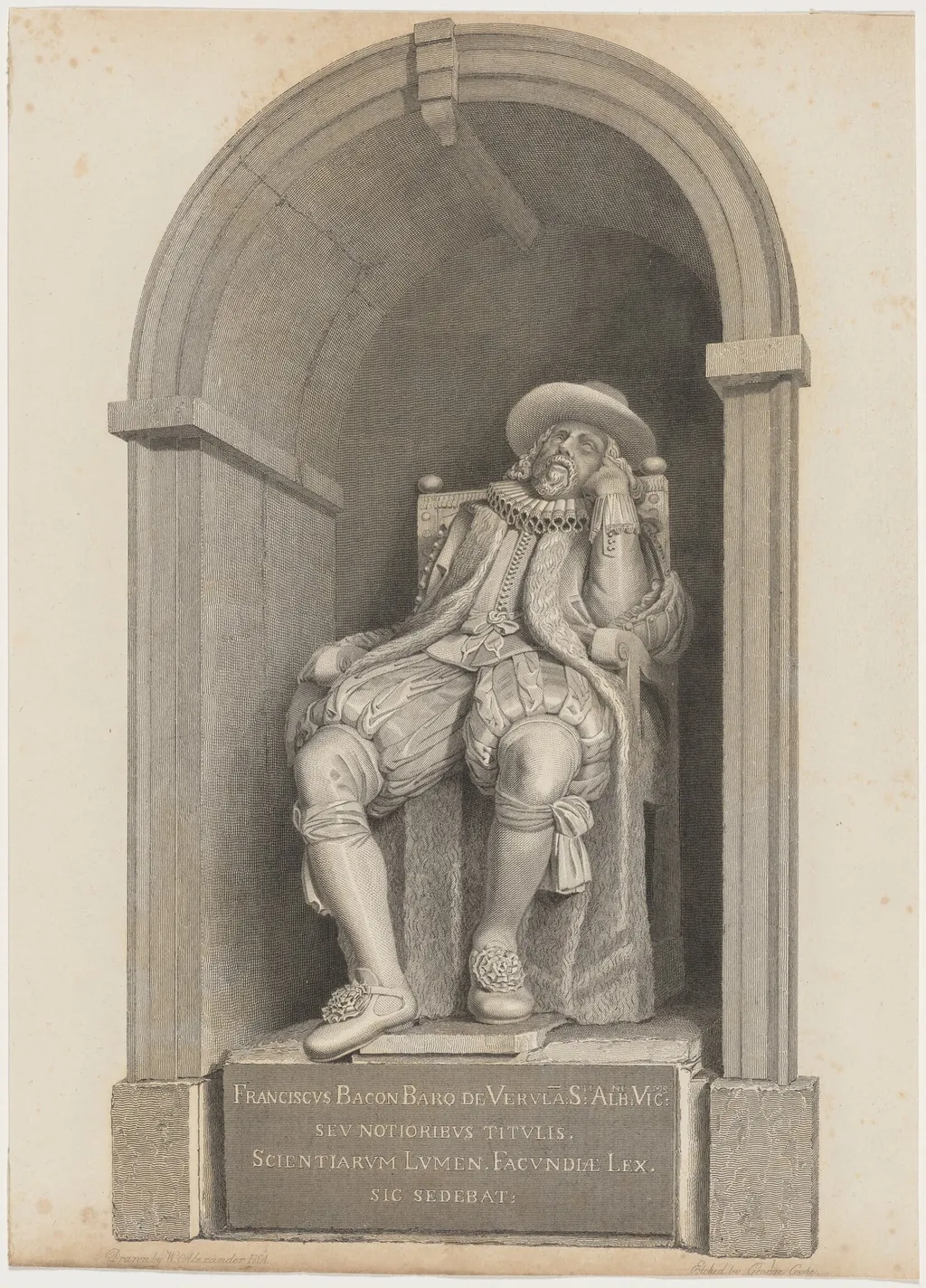
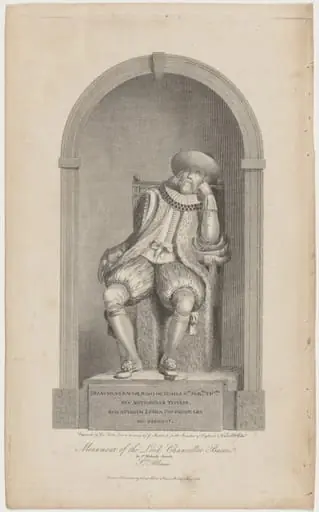
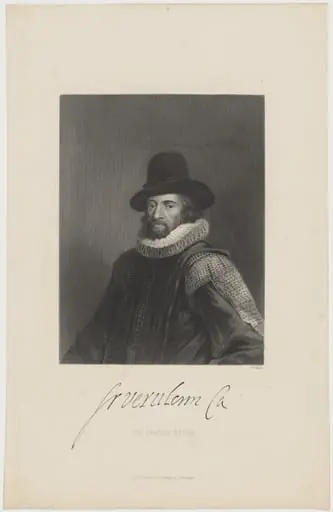
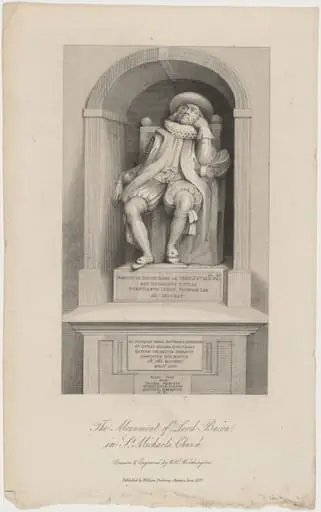
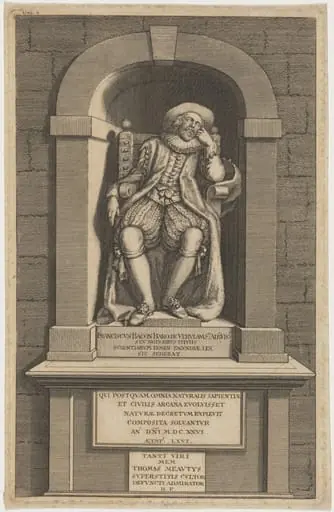
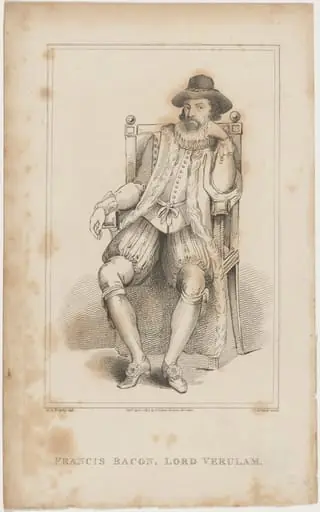
Francis Bacon is an ink print by the Romanticist artist George Cooke. It dates from 1808 and is held in the collection of the National Gallery of Art.
About this work
Overview
The composition is restrained, with minimal background elements drawing focus to the figure’s posture and attire.
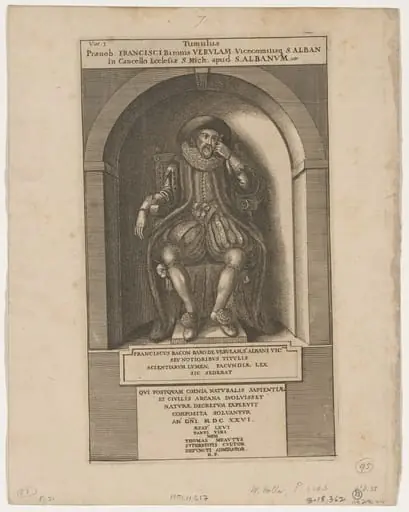
This 1808 engraving by George Cooke depicts a solitary figure, rendered in fine line work on paper. The subject is identified as Francis Bacon, though the image is not a portrait in the literal sense. It presents a symbolic representation, emphasizing contemplation and weariness rather than physical likeness. The composition is restrained, with minimal background elements drawing focus to the figure’s posture and attire.
Subject & Meaning
The figure, presumed to be the philosopher Francis Bacon, is shown slumped within a shallow architectural niche, suggesting introspection or intellectual fatigue. His outdated clothing and weary posture evoke a sense of temporal distance, perhaps reflecting on the weight of thought or the passage of time. The Latin inscription beneath him reinforces a scholarly context, linking the image to classical learning and the burdens of intellectual legacy.
Technique & Style
Cooke employs fine, controlled engraving lines to model form and texture, particularly in the folds of the heavy coat and ruffled collar. Shading is achieved through cross-hatching and varying line density, giving the fabric a tangible weight and aged quality. The background remains sparse, allowing the figure’s contours and the carved inscription to dominate. The style reflects early 19th-century printmaking conventions focused on clarity and detail.
History & Provenance
Created in 1808, the engraving was likely produced as part of a series illustrating notable historical figures. It was intended for dissemination among educated audiences interested in intellectual heritage. While no detailed provenance is recorded, such prints were commonly bound in collections or displayed in private libraries, serving as visual references to philosophical tradition rather than standalone artworks.
Context
In the early 1800s, engraved portraits of philosophers and statesmen were popular in Britain, often used to educate and inspire. Bacon, as a foundational figure in empiricism, was a natural subject for such representations. The image aligns with a broader cultural trend of venerating Enlightenment thinkers through idealized, somber depictions that emphasized moral and intellectual gravity over individual likeness.
Legacy
Though not widely reproduced today, the engraving remains an example of how 19th-century printmakers translated intellectual ideals into visual form. Its quiet dignity and technical precision reflect the period’s reverence for scholarly tradition. It contributes to a visual archive of Enlightenment figures, preserved not through grandeur but through restrained, deliberate craftsmanship.
Artist & collection