Artwork
Landscape with Group of Trees Surrounded by Water
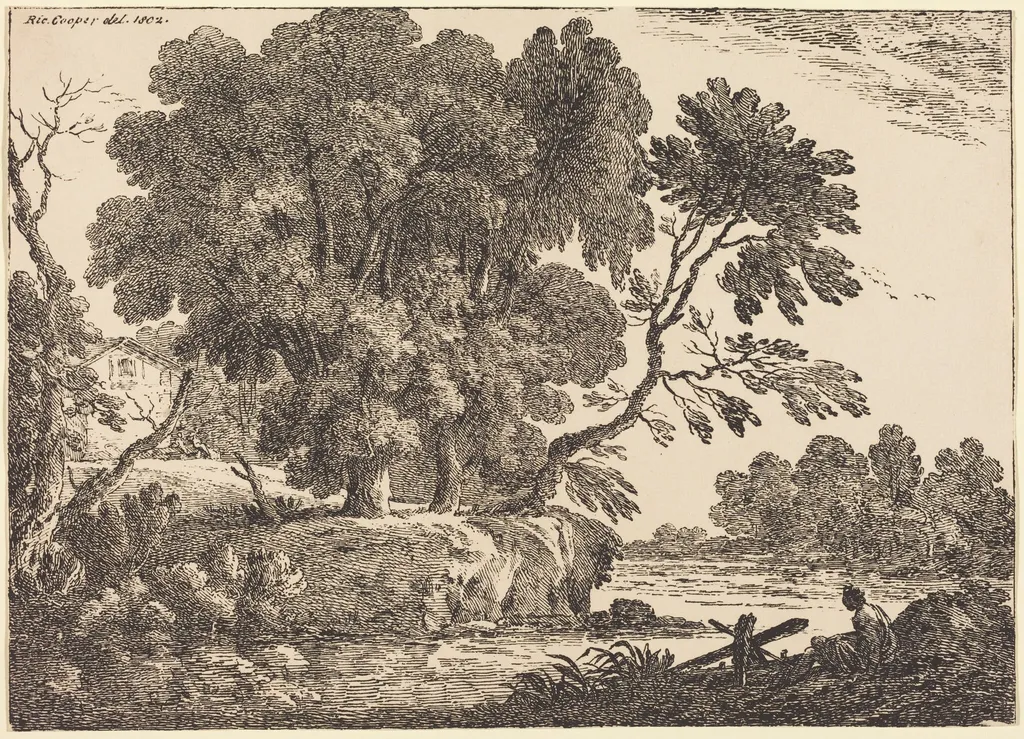
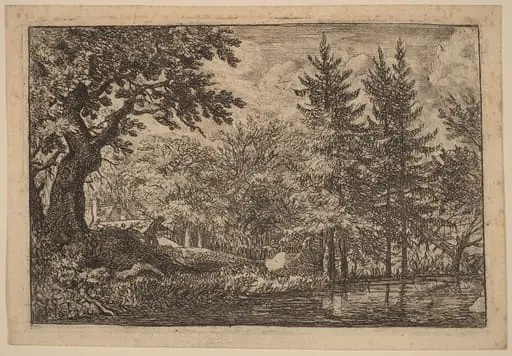
Landscape with Group of Trees Surrounded by Water is an ink print by the Romanticist artist Richard Cooper II. It dates from 1802 and is held in the collection of the National Gallery of Art.
About this work
Overview
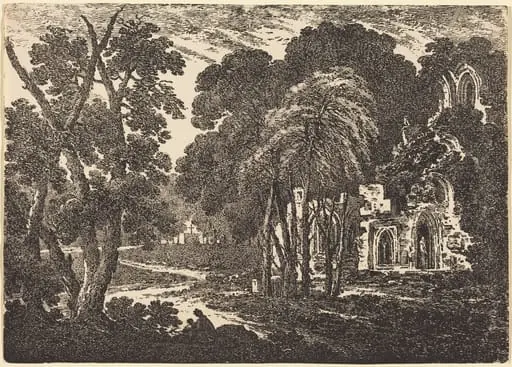
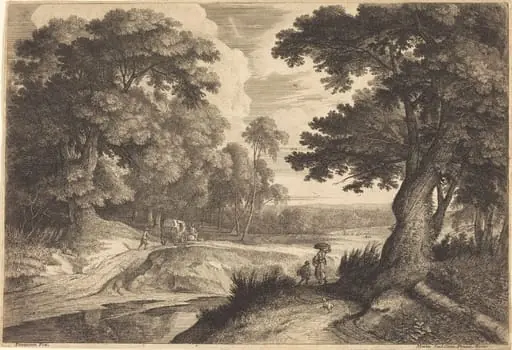
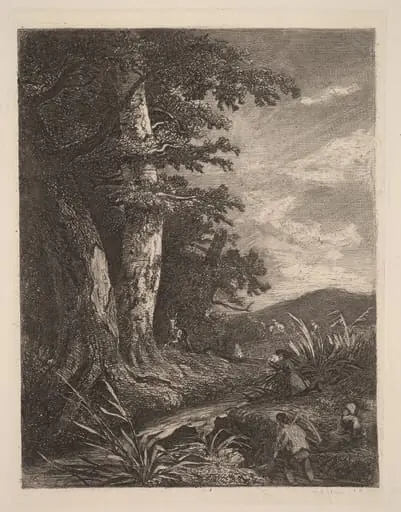
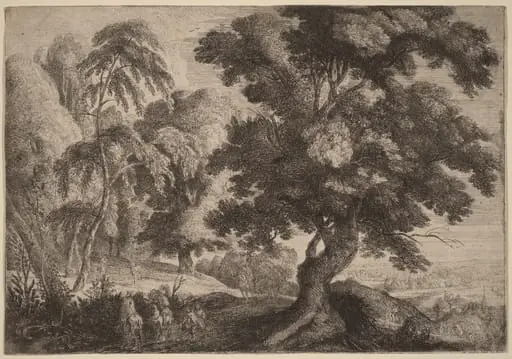
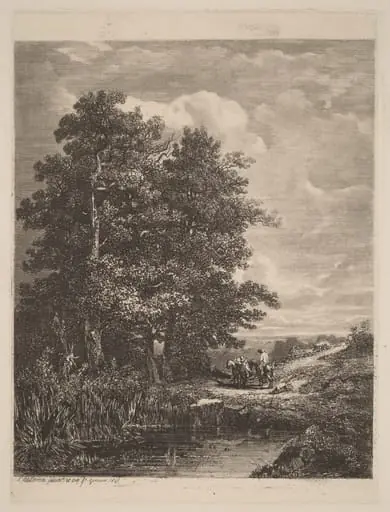
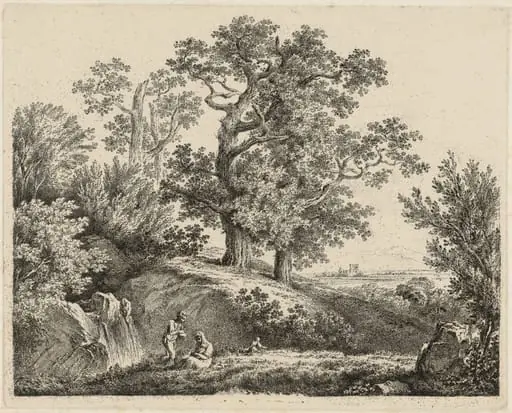
Created in 1802 by Richard Cooper II, this lithograph depicts a quiet natural scene dominated by a dense cluster of trees encircled by still water. Executed in pen and tusche on stone, the work belongs to the printmaking tradition of early 19th-century Britain. Its composition emphasizes solitude and the quiet presence of nature, with minimal human intervention visible beyond a distant structure.
Subject & Meaning
A faint building in the distance suggests human presence without intrusion, framing nature as both enduring and subtly observed.
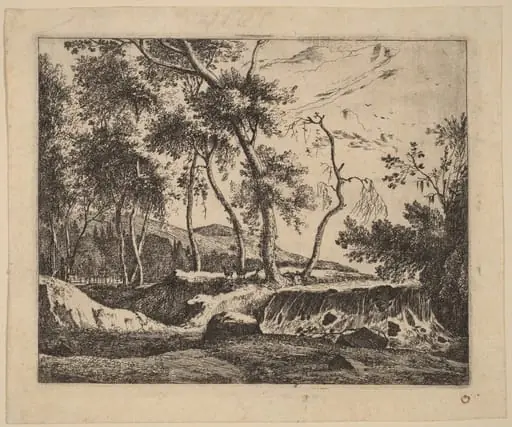
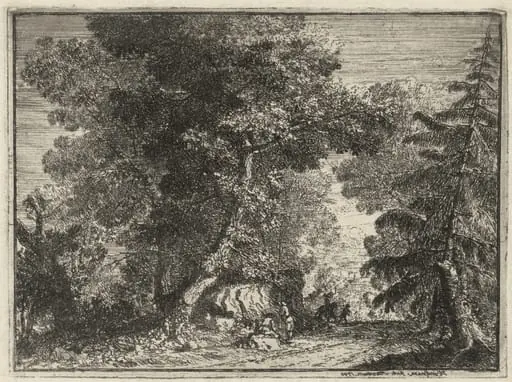
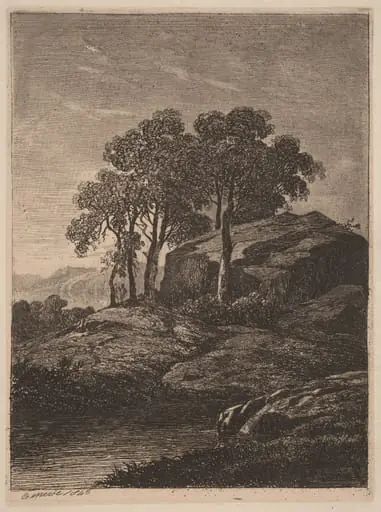
The subject centers on a group of trees, their intertwined branches forming a protective canopy over the water’s edge. The calm surface reflects the foliage, reinforcing a sense of stillness. A faint building in the distance suggests human presence without intrusion, framing nature as both enduring and subtly observed. The image conveys a contemplative mood, aligned with Romantic-era ideals of nature as a refuge from industrialization.
Technique & Style
Cooper employed pen-and-tusche lithography, using ink and greasy washes to build tonal depth and texture. The dense shadows in the tree trunks and foliage contrast with the soft, graded sky, creating a sense of volume without heavy outlines. The technique allowed for fluid, expressive marks that mimic natural forms, enhancing the organic feel of the scene while maintaining the precision characteristic of lithographic printing.
History & Provenance
The print was produced during Cooper’s active years as a topographical artist and printmaker in London. It likely originated as part of a series documenting rural landscapes, though no known exhibition or collection record predates the 19th century. Its survival in private and institutional archives suggests it was valued for its technical finesse rather than its commercial appeal.
Context
In the early 1800s, British artists increasingly turned to landscape as a subject worthy of serious study, moving beyond topographical utility toward emotional resonance. Cooper’s work reflects this shift, aligning with contemporaries who used print media to explore nature’s subtleties. Lithography, still emerging as an artistic medium, offered new possibilities for capturing atmospheric effects with relative ease.
Legacy
Though not widely exhibited in his lifetime, Cooper’s lithographs contributed to the development of landscape printmaking in Britain. His use of tusche to suggest texture and mood influenced later artists experimenting with tonal lithography. Today, the work is recognized as a quiet example of early 19th-century British print culture, valued for its restraint and sensitivity to natural form.
Own this work as a print
Artist & collection