Artwork
Ruined Abbey among Trees
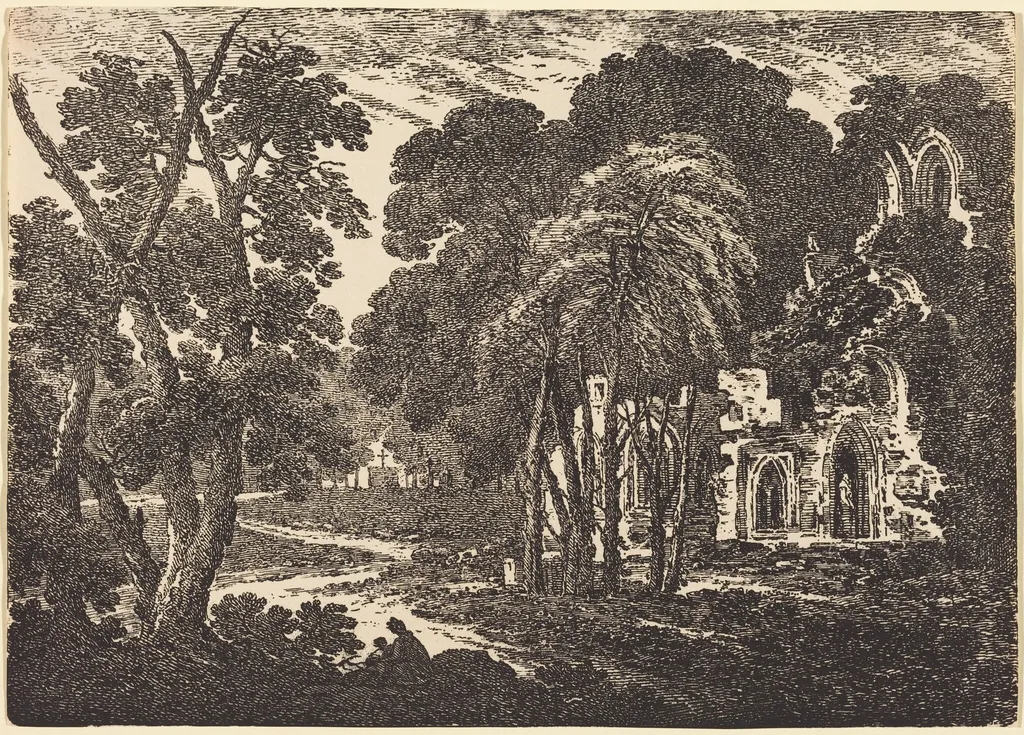
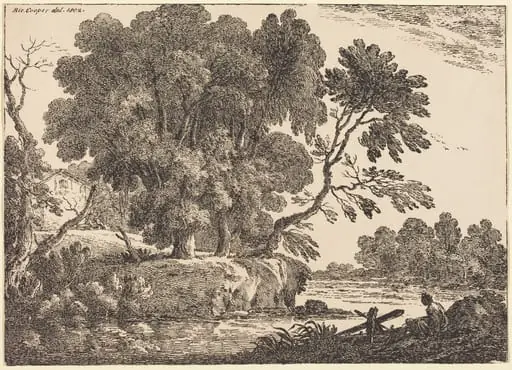
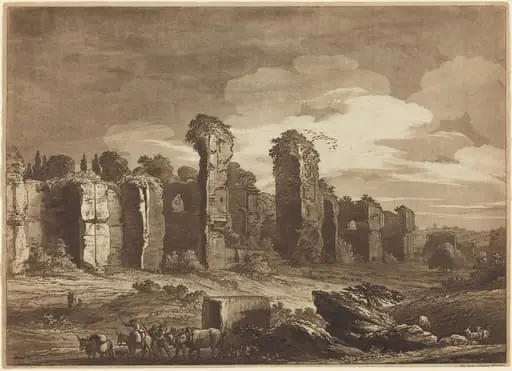
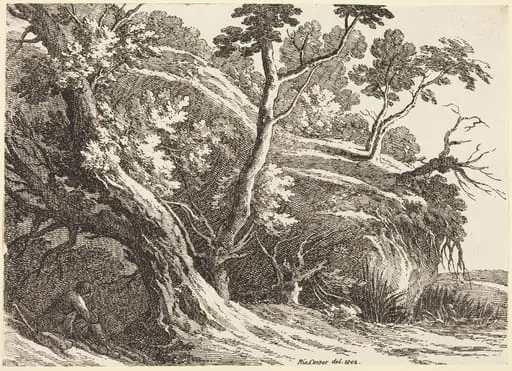
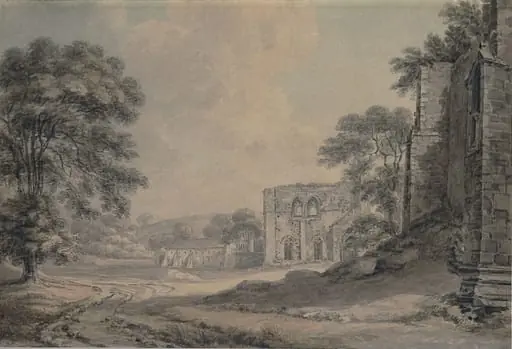
Ruined Abbey among Trees is an ink print by the Romanticist artist Richard Cooper II. It dates from 1802 and is held in the collection of the National Gallery of Art.
About this work
Overview
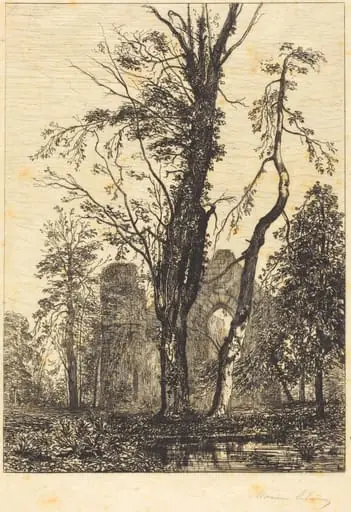
Ruined Abbey among Trees is a pen-and-tusche lithograph created by Richard Cooper II in 1802, depicting a somber, naturalized scene of abandonment and decay.
Subject & Meaning
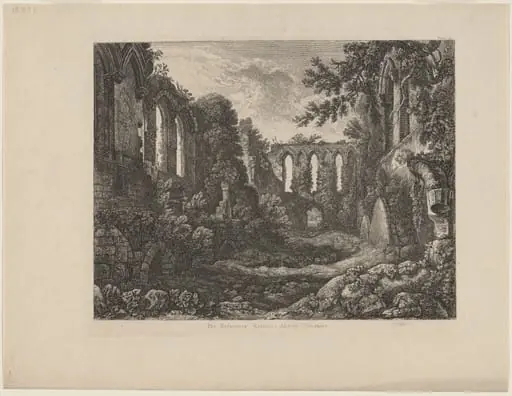
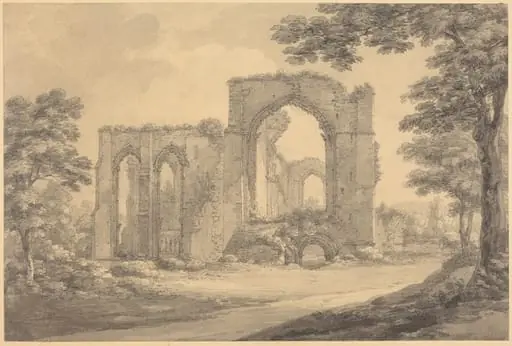
The print portrays a crumbling stone abbey, overgrown with a dense, wild forest. The structure's arched doorways and broken walls are partially obscured by shadows, conveying a sense of age and neglect.
Technique & Style
Cooper II employed fine, detailed lines to render the texture of both the foliage (with individual leaves) and the weathered stone (with visible cracks). This level of meticulous detail was characteristic of early 19th-century lithographic prints.
History & Provenance
Created in 1802, the work exemplifies the technical capabilities of lithography during its early development. The medium, invented in the late 18th century, allowed for the mass production of detailed, high-quality images like this one.
Context
The scene reflects the Romantic-era fascination with ruins and the sublime power of nature reclaiming human-made structures. The choice of subject matter aligns with contemporary artistic trends that emphasized emotion, decay, and the relationship between nature and human legacy.
Legacy
While specific details on the print's direct influence are not provided, works like Ruined Abbey among Trees contributed to the broader popularity of lithography in the 19th century, enabling wider dissemination of artistic themes that resonated with the Romantic movement.
Artist & collection