Artwork
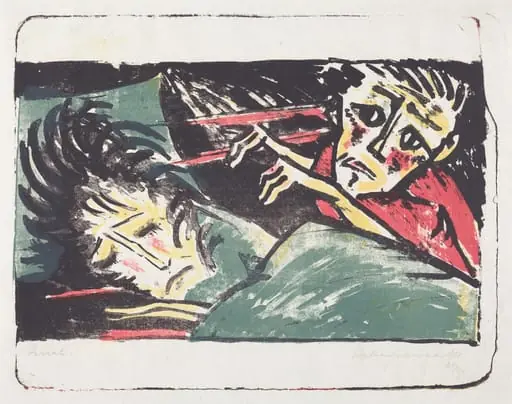
Qual (Torment)
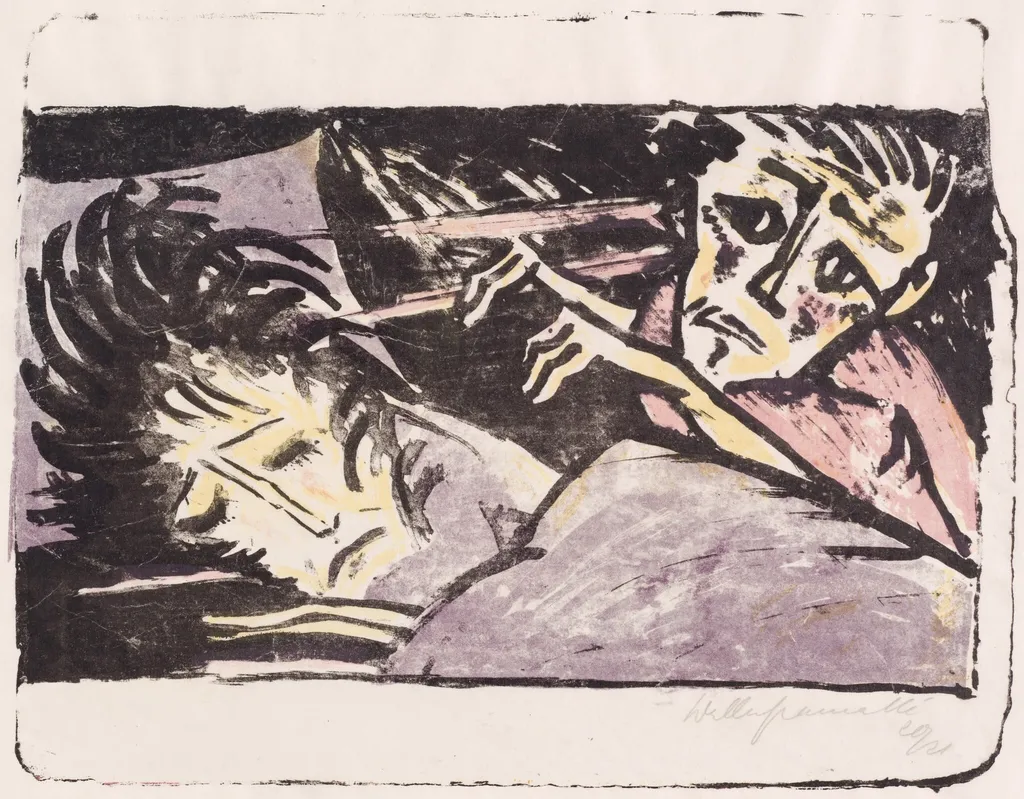
Qual (Torment) is an ink print by Walter Gramatté. It dates from 1920 and is held in the collection of the National Gallery of Art.
About this work
Overview
Created in 1920, *Qual (Torment)* is a color lithograph by German artist Walter Gramatté, executed in black, violet, pink, and yellow on delicate Japan paper.
Created in 1920, *Qual (Torment)* is a color lithograph by German artist Walter Gramatté, executed in black, violet, pink, and yellow on delicate Japan paper. The work emerges from a period of personal and societal upheaval, reflecting the artist’s physical suffering and the psychological aftermath of the First World War. Its muted palette and fragmented forms signal an inward focus, characteristic of Gramatté’s broader engagement with emotional and spiritual distress through printmaking.
Subject & Meaning
The image depicts two entwined figures reclining on a bed, their forms distorted and barely distinguishable from the surrounding shadows. The composition conveys a sense of physical exhaustion and psychological anguish, possibly alluding to illness, trauma, or existential despair. The lack of clear narrative or setting invites interpretation as an internal state rather than a literal scene, aligning with Gramatté’s interest in the unseen dimensions of human experience.
Technique & Style
Gramatté employed color lithography to layer translucent inks unevenly, creating a tactile, almost fractured surface. The jagged contours and irregular color registration suggest a hand-wrought process, where ink appears scraped or smudged rather than cleanly applied. This deliberate imperfection enhances the work’s emotional tension, merging expressionist intensity with a raw, almost unfinished aesthetic that resists polished representation.
History & Provenance
Gramatté produced this print during a time of frequent relocation—between Berlin, Hamburg, Hiddensee, and Barcelona—each place influencing his evolving vision. *Qual (Torment)* was made shortly after the war, amid his declining health, and reflects the isolation and introspection of those years. While its early ownership is undocumented, the work remains part of a small but significant body of prints that document his artistic response to personal and collective crisis.
Context
Emerging from the German Expressionist movement, Gramatté’s work diverged from overt political themes to explore inner turmoil through symbolic landscapes and bodily forms. In the postwar climate, where many artists sought renewal, he turned inward, using mystical and surreal elements to express suffering. *Qual (Torment)* aligns with contemporaneous efforts to visualize psychological states, yet its quiet intensity sets it apart from more dramatic Expressionist works.
Legacy
Though less widely known than his peers, Gramatté’s prints like *Qual (Torment)* are recognized for their intimate, haunting quality. His fusion of technical experimentation with emotional depth influenced later generations interested in the expressive potential of printmaking beyond traditional boundaries. The work endures as a quiet testament to the resilience of personal vision amid physical and historical collapse.
Artist & collection

Artist
Walter Gramatté (8 January 1897 in Berlin – 9 February 1929 in Hamburg) was a German expressionist painter who specialized in magic realism.

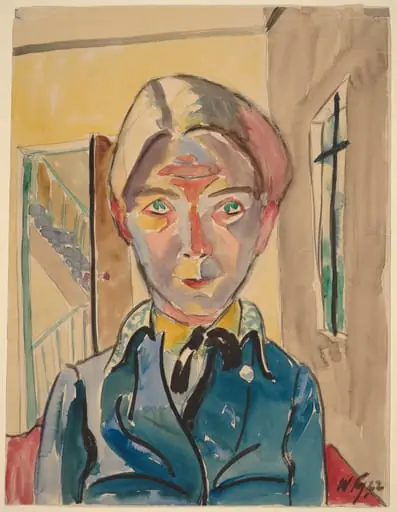 Self-Portrait in Front of Stairs (Selbst vor Treppe)
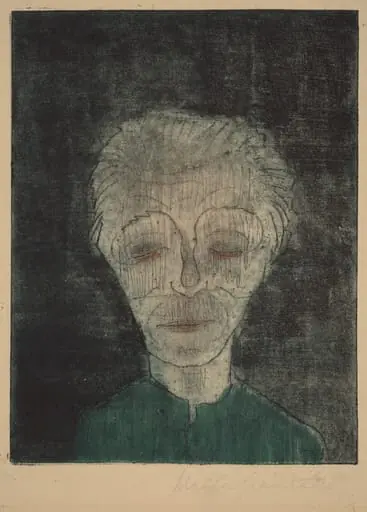 Tired Man (Self-Portrait)
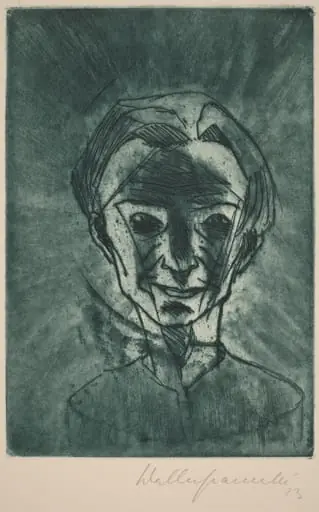 Smiling Head, Self-portrait (Lächelnder Kopf, Selbstporträt)
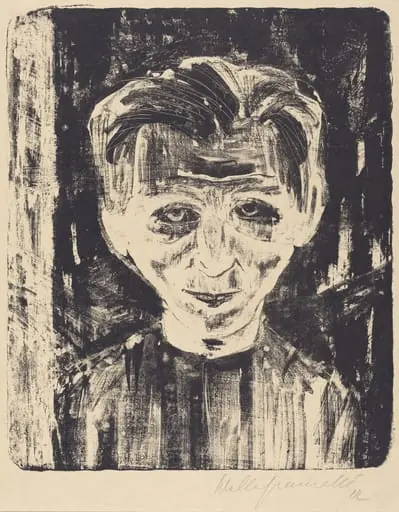 Self-Portrait
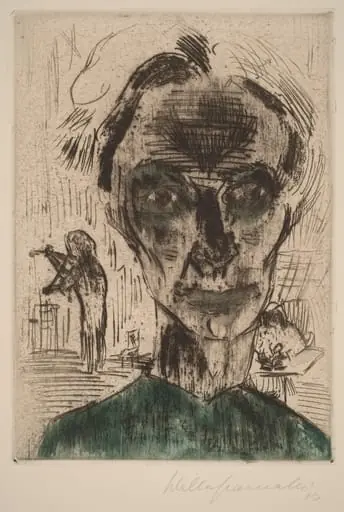 Man in a Room, Self-portrait
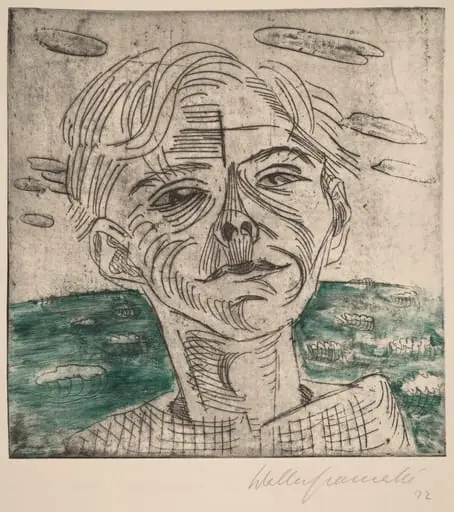 Man at the Sea, Self-portrait (Mann am Meer, Selbstporträt)
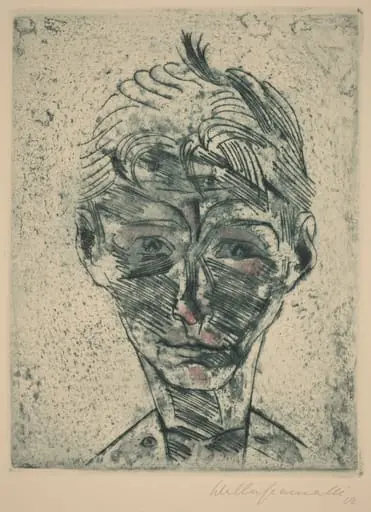 Bust of a Young Man, Self-portrait (Knabenkopf, Selbstporträt)
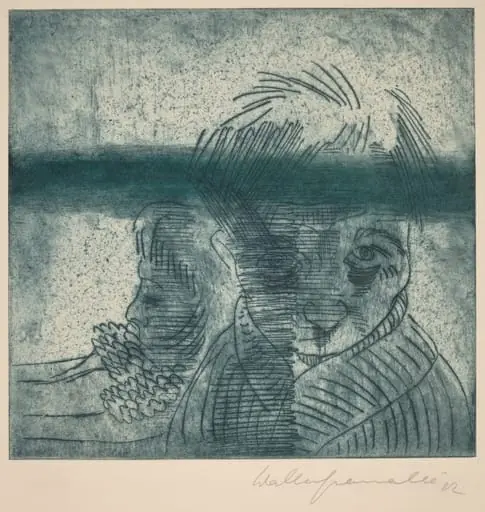 The Couple, Self-Portrait with Wife (Das Paar, Selbstporträt mit Frau)
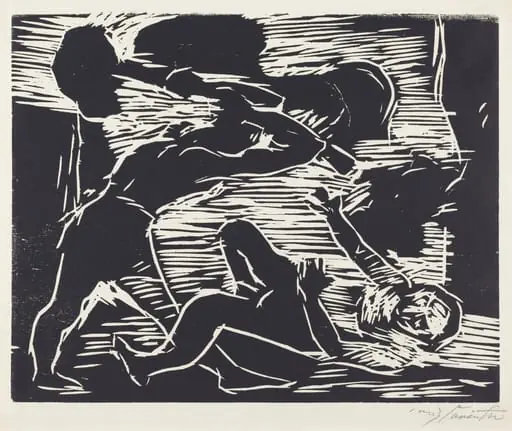 Brudermord (Cain and Abel)
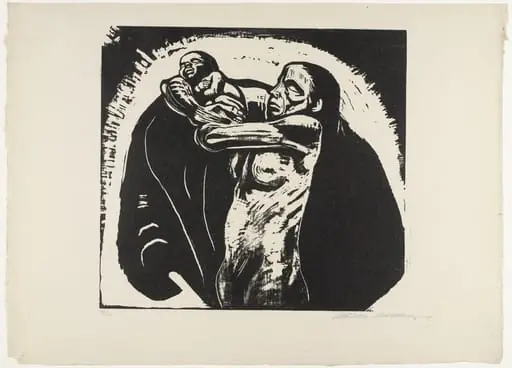 Untitled
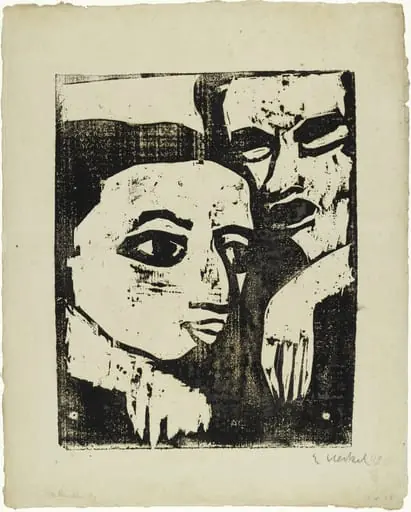 Untitled
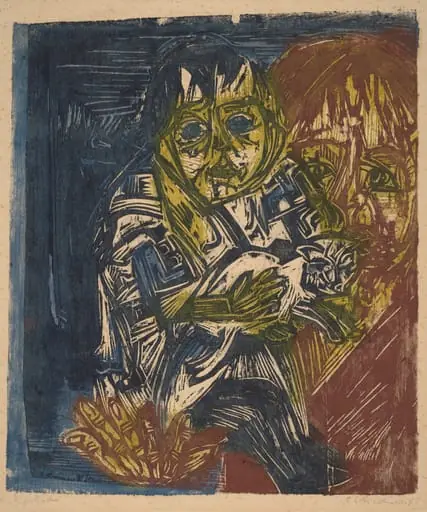 Young Woman with a Child (Mädchen mit Kind)
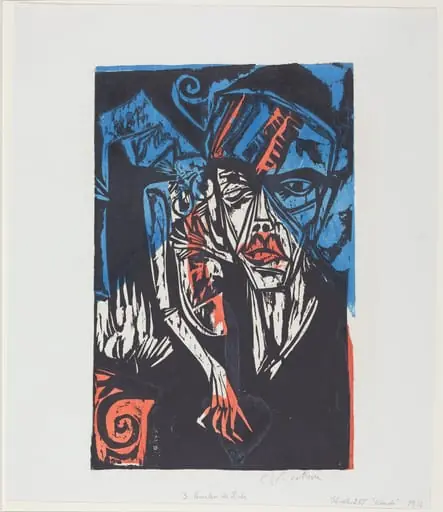 Peter Schlemihls wundersame Geschichte: Kämpfe. Qualen der Liebe (Peter Schlemihl's Wondrous Story: Battles. The Agonies of Love)
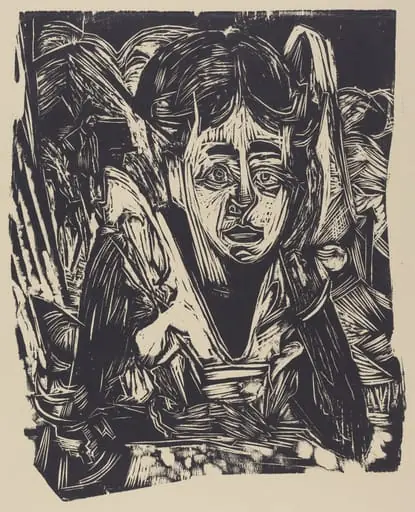 Girl Dreaming
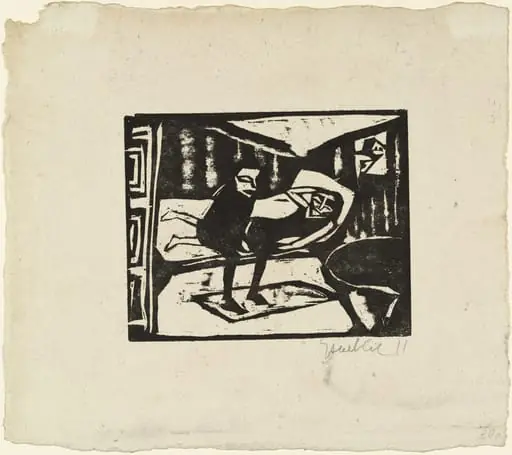 Untitled
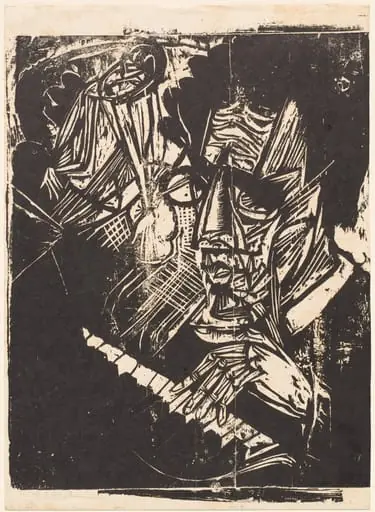 Composer Klemperer
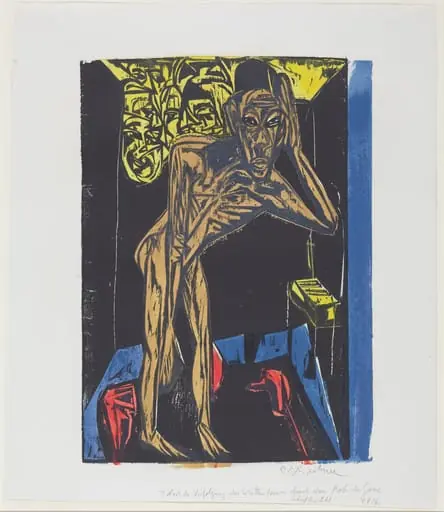 Peter Schlemihls wundersame Geschichte: Schlemihl in der Einsamkeit des Zimmers (Peter Schlemihl's Wondrous Story: Schlemihl in the Solitude of His Room)
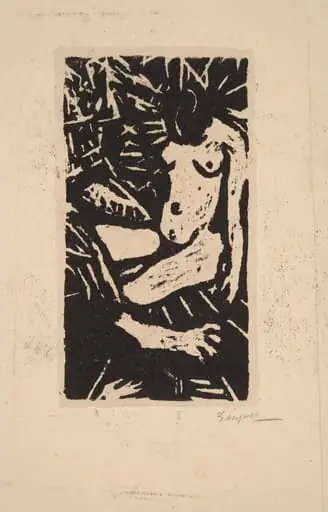 Seated Nude
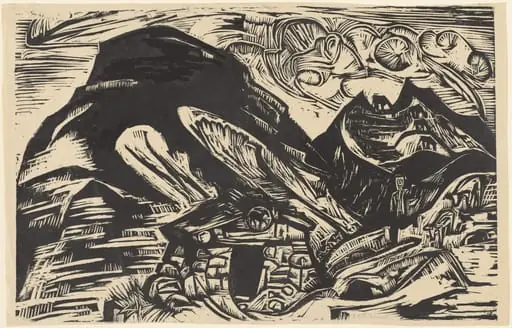 Mountains with a Mountain Hut
 Qual (Torment)