Artwork
Untitled
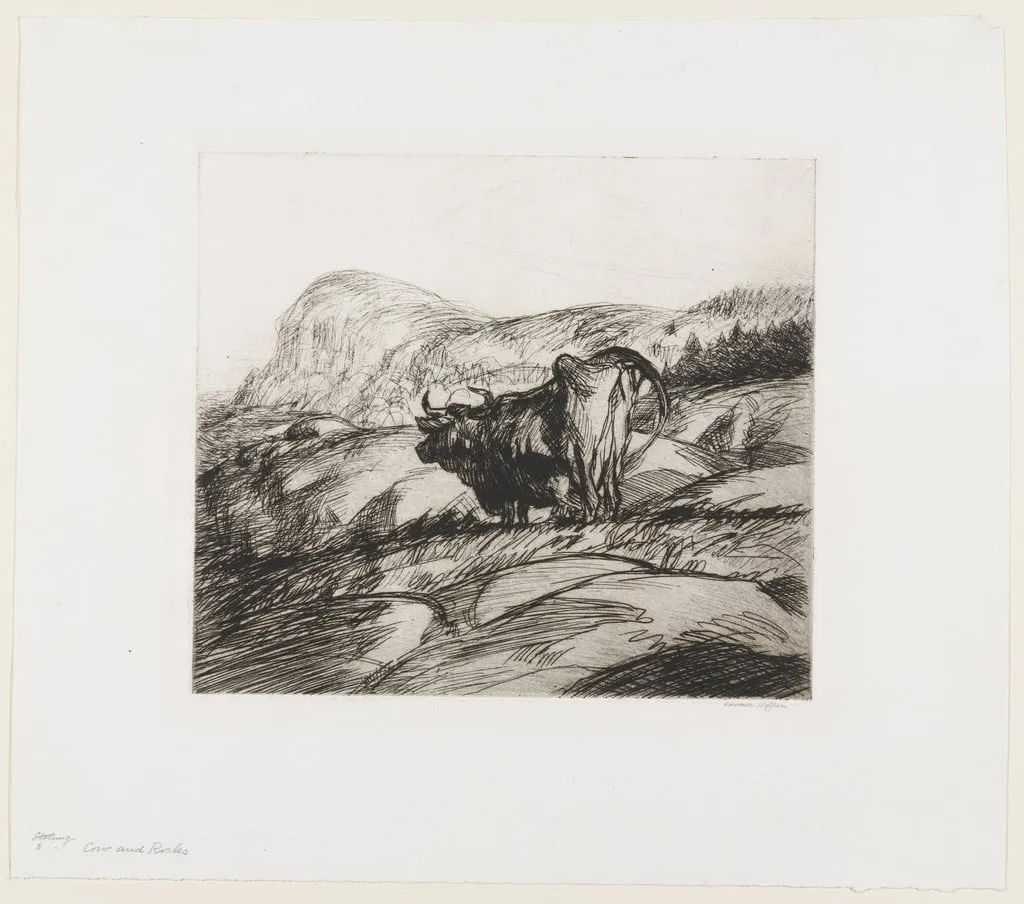
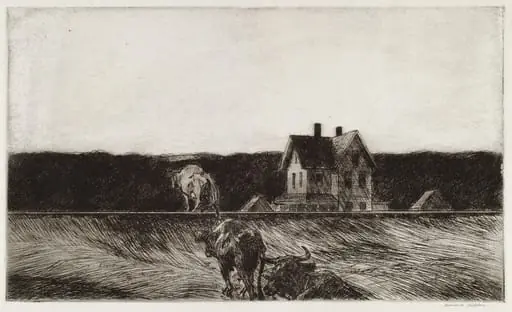
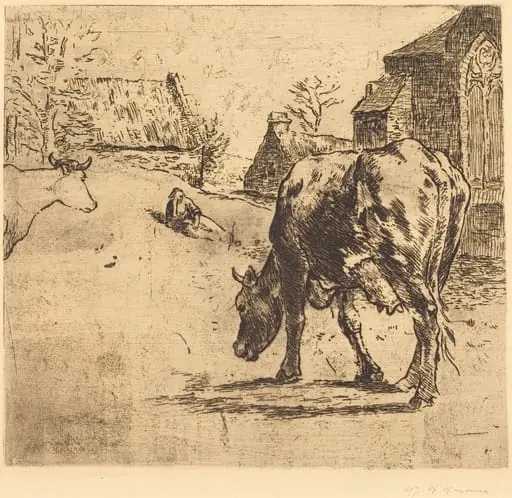
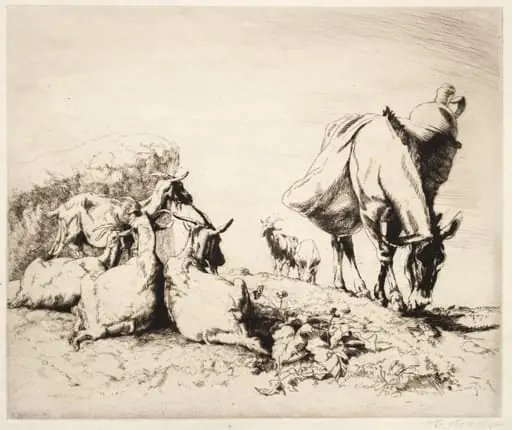
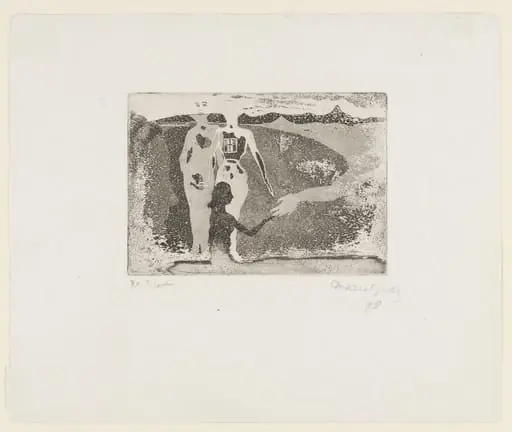
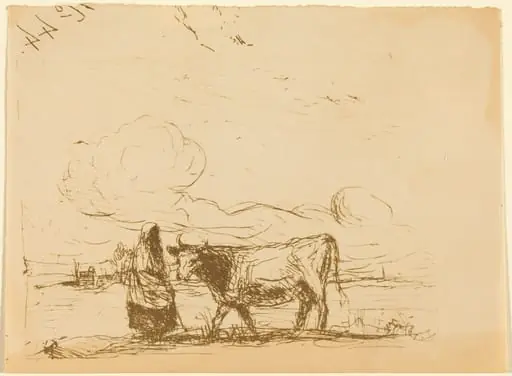
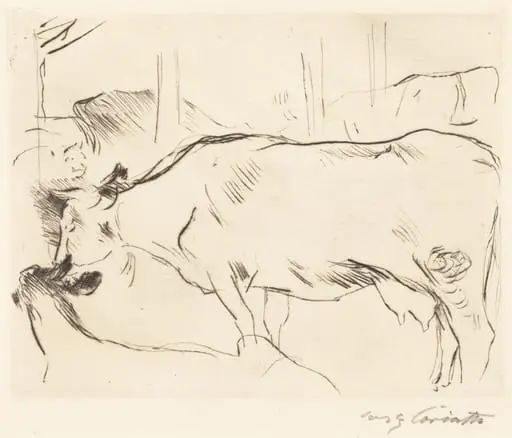
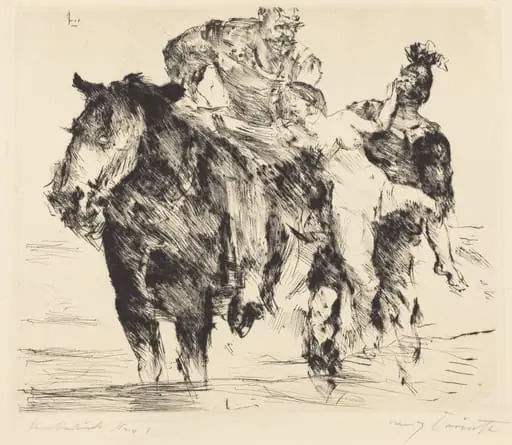
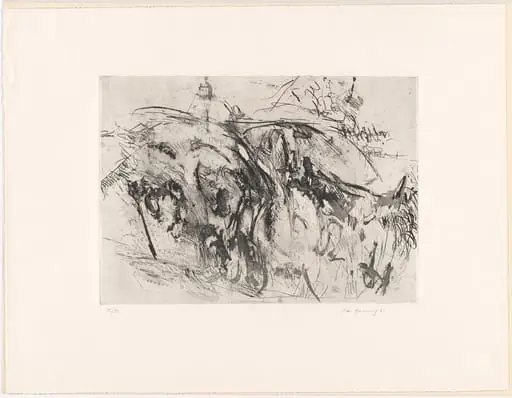
Untitled is an ink print by Edward Hopper. It dates from 1920 and is held in the collection of the Museum of Modern Art.
About this work
Overview
Its simplicity and focus on natural elements reflect Hopper’s interest in the understated rhythms of American life.
Edward Hopper produced this etching in 1920, early in his career as a printmaker. Though better known for his paintings, Hopper dedicated significant attention to etching during this period, using the medium to explore rural scenes and quiet moments. The work depicts two cows on a windswept hillside, rendered in stark black-and-white tones. Its simplicity and focus on natural elements reflect Hopper’s interest in the understated rhythms of American life.
Subject & Meaning
The two cows, one lowered in stillness and the other turned sideways, inhabit a rugged, untended landscape. There is no human presence, no narrative beyond their quiet coexistence. The scene evokes isolation and endurance, themes that recur in Hopper’s later work. The animals are not idealized; their forms are grounded, almost weary, suggesting a relationship with the land that is unromanticized and deeply observed.
Technique & Style
Hopper employed etching to achieve a tactile, linear quality, using fine, scratchy incisions to suggest wind-tossed grass and rocky terrain. The contrast between dense shadows and bare plate creates depth without gradation. His hand is evident in the urgency of the lines—neither polished nor refined, but direct and responsive. This technique aligns with his realist ethos, prioritizing observation over embellishment.
History & Provenance
The etching entered the collection of The Museum of Modern Art, where it remains part of its holdings of early 20th-century American prints. It was made during a period when Hopper was actively exhibiting etchings and building his reputation beyond painting. Though not widely published or reproduced at the time, it represents a key phase in his artistic development before he turned fully to oil painting.
Context
In 1920, Hopper had recently completed training under William Merritt Chase and Robert Henri, absorbing their emphasis on everyday subjects and expressive brushwork. While his peers often focused on urban energy, Hopper turned to rural solitude, finding in pastoral scenes a quiet tension between presence and absence. This etching aligns with a broader interest among American artists in capturing the emotional weight of the land.
Legacy
Though less celebrated than his paintings, Hopper’s etchings like this one reveal the foundations of his visual language: economy of form, atmospheric stillness, and a sensitivity to light and texture. This work contributes to understanding his evolution as an artist who found meaning in the unremarkable, and whose prints helped shape the American realist tradition in printmaking.
Artist & collection
Artist
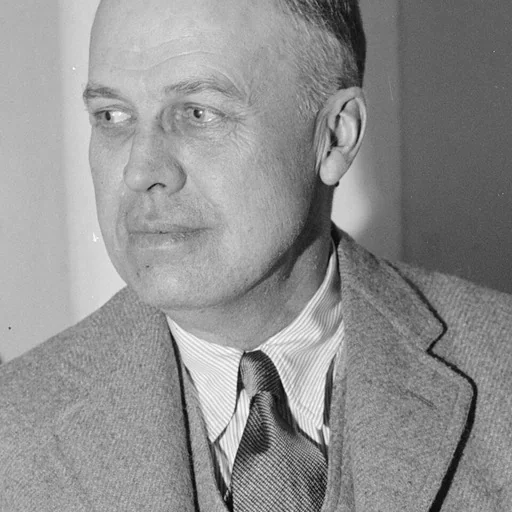
Edward Hopper (July 22, 1882 – May 15, 1967) was an American realist painter and printmaker.