Artwork
Weidende Schafe (Grazing Sheep)
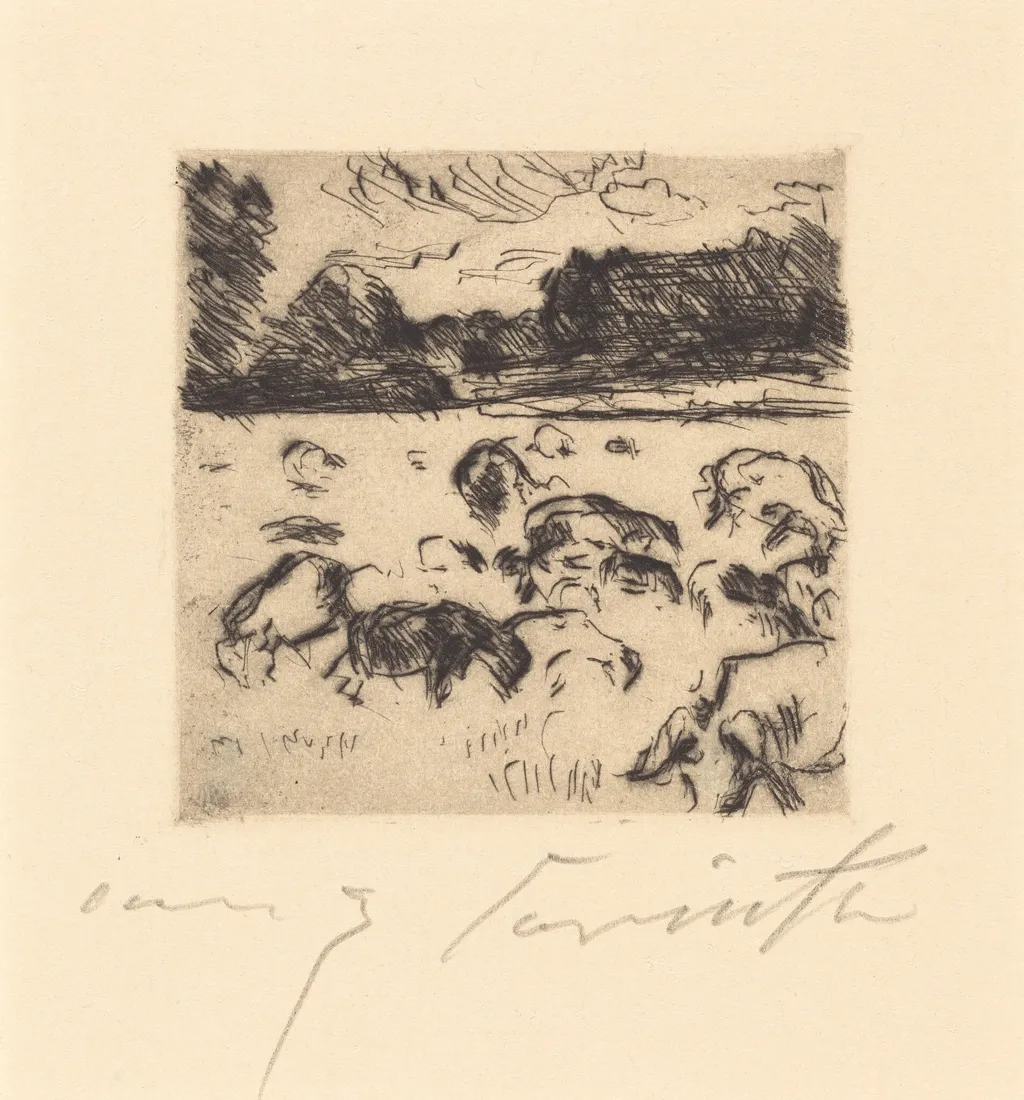
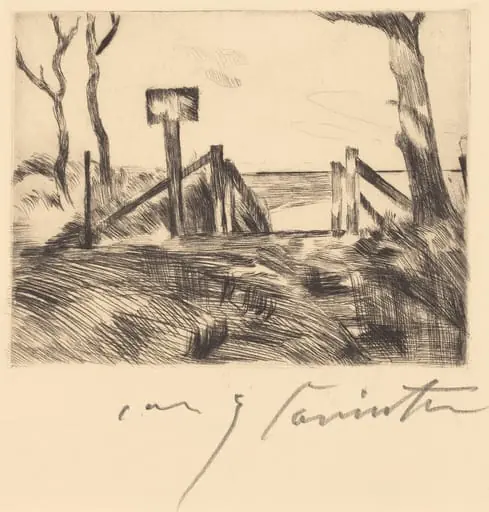
Weidende Schafe (Grazing Sheep) is an ink print by Lovis Corinth. It dates from 1916 and is held in the collection of the National Gallery of Art.
About this work
Overview
Lovis Corinth produced *Weidende Schafe* in 1916 as a drypoint print on wove paper. The work reflects his transition toward a more expressive mode following a stroke in 1911, though it avoids the intensity of his later color-driven pieces. Instead, it presents a subdued rural scene, rendered with minimal yet deliberate marks that emphasize atmosphere over detail.
Subject & Meaning
The print depicts a quiet pastoral moment: a small herd of sheep grazing on a gentle slope beneath a muted, overcast sky. A dark, indistinct form in the distance hints at a structure or stand of trees, grounding the scene without distracting from its stillness. The absence of human figures reinforces a sense of solitude, suggesting an observation of nature unmediated by activity.
Technique & Style
Corinth employed drypoint, scratching directly into a metal plate to create lines that hold ink and produce a soft, fuzzy edge when printed. The resulting texture is immediate and tactile, echoing the spontaneity of a sketch. His brushwork-like lines convey movement and form with economy, balancing control with a sense of haste that lends the image its intimate, observational quality.
History & Provenance
Created during World War I, the print emerged from a period of personal and artistic transformation for Corinth.
Created during World War I, the print emerged from a period of personal and artistic transformation for Corinth. After his 1911 stroke, he increasingly turned to intimate subjects and experimental printmaking. *Weidende Schafe* belongs to a series of landscapes and animal studies from this time, made in his studio in Berlin and later circulated among collectors and fellow artists in the German art world.
Context
Corinth had been associated with the Berlin Secession, a group challenging academic norms, and by 1916 was moving beyond Impressionist influences toward Expressionism. While many contemporaries focused on urban tension or psychological turmoil, this work reflects a retreat into quiet, natural motifs—perhaps a response to wartime anxiety or a personal search for calm amid upheaval.
Legacy
Though less celebrated than his portraits or biblical scenes, *Weidende Schafe* exemplifies Corinth’s mastery of printmaking and his ability to convey emotion through restraint. It remains a key example of how German artists used intimate subjects to explore inner states during a turbulent era, influencing later generations interested in the expressive potential of line and texture.
Artist & collection

Artist
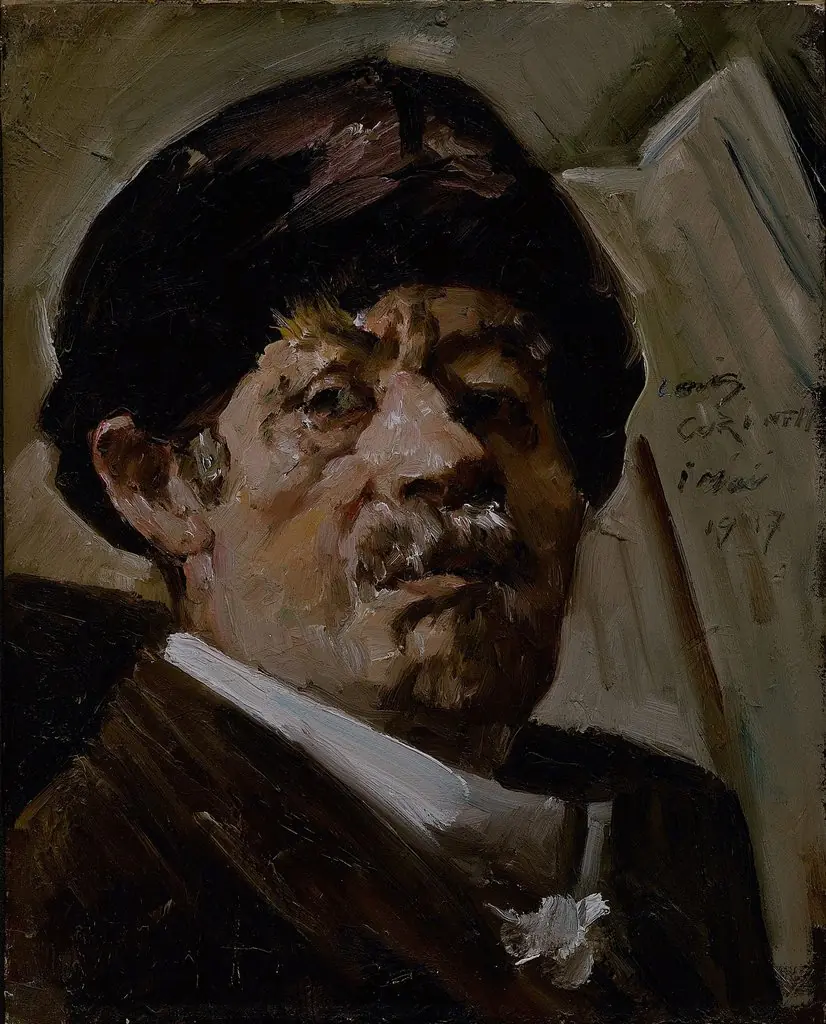
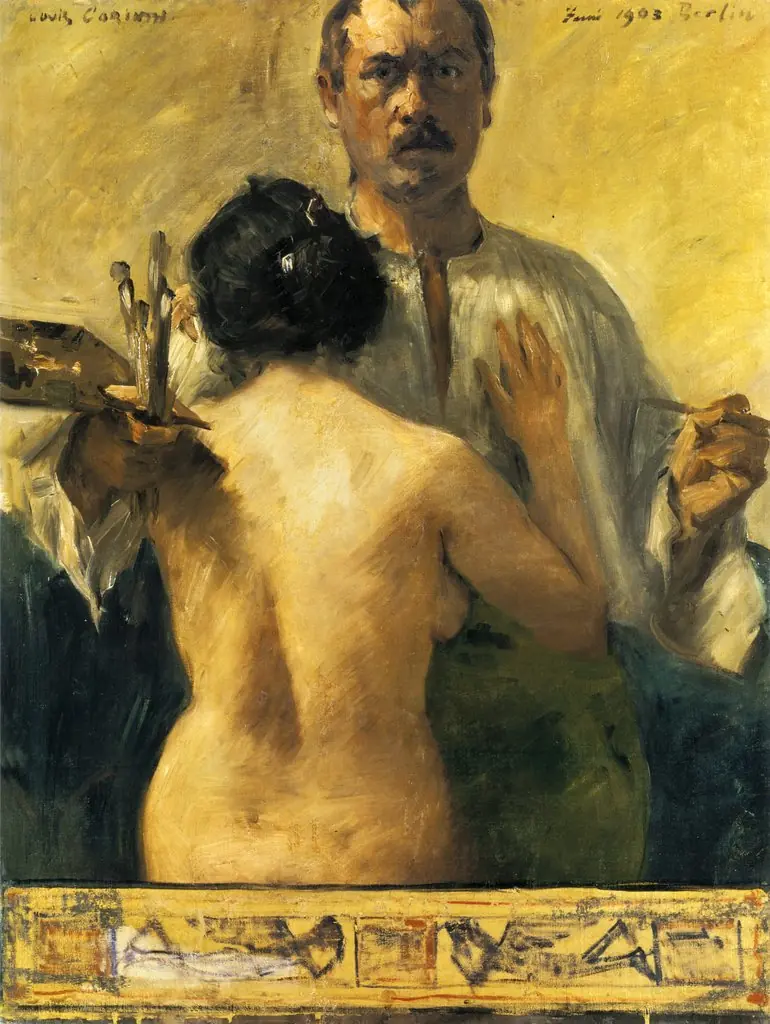
Lovis Corinth was a German artist and writer whose mature work as a painter and printmaker realized a synthesis of impressionism and expressionism.

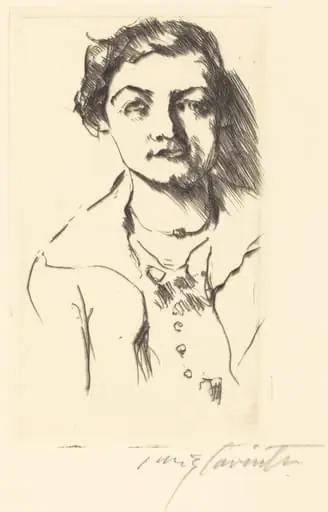
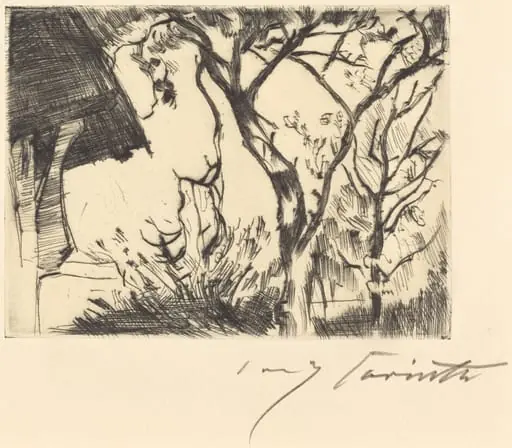 Hausecke (Corner of a House)
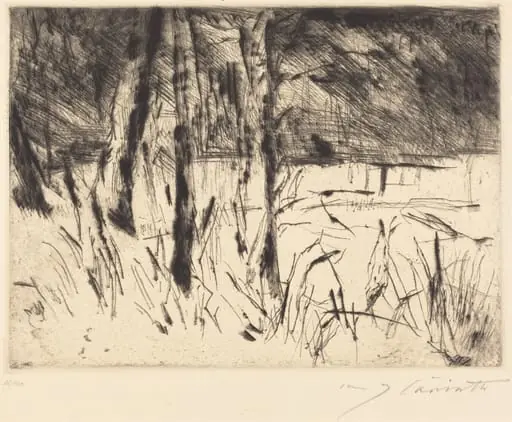 Tiergarten (Zoological Garden)
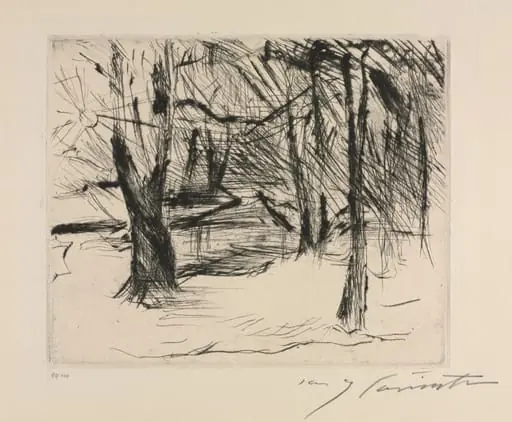 Der Tiergarten: Trees with Sun
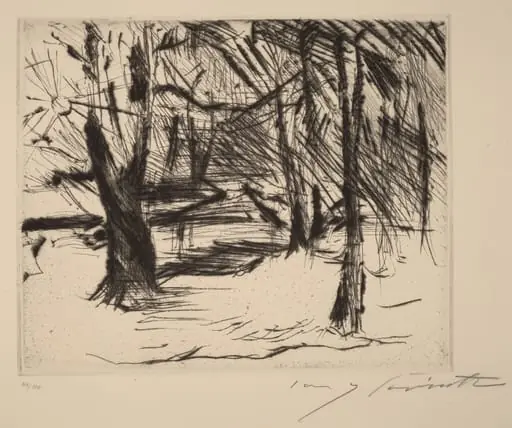 Bäume mit Sonne (Trees in the Sun)
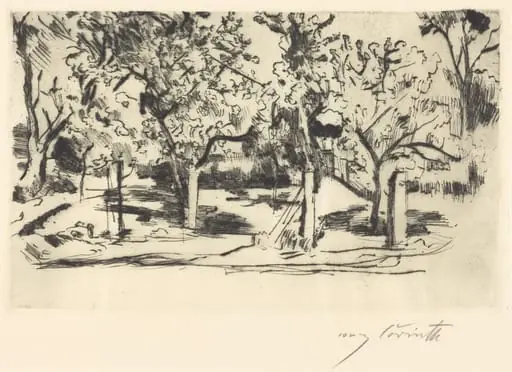 Obstgarten (Orchard)
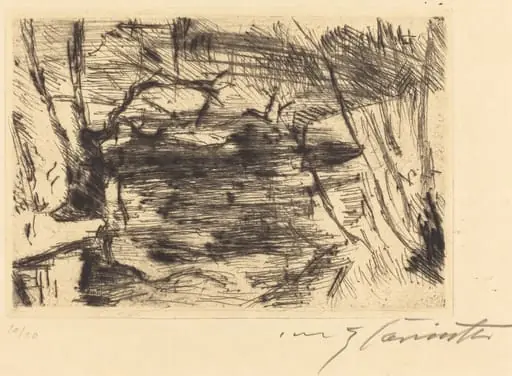 Der Neue See (The New Lake)
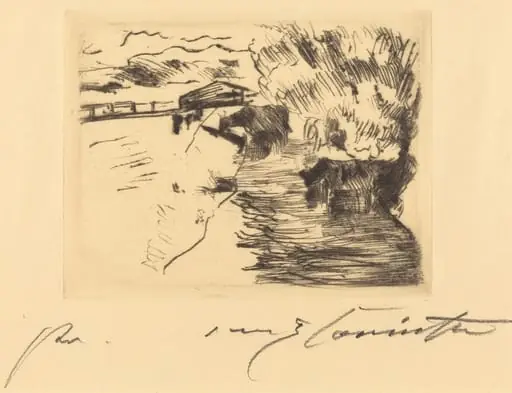 Am see (On a Lake)
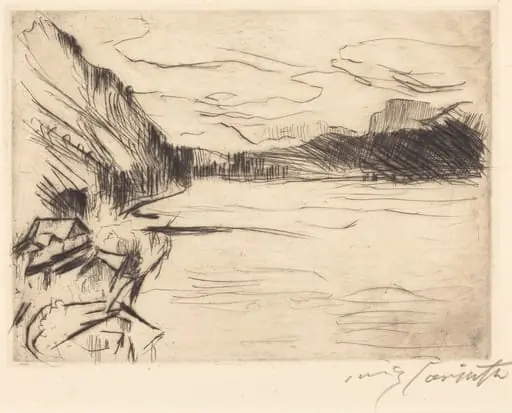 Am Walchensee (On Walchen Lake)
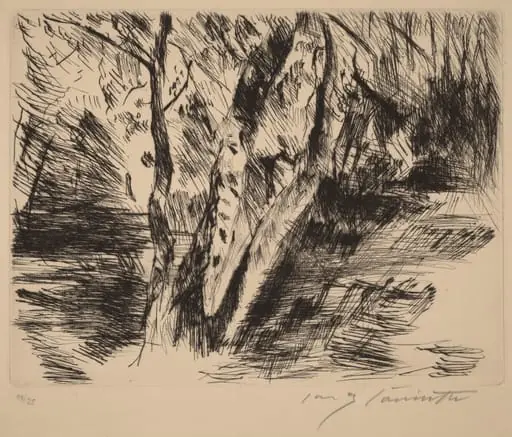 Birkenstämme im Tiergarten (Birch Trees in the Tiergarten)
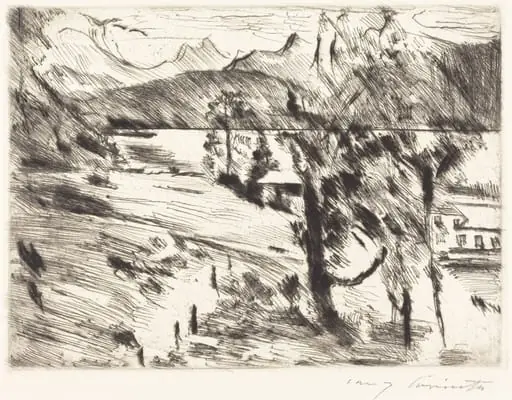 Walchensee landschaft (Walchensee Landscape)
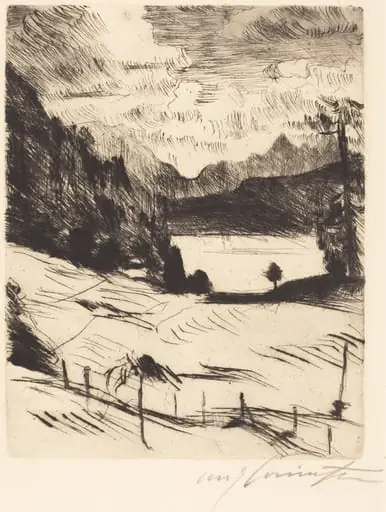 Der Walchensee (The Walchensee)
 Brücke mit Tafel (Bridge with Sign)