Artwork
Wilhelm Trübner
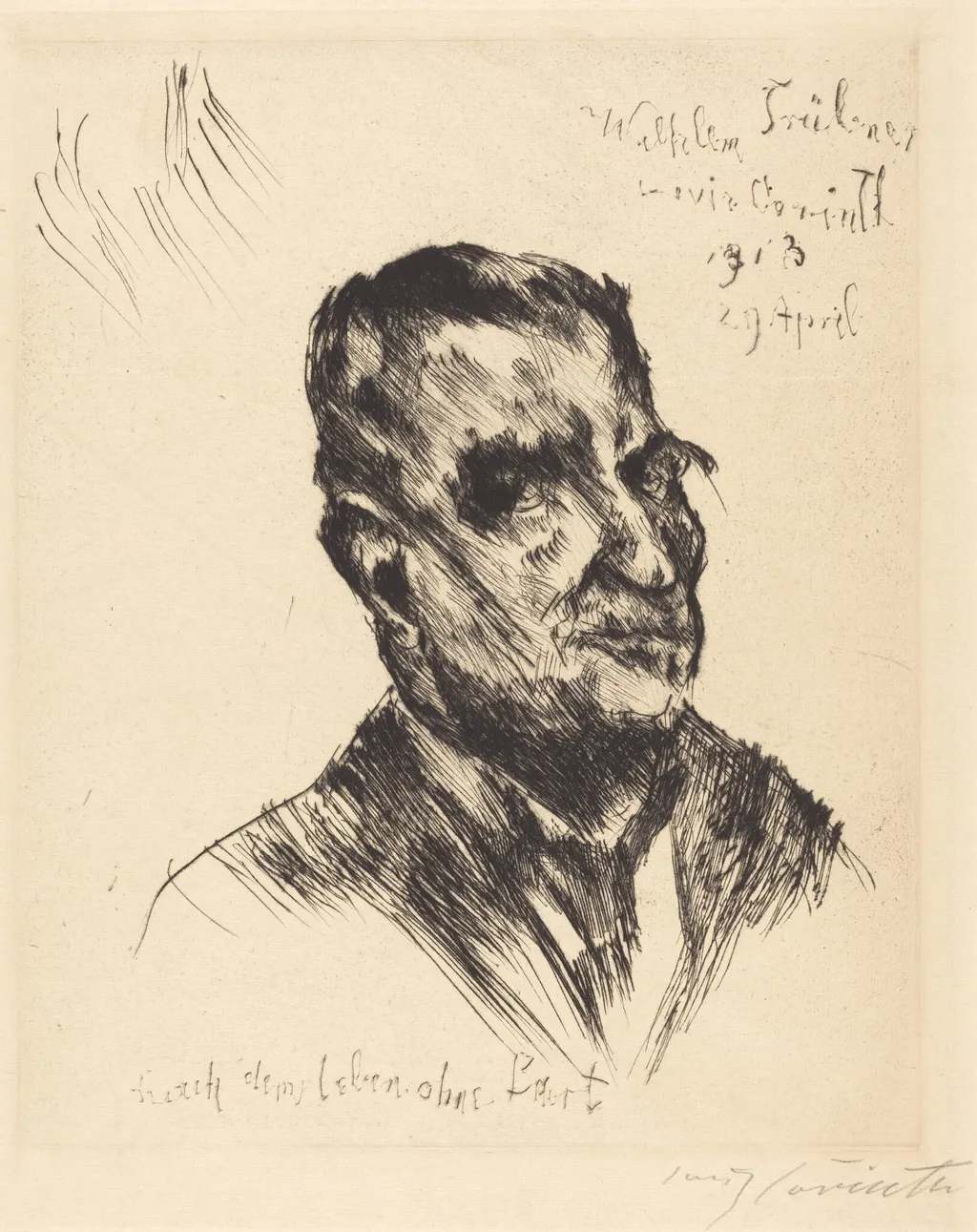
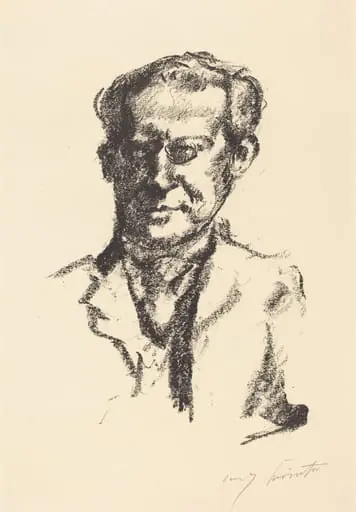
Wilhelm Trübner is an ink print by Lovis Corinth. It dates from 1913 and is held in the collection of the National Gallery of Art.
About this work
The name *Wilhelm Trübner* is written in the top corner, along with the date *1913* and a few German words.
This sketch shows a man’s face in profile, drawn in loose, scratchy lines. The artist used only black ink on light paper, leaving the background bare. His glasses, collar, and hair are suggested with quick strokes—no details are finished.
The name *Wilhelm Trübner* is written in the top corner, along with the date *1913* and a few German words. The sketch feels fast, like it was made in one sitting.
If you like this style, check out Corinth, Lovis.
Overview
Lovis Corinth’s 1913 drypoint presents a profile portrait of Wilhelm Trübner rendered in stark black on wove paper. The image consists of rapid, scratchy lines that outline the sitter’s glasses, hair, and collar, leaving the surrounding space empty. The artist’s signature and date appear in the upper margin, indicating a single‑session execution.
Subject & Meaning
The work depicts Wilhelm Trübner, a German realist painter whose naturalistic approach initially contrasted with Corinth’s early impressionist leanings. By 1913, Corinth’s view of Trübner had shifted, and the portrait reflects a gesture of acknowledgment toward a contemporary whose art once stood in opposition to his own evolving style.
Technique & Style
Executed as a drypoint, the print relies on incised lines that retain a rough, unrefined quality, characteristic of Corinth’s post‑stroke period. The exclusive use of black ink against a light paper background emphasizes contour over detail, while the swift, unfinished strokes convey immediacy and a move toward expressionist sensibilities.
History & Provenance
Created two years after Corinth suffered a debilitating stroke in 1911, the piece marks a transitional phase in his printmaking. While specific ownership records are sparse, the work remains associated with Corinth’s later oeuvre, illustrating his adaptation to physical limitations through altered artistic methods.
Context
Corinth, trained in Paris and Munich, became a leading figure in the Berlin Secession, a group advocating modernist reforms. The portrait of Trübner emerges amid this milieu, reflecting the broader dialogue between realism and emerging expressionist tendencies within early twentieth‑century German art.
Artist & collection

Artist
Lovis Corinth was a German artist and writer whose mature work as a painter and printmaker realized a synthesis of impressionism and expressionism.

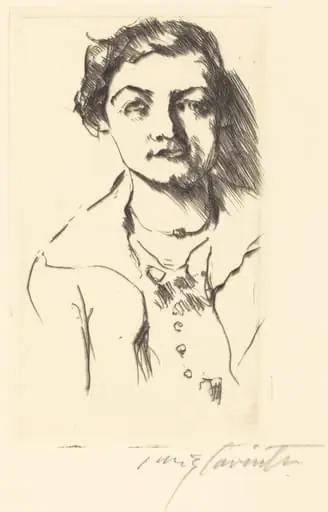
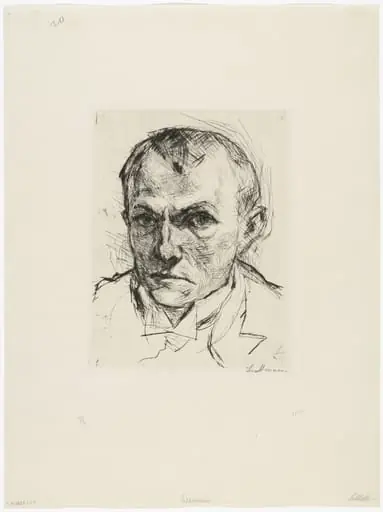 Untitled
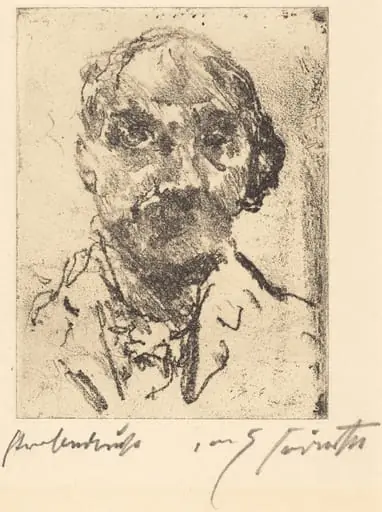 Selbstbildnis (Self-Portrait)
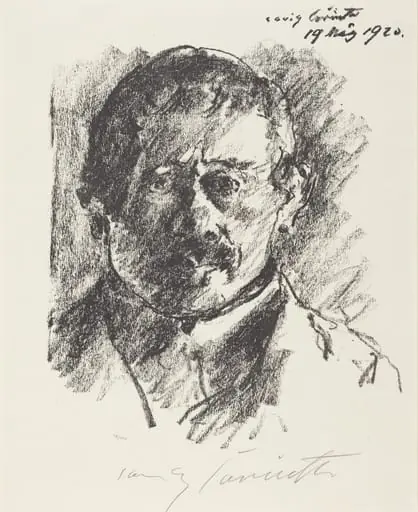 Selbstbildnis (Self-Portrait)
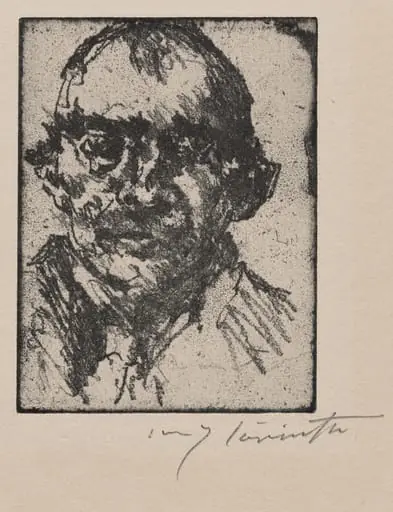 Self-Portrait
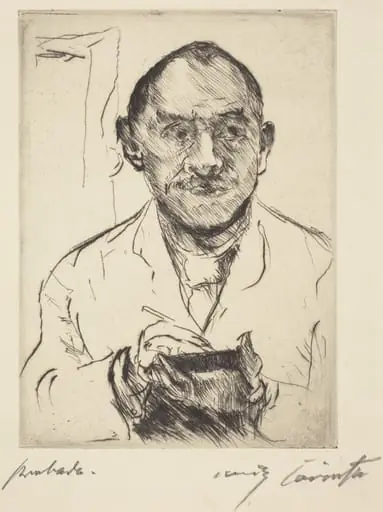 Selbstbildnis (Self-Portrait)
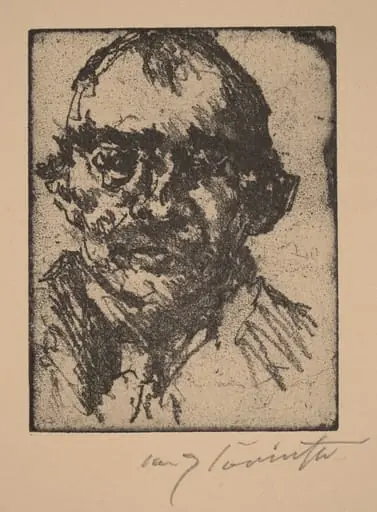 Selbstbildnis (Self-Portrait)
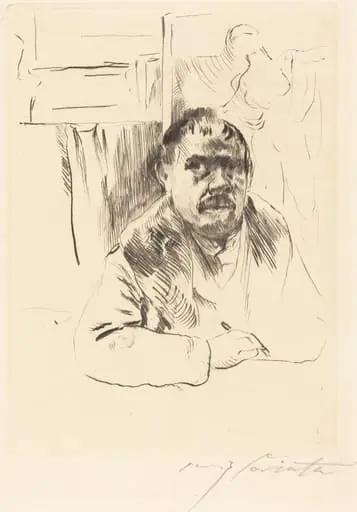 Selbstbildnis im Pelz (Self-Portrait in a Fur Coat)
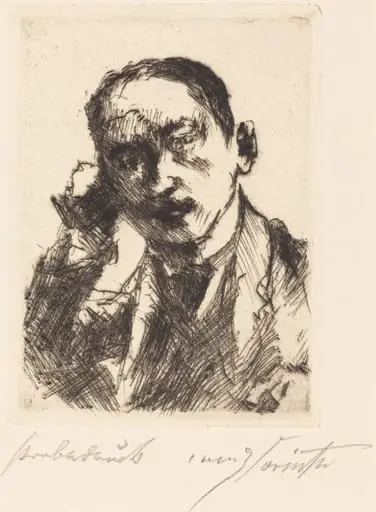 Bildnis K.S. (Portrait of K.S.)
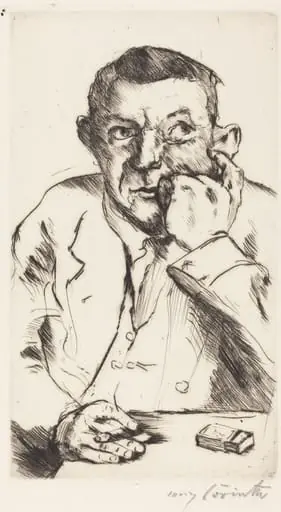 Männliches Bildnis mit Aufgestütztem Arm (Portrait of a Man Smoking)
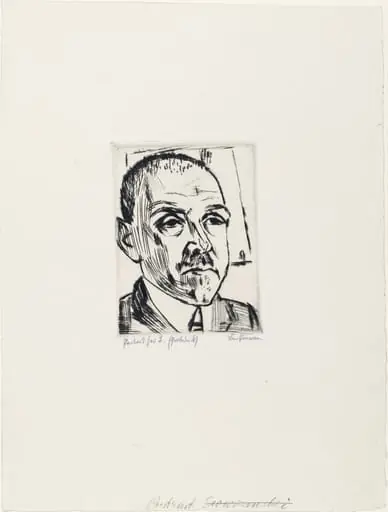 Untitled
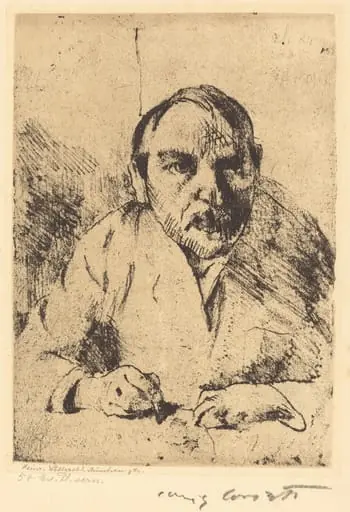 Selbstbildnis (Self-Portrait)
 Arno Holz