Artwork
The Mocking of Christ and Christ Before Caiaphas
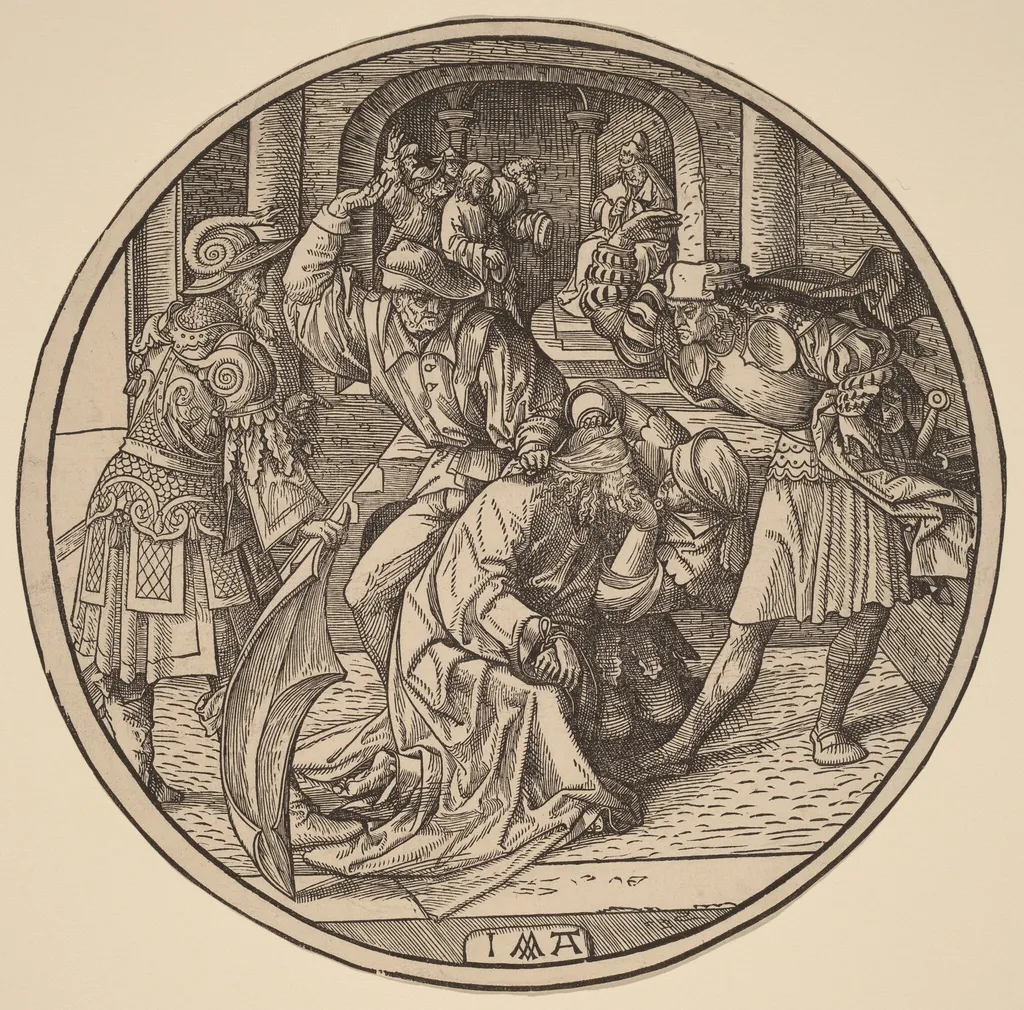
The Mocking of Christ and Christ Before Caiaphas is an ink print by the Renaissance artist Jacob Cornelisz van Oostsanen. It dates from 1513 and is held in the collection of the National Gallery of Art.
About this work
Overview
Created in 1513 by Jacob Cornelisz van Oostsanen, this woodcut on laid paper presents two episodes from the Passion of Christ within a single composition.
Created in 1513 by Jacob Cornelisz van Oostsanen, this woodcut on laid paper presents two episodes from the Passion of Christ within a single composition. As a leading printmaker in early 16th-century Amsterdam, van Oostsanen employed the woodcut medium to convey complex biblical narratives with precision. The work reflects the growing demand for religious imagery in the Northern Netherlands, where printmaking served both devotional and educational purposes.
Subject & Meaning
The left panel depicts Christ being mocked by soldiers, who pull his hair and taunt him while he wears a crown of thorns. The right shows Christ standing before Caiaphas, the high priest, who holds a scroll as witnesses gesture in judgment. Together, the scenes emphasize Christ’s suffering and the injustice of his trial. The inclusion of onlookers and hidden faces underscores the theme of public complicity in his condemnation.
Technique & Style
Van Oostsanen used sharp, incised lines and dense hatching to generate contrast and movement. The background is filled with swirling decorative motifs and tiny, peering faces behind curtains, enhancing the sense of crowded chaos. Ornate borders of spirals and foliage frame the narrative, blending decorative elegance with emotional intensity. The woodcut’s clarity and detail reflect the artist’s mastery of the medium’s graphic possibilities.
History & Provenance
Produced during Amsterdam’s rise as a hub of artistic production, this print was part of a broader wave of religious imagery circulated across Northern Europe. Van Oostsanen’s workshop likely issued multiple impressions, though surviving examples are rare. The work’s survival in collections today attests to its early reception among collectors and religious communities who valued its narrative clarity and devotional power.
Context
In the early 1500s, woodcuts were widely used to disseminate biblical stories to a literate but not necessarily elite public. Van Oostsanen’s work aligns with the Northern Netherlandish tradition of detailed, emotionally charged religious prints. His compositions often combined multiple scenes, a format suited to the devotional practices of the time, where visual storytelling reinforced theological teachings.
Legacy
Van Oostsanen’s prints, including this one, influenced later Northern printmakers through their narrative density and graphic precision. Though his name faded after his death, his technical approach remained a reference point for artists working in woodcut well into the 16th century. This work stands as an example of how printmaking helped shape religious visual culture before the Reformation transformed its role.
Artist & collection
Artist
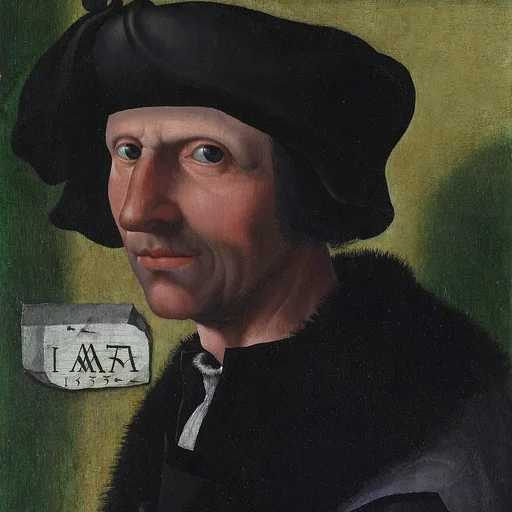
Jacob Cornelisz van Oostsanen (before 1470 – 1533) was a Northern Netherlandish designer of woodcuts and painter.

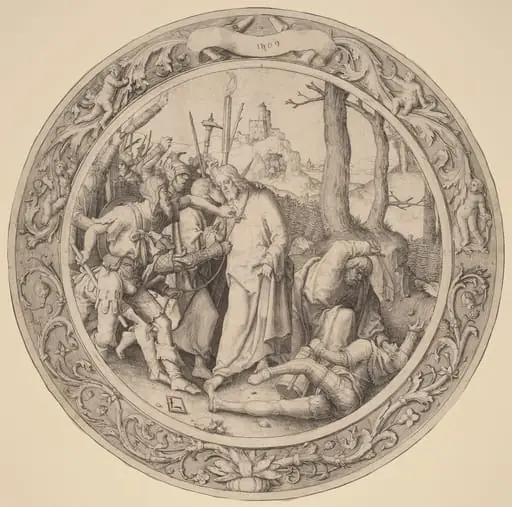
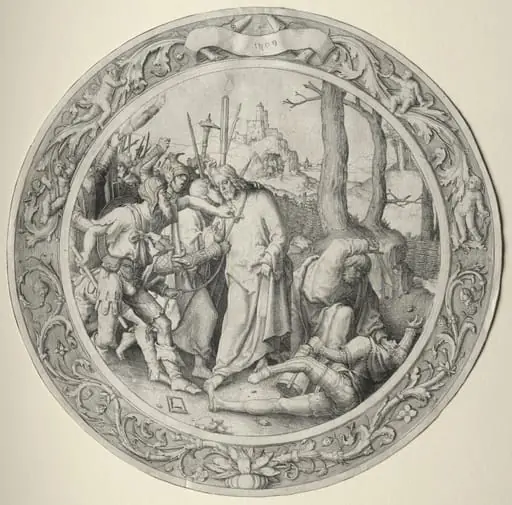
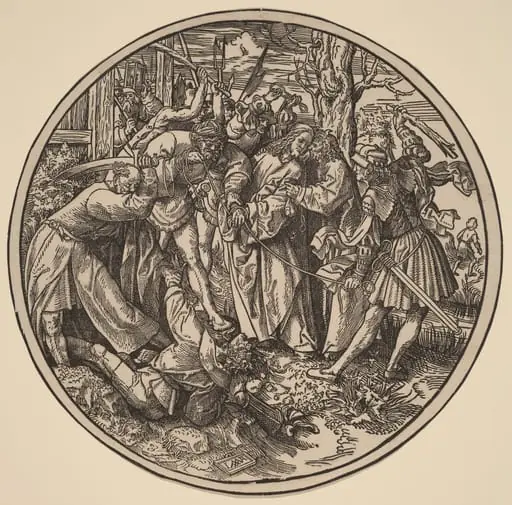 The Betrayal of Christ
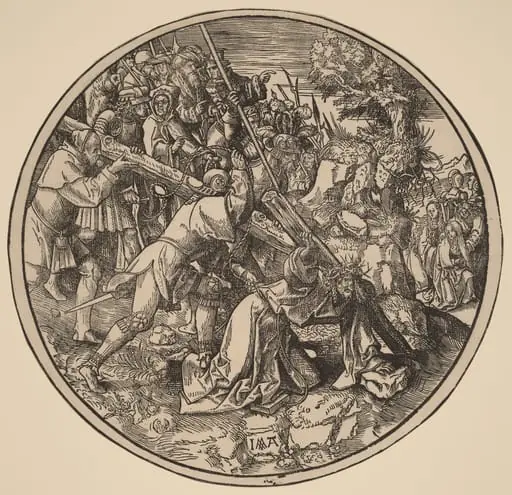 Christ Carrying the Cross
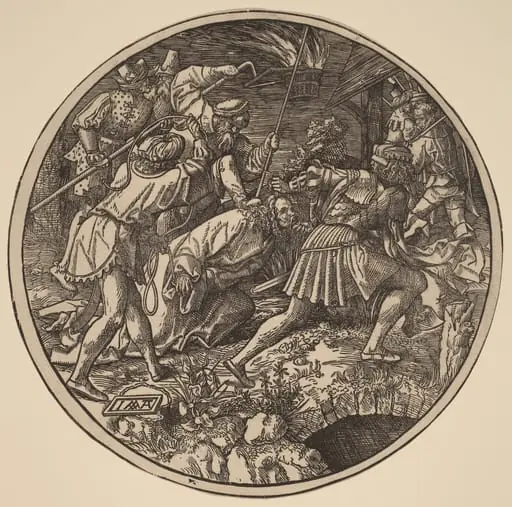 Christ Led Away After His Arrest
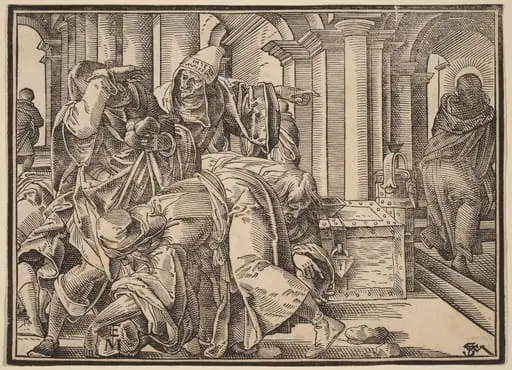
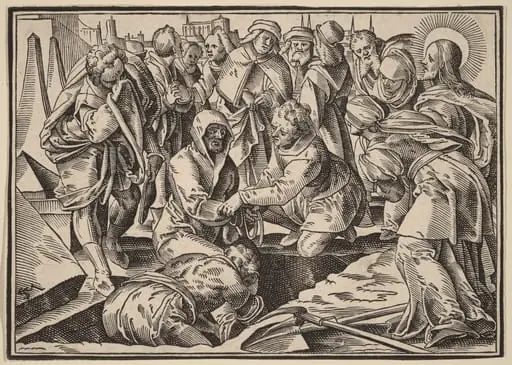 Christ Tells His Disciples of the Last Judgment
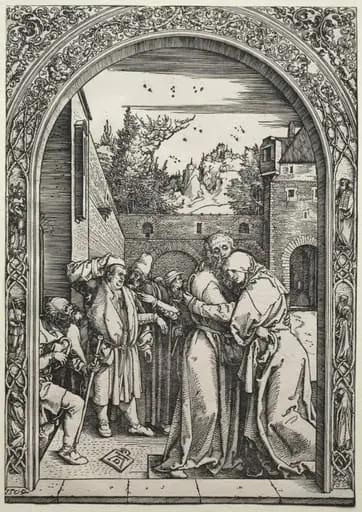 The Meeting of Joachim and Anna at the Golden Gate
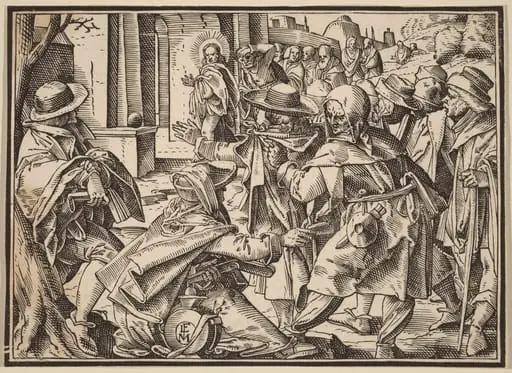 Christ Tells His Disciples of the Last Judgment
 The Captivity
 Virgil hanging in a Basket
 The Round Passion: The Betrayal of Christ
 Christ Tells His Disciples of the Last Judgment