Artwork
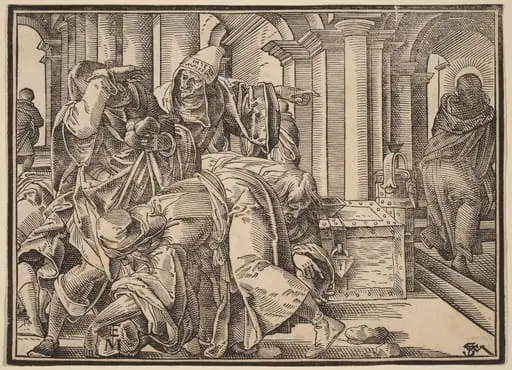
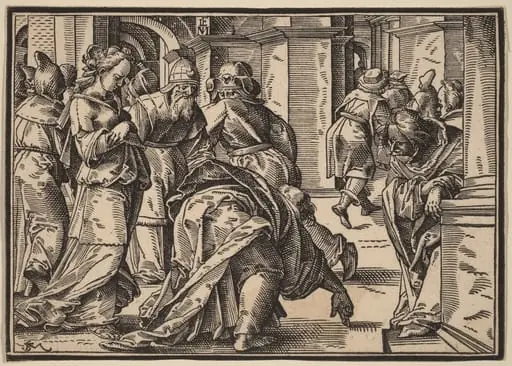
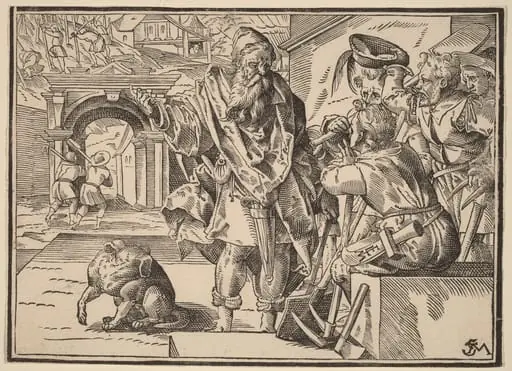
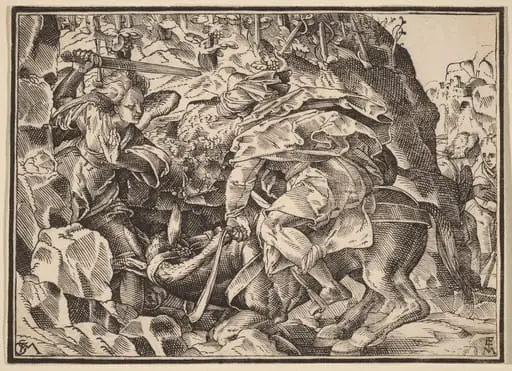
Christ Tells His Disciples of the Last Judgment
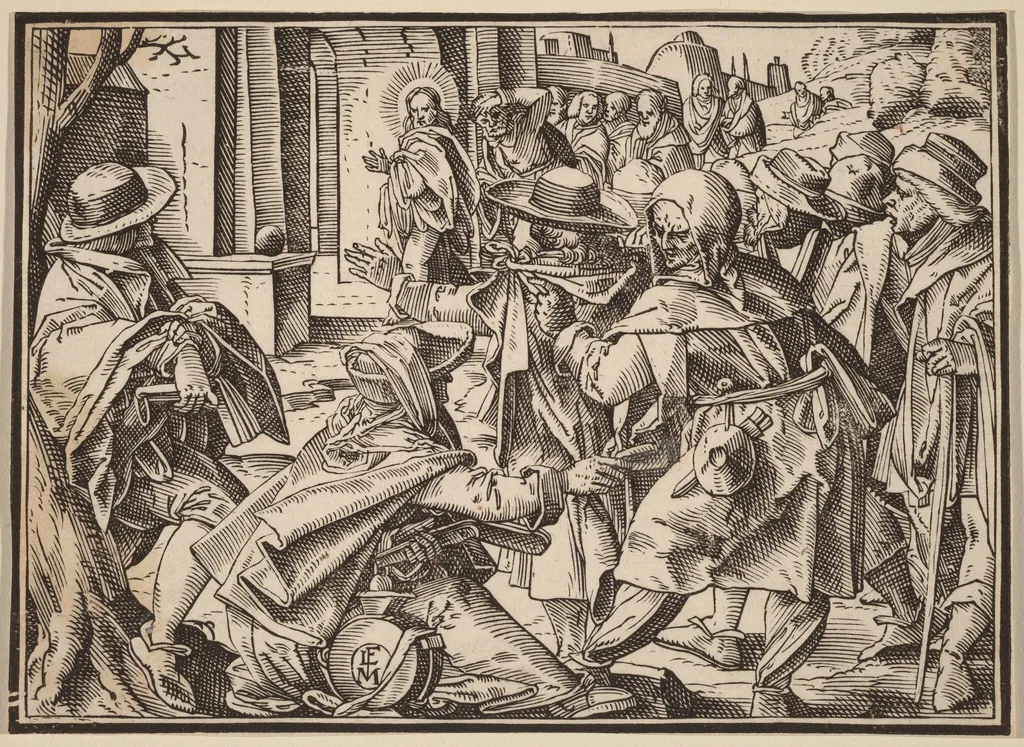
Christ Tells His Disciples of the Last Judgment is an ink print by the Renaissance artist Christoph Murer. It dates from 1630 and is held in the collection of the National Gallery of Art.
About this work
Overview
Its dense composition and linear precision reflect the technical constraints and expressive potential of woodcut printing in early 17th-century Switzerland.
Created in 1630 by Christoph Murer, this woodcut depicts a moment from Christian eschatology: Christ revealing the Last Judgment to his followers. Rendered on laid paper, the print belongs to a tradition of devotional imagery used for private contemplation. Its dense composition and linear precision reflect the technical constraints and expressive potential of woodcut printing in early 17th-century Switzerland.
Subject & Meaning
The scene captures Christ addressing his disciples within a church interior, as they react to the revelation of divine judgment. Figures are arranged in varied postures—kneeling, prostrate, standing—each conveying individual responses to impending fate. A central cross anchors the composition, symbolizing redemption amid fear. The emotional tension reflects the Reformation-era preoccupation with salvation, sin, and divine justice.
Technique & Style
Murer employed sharp, incised lines typical of woodcut printing, carving the design into a wooden block to produce bold contrasts between inked forms and blank paper. Shading is minimal, relying on line density and spacing to suggest volume and movement. The crowded figures are rendered with rhythmic repetition, enhancing the sense of collective anxiety without individualized detail.
History & Provenance
The print was produced in Augsburg, a center of religious printmaking during the Counter-Reformation. Murer, a Swiss pastor and artist, created devotional prints for lay audiences seeking visual aids to faith. While specific early ownership records are sparse, similar works circulated widely in Protestant and Catholic households, often bound into devotional collections or used in family prayer.
Context
In the decades following the Reformation, printed images played a vital role in communicating theological ideas to non-literate populations. Murer’s work aligns with a broader trend of didactic prints that visualized biblical narratives to reinforce moral and spiritual discipline. The emphasis on communal reaction to judgment reflects contemporary sermons on repentance and divine accountability.
Legacy
Murer’s woodcut remains a representative example of early modern religious print culture, illustrating how artists adapted traditional iconography to the demands of mass reproduction. Though not widely known today, such works contributed to the visual literacy of their time, embedding biblical themes into everyday spiritual practice through accessible, repeatable imagery.
Artist & collection


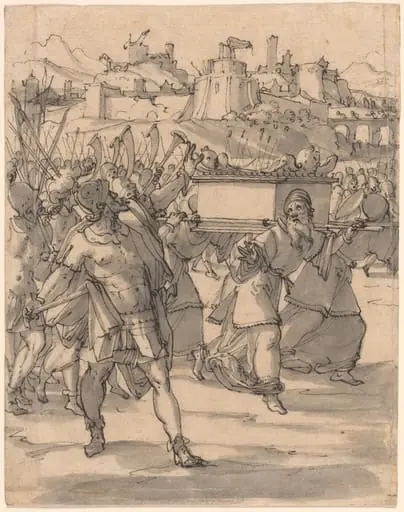 Joshua and the Israelites before the Walls of Jericho
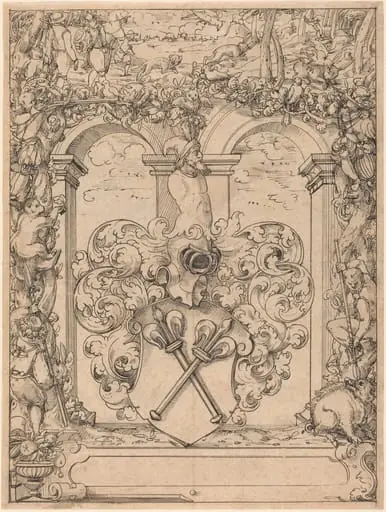 Design for a Window (Hunting Scene)
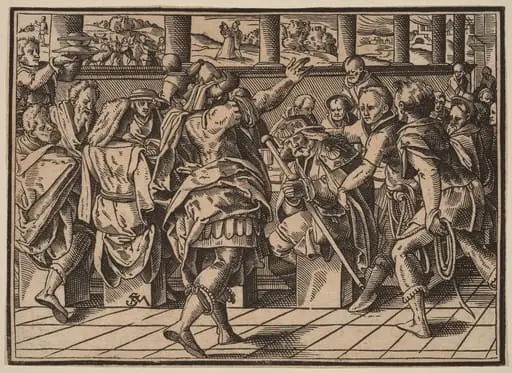 The Martyrdom of Saint James (?)
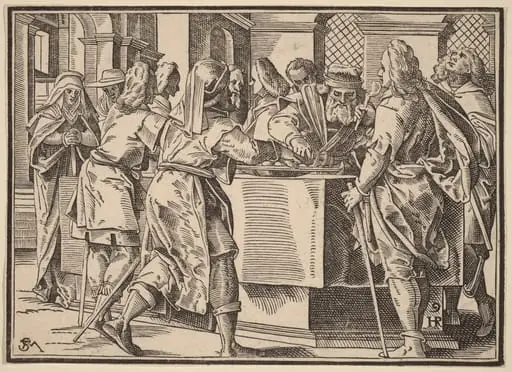 Christ Tells His Disciples of the Last Judgment
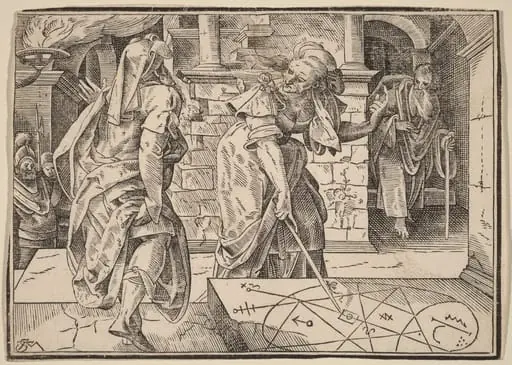 Christ Tells His Disciples of the Last Judgment
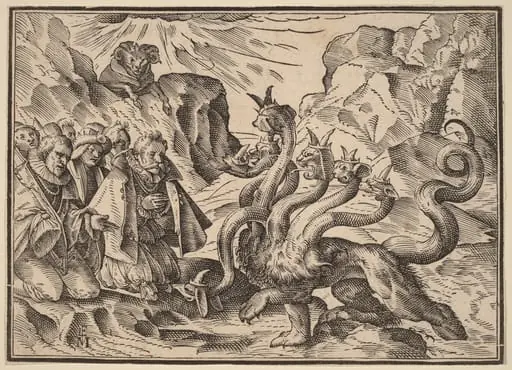 The Four Horsemen of the Apocalypse
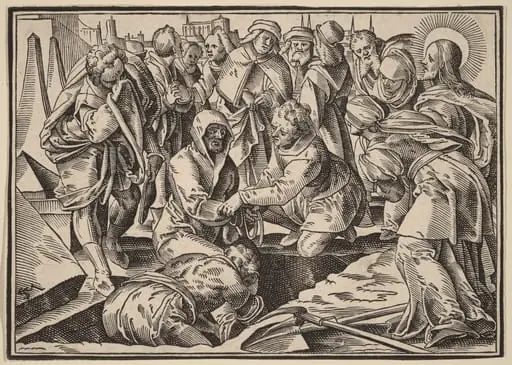 Christ Tells His Disciples of the Last Judgment
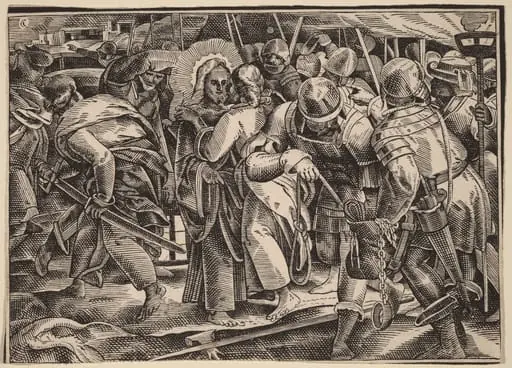 Christ Tells His Disciples of the Last Judgment