Artwork
Christ Tells His Disciples of the Last Judgment
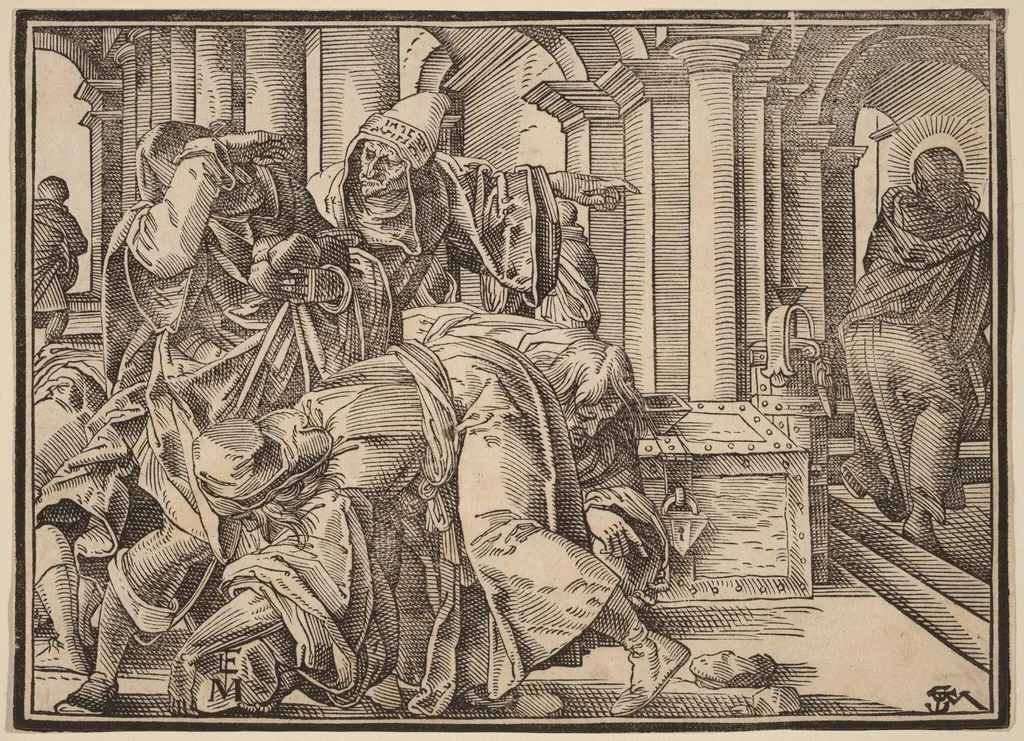
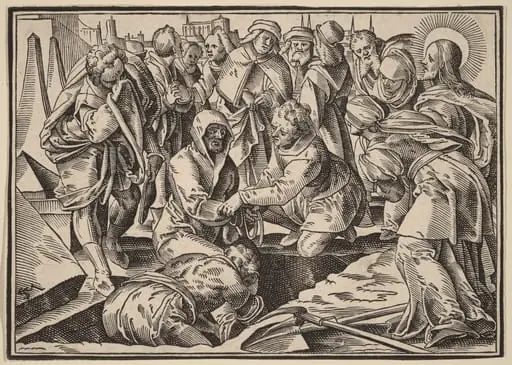
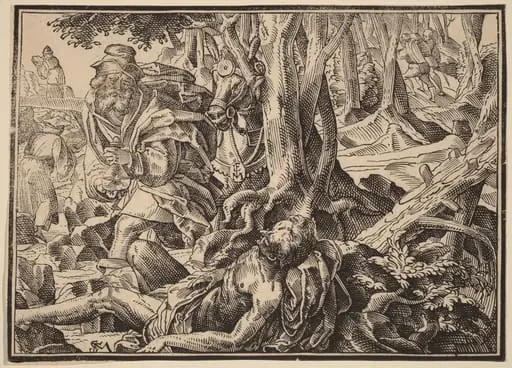
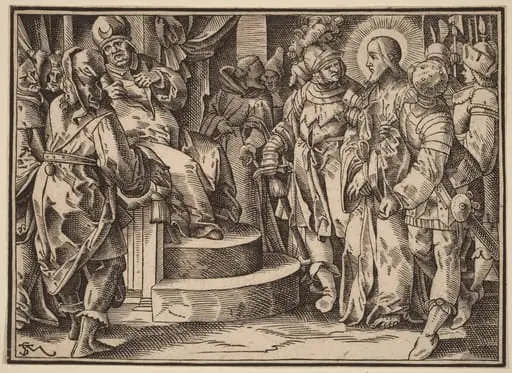
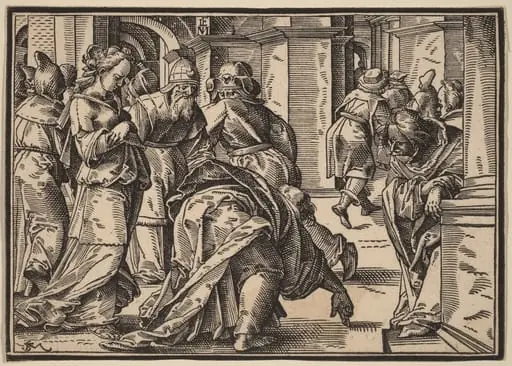
Christ Tells His Disciples of the Last Judgment is an ink print by the Renaissance artist Christoph Murer. It dates from 1630 and is held in the collection of the National Gallery of Art.
About this work
Overview
Rendered in ink on laid paper, the print uses precise linear engraving to convey motion and emotion without color.
Created in 1630 by Christoph Murer, this black-and-white woodcut depicts a biblical moment from the New Testament: Christ revealing the coming Last Judgment to his followers. Rendered in ink on laid paper, the print uses precise linear engraving to convey motion and emotion without color. The composition fills the frame with a dense assembly of figures, arranged around a central elevated figure, suggesting a sacred space within an architectural setting.
Subject & Meaning
The scene illustrates Christ announcing the final judgment to his disciples, a moment of divine revelation and moral reckoning. Figures react with varied intensity—some gaze upward in awe, others kneel or cower in dread. The gesture of pointing skyward emphasizes divine authority, while the crowd’s expressions reflect human responses to eschatological truth. The composition invites contemplation of spiritual preparedness and the weight of judgment.
Technique & Style
Murer employed traditional woodcut methods, carving lines into a wooden block to produce sharp, high-contrast imagery. Shading and texture are achieved through dense hatching and cross-hatching, creating volume and emotional nuance without color. The detailed rendering of faces and gestures, combined with architectural elements like columns and arches, demonstrates a mastery of linear precision typical of early 17th-century Northern European printmaking.
History & Provenance
The print was produced in Switzerland during a period of religious upheaval following the Reformation. Murer, a physician and engraver active in Zürich, often illustrated theological texts. This work likely served devotional or educational purposes, distributed among clergy or literate laypeople. Its survival in collections today reflects its role in Protestant visual culture, where printed images reinforced doctrinal teachings.
Context
In early 17th-century Protestant regions, printed images like this one filled a need for accessible religious instruction after the decline of elaborate church art. Woodcuts were inexpensive and reproducible, making them ideal for spreading biblical narratives. Murer’s work aligns with a broader trend of using print to visualize scripture, particularly apocalyptic themes that resonated during times of social and religious uncertainty.
Legacy
Though not widely known today, Murer’s woodcut exemplifies the quiet power of vernacular religious printmaking in early modern Europe. Its emphasis on emotional expression through line and composition influenced later illustrators of biblical texts. The print remains a testament to how ordinary media could convey profound theological ideas, bridging literacy, faith, and visual culture in pre-industrial society.
Artist & collection


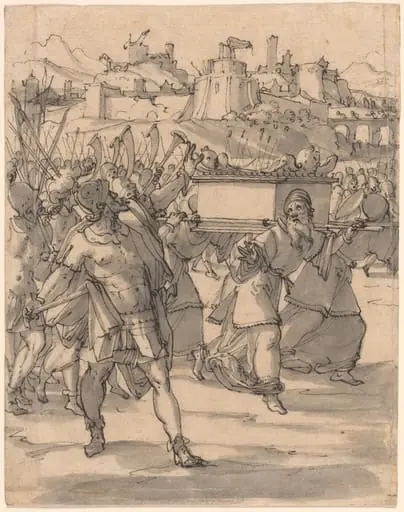 Joshua and the Israelites before the Walls of Jericho
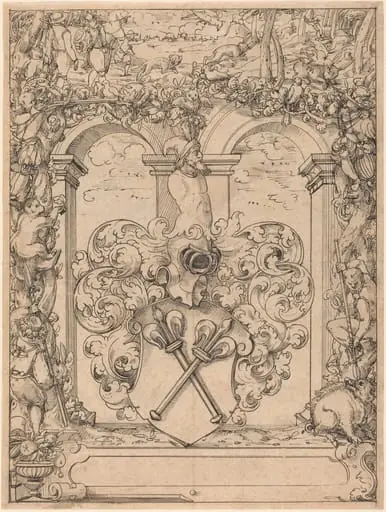 Design for a Window (Hunting Scene)
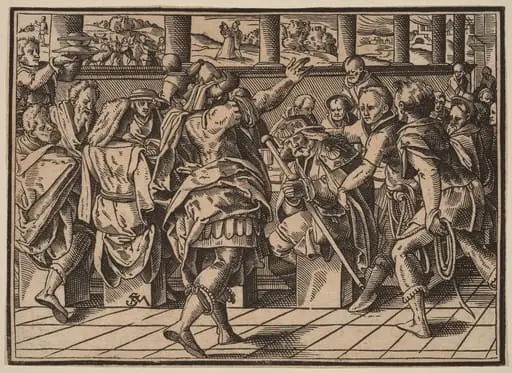 The Martyrdom of Saint James (?)
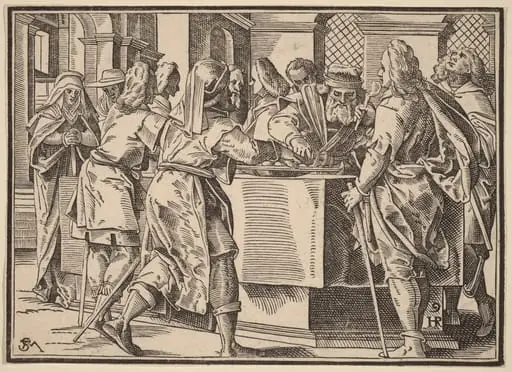 Christ Tells His Disciples of the Last Judgment
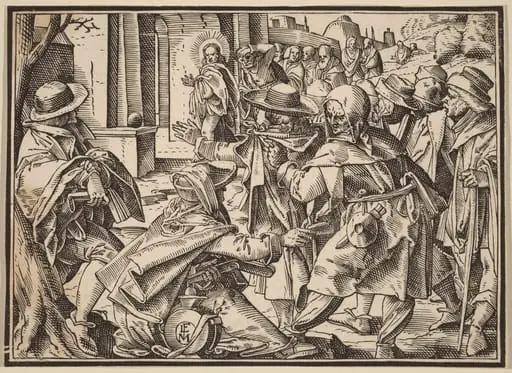 Christ Tells His Disciples of the Last Judgment
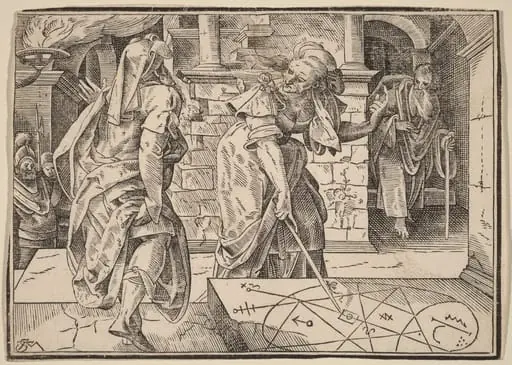 Christ Tells His Disciples of the Last Judgment
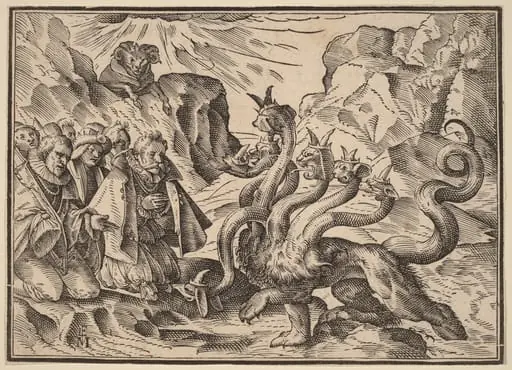 The Four Horsemen of the Apocalypse
 Christ Tells His Disciples of the Last Judgment
 Christ Tells His Disciples of the Last Judgment
 Christ Tells His Disciples of the Last Judgment
 Christ Tells His Disciples of the Last Judgment
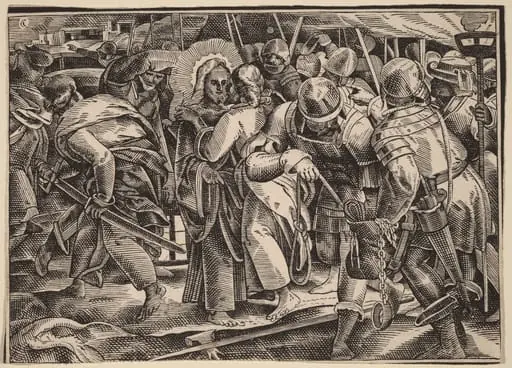 Christ Tells His Disciples of the Last Judgment
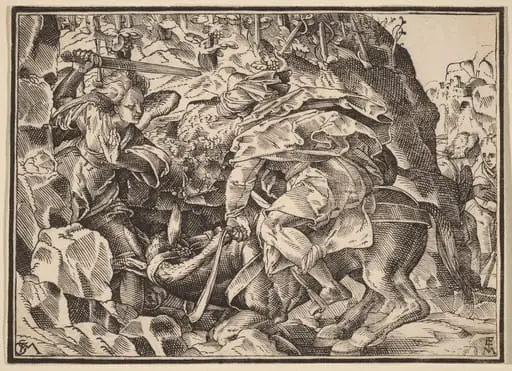 Christ Tells His Disciples of the Last Judgment
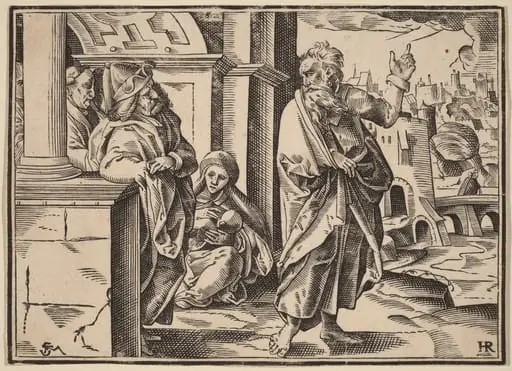 Christ Tells His Disciples of the Last Judgment
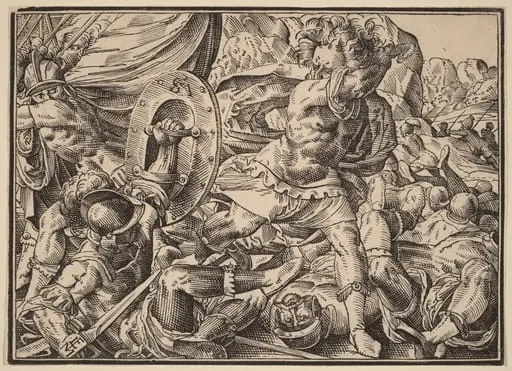 Christ Tells His Disciples of the Last Judgment