Artwork
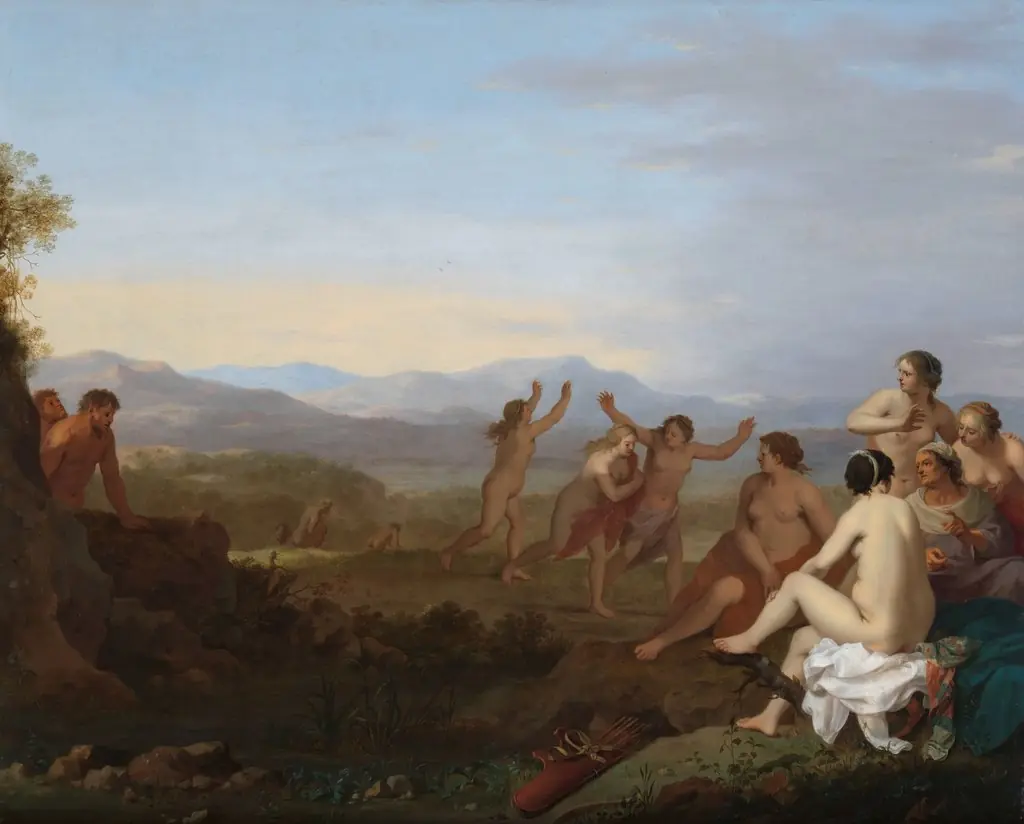
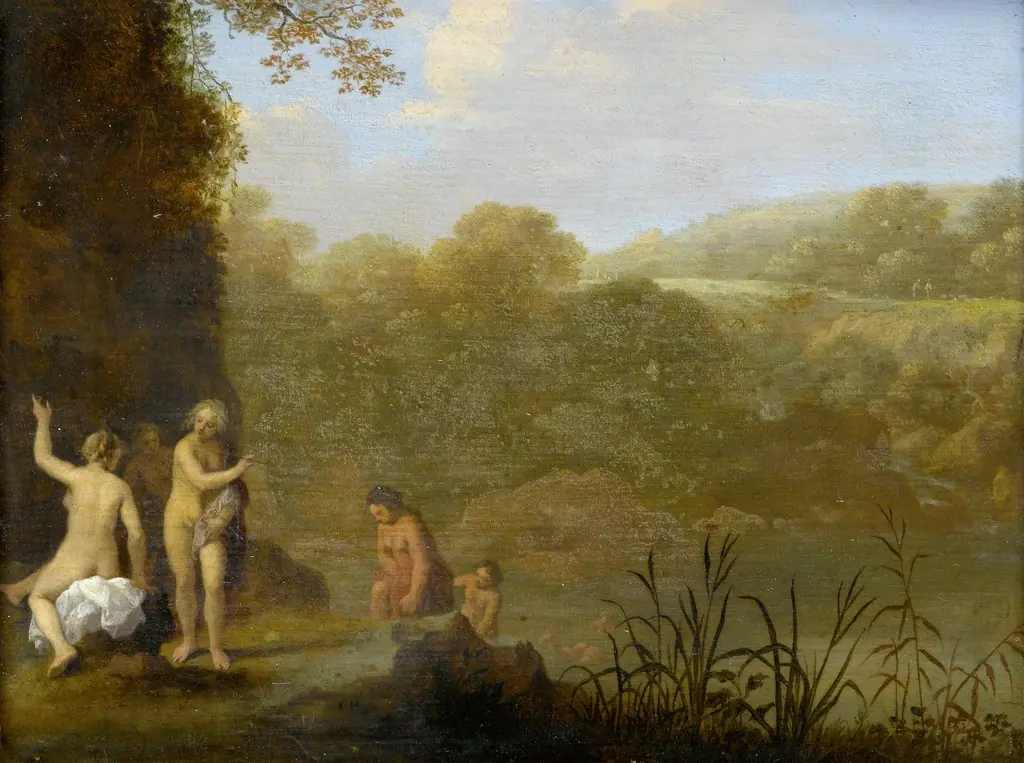
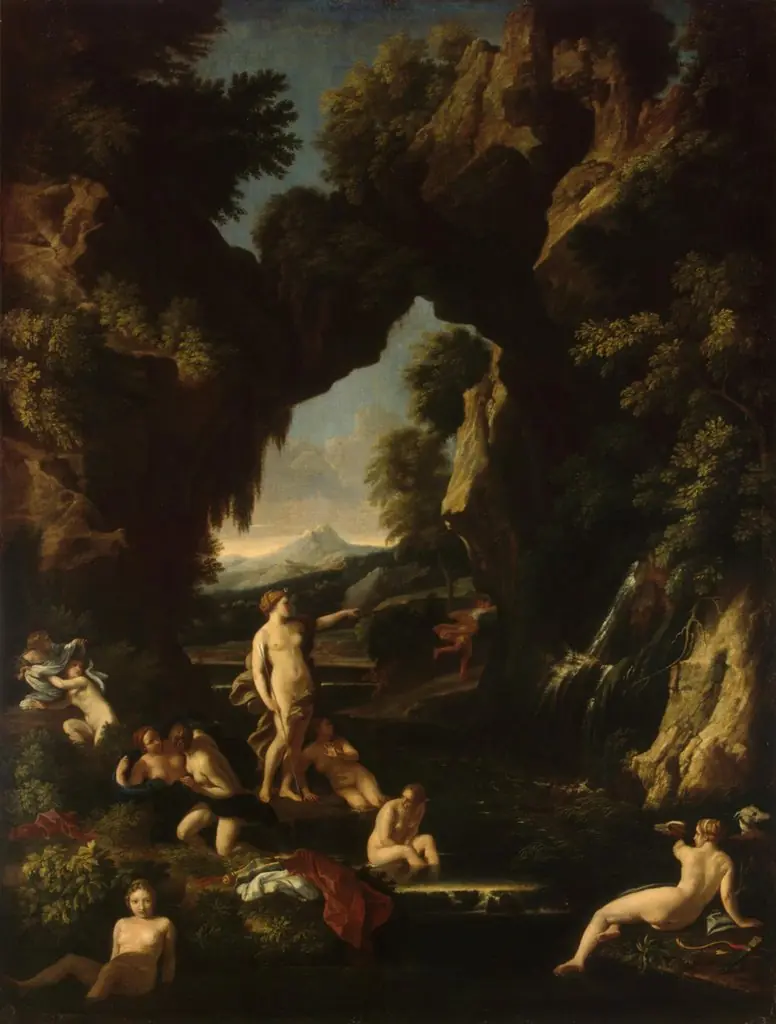
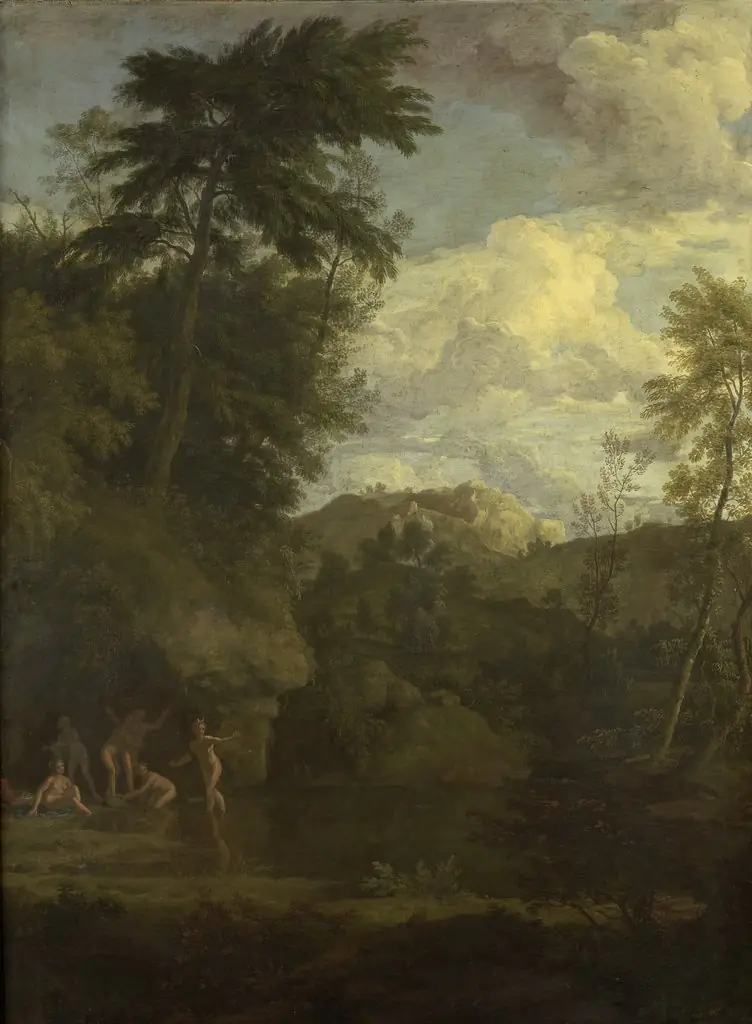
Landscape with Diana and Callisto
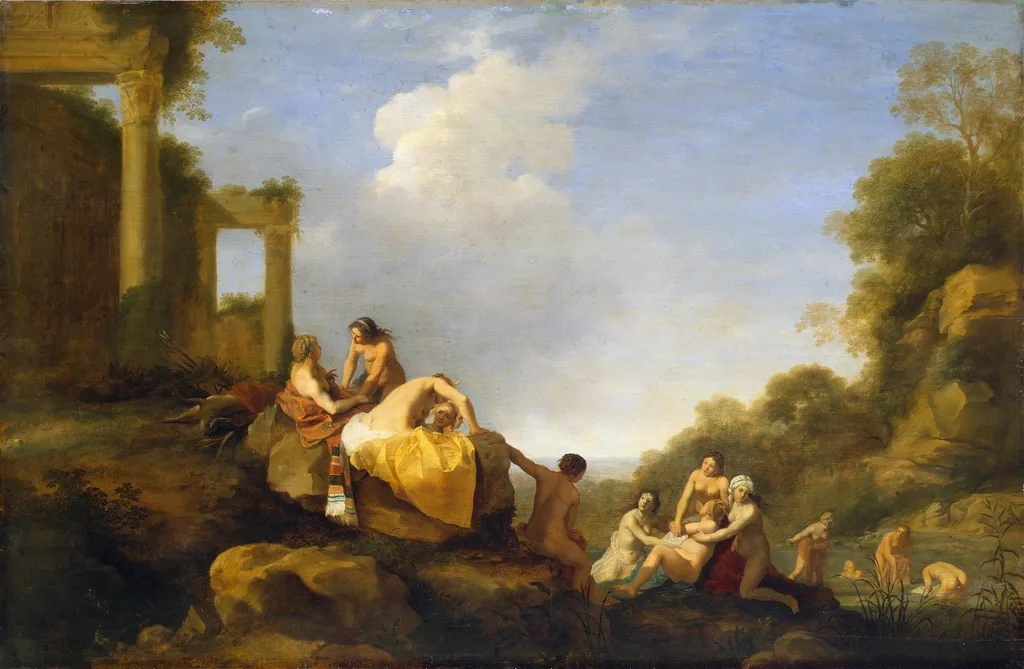
Landscape with Diana and Callisto is an oil painting by the Dutch Golden Age artist Cornelius van Poelenburgh. It dates from 1650 and is held in the collection of the Hermitage Museum.
About this work
Overview
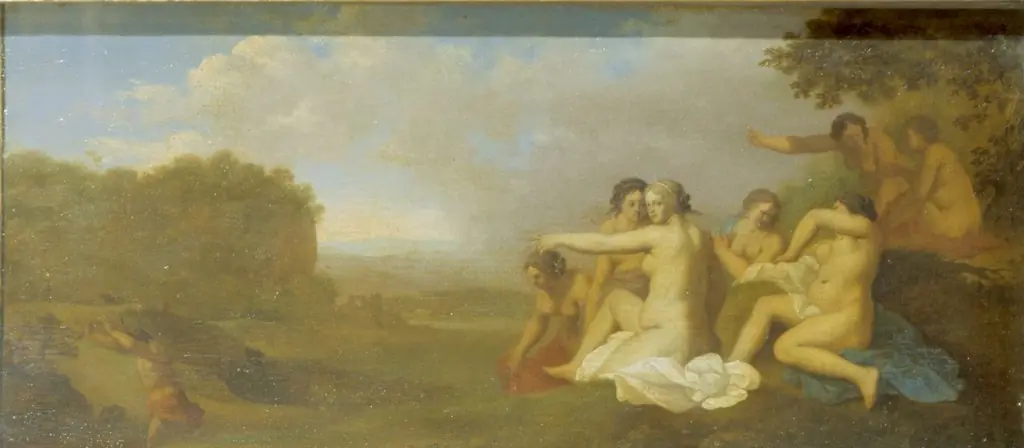
Soft, muted tones of green, ochre and blue convey a tranquil daylight, while the figures interact in a relaxed, almost conversational manner.
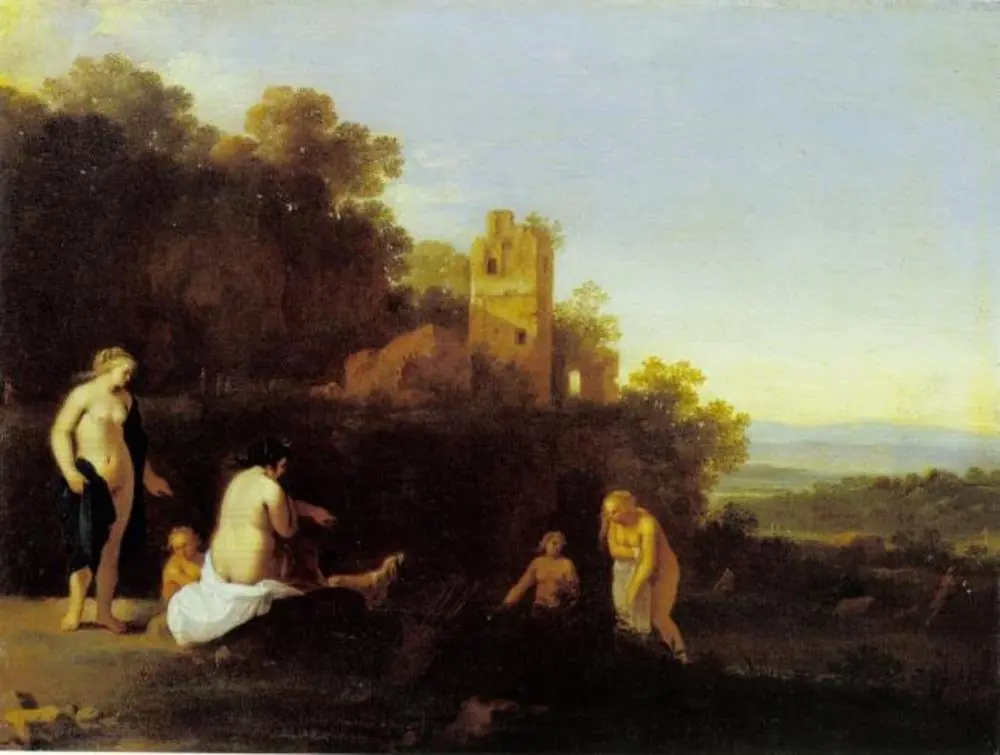
Cornelis van Poelenburgh’s *Landscape with Diana and Callisto* is an oil painting on canvas dating from the mid‑17th century. The composition places mythological figures within a gently rolling Italianate countryside, where a riverbank and distant ruins frame a small gathering of draped and partially nude bodies. Soft, muted tones of green, ochre and blue convey a tranquil daylight, while the figures interact in a relaxed, almost conversational manner.
Subject & Meaning
The work draws on the classical tale of Diana, goddess of the hunt, and her nymph Callisto, who was later transformed into a bear. Here they appear in a pastoral setting, suggesting a moment of respite rather than dramatic narrative. The inclusion of a ruined temple and an open sky reinforces themes of timeless nature and the fleeting presence of myth within an idealized landscape.
Technique & Style
Van Poelenburgh employs a finely detailed, miniature approach typical of his Roman period, rendering foliage, rock textures and architectural fragments with delicate brushwork. The figures are rendered on a smaller scale than the surrounding scenery, a hallmark of his mythological landscapes. Light is diffused across the scene, creating subtle chiaroscuro that models the bodies while preserving the overall softness of the palette.
History & Provenance
Created around 1650, the painting reflects the Dutch Golden Age’s fascination with Italian scenery, a result of van Poelenburgh’s long residence in Rome. After changing hands among private collectors, the canvas entered the collection of the State Hermitage Museum in St. Petersburg, where it remains part of the European paintings department.
Context
During the early 17th century, many Dutch artists traveled to Italy to study classical antiquity and landscape conventions. Van Poelenburgh’s work exemplifies this cross‑cultural exchange, merging Northern attention to detail with Southern idealized vistas. The painting also aligns with contemporary tastes for small, intimate mythological scenes that could be displayed in private chambers rather than large public spaces.
Own this work as a print
Artist & collection
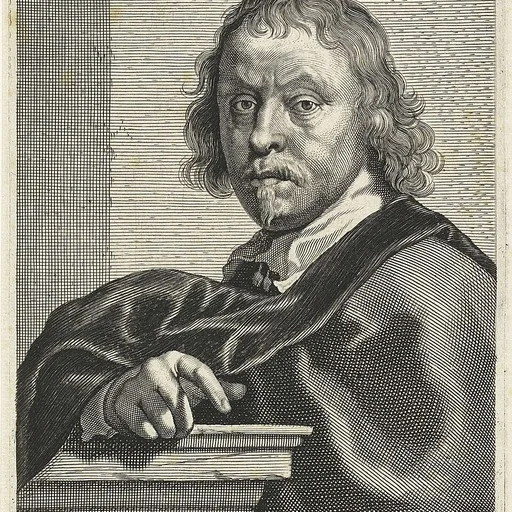
Artist
Cornelis van Poelenburgh or Cornelis van Poelenburch (1594 – 12 August 1667), was a Dutch landscape painter and draughtsman.