Artwork
Putti Playing in a Fanciful Landscape
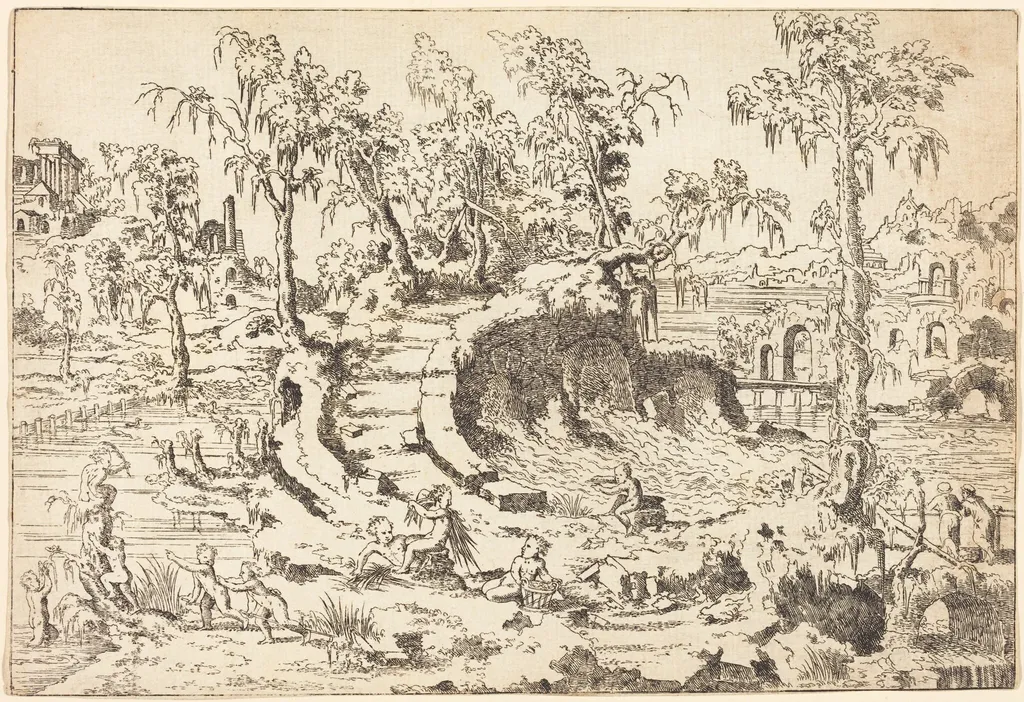
Putti Playing in a Fanciful Landscape is an ink print by the Renaissance artist Jean Cousin the Younger. It dates from 1558 and is held in the collection of the National Gallery of Art.
About this work
Overview
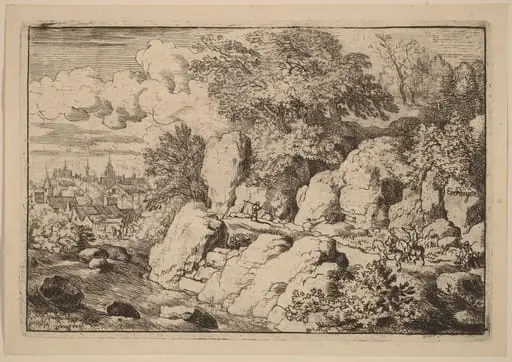
Created in 1558 by Jean Cousin the Younger, this etching on laid paper presents a dreamlike rural scene populated by putti engaged in playful activities. The composition balances intimate foreground action with a receding landscape of hills, trees, and distant architecture, all rendered through fine, controlled lines characteristic of Renaissance printmaking.
Subject & Meaning
The putti—cherubic figures drawn from classical and Christian iconography—engage in idle, joyful pursuits among natural and architectural elements.
The putti—cherubic figures drawn from classical and Christian iconography—engage in idle, joyful pursuits among natural and architectural elements. Their presence suggests an allegory of innocence or the harmony of nature and human delight, though no explicit narrative is given. The scene evokes a poetic ideal rather than a literal place, inviting contemplation over moral or mythological interpretation.
Technique & Style
Cousin employed etching to achieve fine detail and subtle tonal gradations. Delicate linework defines textures in bark, water, and stone, while cross-hatching builds shadow and depth. The composition avoids stark contrasts, favoring a soft, atmospheric quality that enhances the dreamlike mood. The medium’s precision allows for intricate rendering without overwhelming the viewer with heaviness.
History & Provenance
The print originates from a period when French artists were increasingly engaged with Italian Renaissance motifs. Jean Cousin the Younger, known for his work in painting and print, produced this etching during a time of growing interest in mythological and pastoral subjects among Northern European printmakers. Its survival in collections suggests early appreciation for its technical finesse.
Context
In mid-16th century France, etching was emerging as a respected medium for artistic expression beyond mere reproduction. Cousin’s work reflects broader trends: the revival of classical themes, the influence of Italian Mannerism, and a fascination with nature as a stage for human-like figures. This piece aligns with other prints that blurred the line between reality and fantasy.
Legacy
Though not widely reproduced in later centuries, the etching remains a notable example of French Renaissance printmaking. It demonstrates how artists used intimate, detailed scenes to explore imaginative worlds, influencing later generations interested in lyrical landscapes and allegorical figures. Its preservation offers insight into the evolving role of print in artistic discourse.
Artist & collection


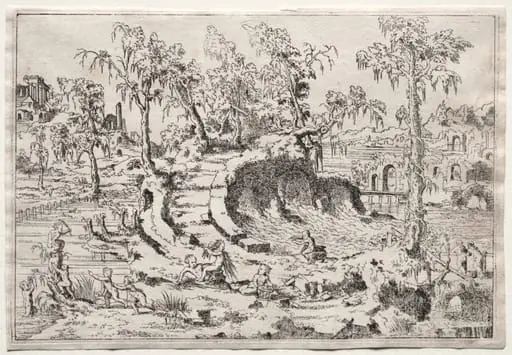 Landscape with Putti
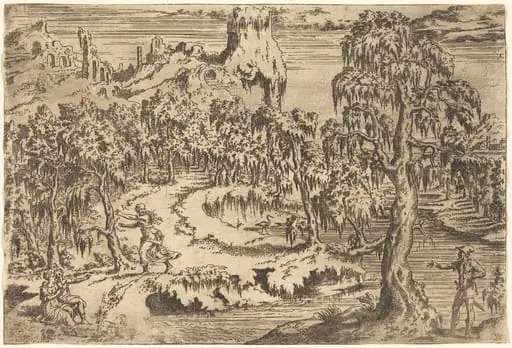 Landscape with a Woman Fleeing at the Sight of a Soldier
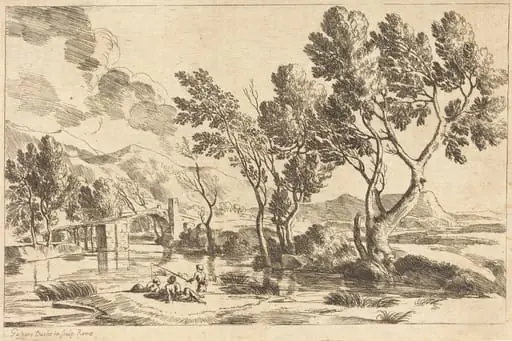 Roman Landscape
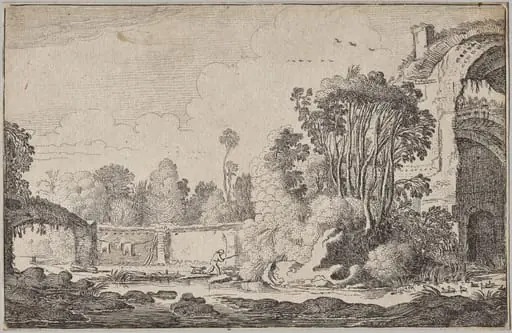 Landscapes, part III: Roman Ruins in Wooded Surroundings
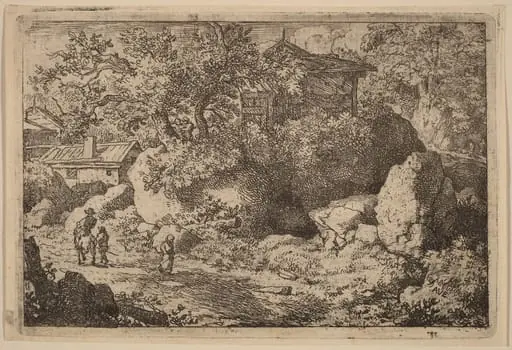 Peasant on Horseback
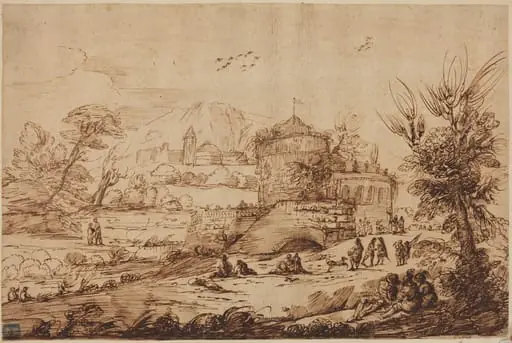 Landscape with Fortress and River
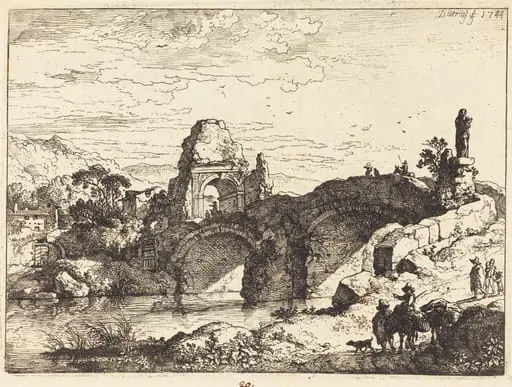 Landscape with a Bridge and Ruined Tower
 Landscape
 The Samaritan Pours Oil and Wine in the Wounds of a Man Left for Dead
 Hut with the Remains of a Hedge
 Sleeping Shepherd
 Two Horsemen on a Rocky Path