Artwork
Interior of the Church of St. Denis, Faxton
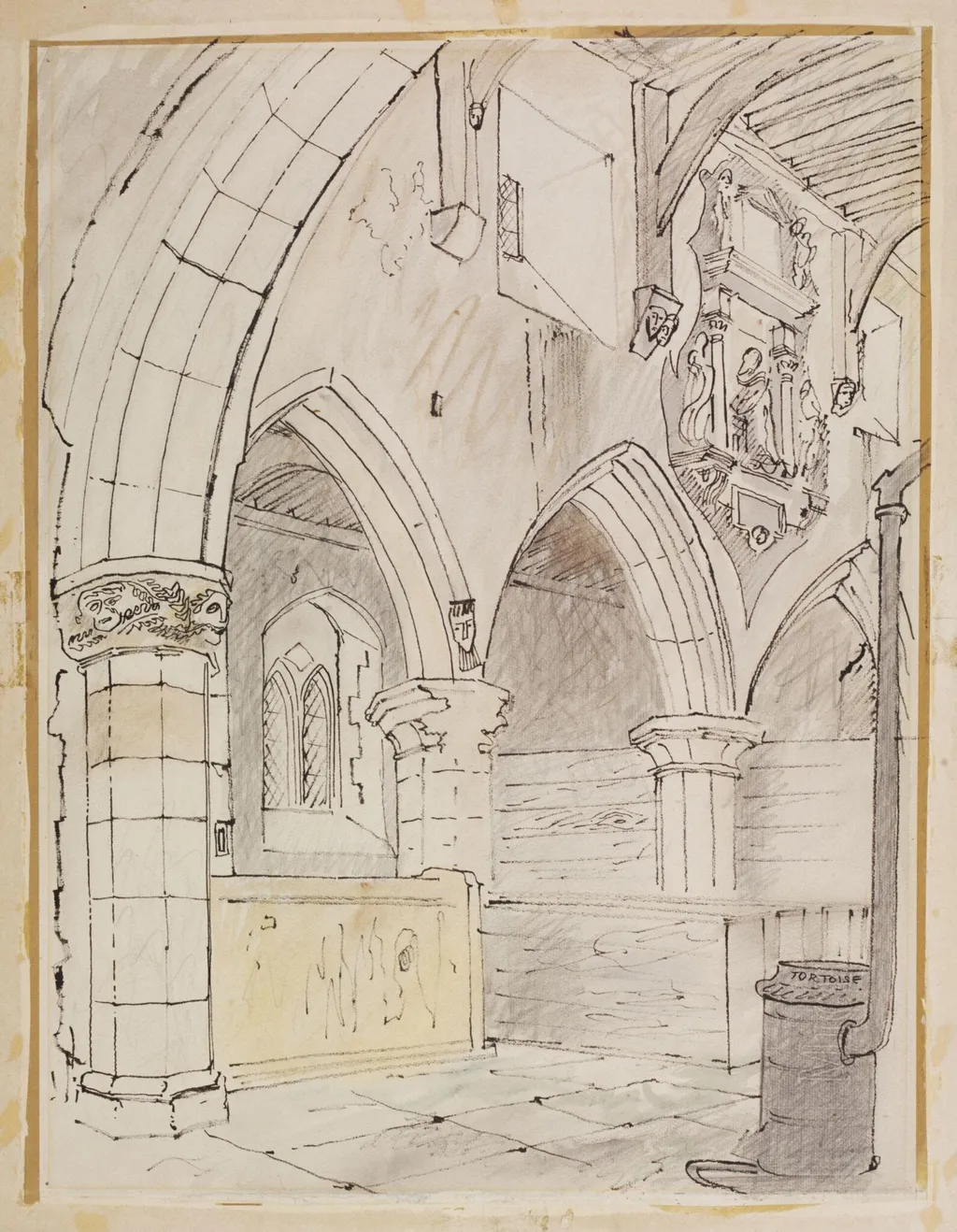
Interior of the Church of St. Denis, Faxton is a watercolor work on paper by Piper. It dates from 1940 and is held in the collection of the Victoria and Albert Museum. The watercolour presents the nave of St.
About this work
Overview
The watercolour presents the nave of St. Denis Church in Faxton, revealing a succession of pointed stone arches that frame the vaulted space. A carved memorial is set into the wall above the arcade, while muted light filters through modest windows, illuminating the rough stone floor and aged columns. A few indistinct figures occupy the rear, giving a sense of the building’s continued use.
Subject & Meaning
The composition concentrates on the architectural geometry of the medieval interior, emphasizing the rhythm of arches and the solidity of the stonework. By omitting decorative detail and focusing on structural lines, the image conveys a quiet reverence for the church’s historic fabric, suggesting both its spiritual function and its status as a tangible link to local heritage.
Technique & Style
Executed in watercolour, the work relies on transparent washes to model light and shadow, allowing the pale illumination to suggest depth without intricate rendering. Broad, swift strokes capture the mass of the arches and walls, while finer touches hint at the memorial carving. The overall effect is that of a rapid field sketch, prioritising form and atmosphere over precise ornamentation.
History & Provenance
This watercolour was produced for that purpose, entering the national archive before eventually being acquired by a public collection for study and exhibition.
Created in 1940, the piece forms part of the Recording Britain project, a wartime initiative directed by Sir Kenneth Clark. Artists were commissioned to document buildings and landscapes considered at risk from bombing and post‑war development. This watercolour was produced for that purpose, entering the national archive before eventually being acquired by a public collection for study and exhibition.
Context
The Recording Britain scheme sought to preserve visual records of sites deemed emblematic of the nation’s cultural identity during a period of upheaval. Churches, rural vistas, and historic towns were prioritized, reflecting a broader concern for a “vanishing Britain.” The work’s focus on a modest parish church aligns with the project's aim to capture ordinary yet significant elements of the country’s built environment.
Artist & collection
Artist
A 1940s British artist known for delicate watercolours of country houses, churches, and riverside views, Piper captured quiet corners of England in soft washes and fine lines.

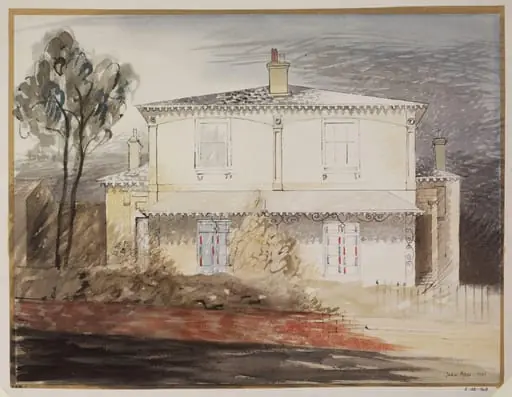 A House, Maidenhead
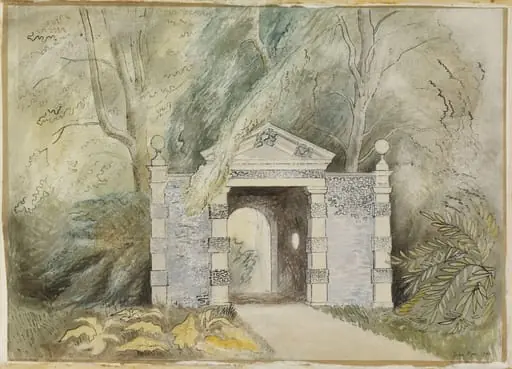 The river approach, Fawley Court
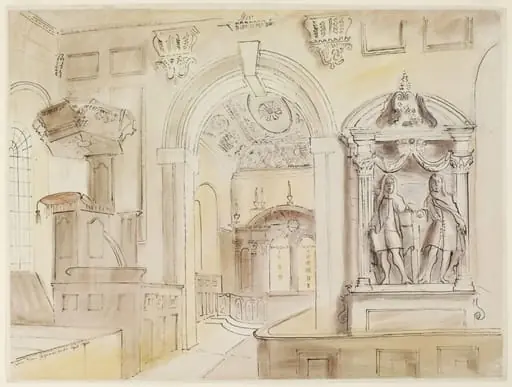 Interior of St. Peter's Church, Gayhurst
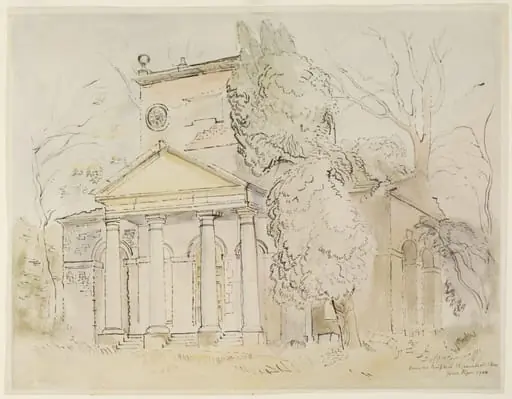 The Ruined Temple of Friendship in the Grounds at Stowe
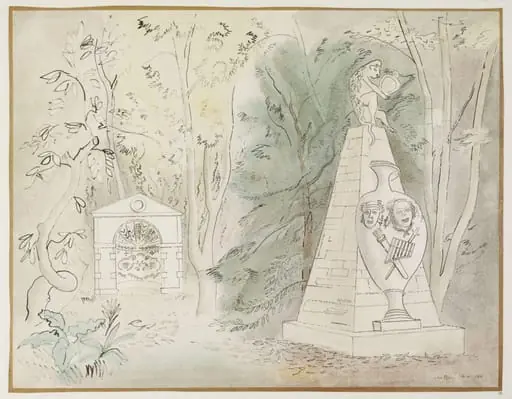 Congreve Monument (designed by Wm. Kent) and Shell Grotto, Stowe
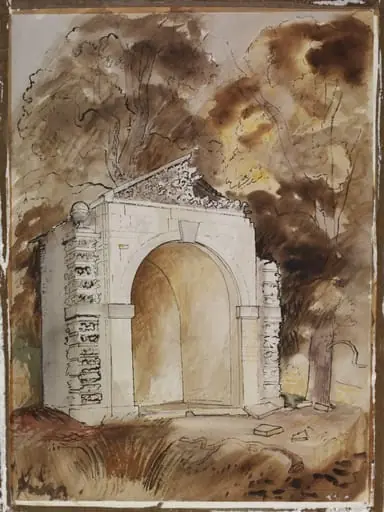 The Duck House in the Park of Buckland House near Faringdon
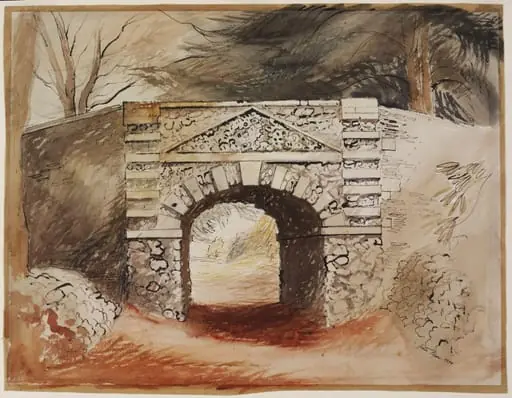 The Tunnel in the grounds of Buckland House, near Faringdon
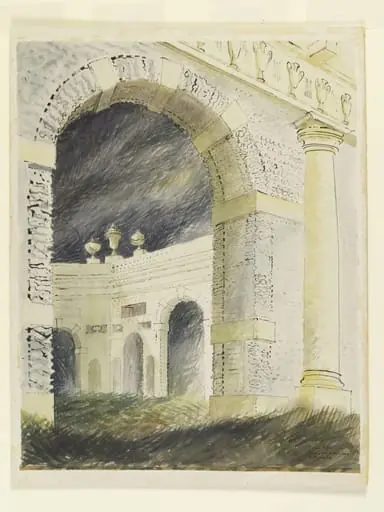 Dashwood Mausoleum, West Wycombe
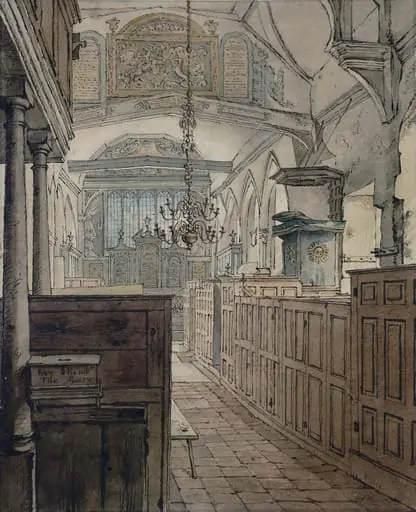 Interior of an old church
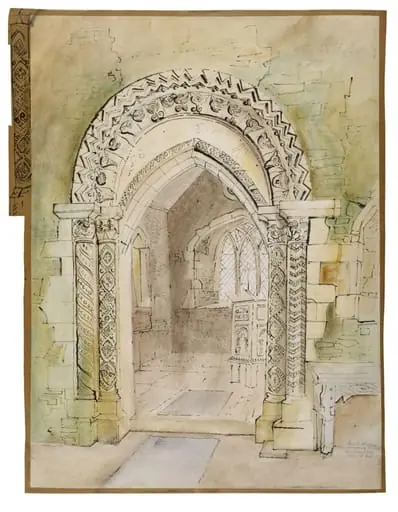 Chancel Arch, St. Peter's, Stanton Low, Buckinghamshire
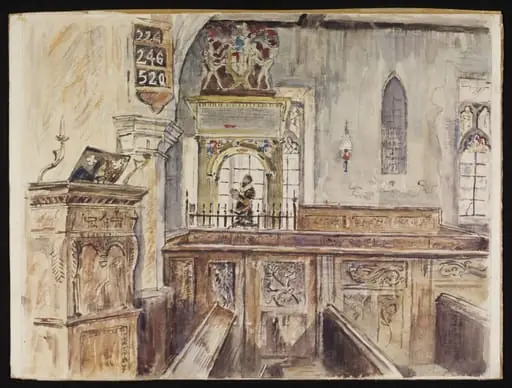 Monument and the Bolingbroke pews, St.Mary’s Church, Lydiard Tregoze
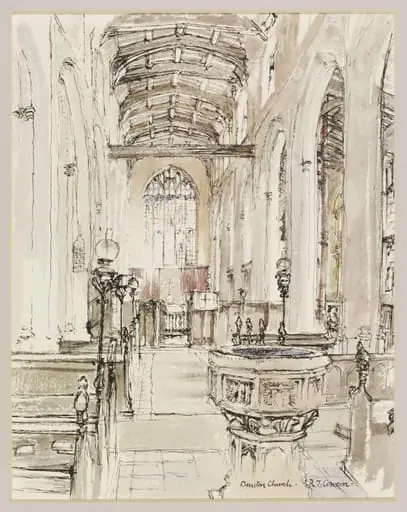 St. Nicholas Church, Denston
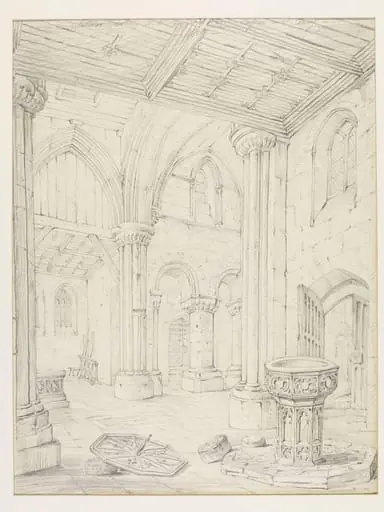 Priory church at Boxgrove
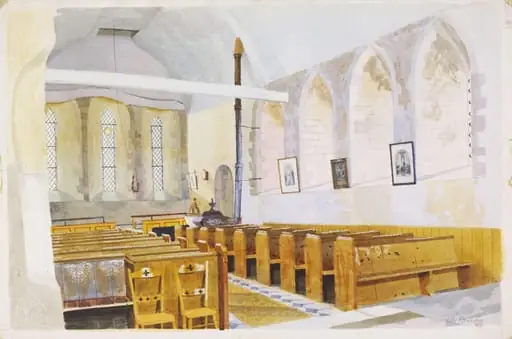 Interior of St. Mary's Church, Tilty
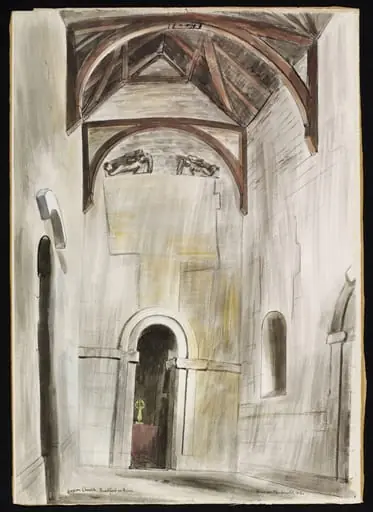 Saxon Church, Bradford-on-Avon
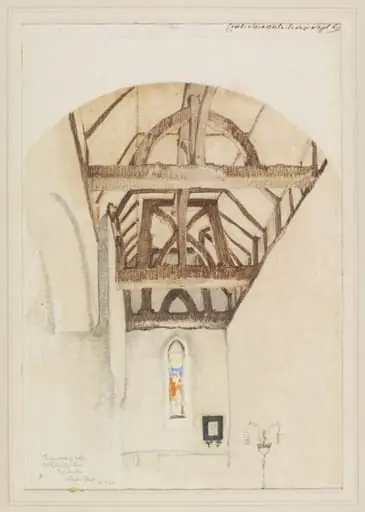 Timber work of Roof, St. Peter-the-Less, Chichester
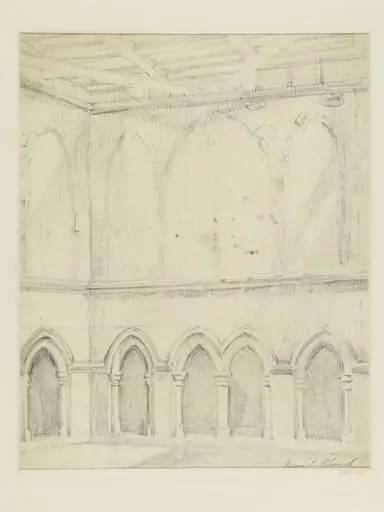 Temple Church
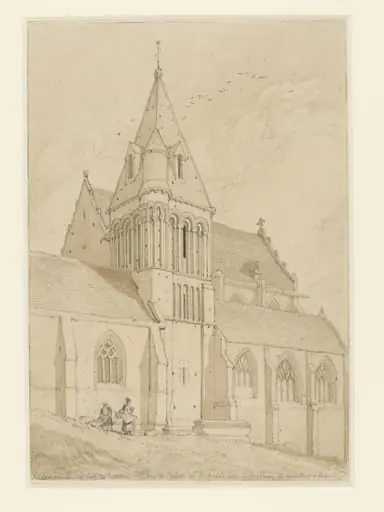 Church of St Michel, Vaucelles, near Bayeux
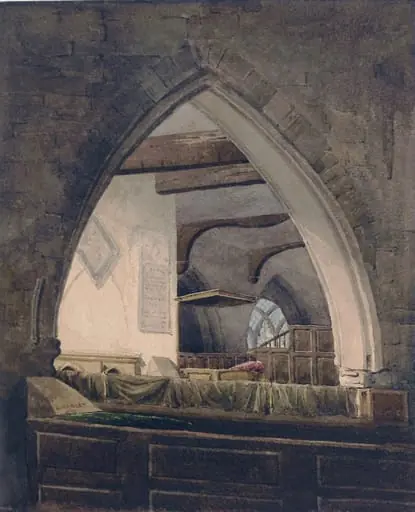 The interior of a church