Artwork
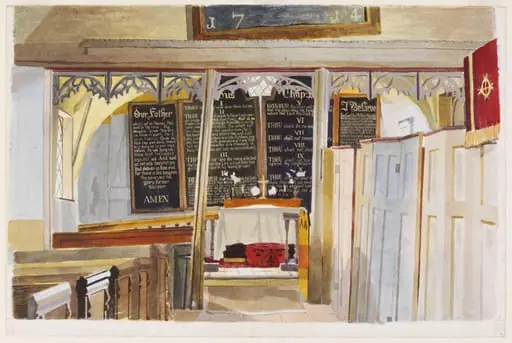
Interior of St. Mary's Church, Tilty
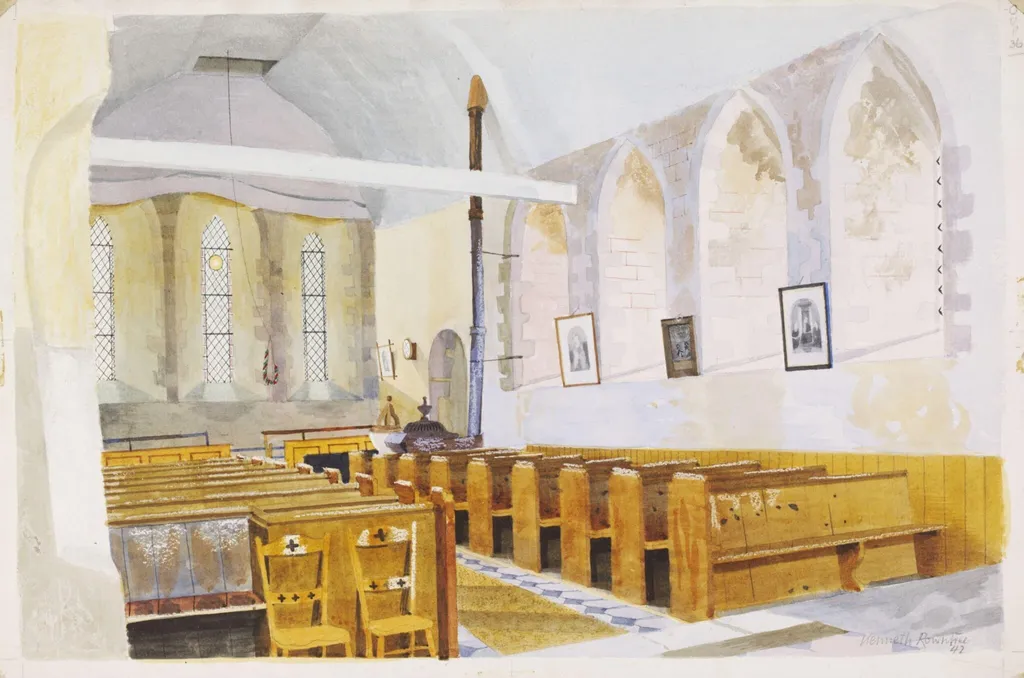
Interior of St. Mary's Church, Tilty is a watercolor work on paper by Kenneth Rowntree. It dates from 1942 and is held in the collection of the Victoria and Albert Museum.
About this work
Most of Rowntree’s church paintings show signs of age, but this one looks bright and dry inside.
This watercolour shows the inside of St. Mary’s Church in Tilty. Kenneth Rowntree painted it in 1942 as part of a project to record Britain during the war. The church is the old chapel from Tilty Abbey, which dates back to 1153.
Most of Rowntree’s church paintings show signs of age, but this one looks bright and dry inside. Unlike his other works, there’s no writing on walls or pews here.
Check out more by Rowntree, Kenneth.
Overview
Kenneth Rowntree’s watercolour, created in 1942, records the interior of St Mary’s Church in Tilty, the surviving chapel of the former Tilty Abbey. The work was produced for the Recording Britain project, an initiative to document the nation’s heritage during the wartime period.
Subject & Meaning
The depicted space is the original 12th‑century chapel that remained after the Cistercian monastery was dismantled in the 16th century. Following the Dissolution, the structure was transferred to the local community and continues to serve as the parish church, linking the viewer to a continuity of worship spanning nearly nine centuries.
Technique & Style
Rowntree employs a clear, luminous wash of watercolour to convey the bright, dry interior, a departure from the weathered atmospheres typical of his other ecclesiastical interiors. Notably, the composition omits any textual inscriptions, a conscious contrast to his usual practice of rendering wall and pew lettering with meticulous precision.
History & Provenance
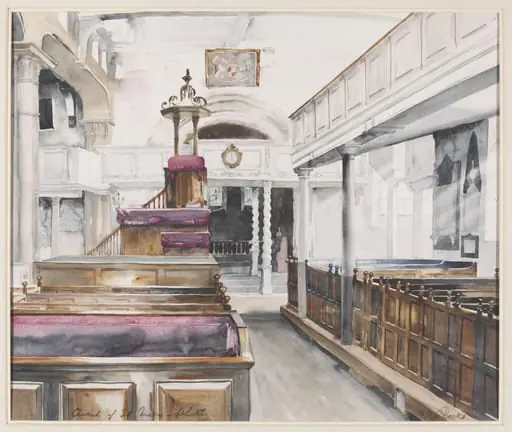
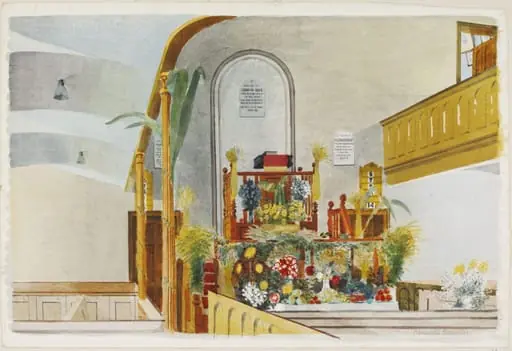
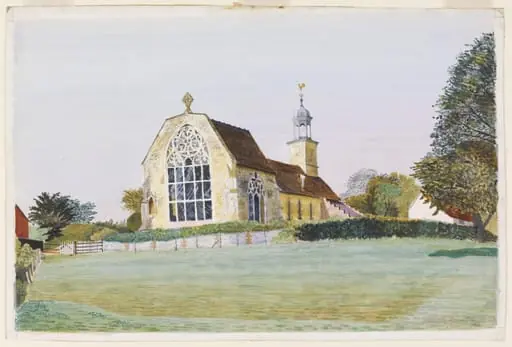
The painting belongs to the trio of Tilty church interiors that Rowntree contributed to the Recording Britain scheme, a government‑sponsored effort to preserve visual records of British architecture and landscapes threatened by war and modernization. The work remains in the collection associated with that program.
Context
Tilty Abbey, founded in 1153 as a Cistercian house, was largely destroyed after Henry VIII’s suppression of monastic houses. The surviving chapel, repurposed as a parish church, exemplifies how religious sites were adapted for local use after the Reformation, a narrative reflected in the unaltered, text‑free interior captured by Rowntree.
Artist & collection
Artist
Kenneth Rowntree painted quiet British places in watercolour around 1940, from barn-stacked Essex fields to the carved oak pews of Caernarvonshire chapels.

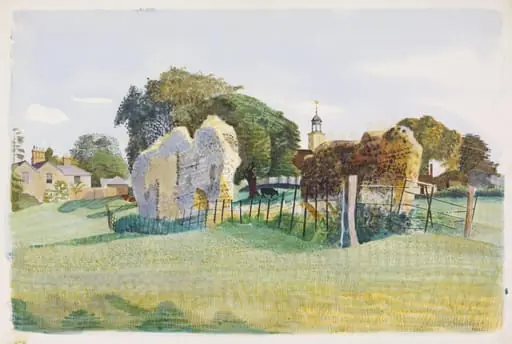 View of the Ruins of the Cloister, the Belfry of St. Mary's Church, and the Vicarage, Tilty
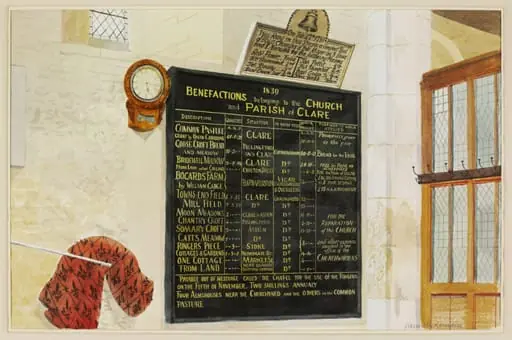 The Bellringer's Chamber, SS. Peter and Paul Church, Clare
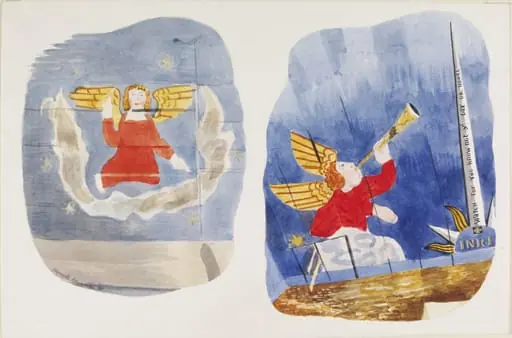 Detail of Ceiling at Gwydir Uchar Chapel, Llanrwst, Caernarvonshire
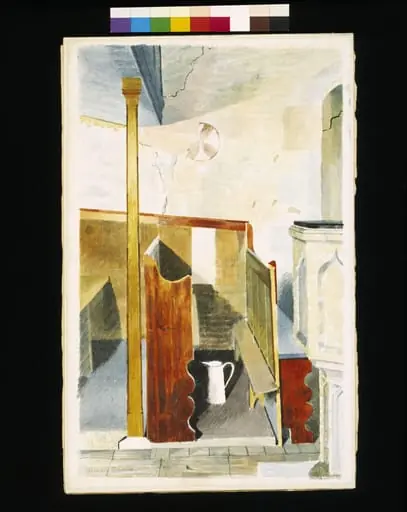 Interior of SS Peter and Paul, Little Saling, Essex
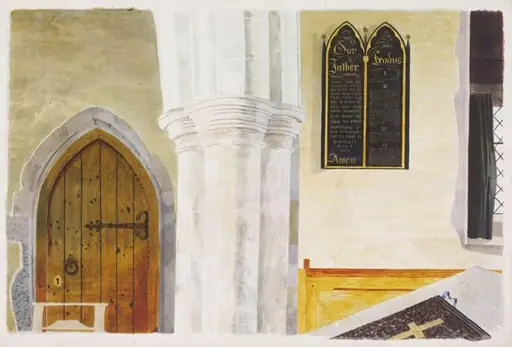 Interior of the Church of St. Mary the Virgin, Lindsell
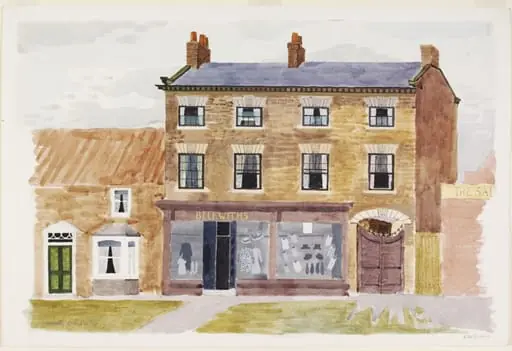 House at Easingwold
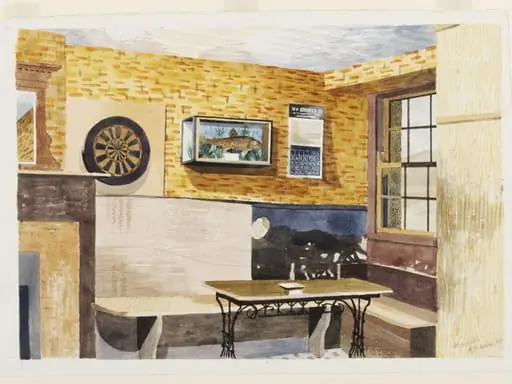 The Smoke Room, Ashopton Inn
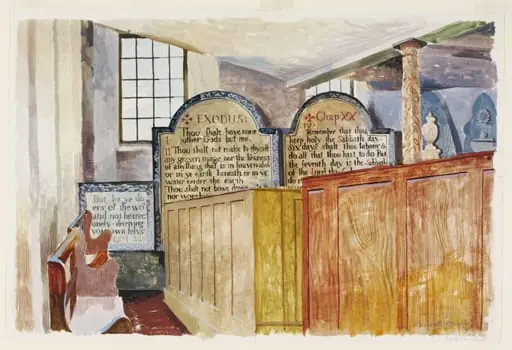 Pews in St Mary's Church, Whitby