Artwork
H Beard Print Collection
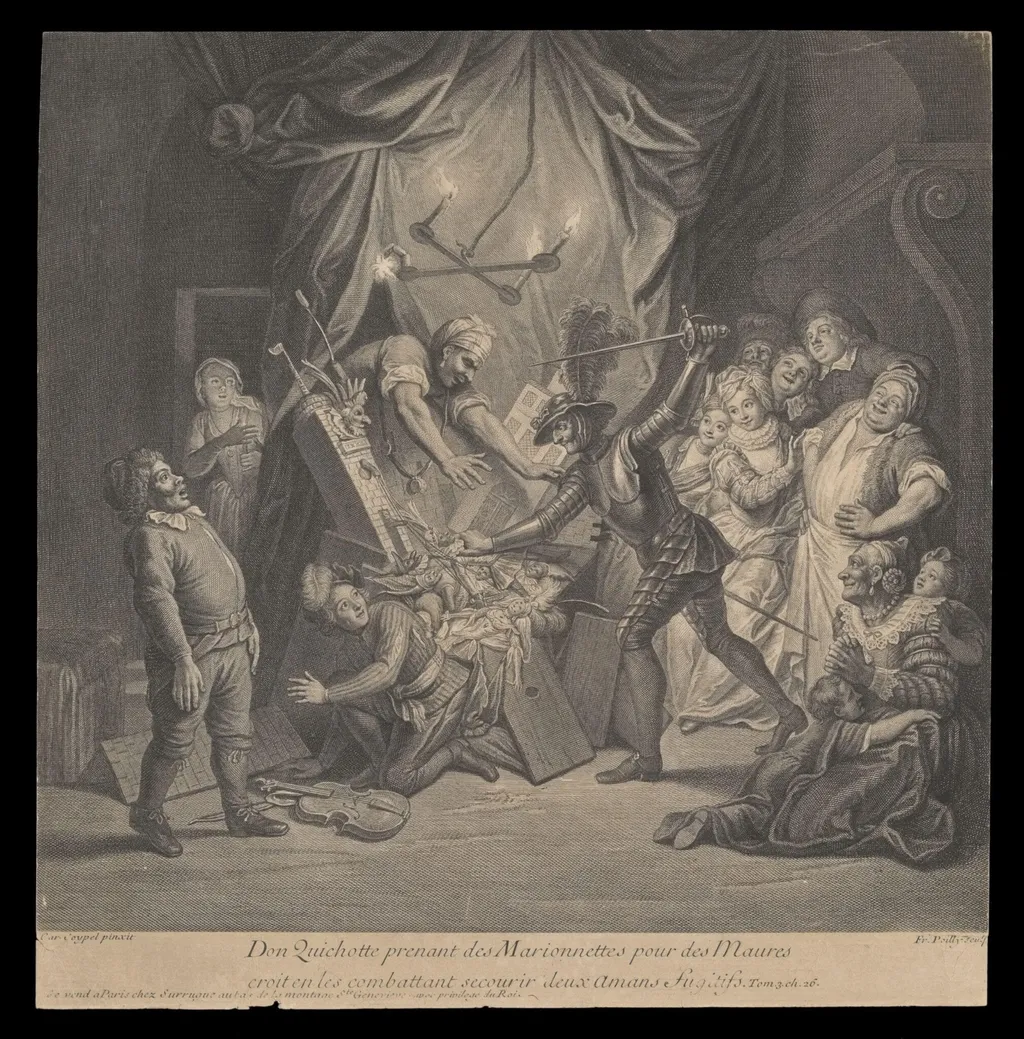
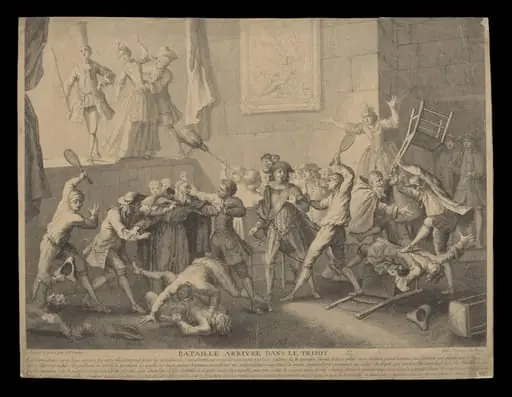
H Beard Print Collection is a print by the Impressionist artist Charles-Antoine Coypel. It dates from 1876 and is held in the collection of the Victoria and Albert Museum. This print depicts a scene from Cervantes' Don Quixote, showing the deluded knight assaulting a puppet theater.
About this work
Overview
This print depicts a scene from Cervantes' Don Quixote, showing the deluded knight assaulting a puppet theater.
This print depicts a scene from Cervantes' Don Quixote, showing the deluded knight assaulting a puppet theater. The title, in French, suggests a European artistic context, likely from the 18th or 19th century. The image captures a moment of comic absurdity, aligning with the novel’s satirical tone. The work belongs to the H. Beard Print Collection, a curated assemblage of illustrated literary scenes.
Subject & Meaning
Don Quixote, convinced the puppets are Moorish invaders, charges at them with his lance. The scene humorously underscores his inability to distinguish fiction from reality, a central theme in Cervantes’ novel. The puppet show, a common entertainment of the time, becomes a mirror for his misplaced heroism. The artist uses this moment to highlight the gap between idealism and the mundane world.
Technique & Style
The print employs fine line work and layered coloring to render detail in costume, architecture, and motion. While the visual note mentions sfumato, this technique—characteristic of painting—is unlikely in printmaking; instead, the effect may arise from stippling or cross-hatching. The composition is dynamic, with diagonal sword strokes and exaggerated gestures enhancing the theatricality of the scene.
History & Provenance
The print originates from the H. Beard Print Collection, assembled in the 19th century by a British collector known for literary-themed engravings. Its French title suggests possible French or Franco-British production, common among illustrators catering to continental audiences. The work was likely reproduced from an earlier illustration, reflecting the period’s popularity of serialized literary imagery.
Context
During the 18th and 19th centuries, Don Quixote’s adventures were widely illustrated across Europe, especially in France and England. Puppet theaters were familiar public spectacles, making this scene instantly recognizable. Artists often emphasized the knight’s folly to appeal to audiences who valued wit and moral satire, aligning with Enlightenment-era interests in reason and illusion.
Legacy
This print contributes to a broader tradition of visual interpretations of Cervantes’ novel, preserving its cultural resonance through accessible media. It reflects how literature was consumed visually in an era before mass photography. Though not by a major artist, it remains a representative example of how popular stories were adapted into print culture for domestic and educational use.
Artist & collection


 Le glouton
 The Judgment of Solomon
 The Crowning with Thorns
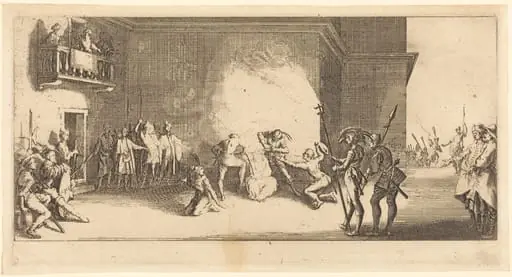 The Crowning with Thorns
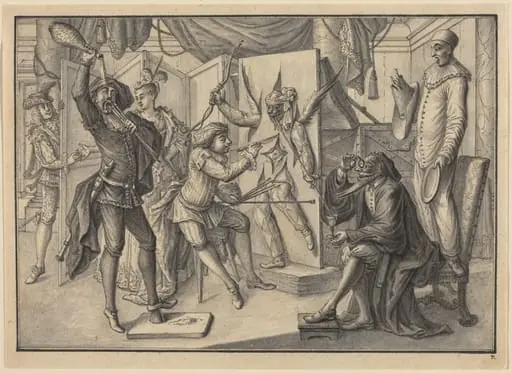 Mezzetin "Paints" a Portrait of Cupid by Cutting the Canvas to Reveal Harlequin
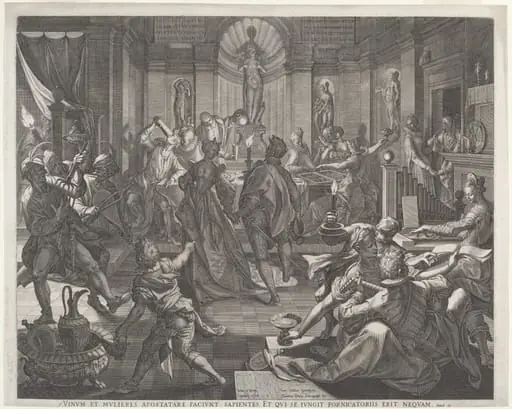 A Pleasure House
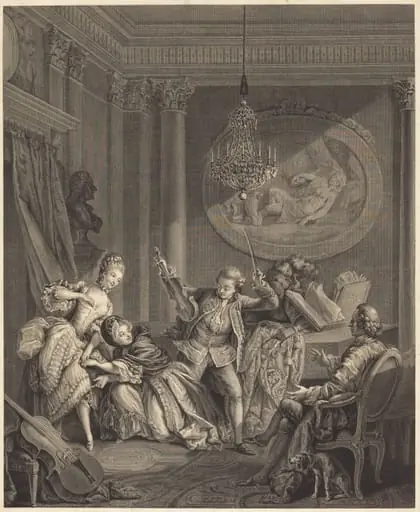 Le chemin de la fortune
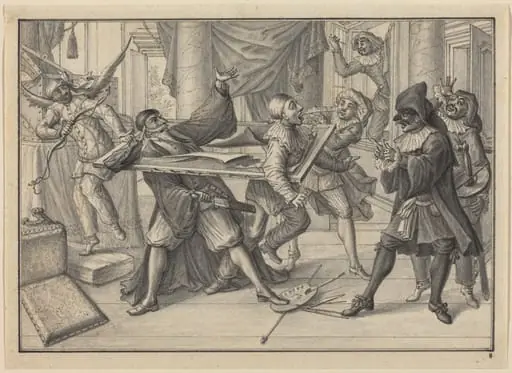 Mezzetin and Harlequin Use the Picture Frame to Catch Pantaloon and Pierrot
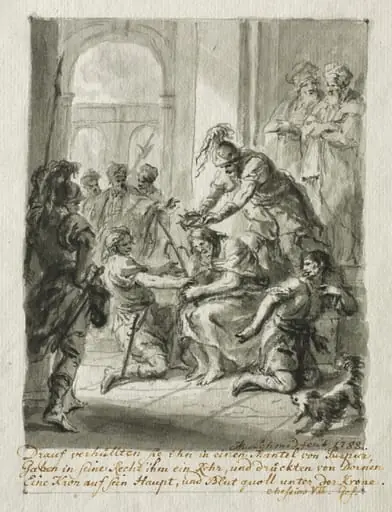 Christ Crowned with Thorns
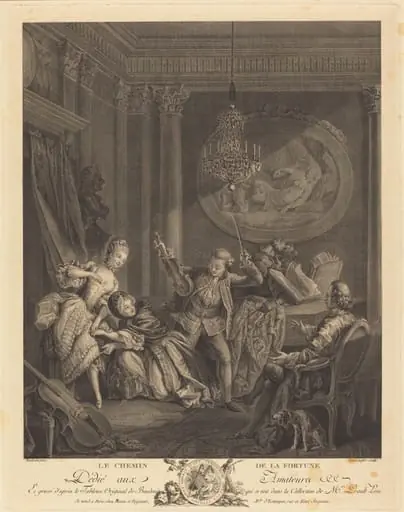 Le chemin de la fortune
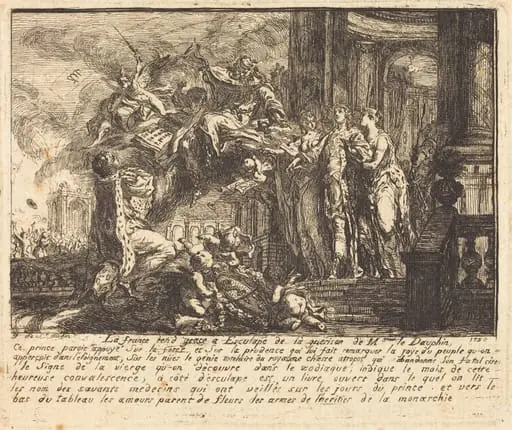 Allegory of the Dauphin's Convalescence (Allegorie sur la convalescence du Dauphin)
 H Beard Print Collection