Artwork
Diana and Endymion
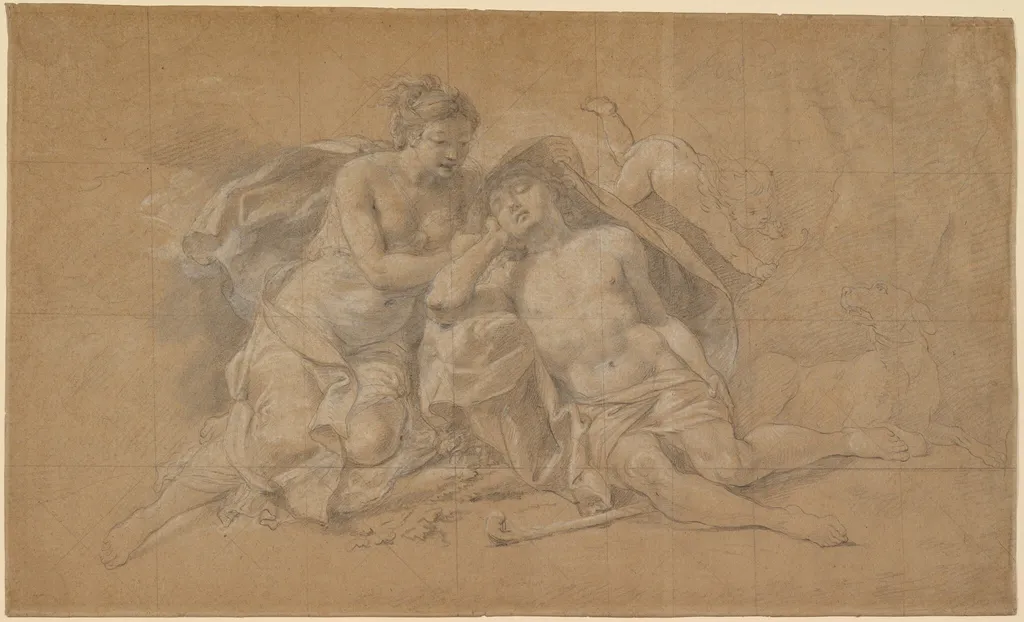
Diana and Endymion is a chalk drawing by the Baroque artist Charles-Antoine Coypel. It dates from 1724 and is held in the collection of the National Gallery of Art. Charles‑Antoine Coypel’s drawing Diana and Endymoon, executed around 1724, presents a mythological encounter in a compact, gestural study.
About this work
Overview
Charles‑Antoine Coypel’s drawing Diana and Endymoon, executed around 1724, presents a mythological encounter in a compact, gestural study. Rendered in black chalk with white accents on brown paper, the work measures as a preparatory sketch rather than a finished composition, emphasizing line and tonal contrast.
Subject & Meaning
The scene depicts the goddess Diana and the mortal Endymion in an intimate pose: one figure kneels, reaching toward a reclining companion whose head is tipped back. The naked bodies intertwine, suggesting the tension between divine pursuit and human vulnerability that characterizes the classical myth.
Technique & Style
Coypel employed a loose, confident line in black chalk, heightened with white to model the forms and suggest chiaroscuro. The brown paper background is reduced to a few swift strokes indicating trees, allowing the figures to dominate the visual field. The drawing’s dynamic twists and dramatic lighting hint at a larger, more finished work.
History & Provenance
Created circa 1724, the drawing is a study likely intended for a subsequent painting or larger composition. Its provenance traces back to Coypel’s workshop, where such preparatory sketches were common practice for French academic artists of the early eighteenth century.
Context
In the early 1700s, French artists frequently revisited classical myths, using them to explore idealized forms and emotional expression. Coypel, a prominent court painter, integrated academic drawing techniques with theatrical composition, aligning his work with the tastes of the Rococo period while retaining a disciplined academic approach.
Artist & collection


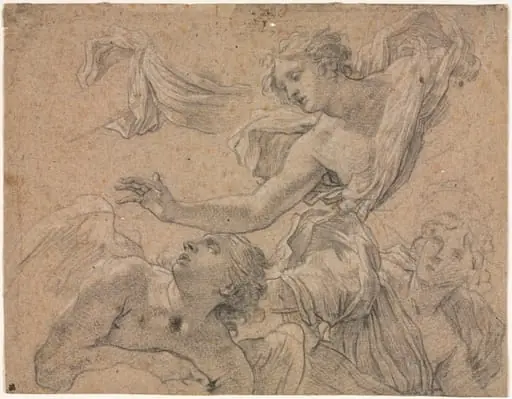 Studies of Angels (recto)
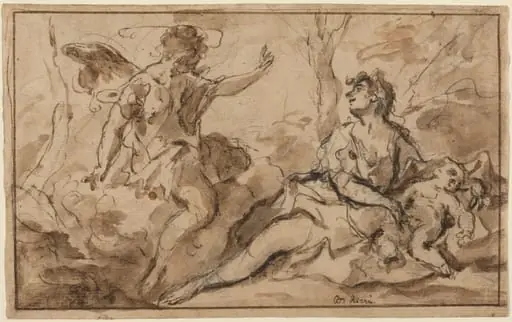 The Angel Appearing to Hagar and Ishmael
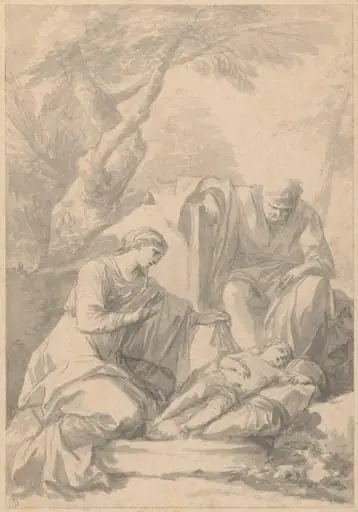 Holy Family Resting on the Flight into Egypt
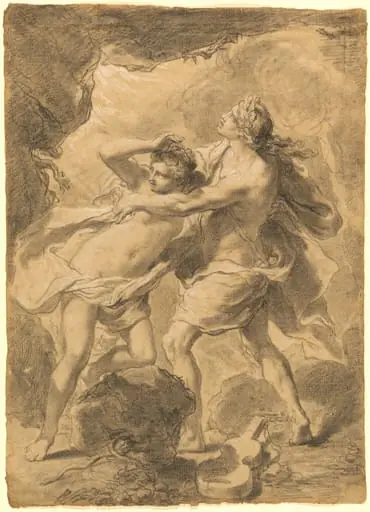 Orpheus and Eurydice
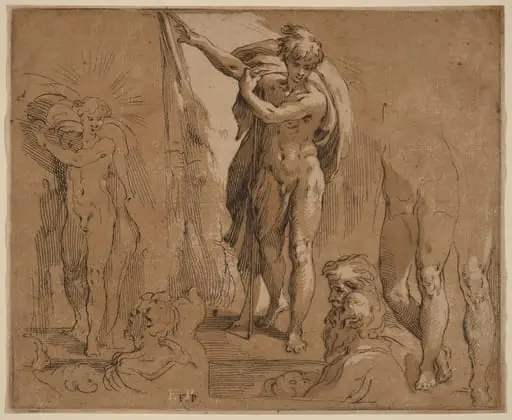 Saint John the Baptist
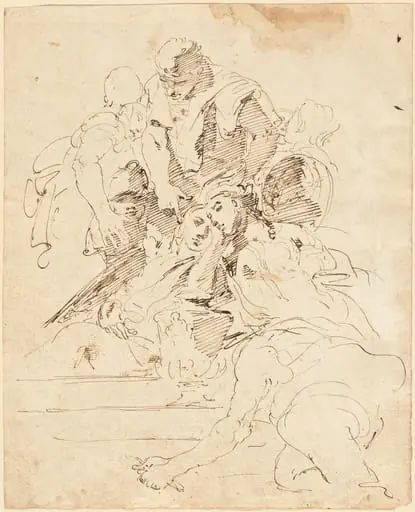 Classical Figures Gathered around an Urn
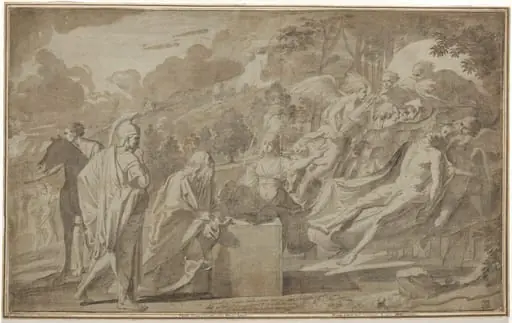 The Prophecy of Basilides
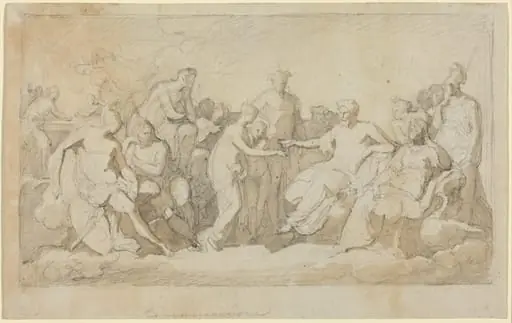 Psyche Received on Mount Olympus
![Jacob and Rebecca before Isaac [recto], by French 18th Century](https://artifactworldgallery.com/img/french-18th-century--jacob-and-rebecca-before-isaac-recto--5393ee8d0dceb48c-w320.webp) Jacob and Rebecca before Isaac [recto]
Jacob and Rebecca before Isaac [recto]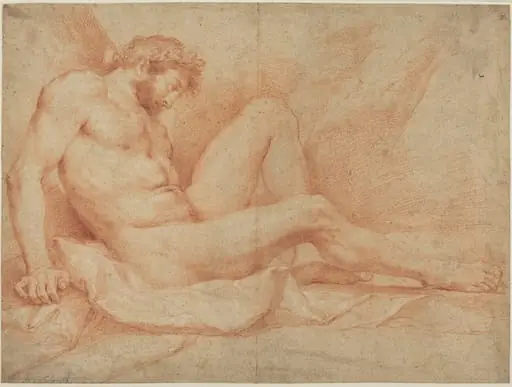 Academic Nude Study of a Seated Male
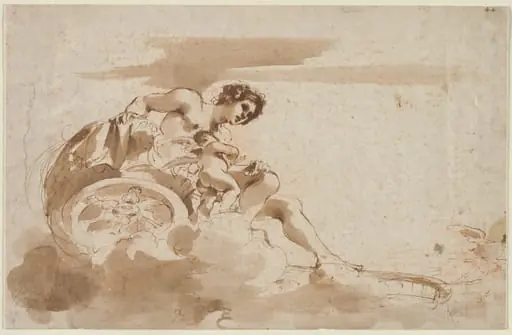 Venus and Cupid in a Chariot
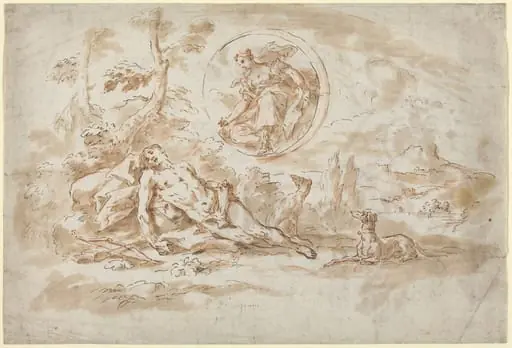 Diana and Endymion