Artwork
L'Abbe Jean-Antoine de Maroulle
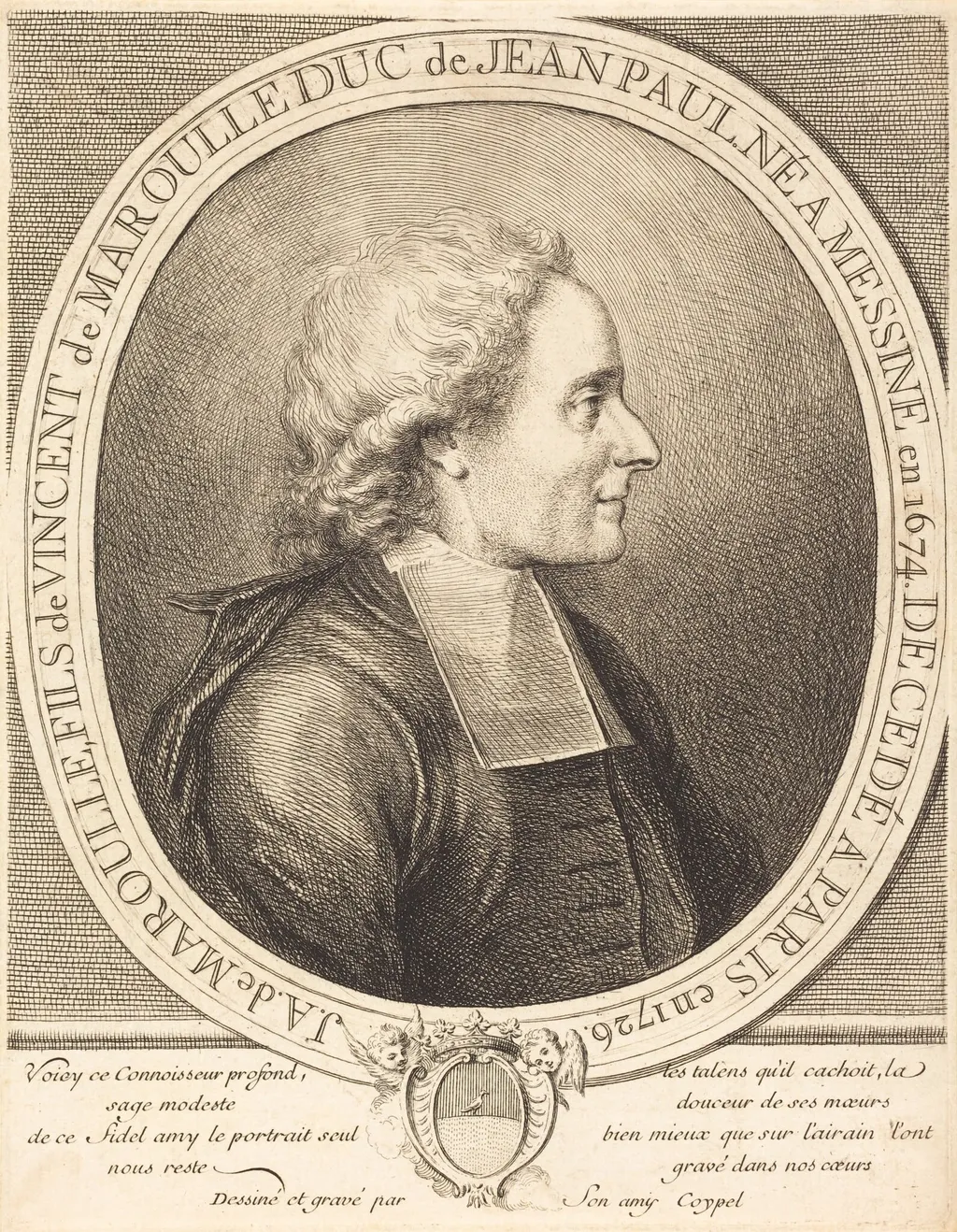
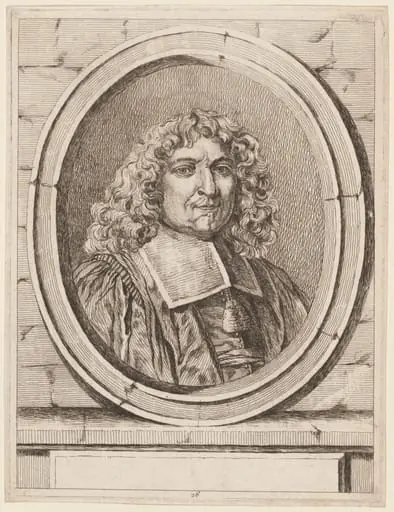
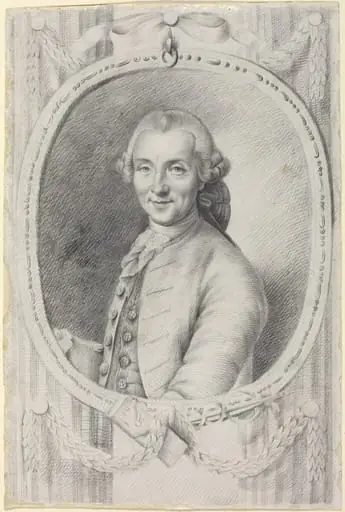
L'Abbe Jean-Antoine de Maroulle is an ink print by the Baroque artist Charles-Antoine Coypel. It dates from 1726 and is held in the collection of the National Gallery of Art.
About this work
Overview
The work is a portrait rendered in fine linear detail, confined within a circular frame that integrates both image and inscription.
Created in 1726 by Charles-Antoine Coypel, this etching portrays Jean-Antoine de Maroulle, a French clergyman. The work is a portrait rendered in fine linear detail, confined within a circular frame that integrates both image and inscription. The composition emphasizes the subject’s dignified presence through controlled tonal gradations and a restrained palette, typical of 18th-century print portraiture.
Subject & Meaning
Jean-Antoine de Maroulle, identified by title and name in the border, is depicted in profile with a quiet, inward smile, suggesting contemplation rather than grandeur. His dark robe and crisp white collar signify his clerical role, while the intimate scale and gentle expression convey personal character over institutional authority. The portrait functions as both identification and quiet homage, typical of ecclesiastical portraiture in early modern France.
Technique & Style
Coypel employed etching to achieve fine, deliberate lines that model the contours of the face and fabric with precision. The background transitions subtly from light to dark, enhancing the subject’s three-dimensionality without distraction. The circular border, inscribed with decorative lettering, frames the image as a keepsake or collectible, reflecting the period’s taste for refined, miniature-style prints meant for private collections.
History & Provenance
The etching was produced during Coypel’s active years as a painter and printmaker at the French court. While specific early ownership records are sparse, such portraits were often circulated among clergy and intellectual circles. Its survival suggests it was valued as a personal or institutional memento, possibly commissioned by Maroulle’s associates or retained within ecclesiastical archives.
Context
In early 18th-century France, etched portraits of clergy were common among those who sought to document religious figures without the expense of oil painting. Coypel, better known for history painting, occasionally turned to prints for more intimate commissions. This work reflects the intersection of artistic skill and social documentation, where printmaking served as a bridge between public ceremony and private remembrance.
Legacy
Though not widely reproduced or exhibited today, the etching remains a representative example of Coypel’s versatility and the broader tradition of clerical portraiture in print. It illustrates how artists of the period used etching to capture individuality within formal constraints, preserving the likeness of lesser-known figures for historical record rather than public acclaim.
Artist & collection