Artwork
Christ Crowned with Thorns
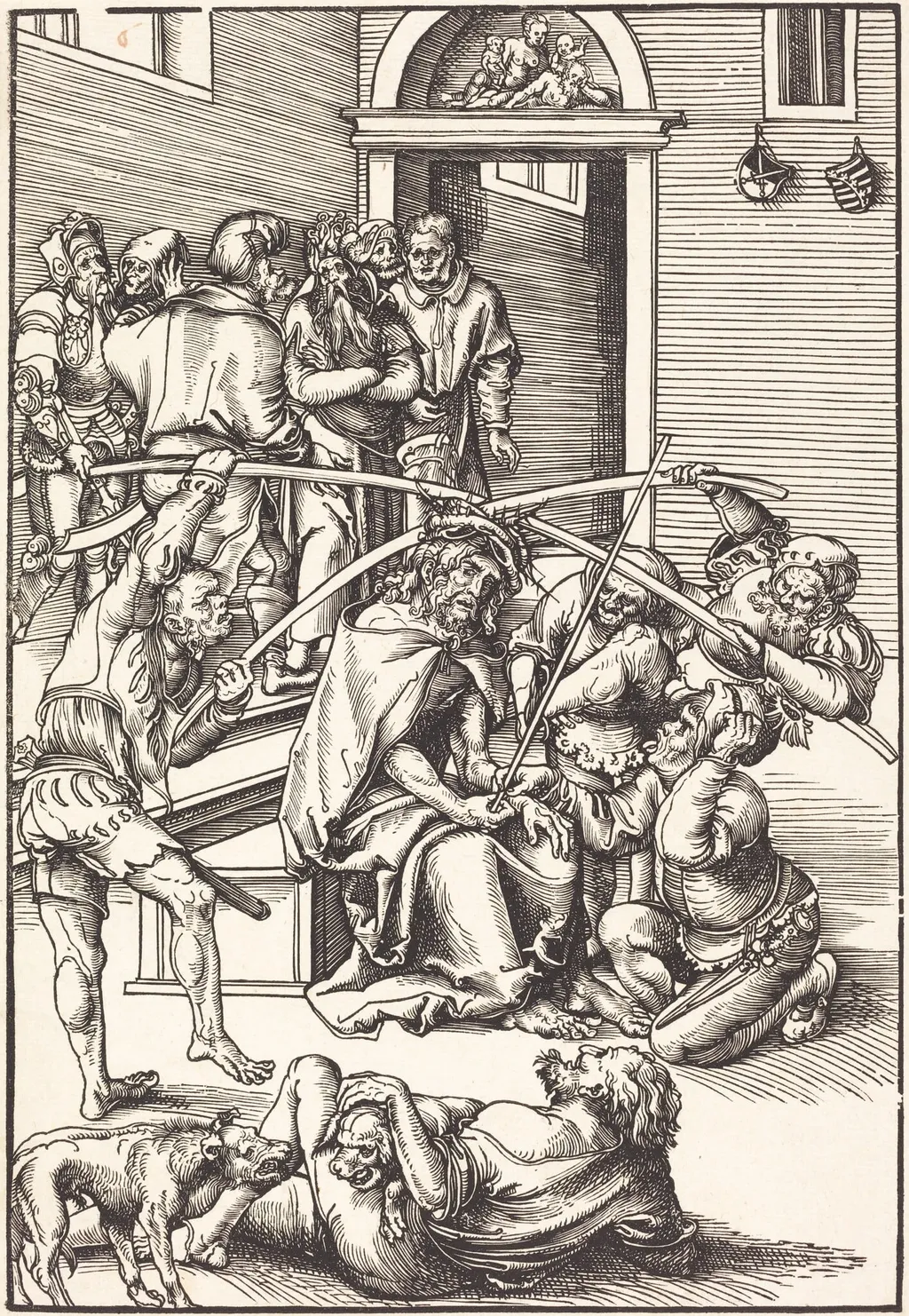
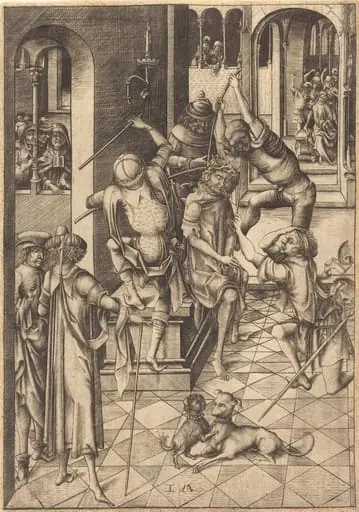
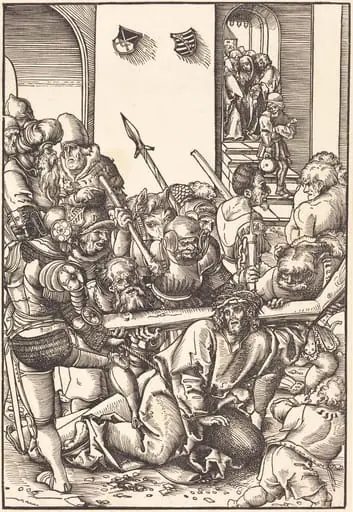
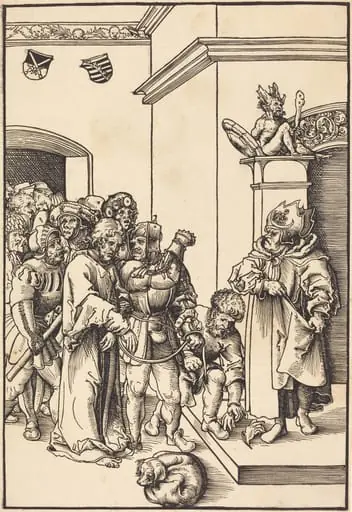
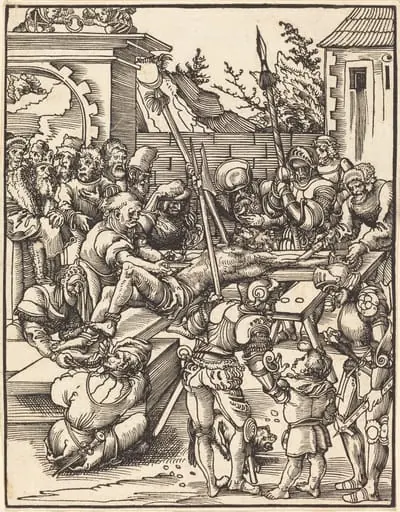
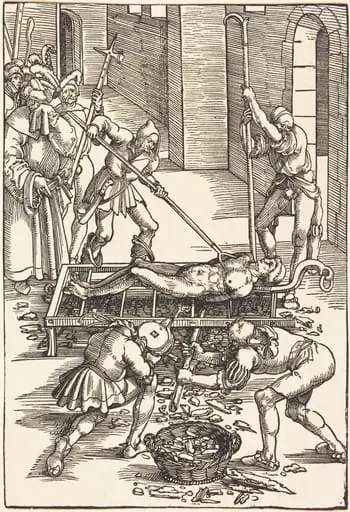
Christ Crowned with Thorns is an ink print by the Renaissance artist Lucas Cranach the Elder. It dates from 1509 and is held in the collection of the National Gallery of Art.
About this work
Overview
Lucas Cranach the Elder’s woodcut *Christ Crowned with Thorns* dates to 1509, placing it firmly within the early German Renaissance. Executed in the print medium for which Cranach was renowned, the image presents a dramatic moment from the Passion narrative, rendered with the precision and vigor characteristic of his graphic work.
Subject & Meaning
The composition centers on the moment when a group of men place a spiked crown upon Christ’s head. The figure of Christ, seated in a long robe, is surrounded by tormentors holding a reed and other implements, emphasizing the physical and spiritual suffering central to Christian devotion.
Technique & Style
Cranach employs bold, incised lines and a strong chiaroscuro of black and white to model forms and suggest depth. Textural details—such as the folds of clothing, the thorns, and the architectural backdrop—are achieved through varied line density, creating a vivid, emotionally charged scene despite the limitations of the woodcut medium.
History & Provenance
Created while Cranach served as court painter to the Electors of Saxony, the print reflects his early engagement with Catholic iconography before his later involvement in the Protestant Reformation. The work circulated as a devotional image, typical of the period’s demand for reproducible religious prints.
Context
During the early 16th century, German artists increasingly used printmaking to disseminate biblical narratives to a broader audience. Cranach’s *Christ Crowned with Thorns* exemplifies this trend, combining courtly artistic standards with the popular demand for accessible religious imagery.
Artist & collection
Artist
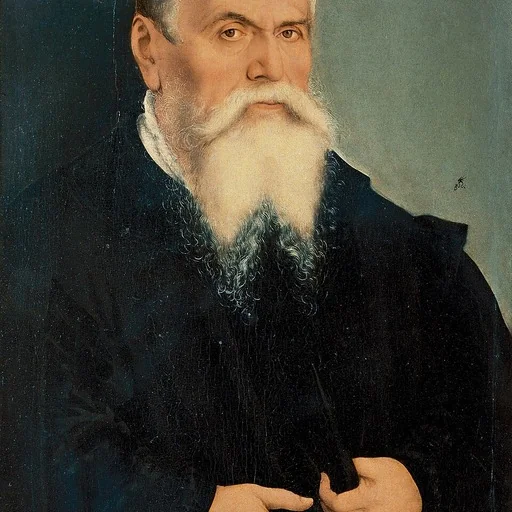
Lucas Cranach the Elder was a German Renaissance painter and printmaker in woodcut and engraving.