Artwork
Christ on the Cross with the Virgin and Saint John the Evangelist
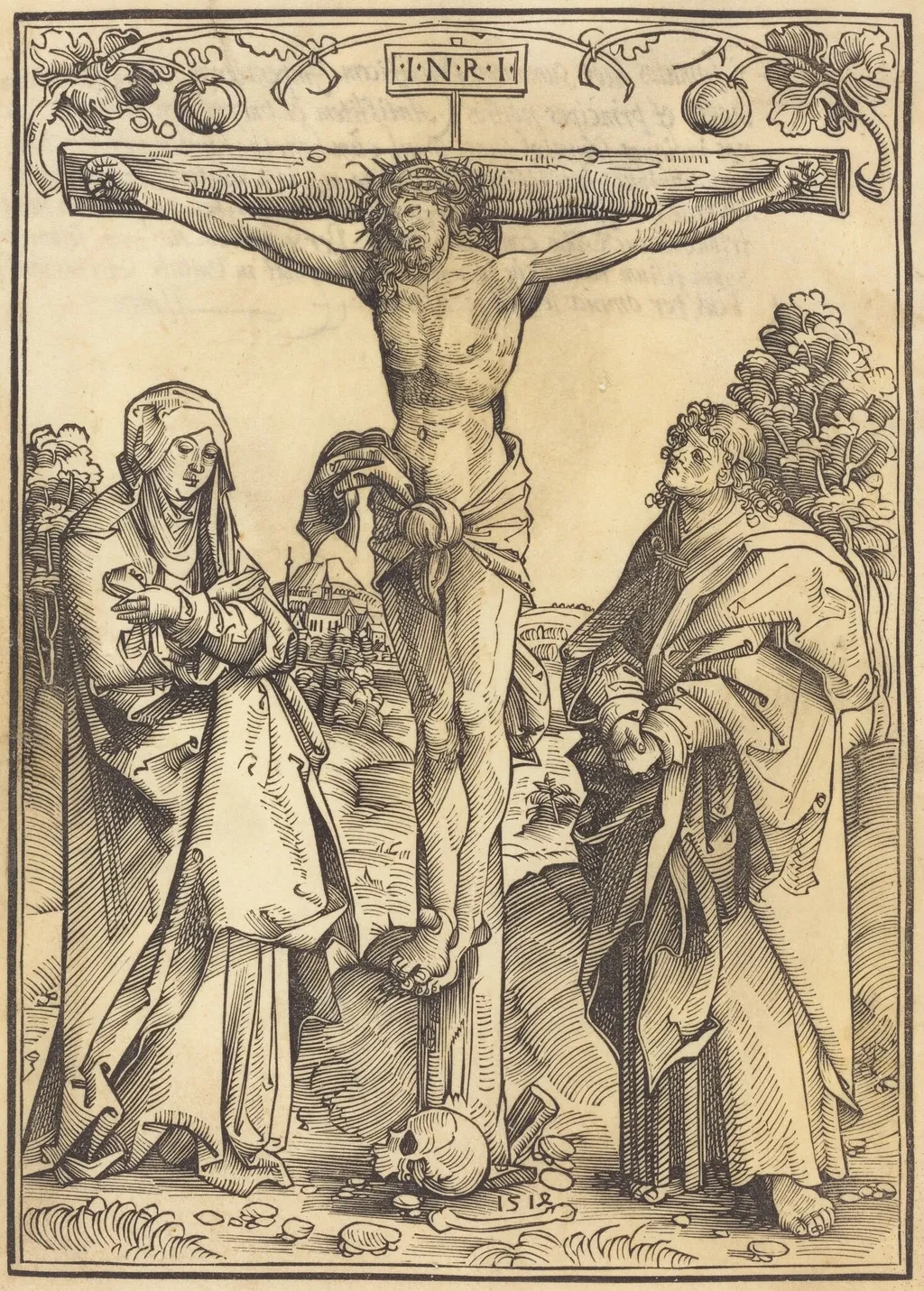
Christ on the Cross with the Virgin and Saint John the Evangelist is an ink print by the Renaissance artist Wolf Traut. It dates from 1514 and is held in the collection of the National Gallery of Art.
About this work
Overview
Wolf Traut’s 1514 woodcut on vellum presents a crucifixion scene in which Christ hangs on the cross, his head inclined backward. Flanking the cross are the Virgin Mary and Saint John the Evangelist, each gazing upward. The composition is set against a sparse landscape of trees and rocky ground, rendered in the crisp, linear quality characteristic of early sixteenth‑century prints.
Subject & Meaning
The image follows traditional Christian iconography, depicting the moment of Christ’s death with his mother and the beloved disciple positioned as witnesses. Their upward gazes emphasize devotion and sorrow, while the inscription above Christ’s head alludes to the biblical titulus, reinforcing the theological focus on sacrifice and redemption.
Technique & Style
Executed as a woodcut, the design relies on bold, clean lines incised into a wooden block, then transferred onto vellum. This method yields stark contrasts and a graphic clarity typical of Northern European printmaking in the early 1500s, allowing fine detail in the figures’ robes and the surrounding foliage despite the medium’s limitations.
History & Provenance
Created in 1514, the print is attributed to Wolf Traut, a German artist active in the early Reformation period. While specific ownership records are scarce, the work survives in several museum collections, indicating its circulation among devotional prints that were widely distributed for personal contemplation.
Context
The early sixteenth century saw a surge in religious prints that could be reproduced for a growing lay audience. Traut’s work reflects this trend, combining accessible visual narrative with the technical precision of woodcut, a medium that facilitated the spread of biblical scenes beyond illuminated manuscripts.
Artist & collection

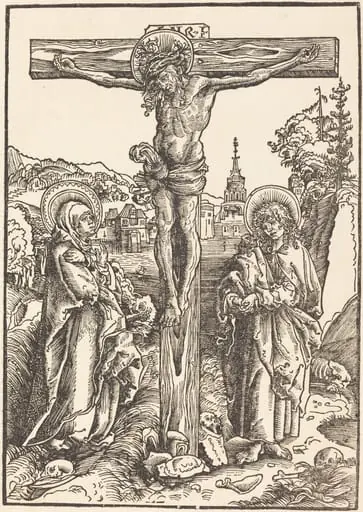 Christ on the Cross Between the Virgin and Saint John
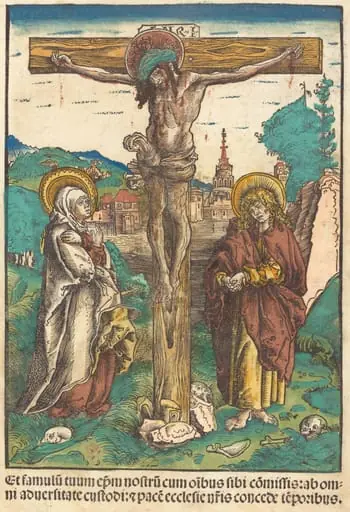 Christ on the Cross Between the Virgin and Saint John
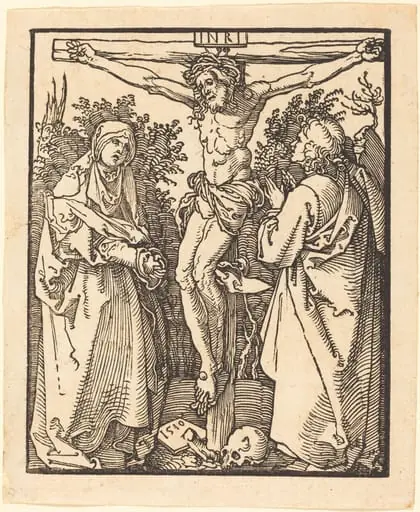 Christ on the Cross with Mary and Saint John
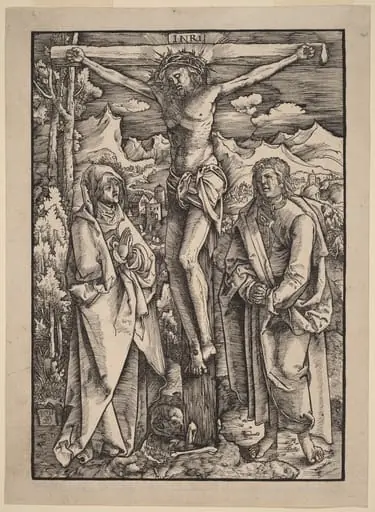 Christ on the Cross between the Virgin and Saint John
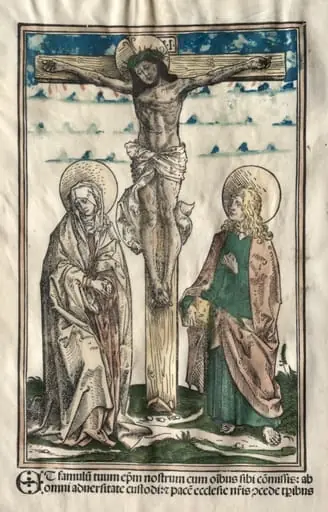 Christ on the Cross between Mary and John
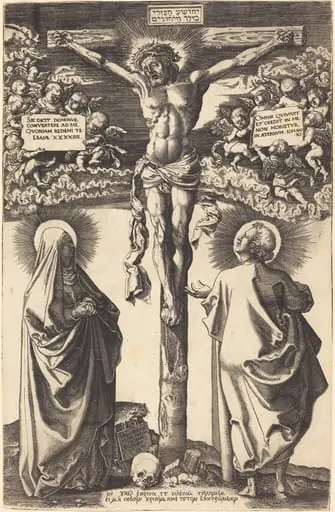 Christ on the Cross with the Virgin and Saint John
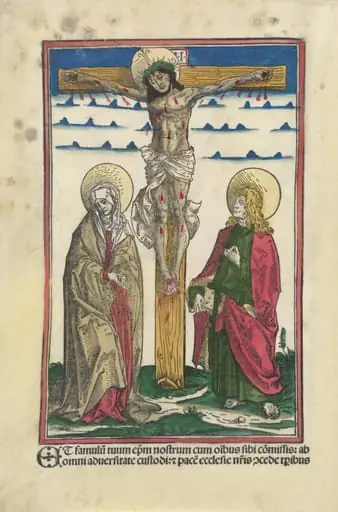 Christ on the Cross with the Virgin and Saint John
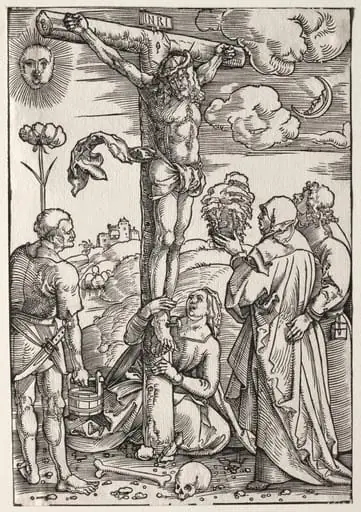 Christ on the Cross with Mary, St. John, Mary Magdalen and St. Stephen
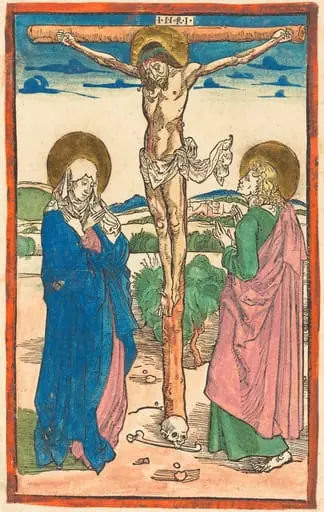 Christ on the Cross Between the Virgin and Saint John