Artwork
Pieta
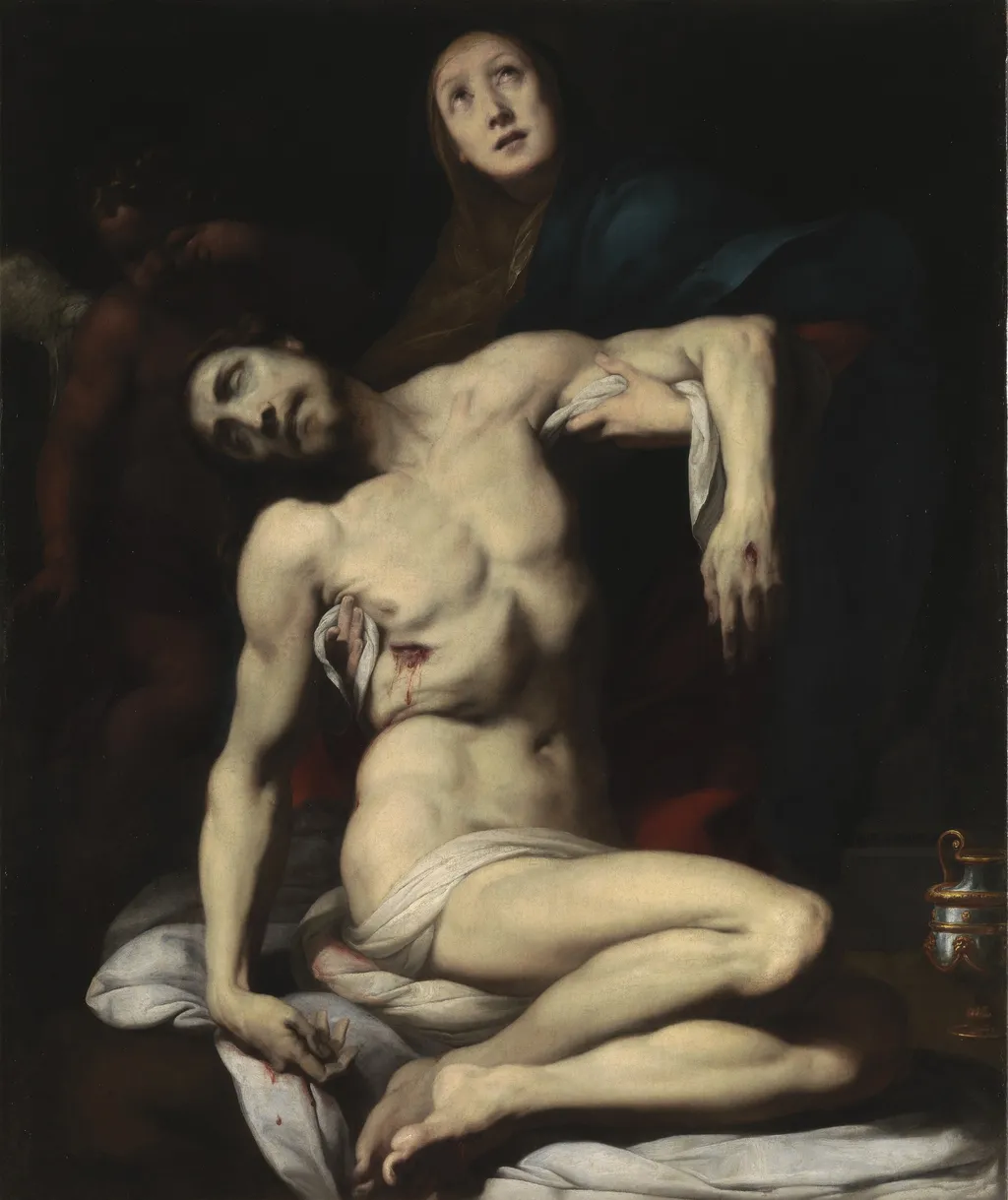
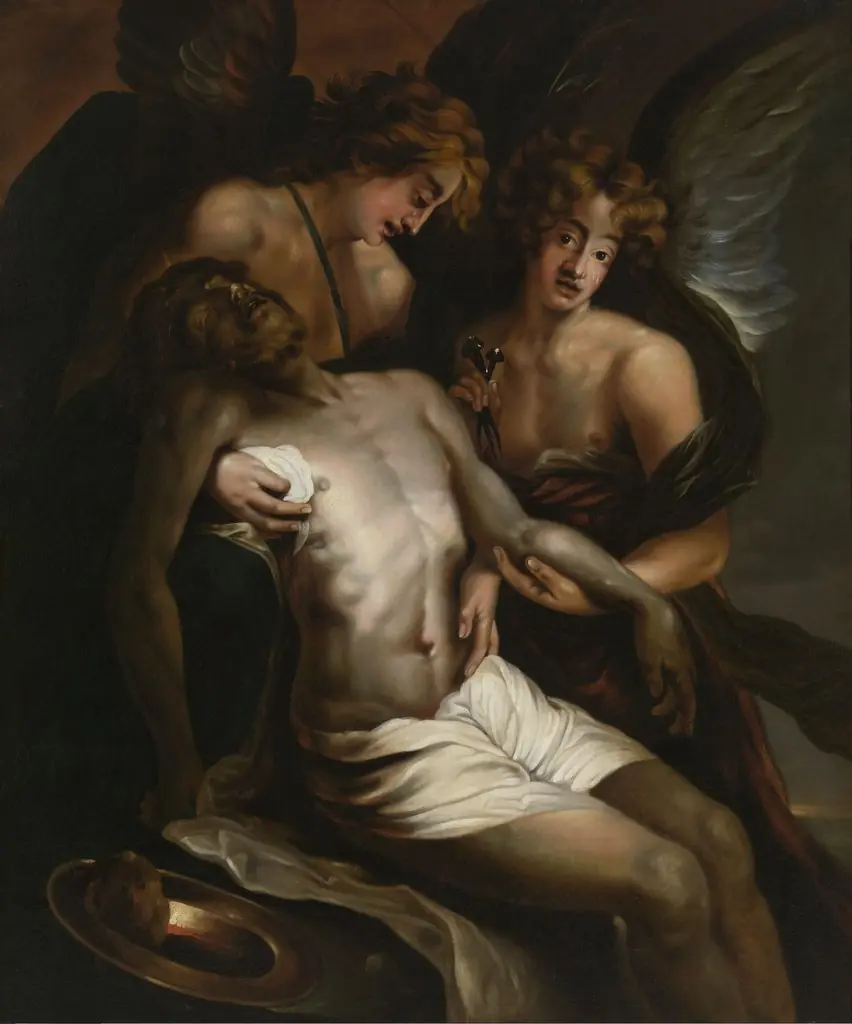
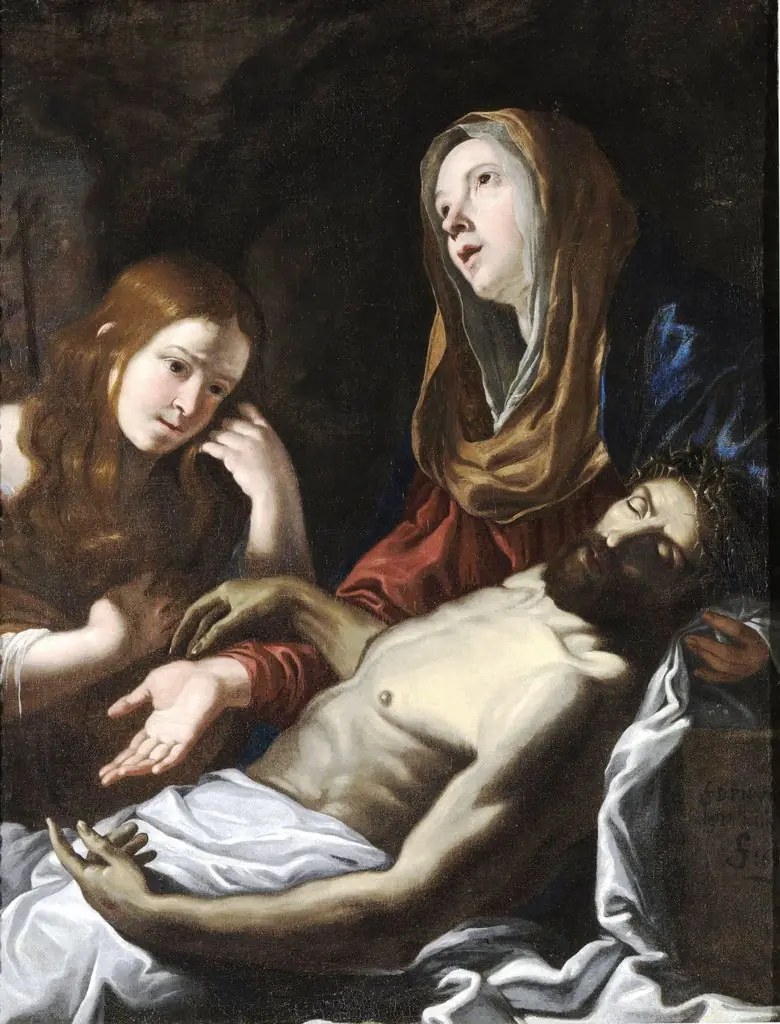
Pieta is an oil painting by the Early Baroque Italian artist Daniele Crespi. It dates from 1626 and is held in the collection of the Museo del Prado.
About this work
Overview
Daniele Crespi, a Milanese painter active in the early 1620s, completed an oil painting titled *Pietà* in 1626. Executed during the early Baroque, the work reflects a shift away from the ornamental Lombard Mannerism toward a clearer, more direct visual language. The canvas is part of the Museo del Prado’s collection.
Subject & Meaning
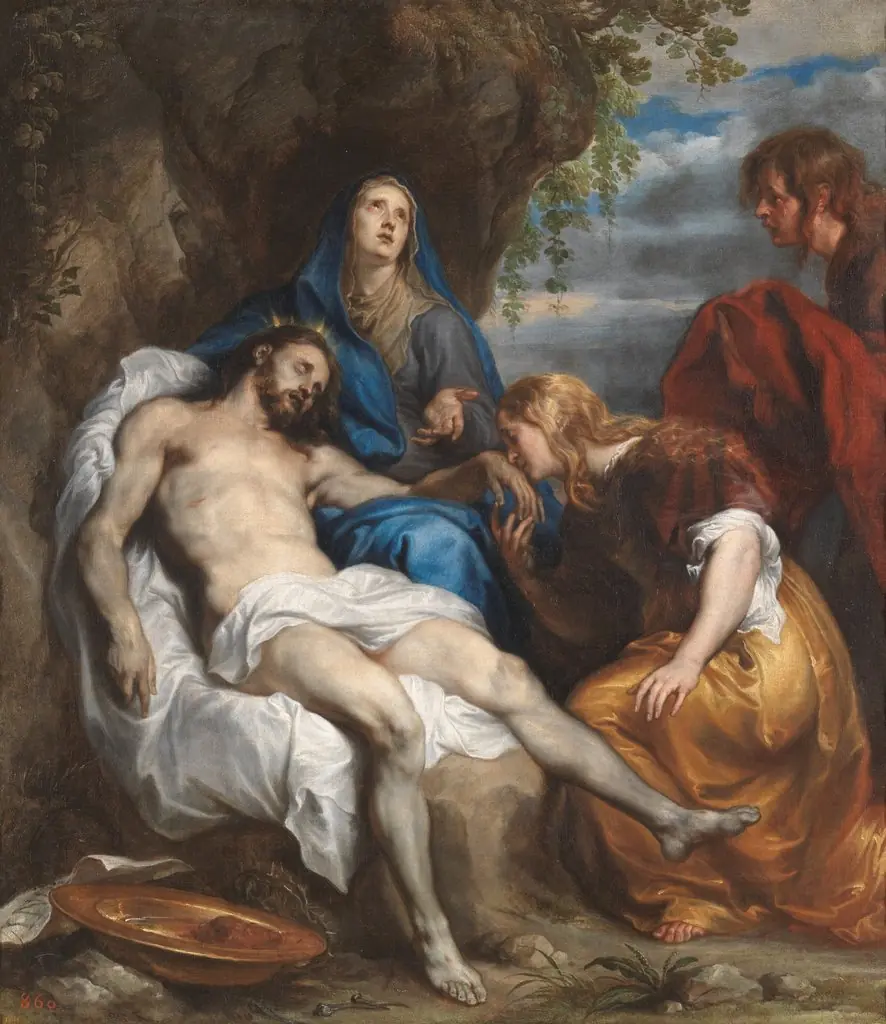
The composition presents a lifeless figure lying across the lap of a grieving woman, identified as the Virgin Mary. The fallen body bears pale skin and subtle wounds on the side and hands, emphasizing the physical suffering of Christ. The woman’s dark attire and tense expression convey sorrow and devotion, underscoring the painting’s devotional purpose.
Technique & Style
Crespi employs a stark chiaroscuro scheme, using a concentrated light source to illuminate the two figures while the surrounding space recedes into deep shadow. A faint red glow at the lower right adds a hint of drama. The realistic rendering of wounds and the tactile modeling of flesh demonstrate the artist’s move toward naturalism.
History & Provenance
After its creation in Milan, the *Pietà* entered various private and institutional collections before being acquired by the Museo del Prado, where it remains on display. Documentation traces its provenance through 17th‑century inventories, confirming its attribution to Crespi.
Context
Crespi’s work belongs to the early Baroque period in northern Italy, a time when artists sought to communicate religious narratives with emotional immediacy. By abandoning the exaggerated poses of Lombard Mannerism, he aligned with broader European trends toward realism and theatrical lighting.
Own this work as a print
Artist & collection
Artist
Daniele Crespi (1598 – 19 July 1630) was an Italian painter and draughtsman. He is regarded as one of the most original artists working in Milan in the 1620s. He broke away from the exaggerated manner of Lombard…