Artwork
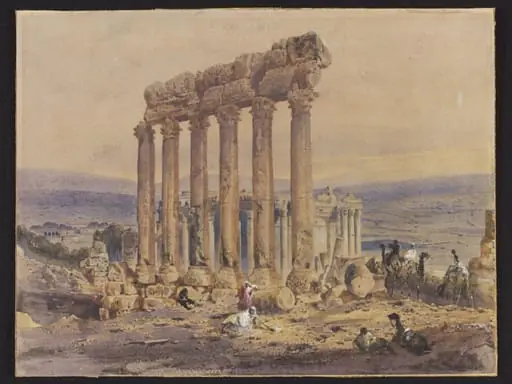
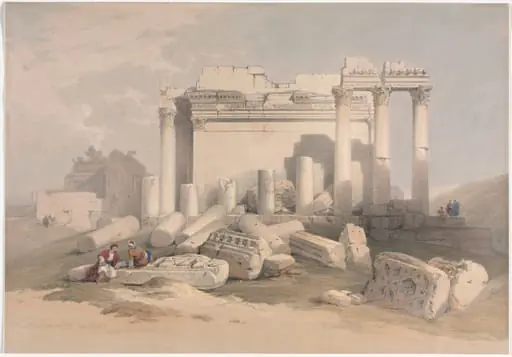
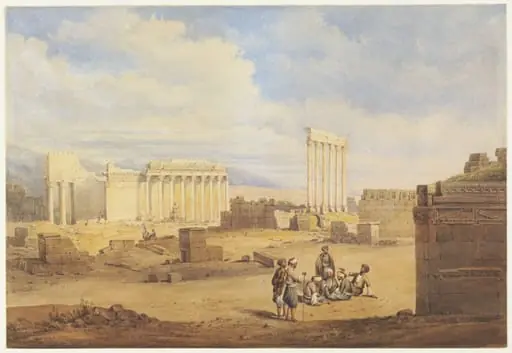
The Temple of Bacchus, Baalbek
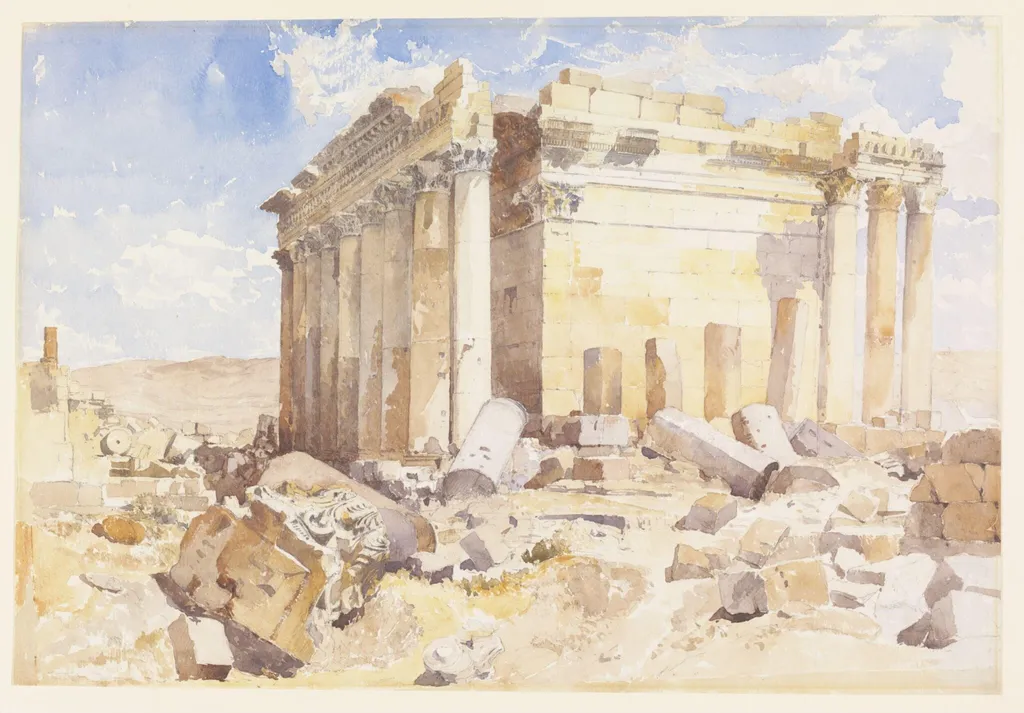
The Temple of Bacchus, Baalbek is a watercolor work on paper by the Impressionist artist William Edward Dighton. It dates from 1852 and is held in the collection of the Victoria and Albert Museum. John Dighton, a Bristol-based watercolourist, produced a small body of work during a single journey to the Near East in 1852.
About this work
Dighton’s watercolour shows the grand Temple of Bacchus in Baalbek, Lebanon. Painted in 1852-53, it captures the ruins half-lost in bright desert light. The heat and glare nearly erase the temple’s carved edges.
This trip to the Near East was his only one. He died soon after, leaving just a handful of landscapes from the journey.
Check the Victoria and Albert Museum for more.
Overview
John Dighton, a Bristol-based watercolourist, produced a small body of work during a single journey to the Near East in 1852.
John Dighton, a Bristol-based watercolourist, produced a small body of work during a single journey to the Near East in 1852. Among these is a watercolour of the Temple of Bacchus in Baalbek, painted the following year. His travels, cut short by his early death, yielded only a few surviving landscapes, several held in the Searight Collection. This piece stands as one of the few direct records of his engagement with ancient architecture in its natural setting.
Subject & Meaning
The Temple of Bacchus, rendered in its ruined state, is not portrayed as a monument to be admired in isolation but as an entity absorbed by its environment. The overwhelming desert light blurs architectural detail, suggesting a quiet tension between human creation and the relentless forces of nature. The scene conveys absence—not through decay alone, but through the erasure of form under intense solar exposure.
Technique & Style
Dighton employed watercolour to capture the transient effects of light rather than precise architectural rendering. Washes of pale ochre and white suggest blinding glare, while minimal definition in the stone carvings reflects the optical haze of a hot, arid atmosphere. His method prioritizes atmospheric impression over topographical accuracy, aligning with a lyrical tradition in British watercolour landscape.
History & Provenance
Dighton’s 1852 tour of Egypt, Sinai, Palestine, and Lebanon was his only visit to the region. He died shortly after returning, leaving behind a limited oeuvre. Six watercolours from this journey are documented in the Searight Collection, including this depiction of Baalbek. The work’s attribution was once confused with that of his mentor W.J. Muller, but stylistic analysis has since clarified its authorship.
Context
In the mid-19th century, European artists increasingly traveled to the Levant to document ancient sites, often through the lens of romanticized ruin. Dighton’s approach diverged from topographical precision; instead, he emphasized sensory experience—heat, light, and silence. His work reflects a shift from archaeological documentation toward emotional resonance with place.
Legacy
Dighton’s surviving watercolours remain rare, valued for their quiet intensity and unique perspective on ancient architecture. His brief career and early death limited his influence, yet his treatment of light and environment anticipates later tendencies in landscape painting that favored mood over detail. The Temple of Bacchus endures as a subtle testament to his brief but evocative vision.
Artist & collection
Artist
William Edward Dighton painted watercolours of 19th-century Middle Eastern landscapes and ruins.

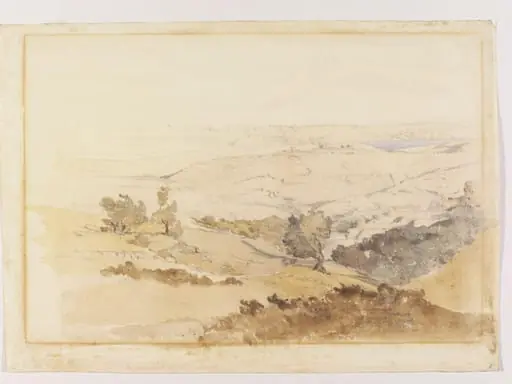
![The Cape of the Veil [Sinai], by William Edward Dighton](https://artifactworldgallery.com/img/william-edward-dighton--the-cape-of-the-veil-sinai--972bd1edd967dc98-w320.webp)