Artwork
Grinling Gibbons Carving, Oxford
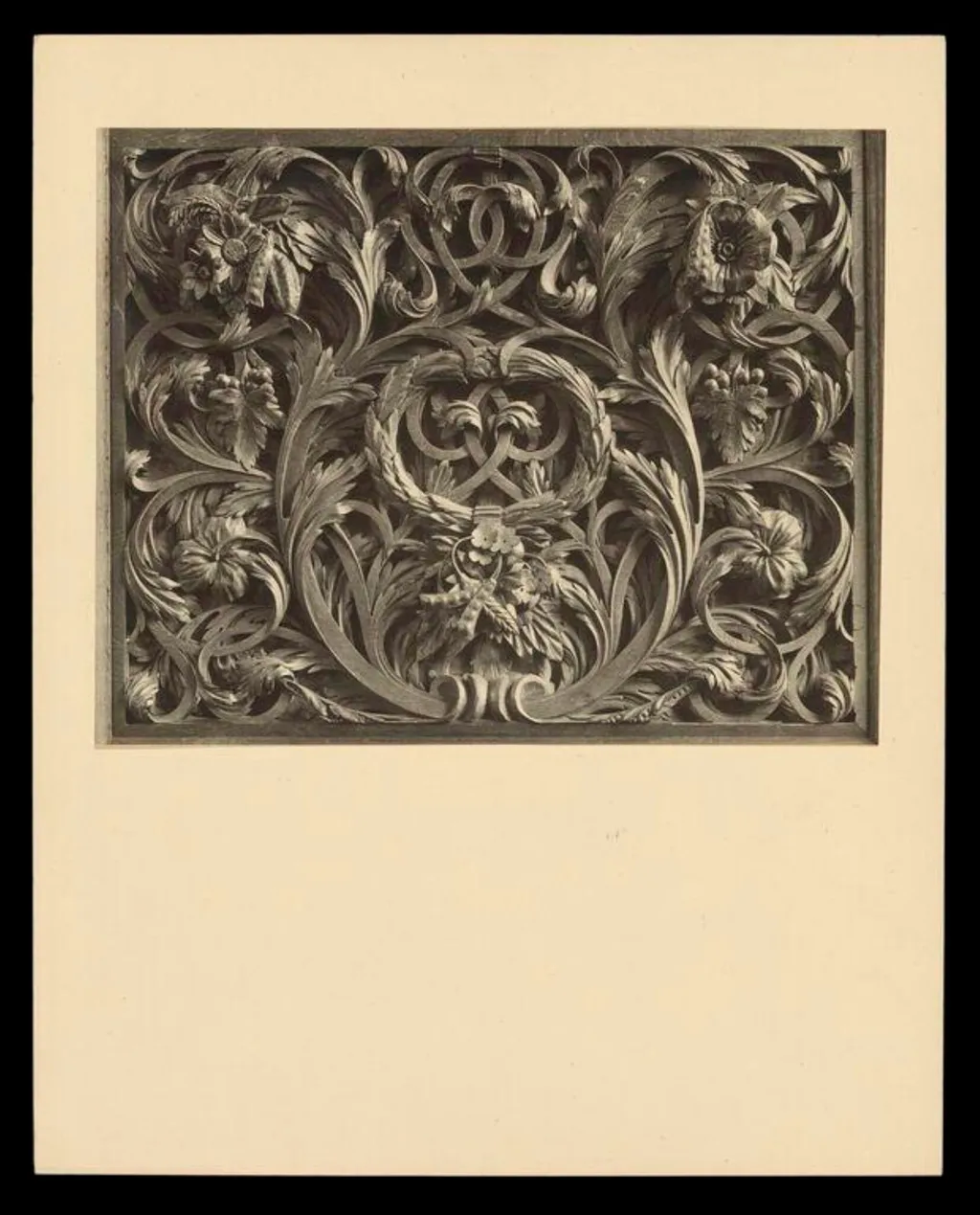
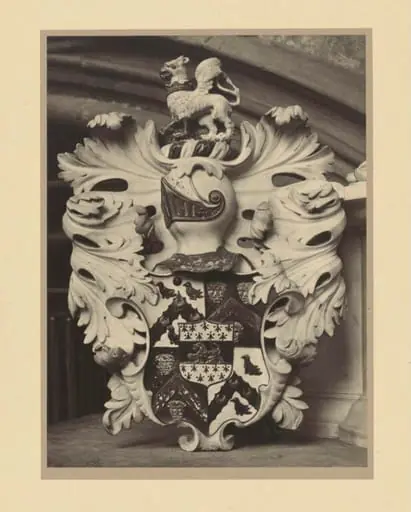
Grinling Gibbons Carving, Oxford is a photographic photography by J. Crowther Cox. It dates from 1949 and is held in the collection of the Victoria and Albert Museum. The black‑and‑white photograph, taken in 1949, records a wooden relief carved by Grinling Gibbons.
About this work
This photo was taken in 1949, showing off the work of Grinling Gibbons, a famous carver from long ago.
This is a black-and-white photograph of carved woodwork. The design looks like swirling vines, leaves, and flowers filling the whole frame. The details are sharp, with tiny curls and textures that make it look almost three-dimensional.
This photo was taken in 1949, showing off the work of Grinling Gibbons, a famous carver from long ago. The craftsmanship here is super precise, with no rough edges.
Check out the Victoria and Albert Museum to see more pieces like this in person.
Overview
The black‑and‑white photograph, taken in 1949, records a wooden relief carved by Grinling Gibbons. The image captures the entire surface, filled with an intricate arrangement of vines, leaves and blossoms that appear to swirl across the panel.
Subject & Meaning
The carving presents a dense network of botanical motifs, intertwining floral forms that suggest growth and natural abundance. The composition relies on the contrast of light and shadow to emphasize the vitality of the plant elements.
Technique & Style
Gibbons employed a high relief technique, carving the wood to a depth that creates pronounced curls and delicate textures. The precision of each cut produces a near‑three‑dimensional effect, with crisp edges that avoid any roughness.
History & Provenance
Grinling Gibbons, an eminent English carver of the late 17th and early 18th centuries, is known for his elaborate decorative work. The photograph documents one of his surviving pieces, providing visual evidence of his skill for mid‑20th‑century audiences.
Context
The image was produced for archival and scholarly purposes, reflecting post‑war interest in preserving historic decorative arts. It situates Gibbons’ work within the broader tradition of ornamental wood carving that flourished in English baroque interiors.
Artist & collection
Artist
J. Crowther Cox spent his life pointing a camera at old buildings, especially churches, before the stones could forget their stories. He liked the way light hit carved saints and weathered coats of arms, so he returned…

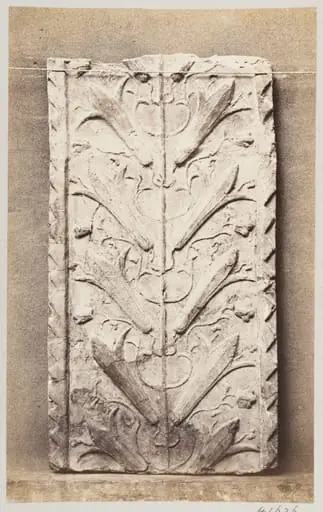 Bas-relief portion of friez of fleur de lys in terra cotta
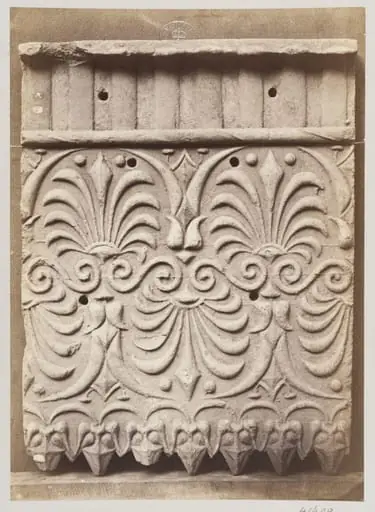 Bas-relief portion of a frieze of honeysuckle in terra cotta
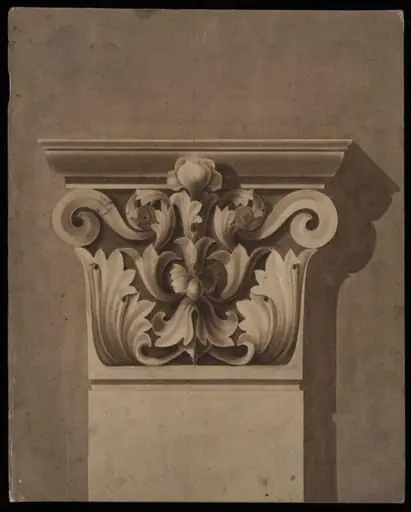 Untitled
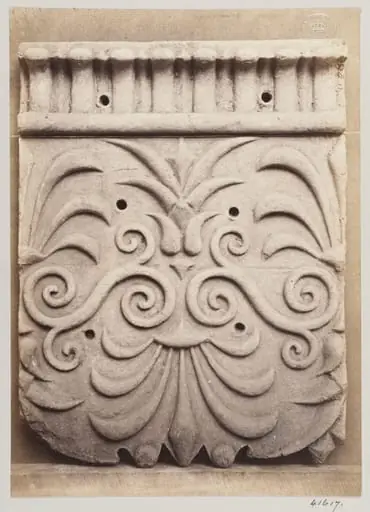 Bas-relief portion of a frieze in terra cotta
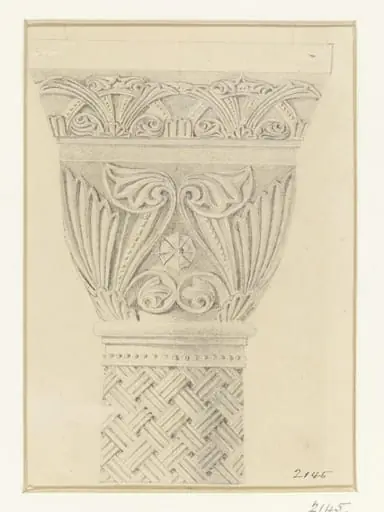 Paradigmata Graphics Variorum Artificum
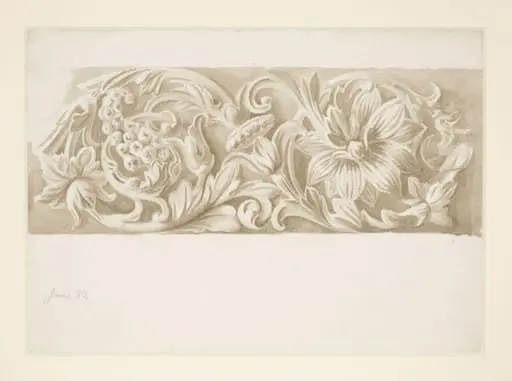 Drawing of part of a frieze
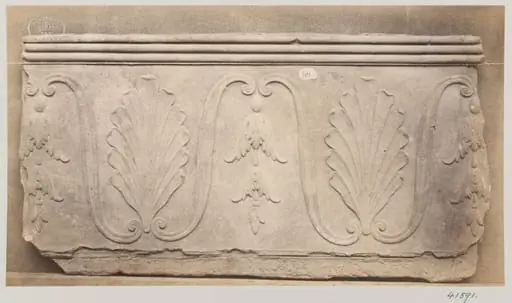 Bas-relief of a portion of a frieze depicting a palmetto and foliage in terra cotta
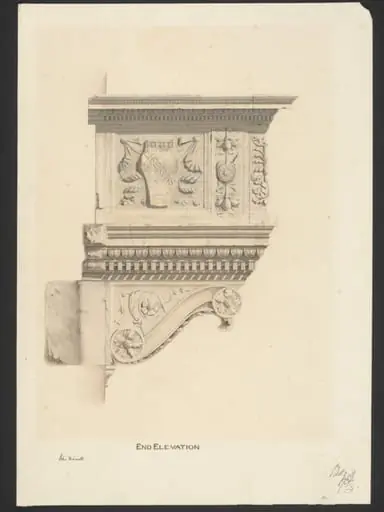 Drawing of the cantoria of Santa Maria Novella, Florence
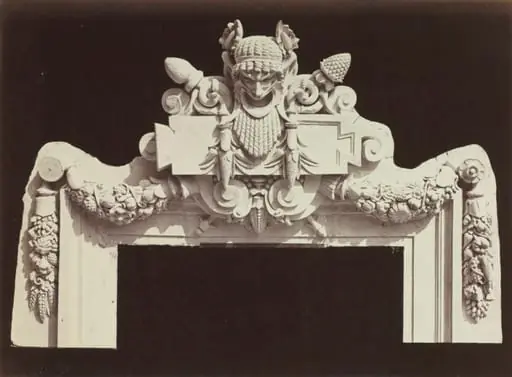 Ornamental Scupture
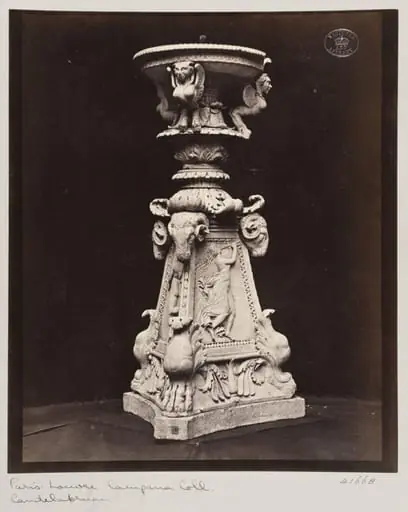 Marble sculptured fountain
 Ornament Panel: Three Children Blowing Horns
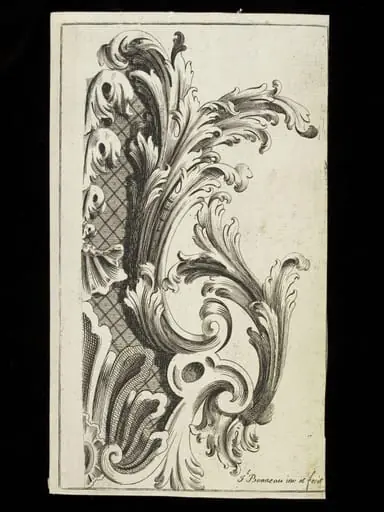 Ornament print by Jacob Bonneau