Artwork
Fruits of Intemperance
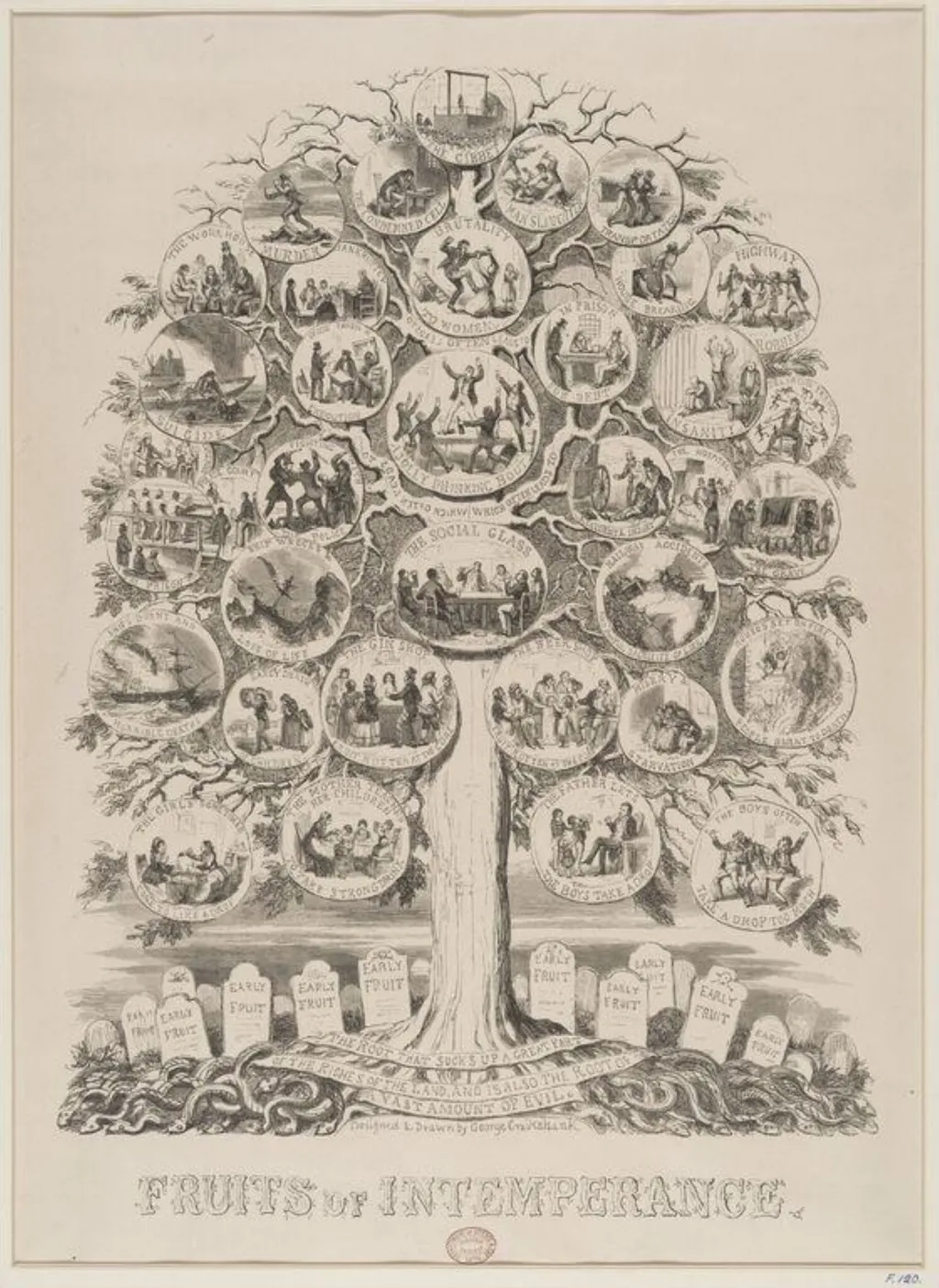
Fruits of Intemperance is a print by the Impressionist artist George Cruikshank. It dates from 1854 and is held in the collection of the Victoria and Albert Museum.
About this work
Overview
Each circular vignette depicts a stage in the descent into alcohol-related ruin, arranged vertically from the trunk to the upper branches.
Created in 1854 by George Cruikshank, this black-and-white print presents a dense, tree-like composition divided into 36 small scenes. Each circular vignette depicts a stage in the descent into alcohol-related ruin, arranged vertically from the trunk to the upper branches. The design mimics a fruit-laden tree, with each 'fruit' representing a consequence of drinking. No color is used, emphasizing stark moral contrast. The entire image functions as a single, unbroken narrative of decline.
Subject & Meaning
The print traces the trajectory of alcohol abuse from mild social drinking to irreversible tragedy. Lower scenes show domestic neglect and poverty, while upper branches reveal violent acts, institutionalization, and death. Repeated motifs—broken families, abandoned children, and graves labeled 'Early Fruit'—underscore the inevitability of ruin. A serpent at the base, bearing the inscription 'The Land Is Another Grave,' suggests systemic corruption. The work frames intoxication not as personal failure but as a societal plague.
Technique & Style
Cruikshank employed fine, unbroken ink lines to render every detail with precision, creating a claustrophobic density that mirrors the overwhelming nature of addiction. The absence of tone or color heightens the grimness, forcing focus on narrative clarity. Scenes are uniformly circular, mimicking fruit, and arranged to guide the viewer’s eye upward. Repetition of similar compositions—such as fallen men or weeping women—reinforces cyclical suffering, turning visual rhythm into moral indictment.
History & Provenance
Produced during the height of the British Temperance Movement, the print was widely distributed as a moralizing tool. It was likely printed in multiple copies for public display in churches, schools, and reform societies. Though not signed in the image itself, Cruikshank’s authorship is well-documented through contemporary records and his known alignment with temperance causes. No known original color versions exist; all surviving prints are monochrome.
Context
The print emerged amid growing public concern over alcohol’s social costs in industrial Britain, where cheap gin and widespread drunkenness fueled poverty and crime. Temperance advocates used visual media to reach illiterate audiences, and Cruikshank’s reputation as a satirist lent credibility. Similar allegorical trees appeared in pamphlets, but none matched this scale or complexity. The work reflects a broader 19th-century trend of using art to enforce moral conformity.
Legacy
Though largely forgotten outside specialist circles, the print remains a key example of Victorian moral illustration. Its structure influenced later public health campaigns, particularly those using sequential imagery to depict disease or addiction. Scholars cite it as evidence of how visual narrative was weaponized for social reform. It is preserved in major collections as a document of cultural anxiety, not as aesthetic achievement.
Artist & collection
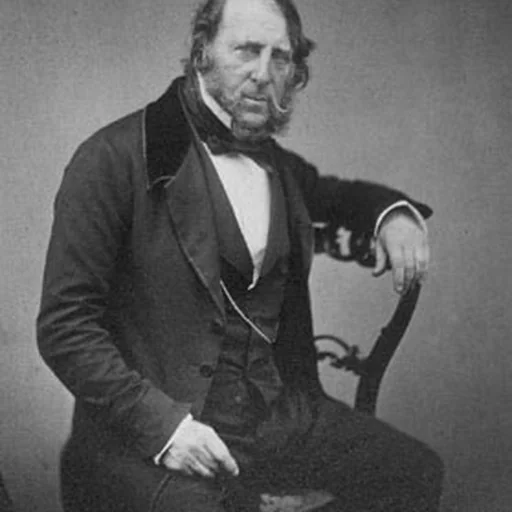
Artist
George Cruikshank or Cruickshank ( KRUUK-shank; 27 September 1792 – 1 February 1878) was a British caricaturist and book illustrator, praised as the "modern Hogarth" during his life.

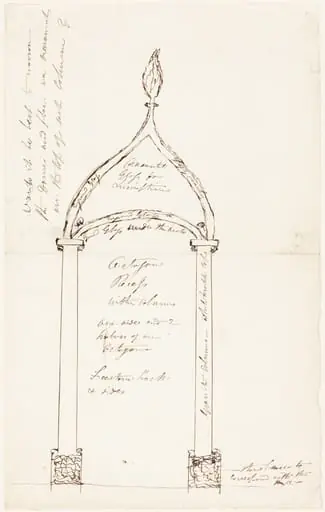 Sketch of Octagon Recess with Columns
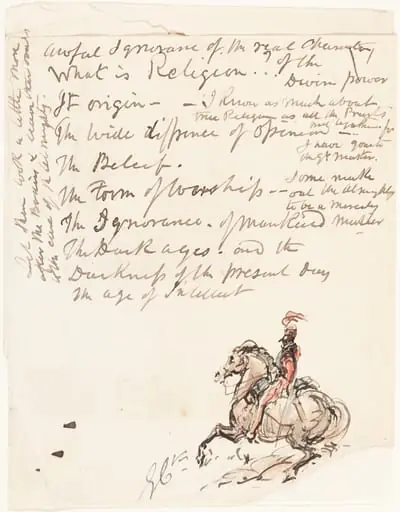 Sketch of Mounted Hussar
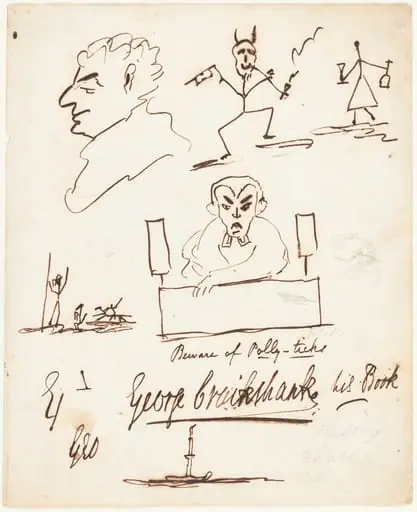 Satirical Sketches
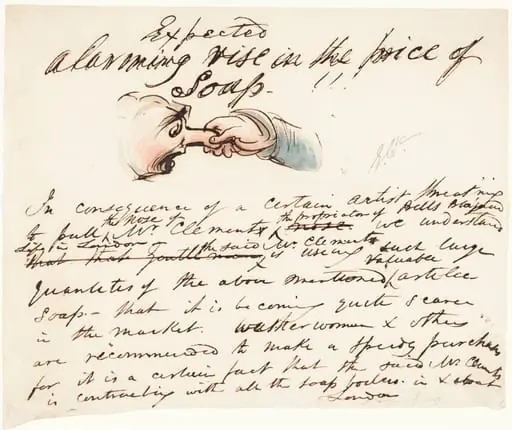 "Expected--alarming rise in the price of soap!"
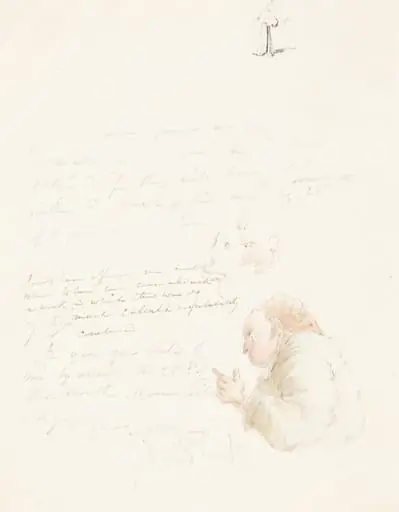 Half-Length of a Lawyer and Other Sketches
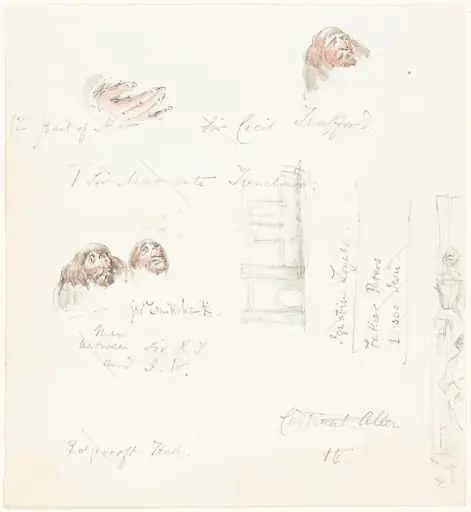 Sketches of Grotesque Faces
 Sketches of Head, Arm, and Kneeling Figure
 Fairy Connoisseurs Inspecting Mr. Frederick Locker's Collection of Drawings
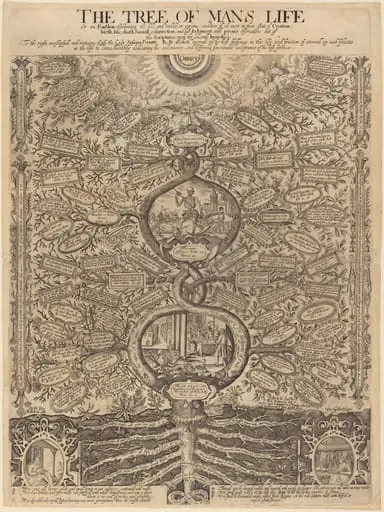 The Tree of Man's Life
 Family Tree of the Stuarts Stemming From Banquho
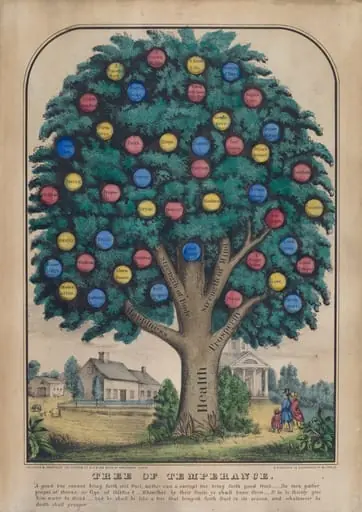 Tree of Temperance
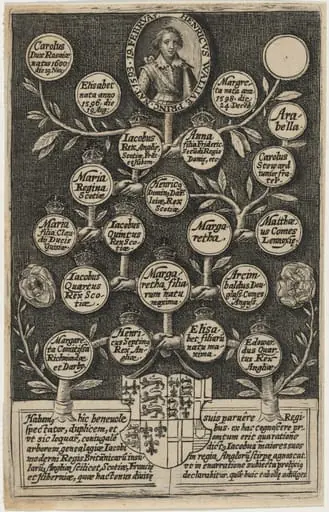 Henry Frederick, Prince of Wales
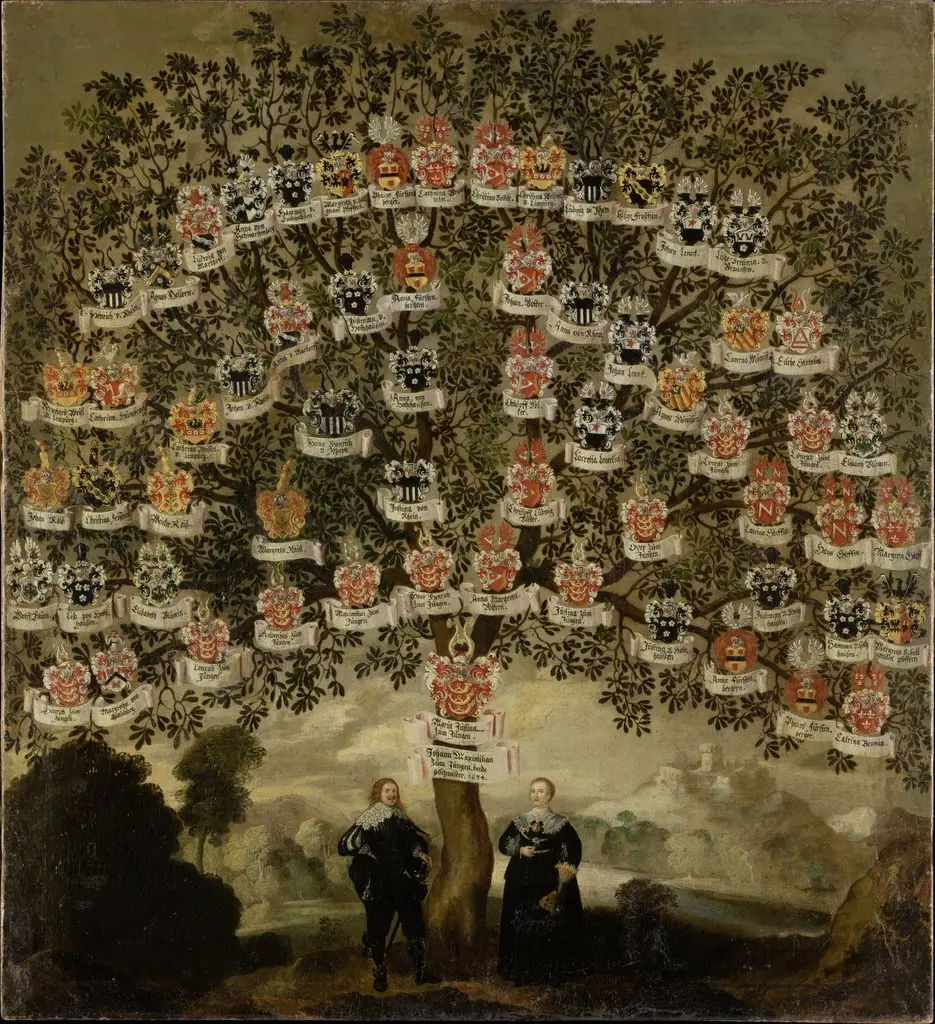 Genealogical Tree of Maria Justina and Johann Maximilian zum Jungen
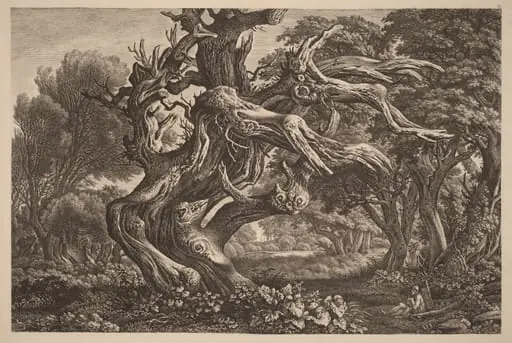 A Dead Oak Tree
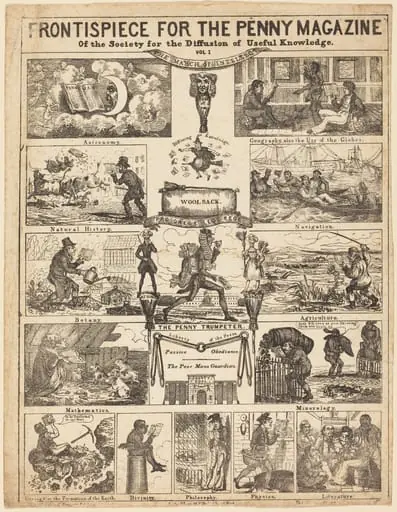 Frontispiece for the Penny Magazine of the Society for the Diffusion of Knowledge: Vo
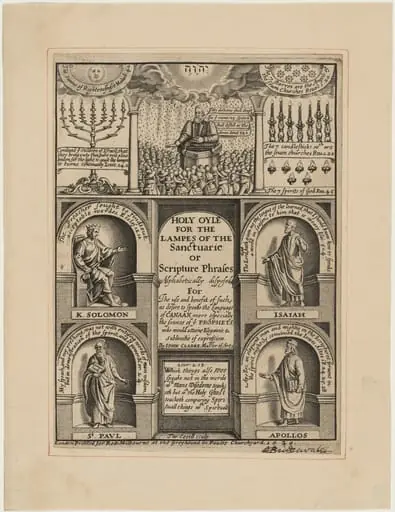 Title Page for Holy Oyle for the Lampes of the Sanctuarie, John Clarke
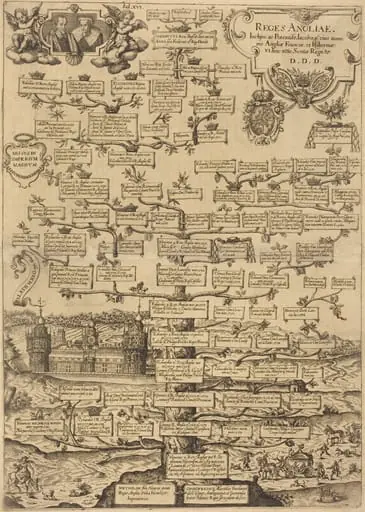 Reges Anglia
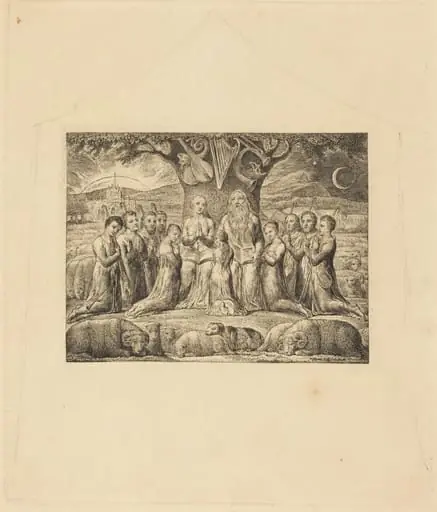 Job and His Family
 Beech in Windsor Forest
 Chene (Oak Tree)