Artwork
Riveaux
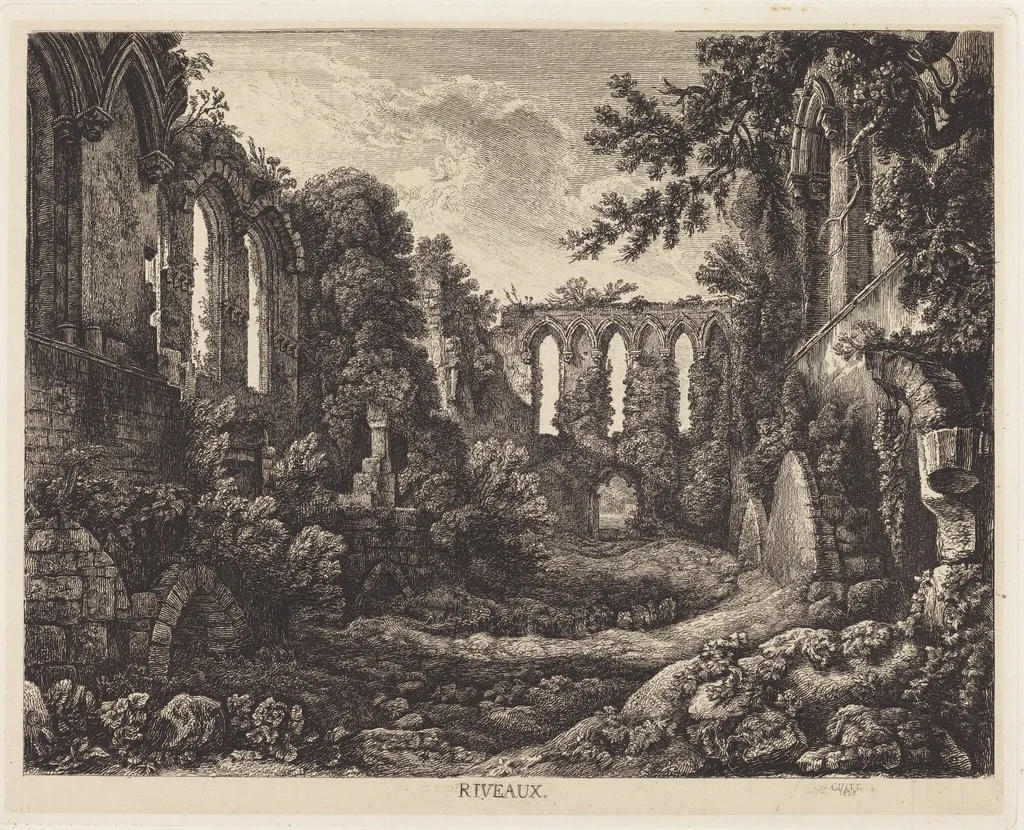
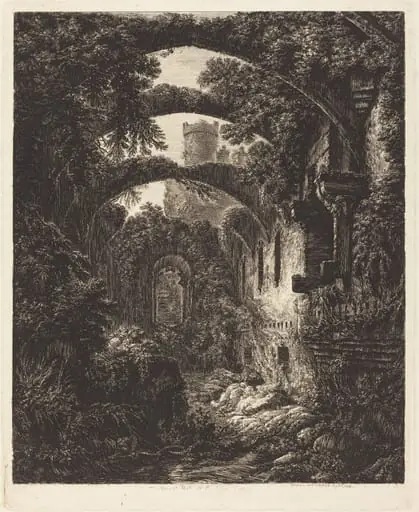
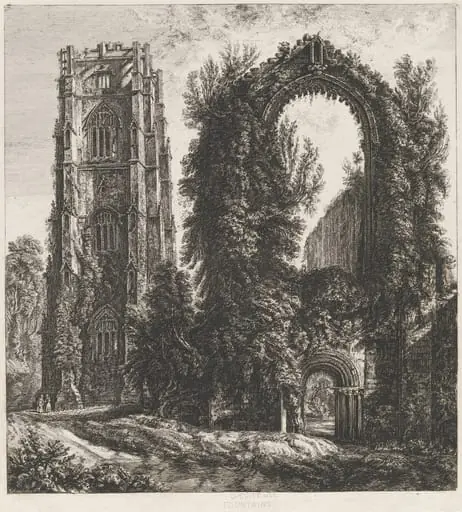
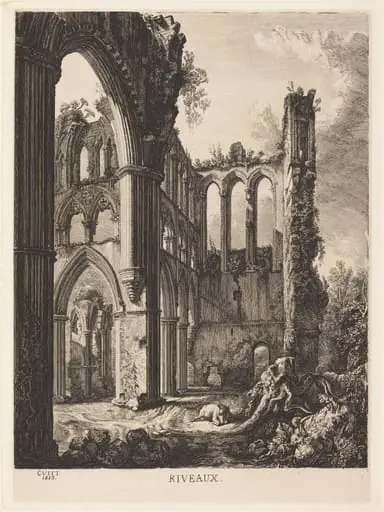
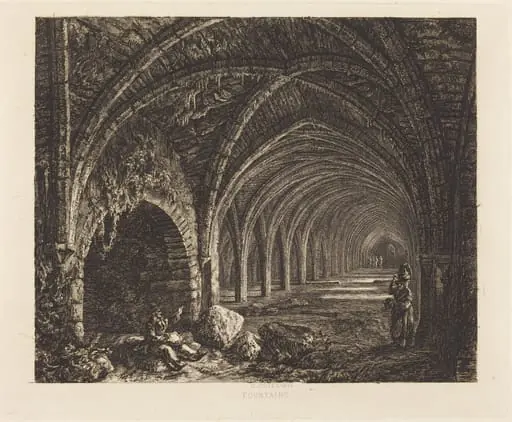
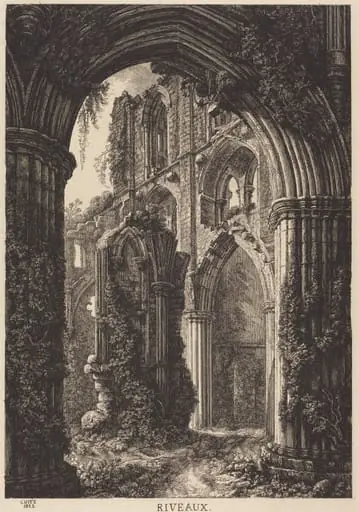
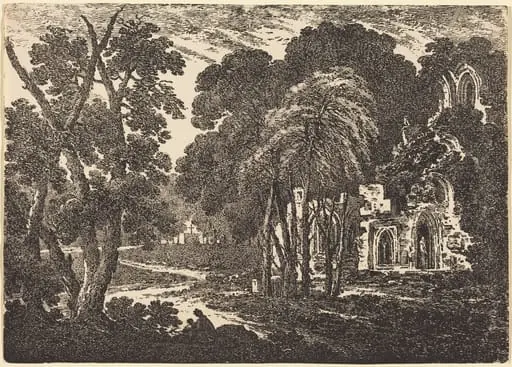
Riveaux is an ink print by the Romanticist artist George Cuitt the Younger. It dates from 1825 and is held in the collection of the National Gallery of Art.
About this work
Overview
Riveaux is a paper‑thin etching produced in 1825 by the English artist George Cuitt the Younger. Executed as a print, the work depicts a sinuous river flanked by lofty trees, rendered through precise, fine lines that give the scene a delicate, almost tactile quality.
Subject & Meaning
The composition centers on a meandering watercourse, its banks lined with tall, slender trees that frame the view. Small, stippled marks suggest the play of light upon the water’s surface, evoking a sense of gentle movement and quiet natural observation.
Technique & Style
Cuitt employed the drypoint method, incising the image directly onto a metal plate with a sharp needle. The resulting burr produces the characteristic fine scratches and subtle dotting that define the water’s texture, while the overall line work remains crisp and controlled.
History & Provenance
Created in the early nineteenth century, the etching was made when Cuitt was reportedly only four years old, an unusually early start for a professional artist. The work has since been catalogued among his early prints and is typically presented on thin, high‑quality paper suitable for delicate impressions.
Context
Riveaux reflects the period’s interest in topographical and pastoral subjects, aligning with the broader Romantic fascination with natural scenery. Cuitt’s choice of drypoint—a technique favored for its ability to convey fine detail—places the piece within a tradition of English printmakers exploring landscape intimacy.
Artist & collection