Artwork
Frescoes in the Loggie of the Vatican
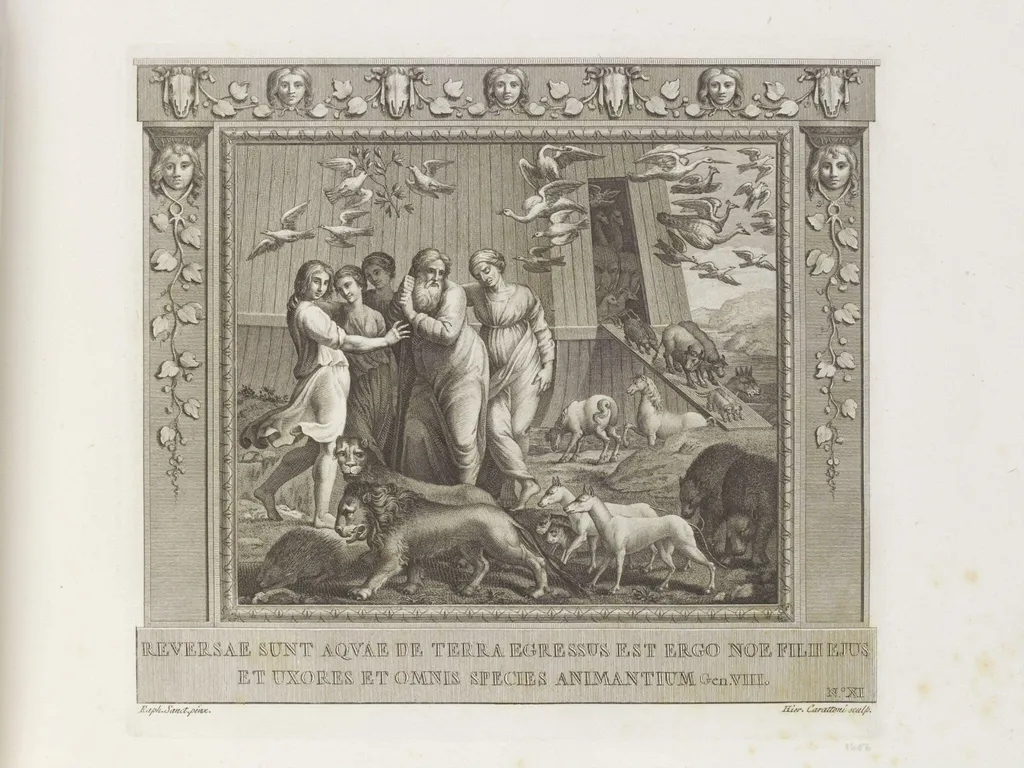
Frescoes in the Loggie of the Vatican is a print by Aloysio Cunego. It dates from 1750 and is held in the collection of the Victoria and Albert Museum.
About this work
Overview
These prints, part of the collection titled *Picturæ Peristylii Vaticani, manus Raphaelis Sancii*, served as accessible reproductions of the papal decorations.
Aloysio Cunego produced a series of prints based on the frescoes adorning the Vatican Loggie, translating Raphael’s original compositions into detailed engravings. These prints, part of the collection titled *Picturæ Peristylii Vaticani, manus Raphaelis Sancii*, served as accessible reproductions of the papal decorations. Executed on paper, they captured the grandeur and narrative complexity of the wall paintings for a wider audience beyond those who could visit the Vatican.
Subject & Meaning
The scene depicts a moment from the biblical account of creation, with a central figure—likely representing the Divine—gesturing as figures and animals gather in reverence. Birds soar above, while terrestrial creatures such as dogs and a lion rest or move among the human group. The composition suggests divine order and harmony, aligning with Renaissance interpretations of Genesis that emphasized God’s authority over nature and humanity.
Technique & Style
Cunego employed fine line engraving with careful tonal gradations to mimic the chiaroscuro effects of the original frescoes. The interplay of light and shadow defines forms, enhances spatial depth, and directs attention to the central figure. Detailed rendering of drapery, animal anatomy, and architectural elements reflects the precision expected in reproductive prints of the period, bridging painting and printmaking traditions.
History & Provenance
The prints were made in the late 18th century under papal patronage, intended to disseminate Raphael’s designs after his death. Cunego, a skilled engraver, was commissioned to translate the Loggie’s frescoes into a portable format. These prints circulated among collectors and artists across Europe, preserving the visual language of the Vatican’s decorative program for generations.
Context
The Vatican Loggie, designed by Raphael and completed after his death, were intended as ceremonial corridors adorned with biblical and mythological scenes. Cunego’s prints emerged during a time when intellectual elites valued classical antiquity and religious narrative in art. Reproducing these frescoes in print aligned with broader Enlightenment-era efforts to catalog and distribute cultural heritage through mechanical reproduction.
Legacy
Cunego’s engravings became key references for artists and scholars studying Raphael’s compositional methods. They preserved details of the Loggie’s frescoes that have since faded or been altered, offering a historical record of their original appearance. The prints remain important artifacts in the history of print culture and the transmission of Renaissance imagery across borders and centuries.
Artist & collection
Artist
Aloysio Cunego spent his life carving copper plates like a jeweler, turning Vatican ceilings into paper prints you could slip into your coat pocket.

 Noah and his family leaving the Ark
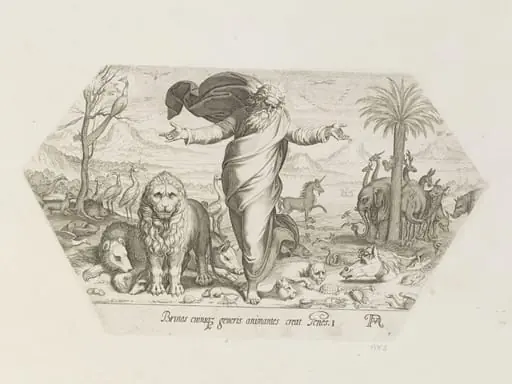 God creating the Animals
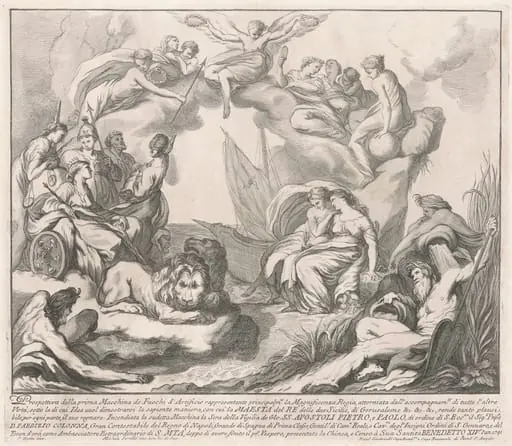 The Prima Macchina for the Chinea of 1741: Allegory of Regal Magnificence
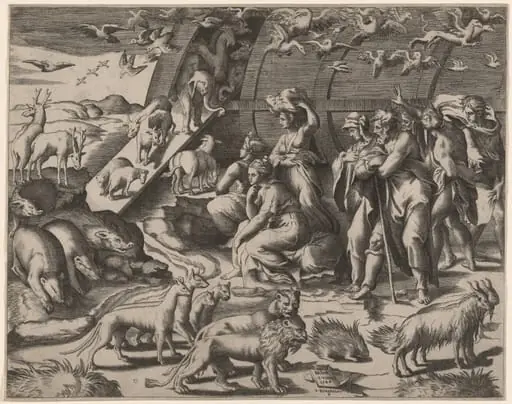 Noah Leaving the Ark
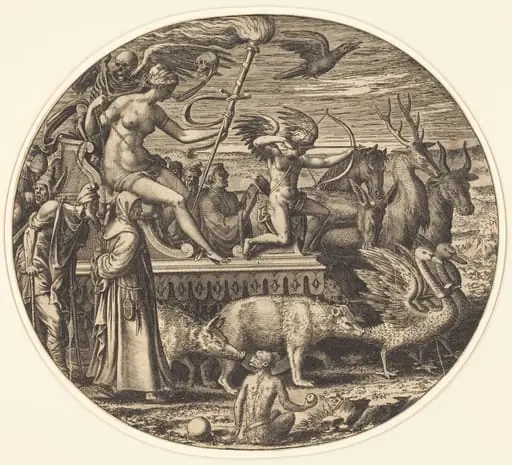 Lust
Lust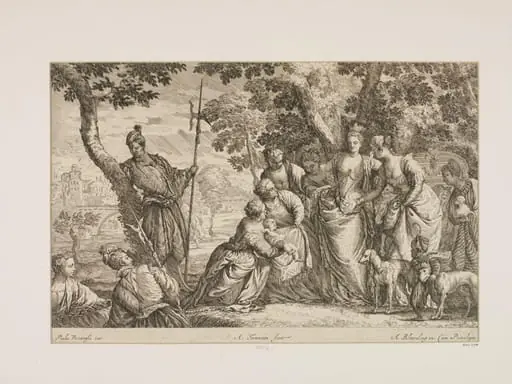 Infant Moses
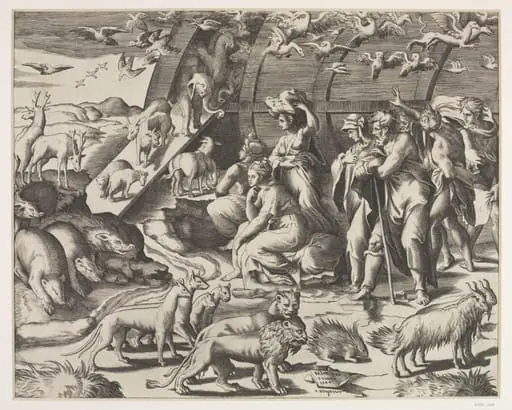 Noah and His Family Leaving the Ark
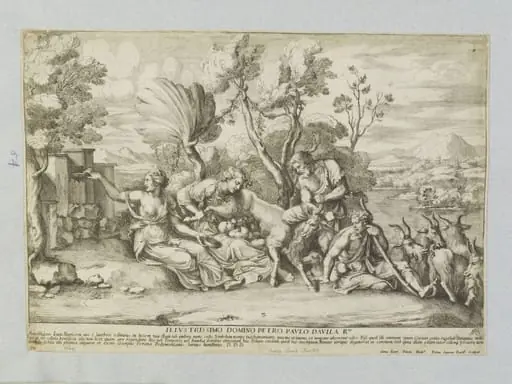 Untitled
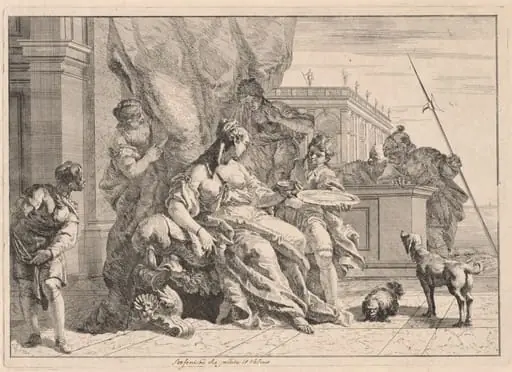 Sofonisba (or Artemisia)
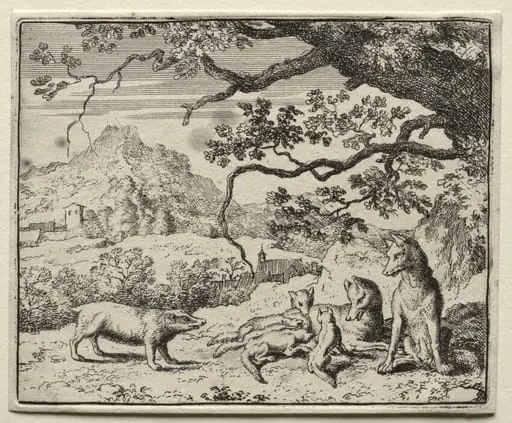 Reynard the Fox: The Badger Calls Reynard to Court
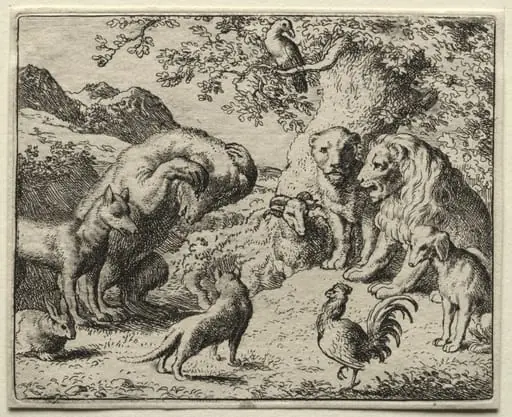 Reynard the Fox: The Complaint of the Bear
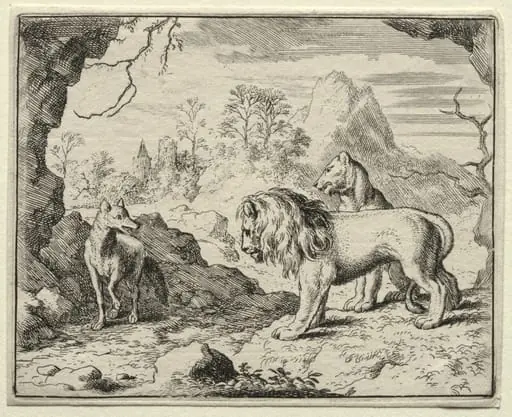 Reynard the Fox: Reynard Tells of Hidden Treasure