Artwork
St. Agnes
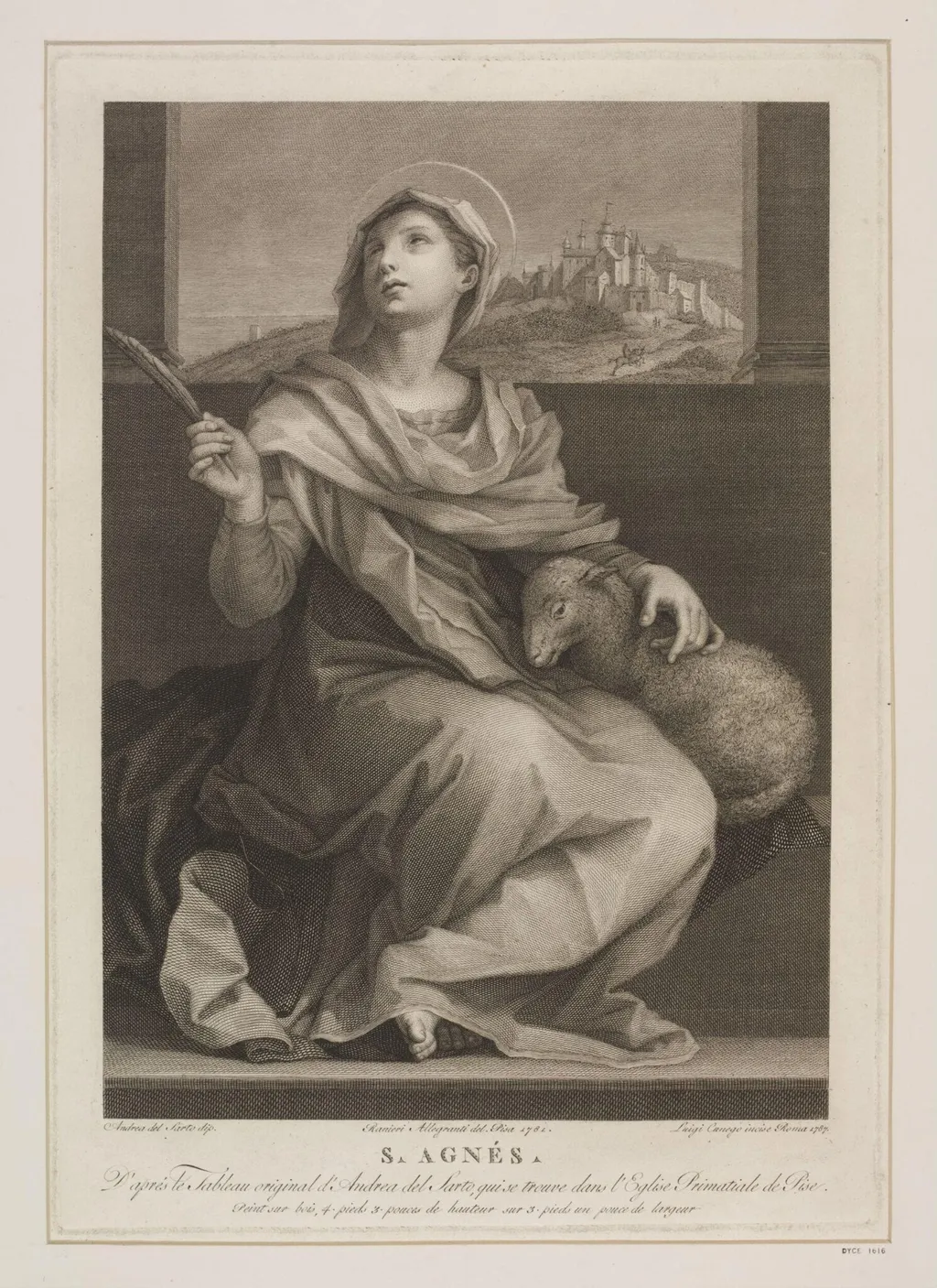
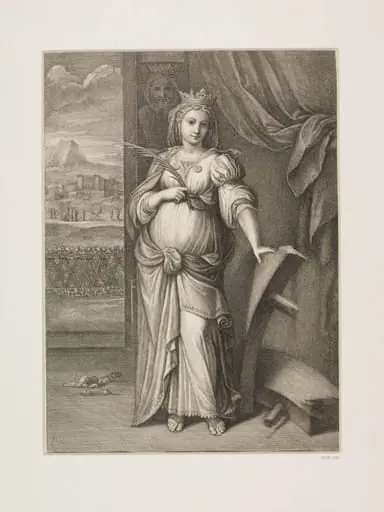
St. Agnes is a print by the Romanticist artist Aloysio Cunego. It dates from 1781 and is held in the collection of the Victoria and Albert Museum.
About this work
Overview
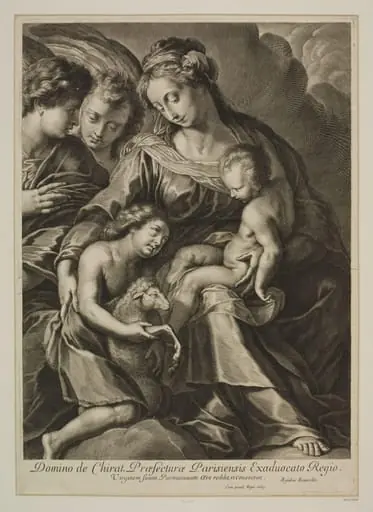
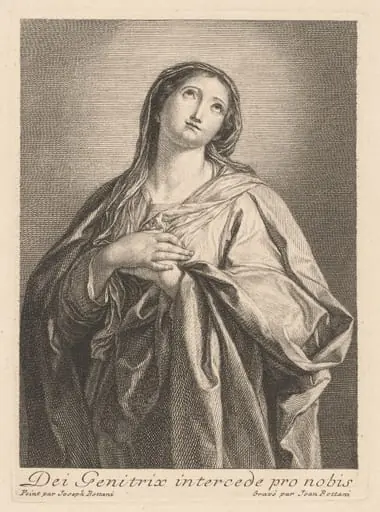
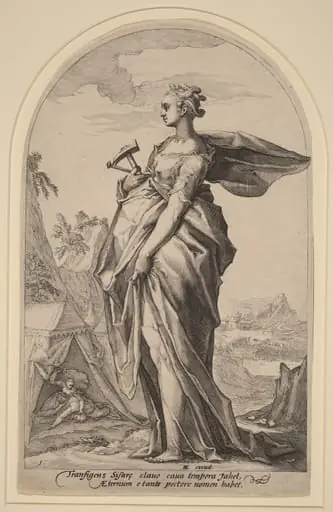
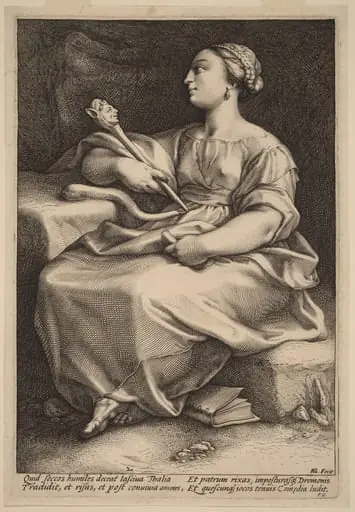
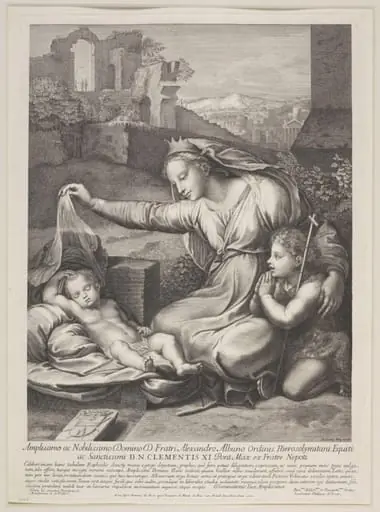
This 1781 print by Aloysio Cunego reproduces a composition originally by Andrea del Sarto. Executed in ink on paper, it bears an inscription crediting Ranieri Allegranti of Pisa as the draftsman. The work belongs to a tradition of reproductive prints that circulated Renaissance compositions in the 18th century, serving both scholarly and devotional audiences.
Subject & Meaning
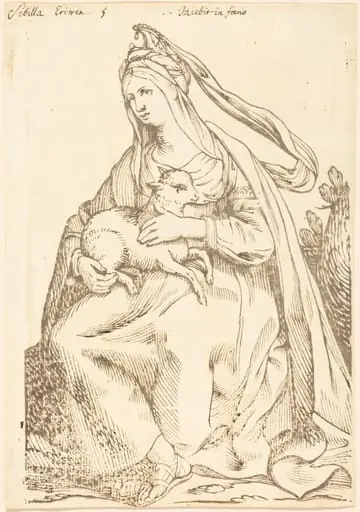
St. Agnes, a early Christian martyr, is portrayed seated with a lamb at her side—a symbol of her purity and innocence. She holds a palm frond, traditionally representing martyrdom. The composition follows iconographic conventions established in medieval and Renaissance hagiography, emphasizing her spiritual virtue rather than narrative drama.
Technique & Style
Cunego employed fine linear engraving to render form and texture, with careful hatching to suggest volume and light. The background landscape, including a distant structure, is rendered with restrained detail, directing focus to the figure. The style reflects 18th-century academic engraving practices, prioritizing clarity and fidelity to the original model over expressive flourish.
History & Provenance
The print was produced in Rome during a period when reproductive engraving flourished as a means of disseminating classical and Renaissance art. Allegranti’s involvement as draftsman suggests collaboration between Italian artists and printmakers. No documented early ownership records exist, but such prints were commonly collected by educated patrons and religious institutions.
Context
Though created in the late 18th century, the image draws from early 16th-century Mannerist models, not Romanticism. The serene composition and restrained emotion align with Neoclassical ideals gaining traction at the time, emphasizing order and historical continuity. Romanticism’s emotional intensity had not yet influenced this type of reproductive print.
Legacy
Cunego’s print contributed to the preservation and transmission of del Sarto’s compositional ideas beyond the original painting. As part of a broader print culture, it helped sustain interest in Renaissance art among collectors and students. The work remains a reference point in studies of 18th-century printmaking and the circulation of artistic models.
Artist & collection
Artist
Aloysio Cunego spent his life carving copper plates like a jeweler, turning Vatican ceilings into paper prints you could slip into your coat pocket.