Artwork
God creating the Animals
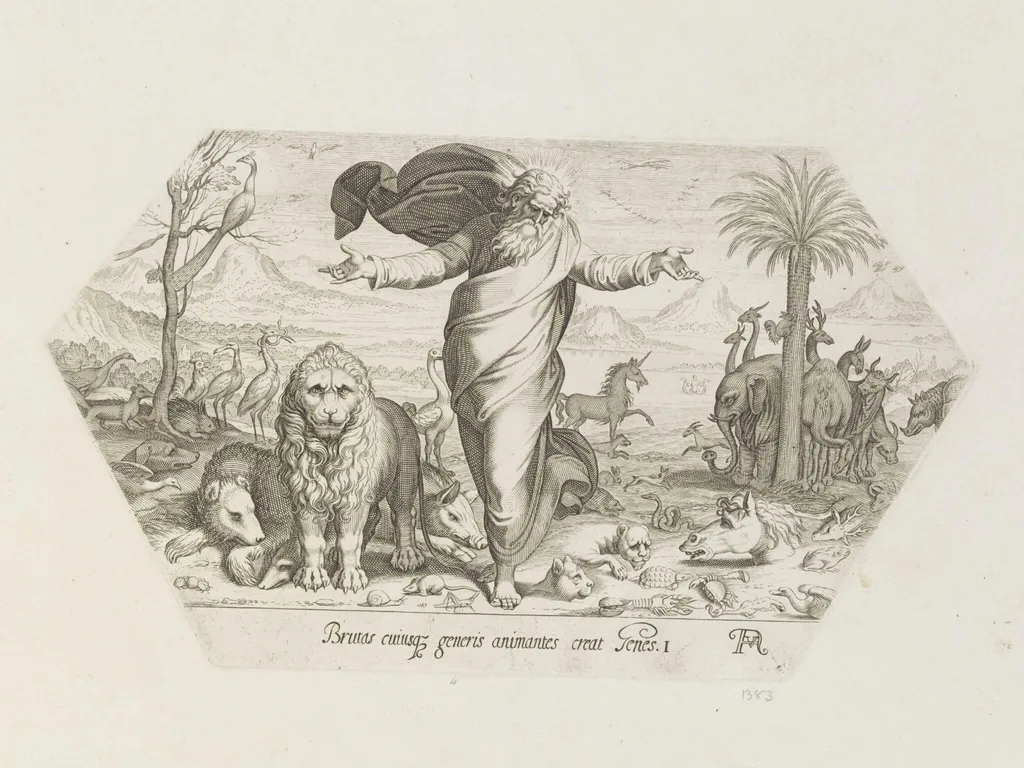
God creating the Animals is a print by the Baroque artist Francesco Villamena. It is held in the collection of the Victoria and Albert Museum.
About this work
Overview
Rendered in fine linear detail, the print belongs to a series of twenty works based on Raphael’s Vatican frescoes, known collectively as the 'Raphael Bible.
This 1626 etching by Francesco Villamena illustrates a moment from the Book of Genesis, capturing the divine act of bringing animal life into existence. Rendered in fine linear detail, the print belongs to a series of twenty works based on Raphael’s Vatican frescoes, known collectively as the 'Raphael Bible.' The composition emphasizes movement and spatial depth through careful shading and arrangement, typical of early 17th-century reproductive printmaking.
Subject & Meaning
The central figure, an elderly man in flowing robes, represents the Creator, arms outstretched as if bestowing life upon the creatures surrounding him. Lions, deer, birds, and hybridized beasts populate the landscape, symbolizing the diversity of creation. The Latin inscription, 'Brutas cuiusq? generis animantes creat,' translates to 'He creates the beasts of every kind,' reinforcing the theological theme of divine order and abundance in nature.
Technique & Style
Villamena employed etching to achieve intricate detail and tonal contrast, using fine lines to define fur, feathers, and foliage. The dramatic interplay of light and shadow enhances the three-dimensionality of the figures and landscape. The composition is densely packed yet carefully balanced, reflecting the influence of High Renaissance ideals adapted into the more expressive visual language of the early Baroque period.
History & Provenance
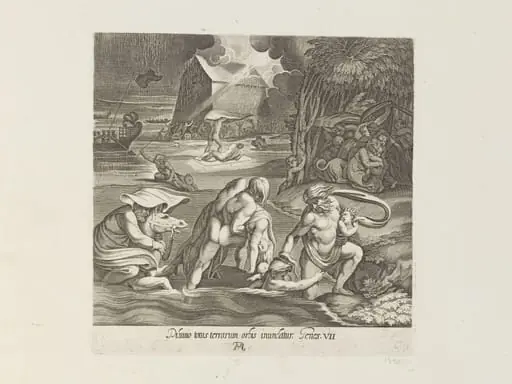
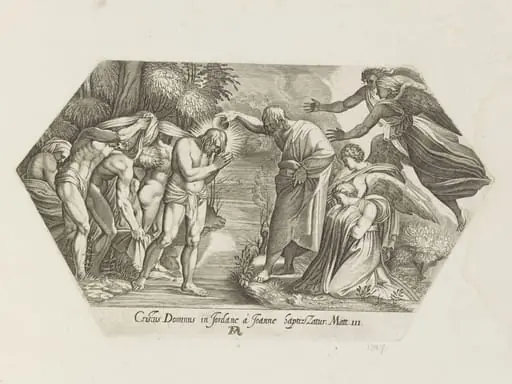
The print was produced as part of a commissioned series reproducing Raphael’s frescoes in the Vatican Loggie, which were widely admired in the 16th and 17th centuries. Villamena, an Italian engraver active in Rome, specialized in translating monumental paintings into accessible prints. This series circulated among collectors and clergy, serving both devotional and educational purposes in an era before widespread access to original artworks.
Context
Created during the Counter-Reformation, the print aligned with the Catholic Church’s emphasis on visual storytelling to reinforce biblical narratives. The choice of Raphael’s compositions—already revered for their harmony and clarity—provided theological authority. Villamena’s etchings made these sacred scenes available beyond the Vatican, supporting religious instruction and devotional practice across Europe.
Legacy
Though Villamena’s name is less known today, his prints helped preserve and disseminate Raphael’s iconography into the Baroque era. The series influenced later reproductive printmakers and contributed to the enduring popularity of biblical imagery in European art. These works remain valuable for understanding how religious narratives were visually transmitted before the age of photography.
Artist & collection
Artist
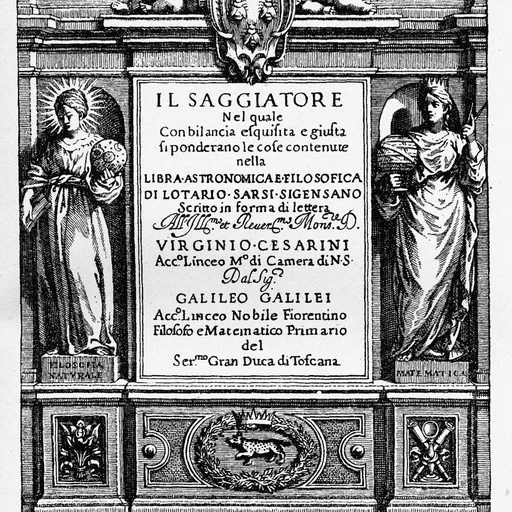
Francesco Villamena (1564–1624) was an Italian engraver, drawing teacher and art collector.

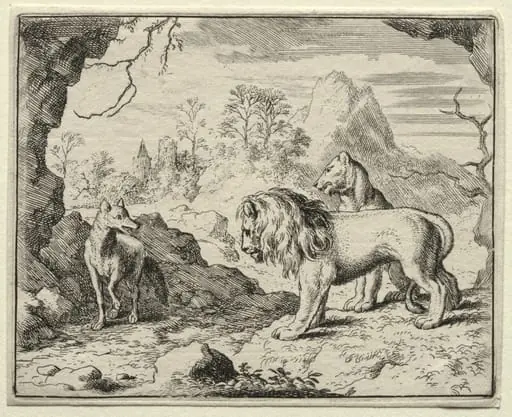 Reynard the Fox: Reynard Tells of Hidden Treasure
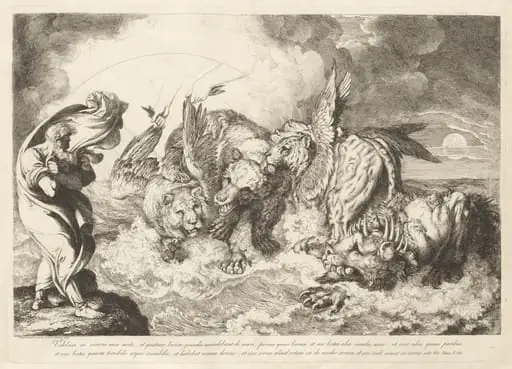 Daniel's Vision
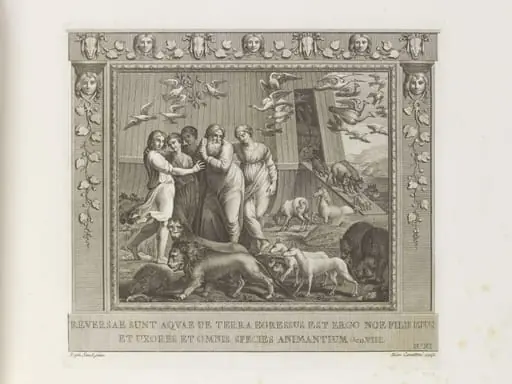 Frescoes in the Loggie of the Vatican
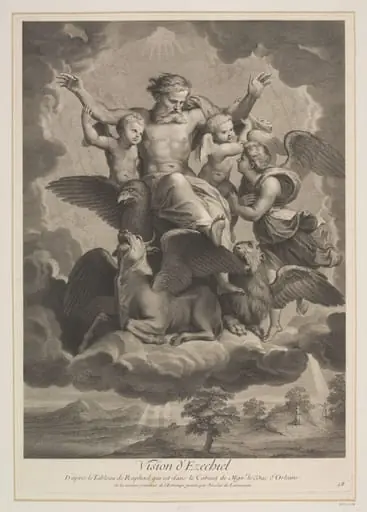 The Vision of Ezekiel
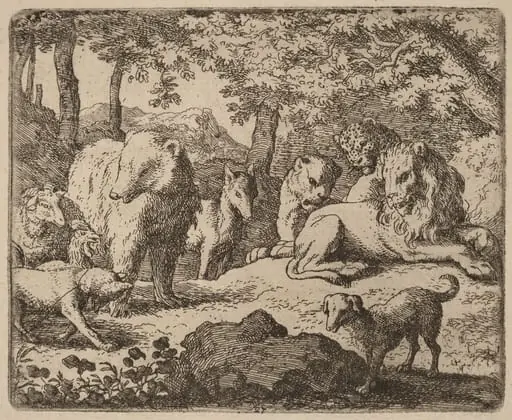 Reynard is Released to Tell His Story
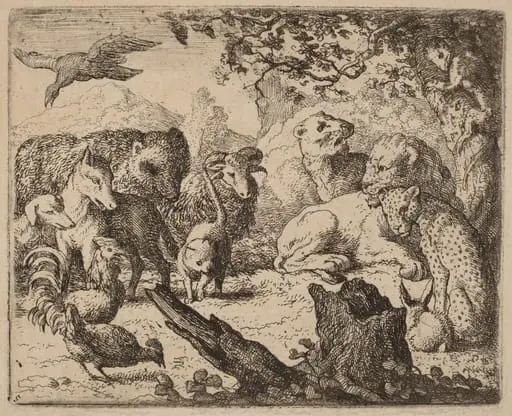 The Lion Announces a Peace
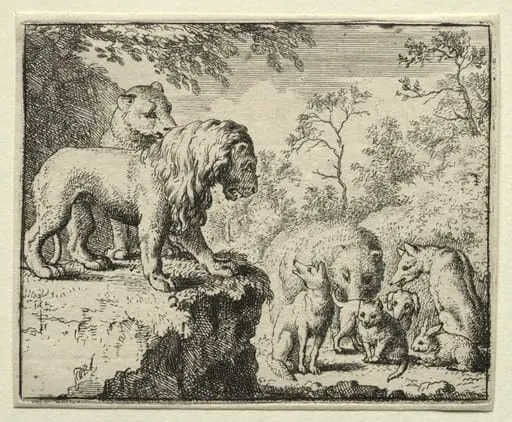 Reynard the Fox: The Pardon of Reynard
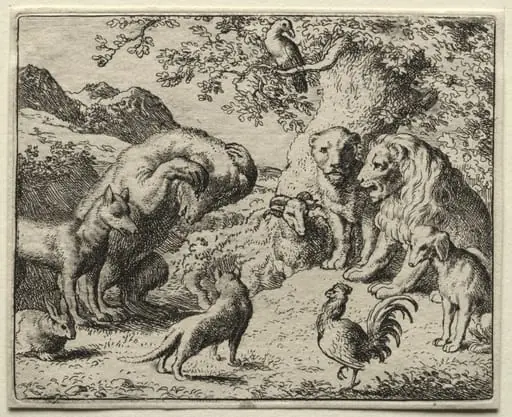 Reynard the Fox: The Complaint of the Bear
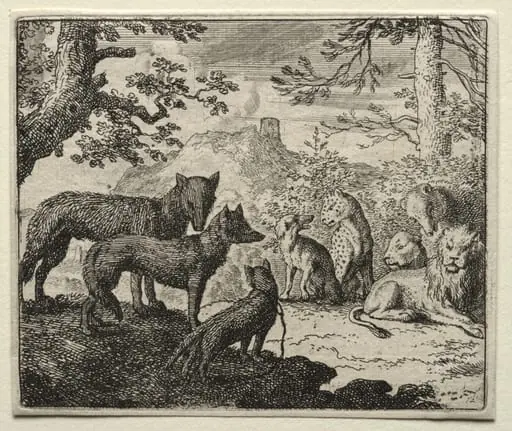 Reynard the Fox: The Relatives of Reynard Leave Court