Artwork
The Prima Macchina for the Chinea of 1741: Allegory of Regal Magnificence
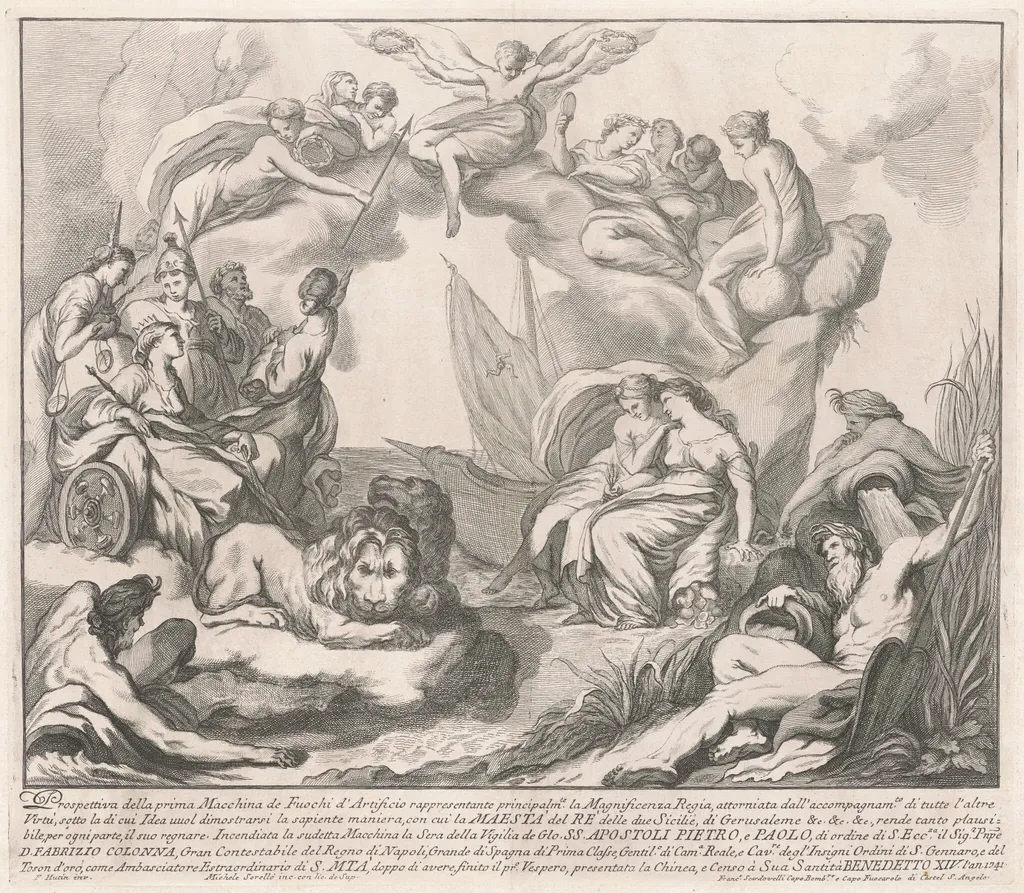
The Prima Macchina for the Chinea of 1741: Allegory of Regal Magnificence is an ink print by the Baroque artist Miguel de Sorellò. It dates from 1741 and is held in the collection of the National Gallery of Art.
About this work
Overview
The Prima Macchina for the Chinea of 1741: Allegory of Regal Magnificence is an etching executed by the Italian printmaker Miguel de Sorellò in 1741. Produced as a single sheet, the work functions as a visual allegory, employing a crowded composition that centers on a dominant figure surrounded by a host of attendants, both terrestrial and airborne.
Subject & Meaning
The central figure, rendered in elaborate drapery, appears to embody regal authority, while the surrounding characters—some winged, others holding symbolic objects—suggest themes of power, triumph, and the splendor of the monarchy. The inclusion of a lion and other animal motifs reinforces notions of strength and sovereignty within the allegorical narrative.
Technique & Style
Executed in the etching medium, Sorellò achieves a lively sense of motion through fine line work and varied hatching that delineates folds of clothing and the flutter of wings. The composition reflects Baroque sensibilities, emphasizing dramatic contrast, dynamic arrangement of figures, and a theatrical interplay of light and shadow across the densely populated scene.
History & Provenance
Created for the Chinea ceremony of 1741, a diplomatic and ceremonial event linking the Papal States with the Kingdom of Naples, the print was likely intended as a commemorative illustration of the occasion. The work has remained in the collections of European print archives, documented in catalogues of 18th‑century Italian prints, and continues to be cited in studies of Baroque allegorical imagery.
Artist & collection


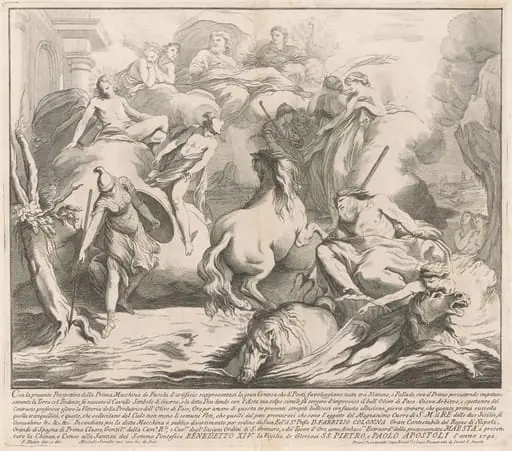 The Prima Macchina for the Chinea of 1742: The Contest of Neptune and Minerva
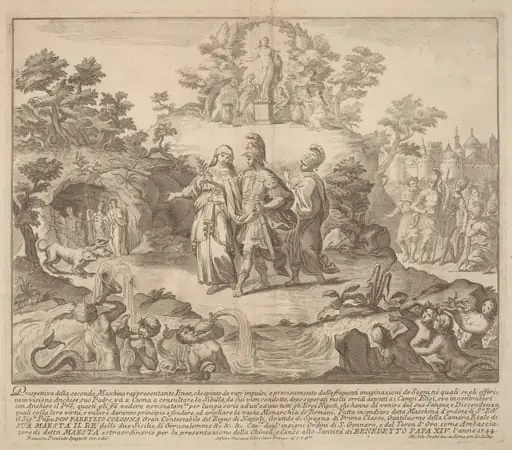 The Seconda Macchina for the Chinea of 1744: Aeneas and Cumaean Sibyl
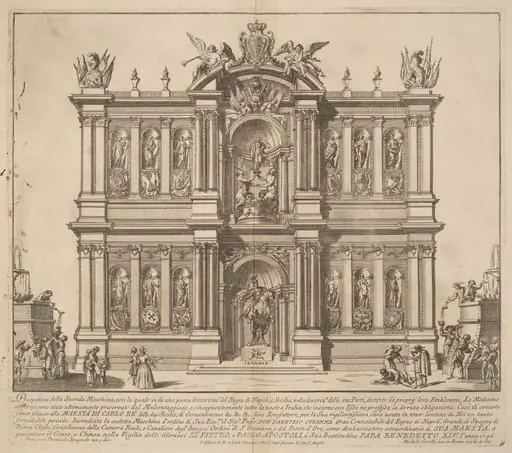 The Seconda Macchina for the Chinea of 1746: The Territories of the Kingdom of Naples
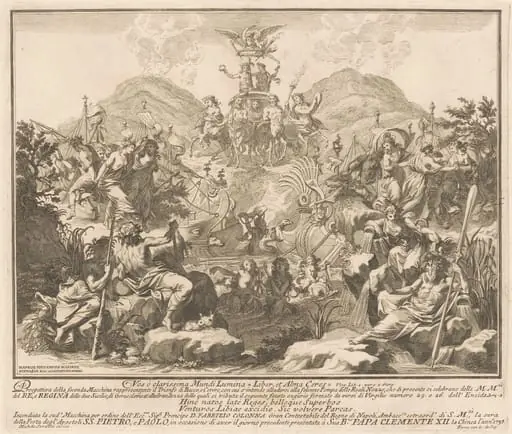 The Seconda Macchina for the Chinea of 1738: The Triumph of Bacchus and Ceres
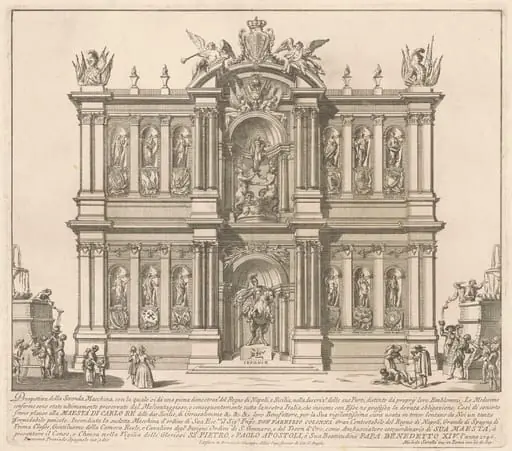 The Seconda Macchina for the Chinea of 1746: The Territories of the Kingdom of Naples
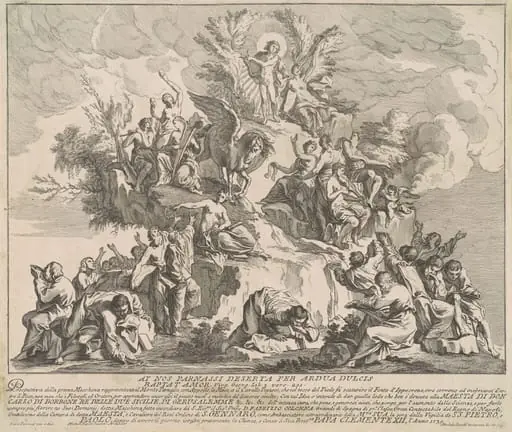 The Prima Macchina for the Chinea of 1739: Mount Parnassus with Apollo, the Muses, and Pegasus
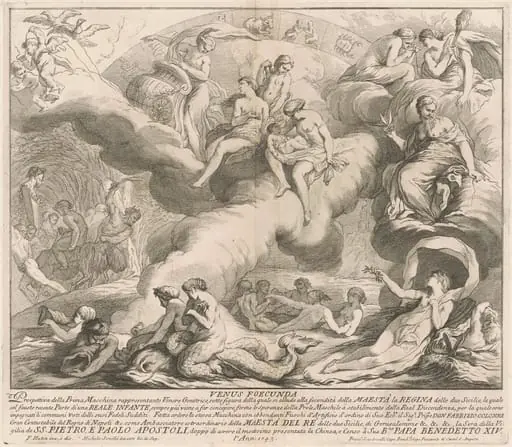 The Prima Macchina for the Chinea of 1743: Venus Genetrix
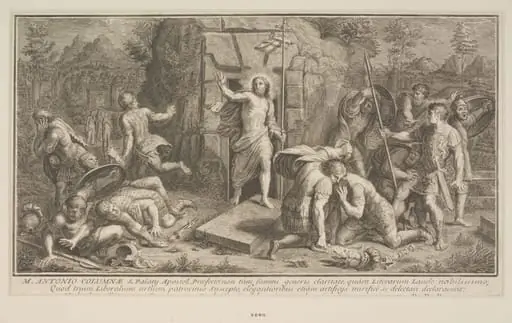 Tapestries in the Vatican, after designs by Raphael