Artwork
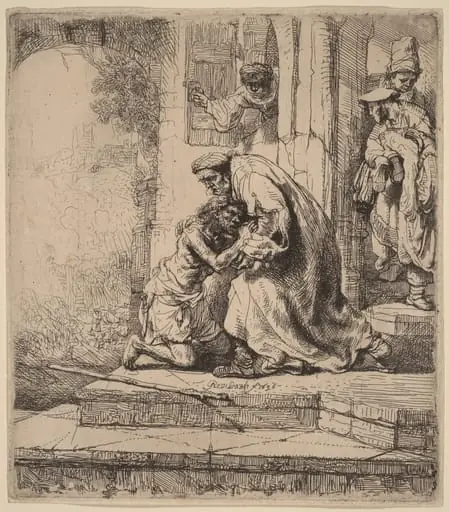
Return of the Prodigal Son
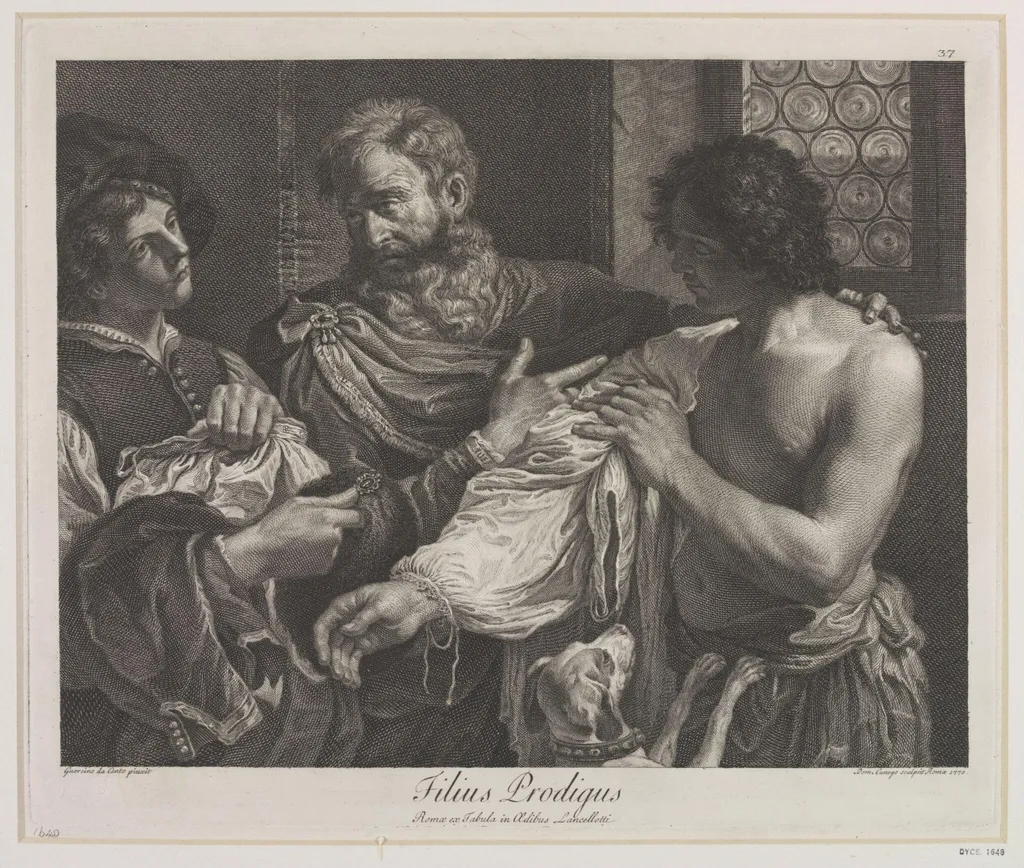
Return of the Prodigal Son is a print by Dominico Cunego. It dates from 1750 and is held in the collection of the Victoria and Albert Museum. Domenico Cunego’s 1750 print reproduces Guercino’s earlier painting of the biblical parable.
About this work
Overview
Cunego’s version preserves the emotional core of the scene while adapting its visual language to the limitations and strengths of the graphic medium.
Domenico Cunego’s 1750 print reproduces Guercino’s earlier painting of the biblical parable. Executed as an engraving on paper, the work translates the painter’s dramatic composition into the precise lines and tonal contrasts characteristic of printmaking. Cunego’s version preserves the emotional core of the scene while adapting its visual language to the limitations and strengths of the graphic medium.
Subject & Meaning
The scene illustrates the moment of reconciliation in the Parable of the Prodigal Son, as described in the Gospel of Luke. The father, clad in a dark robe, embraces his penitent son, who kneels in tattered garments. A third figure, likely an older brother, observes from the right. A dog rests at their feet, grounding the moment in everyday realism. The act of embrace conveys forgiveness and familial restoration.
Technique & Style
Cunego employed fine engraving lines to render chiaroscuro effects derived from Guercino’s painting. Deep shadows and sharply defined highlights model the figures, emphasizing texture in fabric and skin. The composition directs attention to the central embrace through controlled contrasts, while the dog’s quiet presence adds a subtle note of domestic intimacy. The print’s precision reflects the engraver’s skill in translating painterly drama into linear detail.
History & Provenance
The print was made in Rome during the mid-18th century, a period when reproductive engravings were widely circulated to disseminate famous paintings. Cunego, a noted engraver, specialized in reproducing works by Old Masters for collectors and institutions. This print likely served as a means of making Guercino’s composition accessible beyond the original’s physical location.
Context
In 18th-century Europe, religious themes remained central to visual culture, and biblical narratives were frequently reproduced in print form for private devotion and education. Cunego’s work aligns with a broader tradition of engraving that sought to preserve and propagate significant paintings. His prints were valued not only for their fidelity but also for their role in shaping public familiarity with canonical artworks.
Legacy
Cunego’s engraving contributed to the enduring visibility of Guercino’s composition, ensuring its recognition beyond the confines of the original painting’s collection. While the print itself is not an original invention, it played a key role in the transmission of Baroque visual language into later centuries, influencing how audiences encountered and understood this biblical moment through reproductive art.
Artist & collection
Artist
Dominico Cunego made 18th-century prints after famous paintings by Raphael and other old masters.

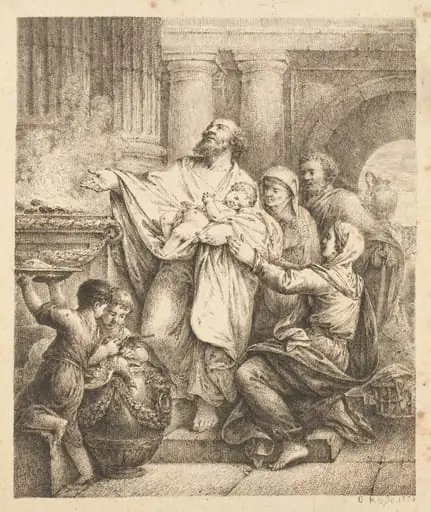 Presentation in the Temple
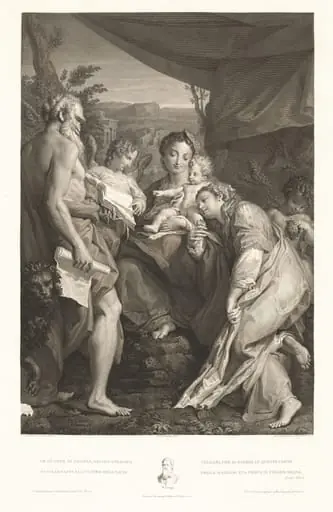 Virgin and Child with Saints Jerome and Catherine and an Angel
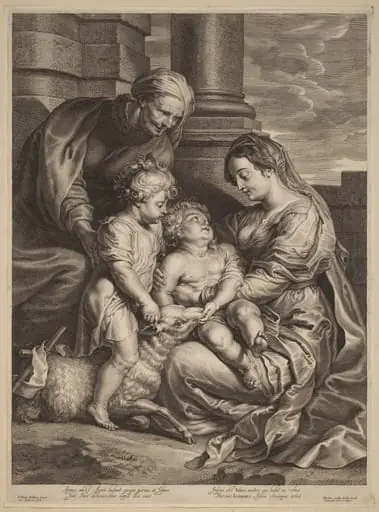 The Virgin and Child with Saint Anne and Saint John
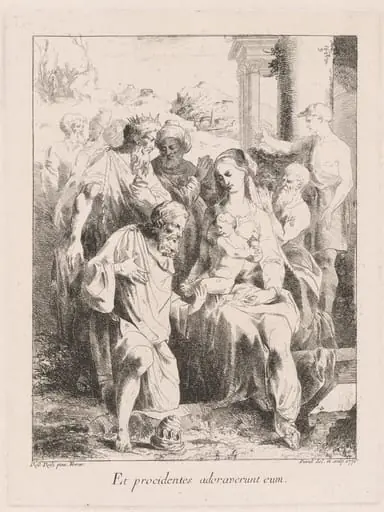 Adoration of the Magi
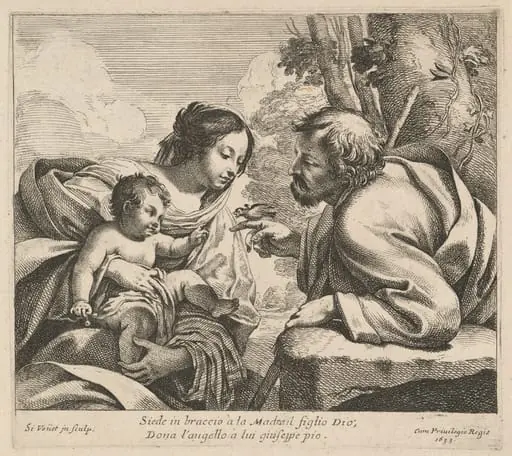 Holy Family with a Bird
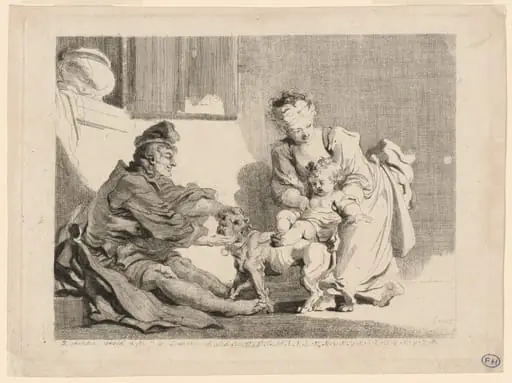 The Child and the Bulldog
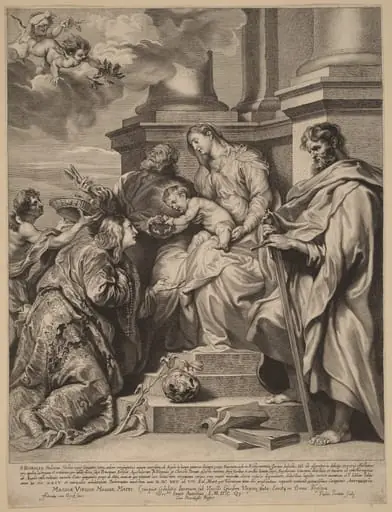 Saint Rosalia Crowned by the Child Jesus
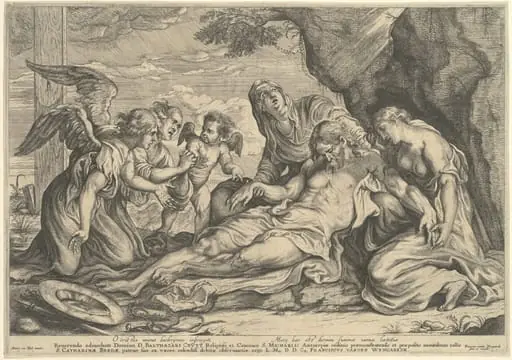 The Lamentation
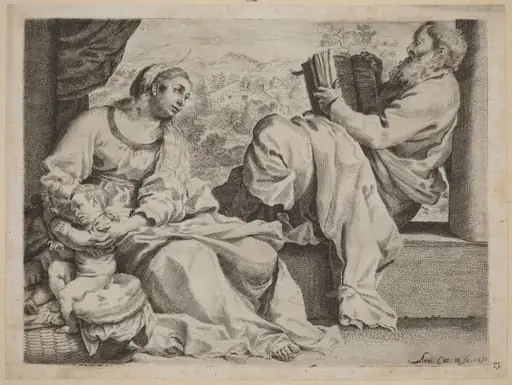 The Holy Family with Saint John the Baptist
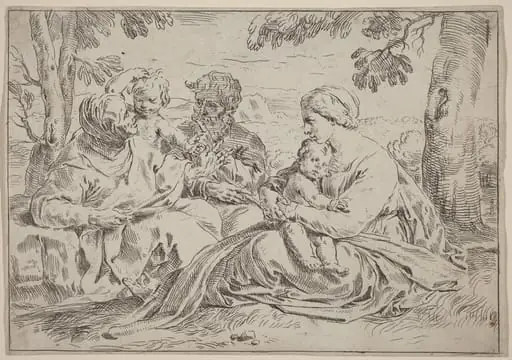 The Holy Family
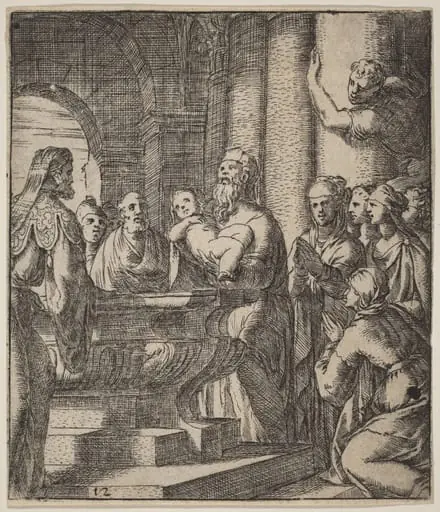 The Baptism of Christ
 The Return of the Prodigal Son