Artwork
Christ Appearing to Mary Magdalene
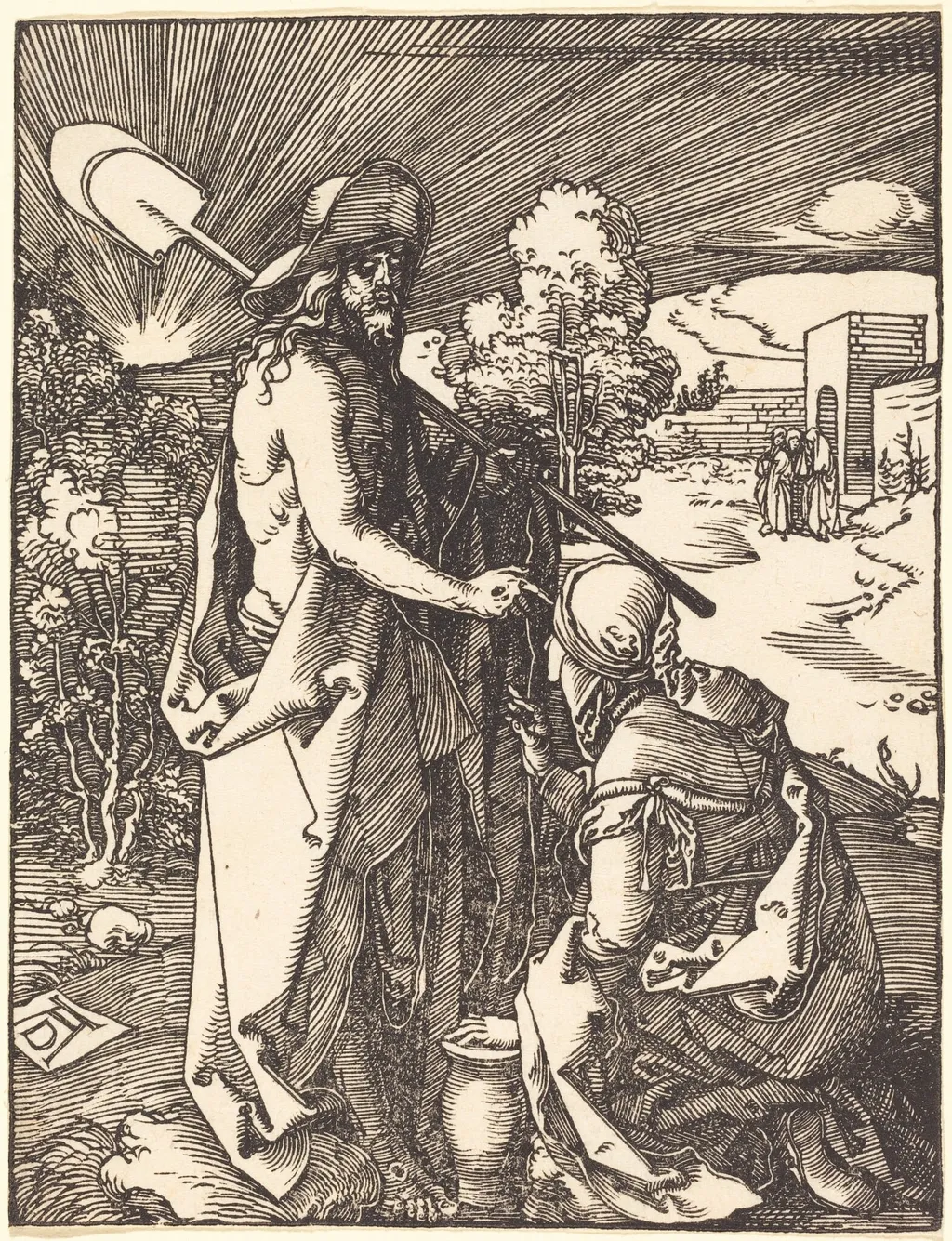
Christ Appearing to Mary Magdalene is an ink print by the Northern Renaissance artist Albrecht Dürer. It dates from 1510 and is held in the collection of the National Gallery of Art.
About this work
Overview
Christ Appearing to Mary Magdalene is a woodcut executed by Albrecht Dürer in 1510, depicting the biblical moment of the Noli me tangere.
Christ Appearing to Mary Magdalene is a woodcut executed by Albrecht Dürer in 1510, depicting the biblical moment of the Noli me tangere. The composition centers on the resurrected Christ standing within a walled garden, his right hand raised in a gesture of blessing or restraint, while Mary Magdalene kneels before him in an attitude of reverence. Dürer renders the figures with precise linear definition characteristic of his mature printmaking style, utilizing fine hatching to model volume and convey the soft quality of morning light. The background features dense, dark foliage and architectural elements that frame the intimate encounter, contrasting with the luminous treatment of the protagonists. Created during the height of Dürer's career following his second journey to Italy, this work exemplifies the German Renaissance synthesis of Northern European detail with Italianate spatial coherence and humanist sensibility. The print demonstrates the artist's mastery of the woodcut medium, transforming a traditional religious subject into a psychologically resonant scene through careful attention to gesture, drapery, and atmospheric depth.
Subject & Meaning
The image captures the moment when the resurrected Christ reveals himself to Mary Magdalene. Christ stands upright in a garden, his right hand raised in a gesture of benediction, while Mary kneels before him, her posture expressing reverence and astonishment. The red of her dress draws attention to her central role and underscores the emotional intensity of the encounter.
Technique & Style
Dürer employed the woodcut medium to achieve delicate modeling through fine, closely spaced lines that suggest soft illumination on the faces of both figures. The contrast between the bright red garment and the surrounding dark foliage heightens visual focus. Subtle details—such as the depiction of Christ’s wounds and a thorny garden path—are integrated into the overall design, rewarding close inspection.
History & Provenance
Created circa 1510, this print belongs to the later phase of Dürer’s career, when he was exploring complex religious narratives in print form. It was produced as part of his broader output of devotional images, intended for private contemplation rather than public display. Existing copies are held in several major collections, reflecting the work’s continued scholarly interest.
Artist & collection
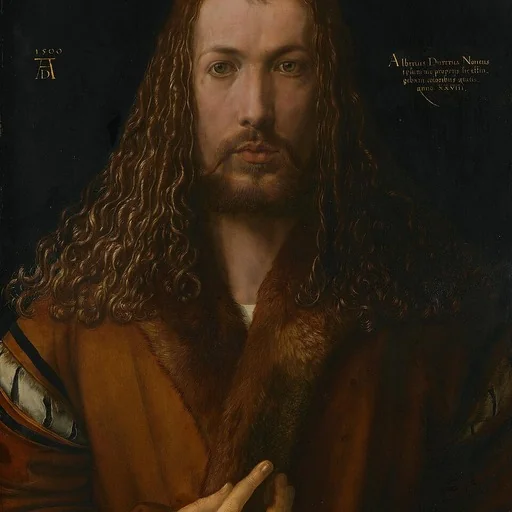
Artist
Albrecht Dürer spent his life in Nuremberg, a busy German city where artists traded prints like currency.

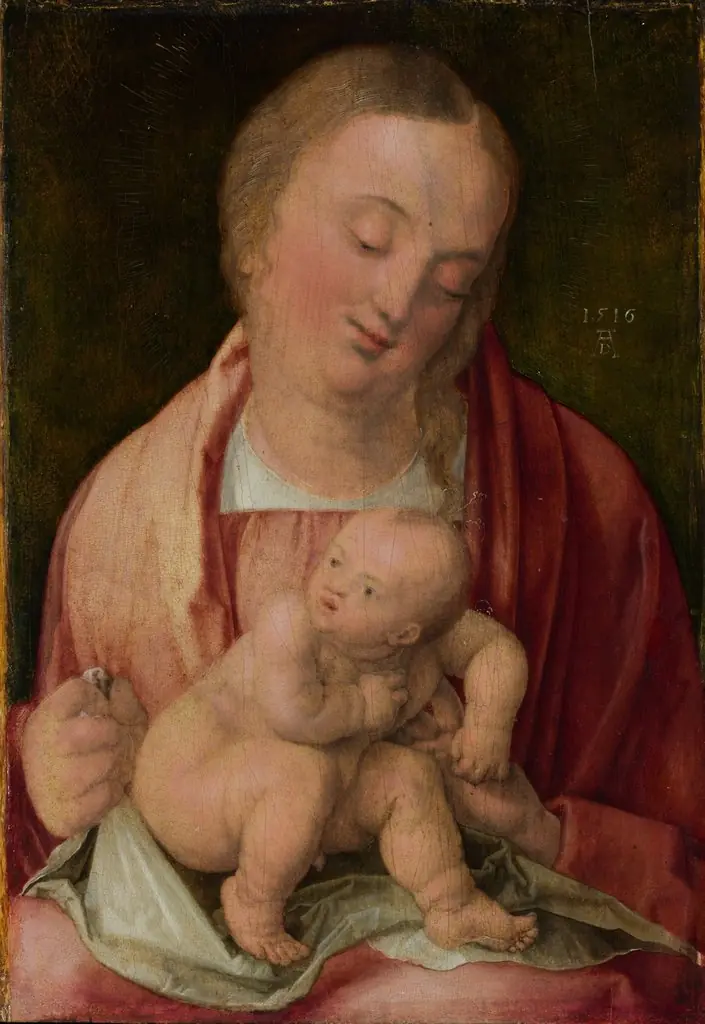
![Madonna and Child [obverse], by Albrecht Dürer](https://artifactworldgallery.com/img/albrecht-durer--madonna-and-child-obverse--d7b8ebf05d22ebe5-w320.webp)
![Lot and His Daughters [reverse], by Albrecht Dürer](https://artifactworldgallery.com/img/albrecht-durer--lot-and-his-daughters-reverse--b4ebf9b282faa17a-w320.webp)
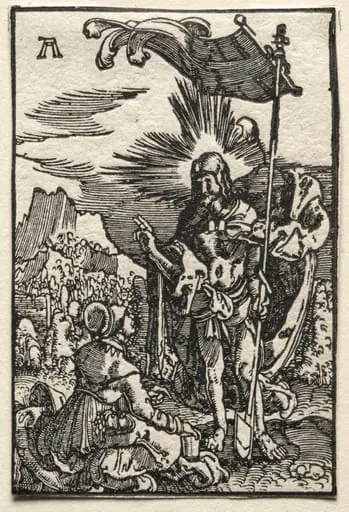 The Fall and Redemption of Man: Christ Appearing to St. Mary Magdalen
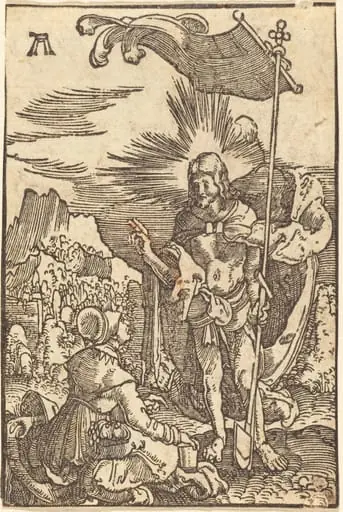 Noli me Tangere
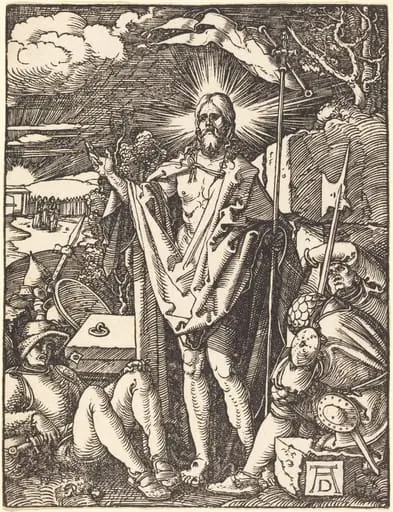 The Resurrection
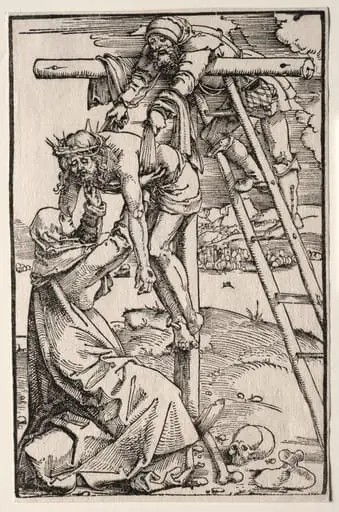 Descent from the Cross
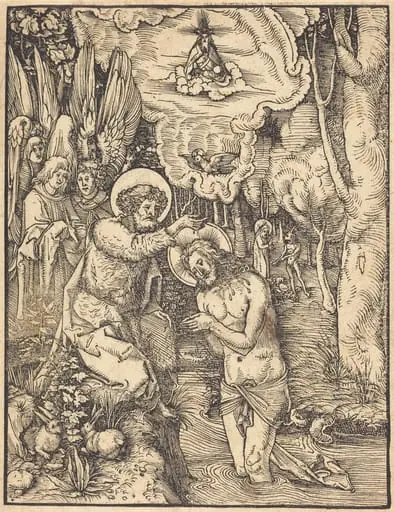 Baptism in Jordan
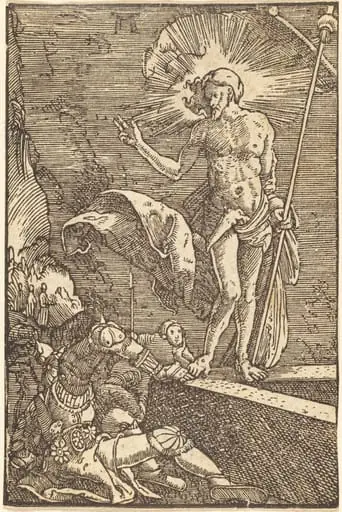 The Resurrection
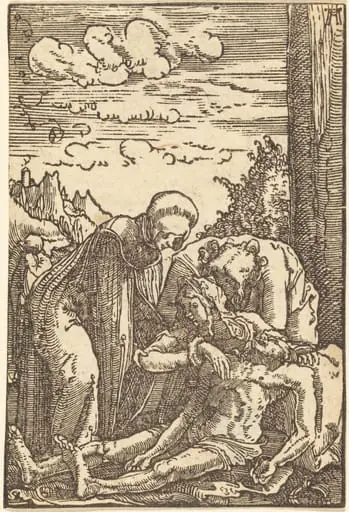 The Lamentation of Christ
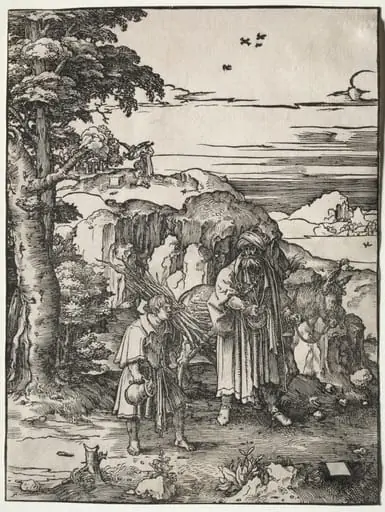 Abraham Going to Sacrifice Isaac
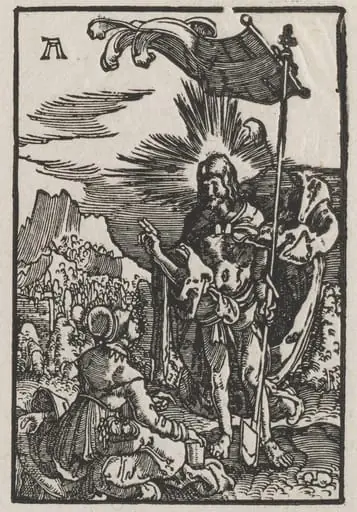 The Fall and Redemption of Man: Christ Appearing to St. Mary Magdalen
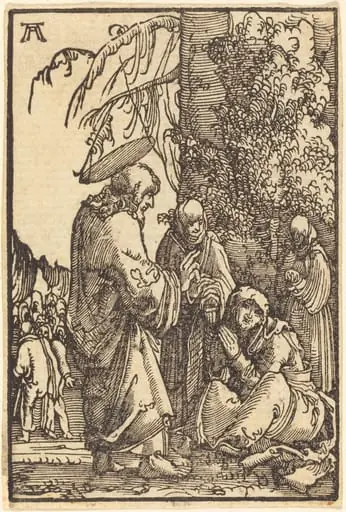 Christ Taking Leave of his Mother
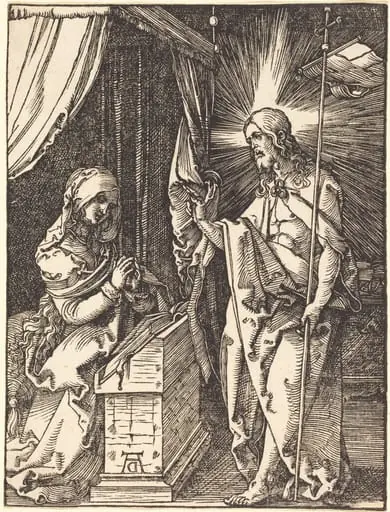 Christ Appearing to His Mother
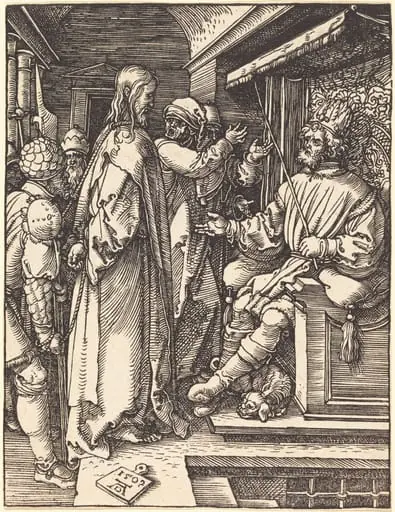 Christ before Herod