Artwork
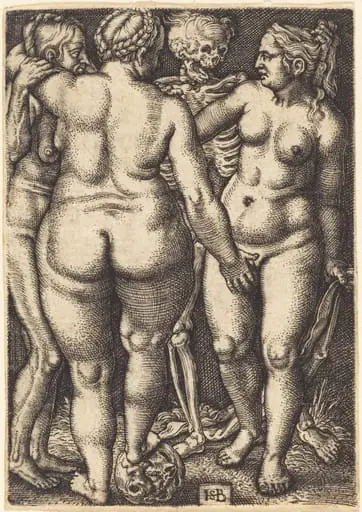
Four Naked Women
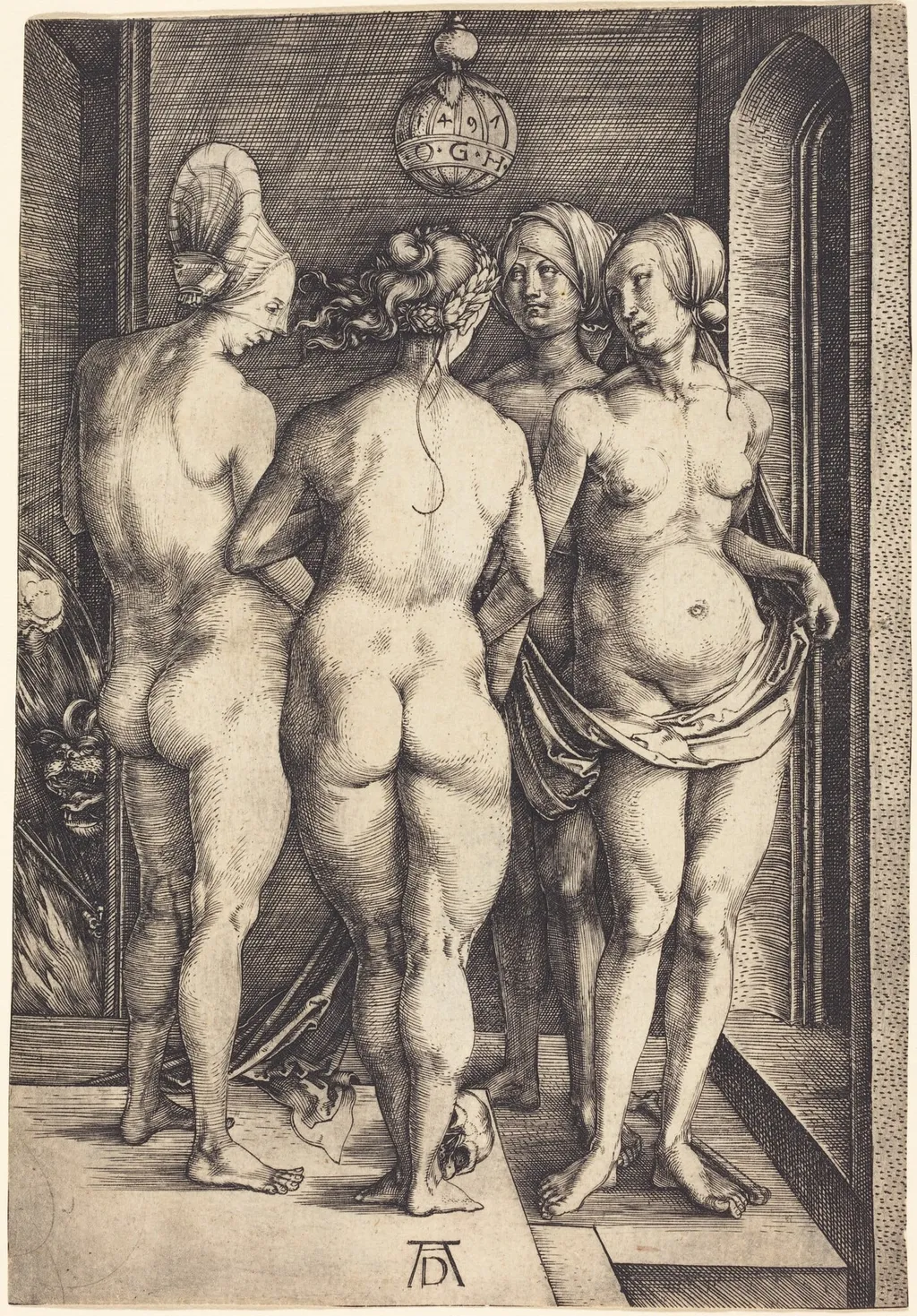
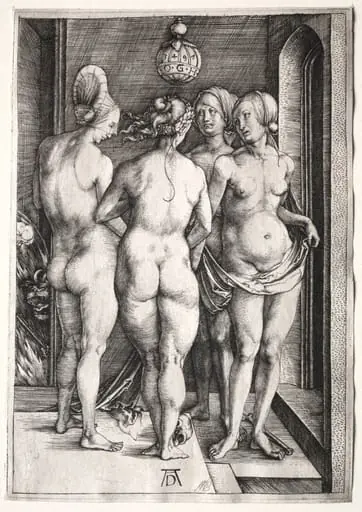
Four Naked Women is an ink print by the Northern Renaissance artist Albrecht Dürer. It dates from 1497 and is held in the collection of the Israel Museum.
About this work
Four naked women stand in a row. Their bodies twist a little. One holds a stick. Details like hair and muscles look sharp.
Albrecht Dürer made this in 1497. He used a needle on metal to carve lines. That technique is called engraving.
See how he cuts tiny lines close together? That’s cross-hatching. It makes shadows look real.
Look up Dürer, Albrecht.
Overview
Created in 1497, this early signed engraving by Albrecht Dürer depicts four nude women gathered in a compact interior space. The figures form a circular arrangement, their bodies slightly twisted, and one holds a slender staff. A small horned figure peeks from a left-hand doorway, clutching an object that appears to be aflame.
Subject & Meaning
The composition suggests a private, possibly illicit setting such as a bathhouse or brothel, with the women engaged in a conspiratorial pose. The presence of the horned demon, often interpreted as a symbol of temptation, adds an erotic undertone and hints at themes of desire and transgression.
Technique & Style
Dürer employed copper engraving, incising fine lines with a needle to build form. Dense cross‑hatching creates subtle gradations of light and shadow, rendering the musculature and hair with sharp clarity. The close spacing of lines demonstrates his early mastery of the medium.
History & Provenance
The work is among Dürer’s first signed prints, marking a pivotal moment in his development as a printmaker. It has been catalogued under several titles—Four Naked Women, Four Witches, Four Sorceresses, and Scene in a Brothel—reflecting varying interpretations of its subject matter over time.
Context
Produced during the German Renaissance, the engraving reflects contemporary interest in classical nudes and the moralizing tradition of depicting vice. Dürer’s interest in anatomical precision and the study of the human form aligns with the broader humanist currents of the late 15th century.
Artist & collection
Artist
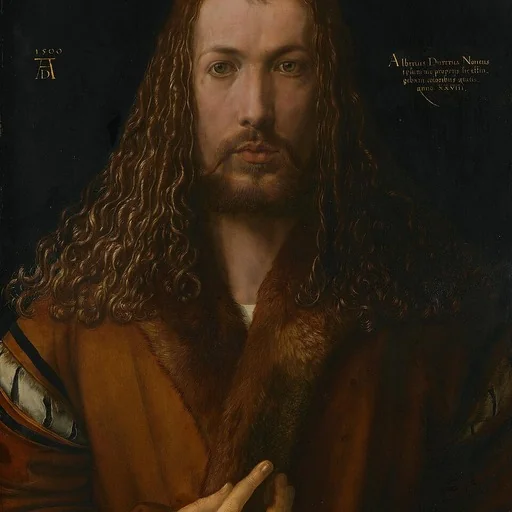
Albrecht Dürer spent his life in Nuremberg, a busy German city where artists traded prints like currency.

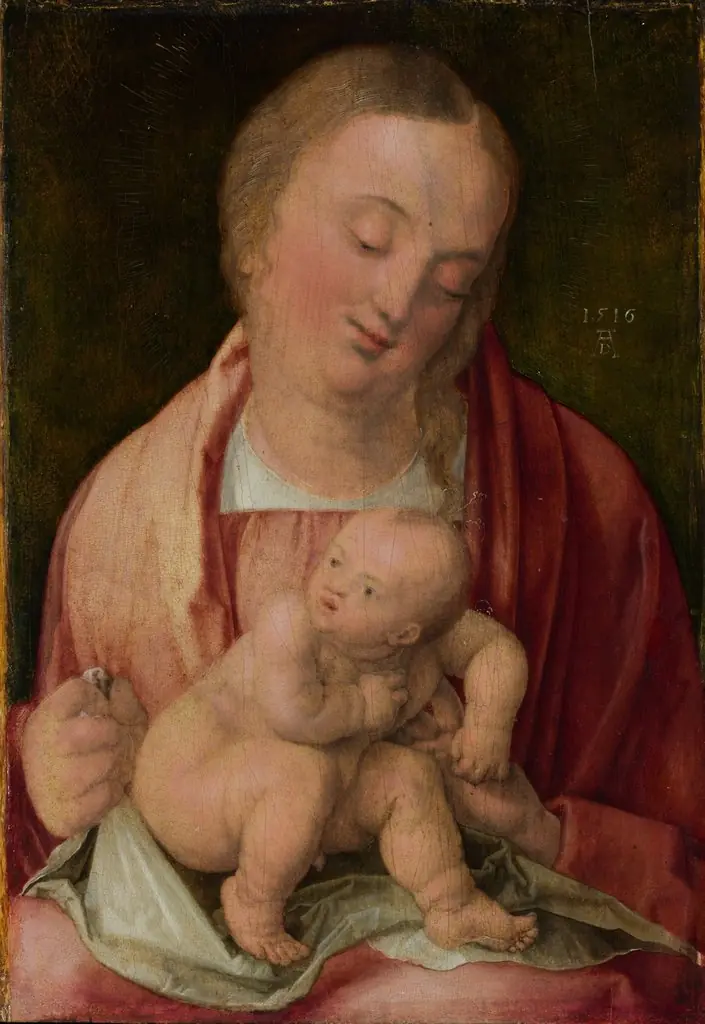
![Madonna and Child [obverse], by Albrecht Dürer](https://artifactworldgallery.com/img/albrecht-durer--madonna-and-child-obverse--d7b8ebf05d22ebe5-w320.webp)
![Lot and His Daughters [reverse], by Albrecht Dürer](https://artifactworldgallery.com/img/albrecht-durer--lot-and-his-daughters-reverse--b4ebf9b282faa17a-w320.webp)