Artwork
Death and Three Nude Women
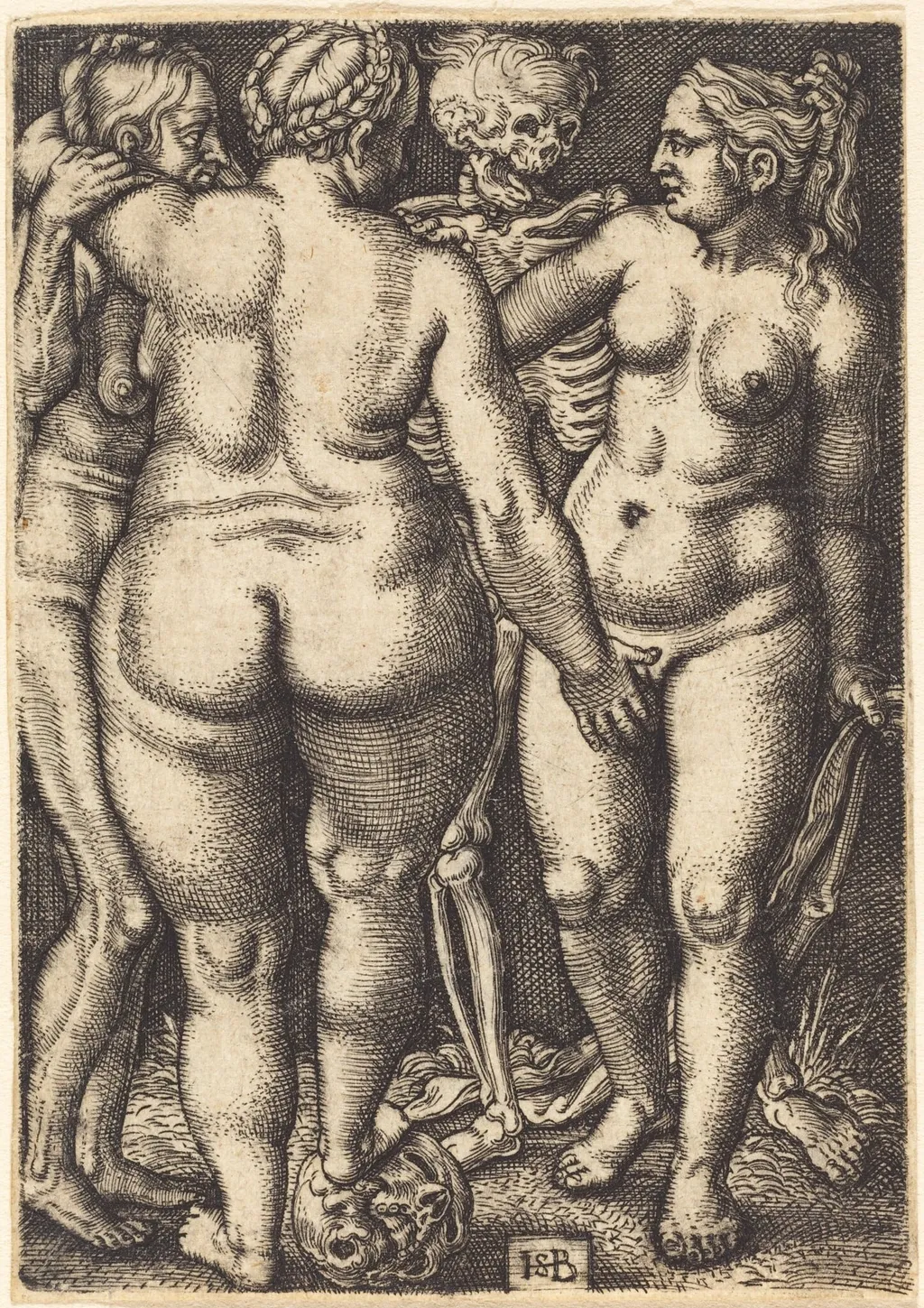
Death and Three Nude Women is an ink print by the Renaissance artist Sebald Beham. It dates from 1525 and is held in the collection of the National Gallery of Art.
About this work
Overview
Death and Three Nude Women is a 1525 engraving by German artist Sebald Beham, a prominent figure among the 'Little Masters' known for intricate, small-scale prints.
Subject & Meaning
The engraving depicts four figures: three nude women and a central skeleton, personifying Death, who holds a scythe. The women, frozen in shock or fear, surround Death in a dance-like pose, conveying the inescapability of mortality.
Technique & Style
Executed in the Renaissance style, the work showcases Beham's meticulous craftsmanship through detailed, realistic renderings of the human form, set against a dark, shadowy background that intensifies the scene's somber mood.
History & Provenance
Created in 1525 by Sebald Beham, a leading artist following in the footsteps of Albrecht Dürer, the engraving exemplifies the nude art genre popular during the early 16th century.
Context
Part of a broader Renaissance artistic trend, the piece reflects the period's fascination with classical themes and the human body, while its macabre element touches on the era's mortality awareness.
Artist & collection
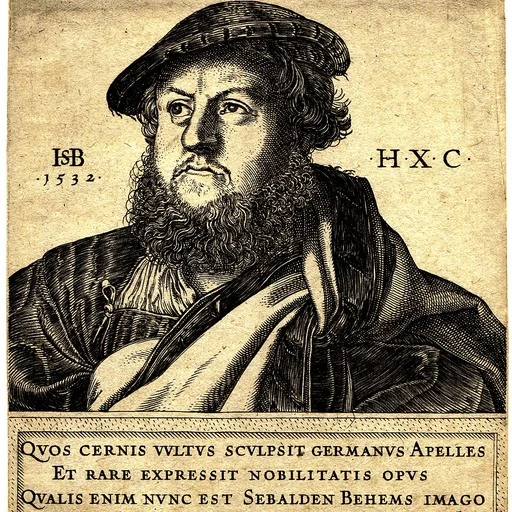
Artist
Sebald Beham (1500–1550) was a German painter and printmaker, mainly known for his very small engravings.