Artwork
Sea Monster ("Das Meerwunder")
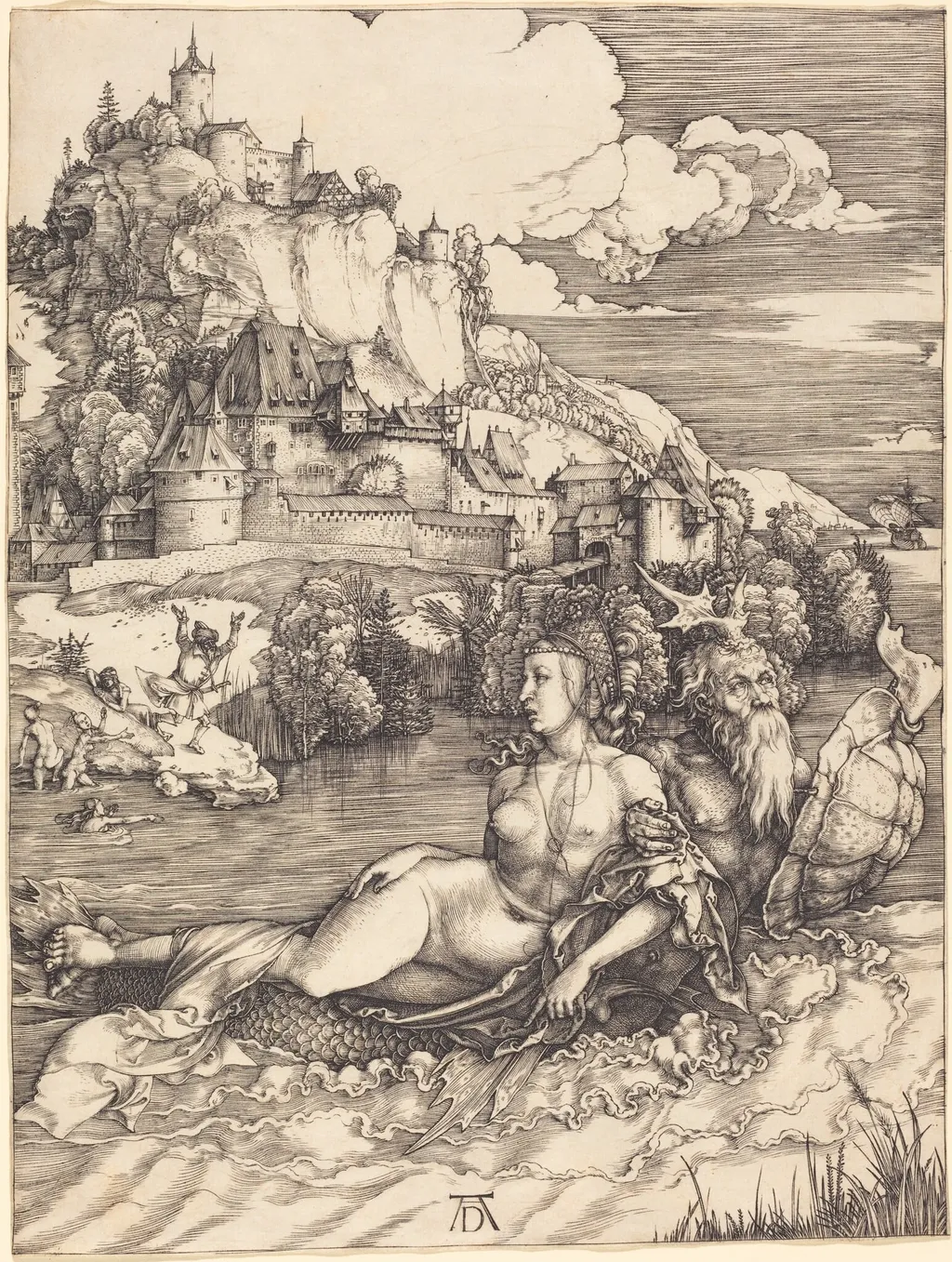
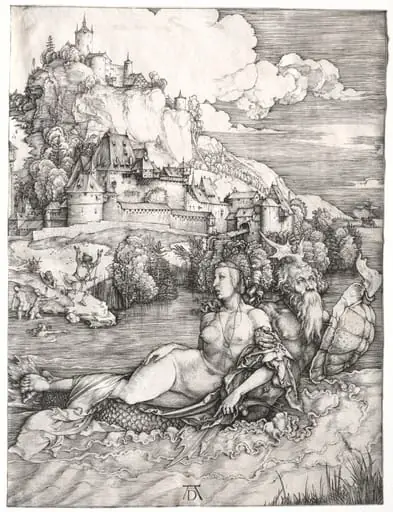
Sea Monster ("Das Meerwunder") is an ink print by the Northern Renaissance artist Albrecht Dürer. It dates from 1498 and is held in the collection of the Israel Museum.
About this work
Dürer was very good at making intricate designs, which is clear in this work.
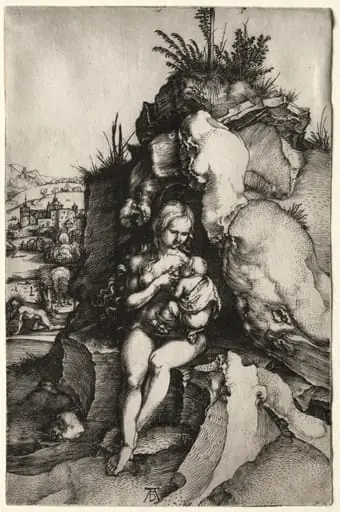
You see a strange sea creature in this engraving.
It's got sharp teeth and scales.
The sea monster is interesting because it shows Dürer's imagination and skill with detail, and he made it around 1498, which was a time of exploration and discovery, so maybe he was inspired by stories of unknown creatures.
Dürer was very good at making intricate designs, which is clear in this work.
Check out the technique: engraving.
Overview
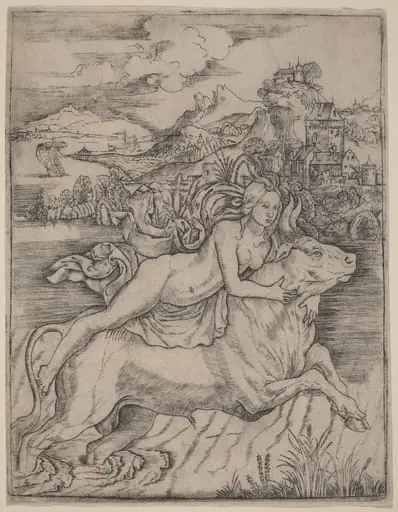
Albrecht Dürer’s copper engraving titled Sea Monster (German: Das Meerwunder), created circa 1498–1500, depicts a nude woman being carried away by a hybrid creature that combines human and fish features. The scene unfolds on a riverbank where onlookers react with alarm, while a distant fortress crowns a rocky outcrop above the water.
Subject & Meaning
The central figure, a voluptuous woman in an elaborate Milanese headdress, appears both startled and composed as she looks back toward her companions, whose gestures range from frantic waving to mournful collapse. Scholars have interpreted the abduction as a narrative device that permits the display of nudity, while others see the woman’s serene, Venus‑like pose as a subtle commentary on eroticism and vulnerability.
Technique & Style
Executed in copper engraving on laid paper, the work showcases Dürer’s meticulous line work and attention to texture, from the scales and sharp teeth of the merman to the intricate detailing of the surrounding figures and architecture. It represents an early exploration of human anatomy and proportion that anticipates the artist’s later, more refined studies of the human form.
History & Provenance
The engraving can be dated by comparison with a signed nude study in Vienna’s Albertina, dated 1501, suggesting a close chronological relationship. A notable Mannerist copy produced around 1550 in Germany testifies to the image’s influence and circulation during the mid‑16th century.
Context
Created during a period of expanding geographic knowledge and mythic curiosity, the print reflects contemporary fascination with sea monsters and exotic beings. Architectural elements in the background echo the Kaiserburg in Nuremberg, linking the fantastical scene to Dürer’s native city.
Artist & collection
Artist
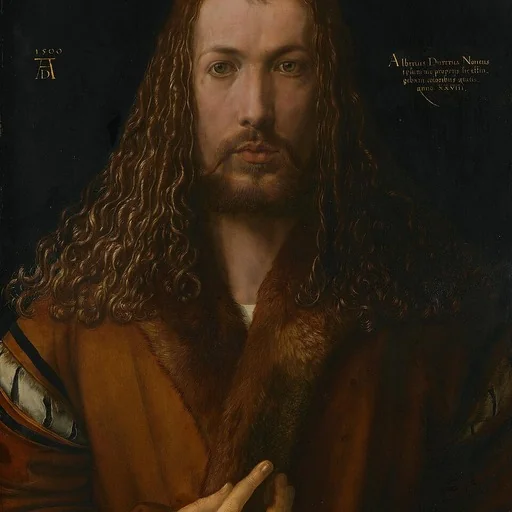
Albrecht Dürer spent his life in Nuremberg, a busy German city where artists traded prints like currency.

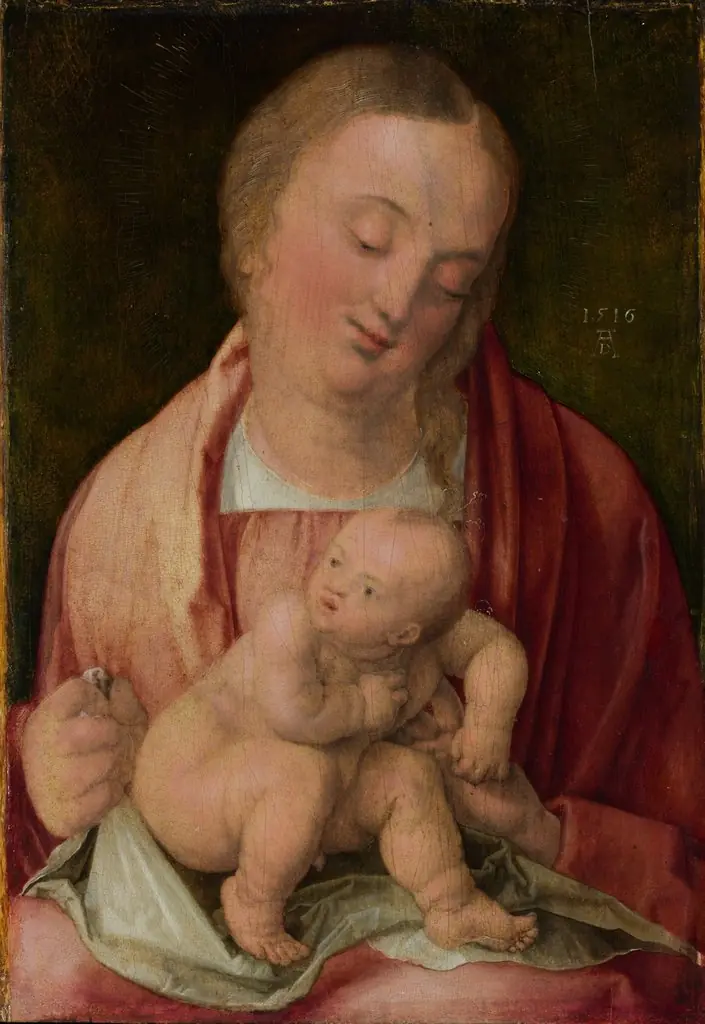
![Madonna and Child [obverse], by Albrecht Dürer](https://artifactworldgallery.com/img/albrecht-durer--madonna-and-child-obverse--d7b8ebf05d22ebe5-w320.webp)
![Lot and His Daughters [reverse], by Albrecht Dürer](https://artifactworldgallery.com/img/albrecht-durer--lot-and-his-daughters-reverse--b4ebf9b282faa17a-w320.webp)