Artwork
The Betrayal
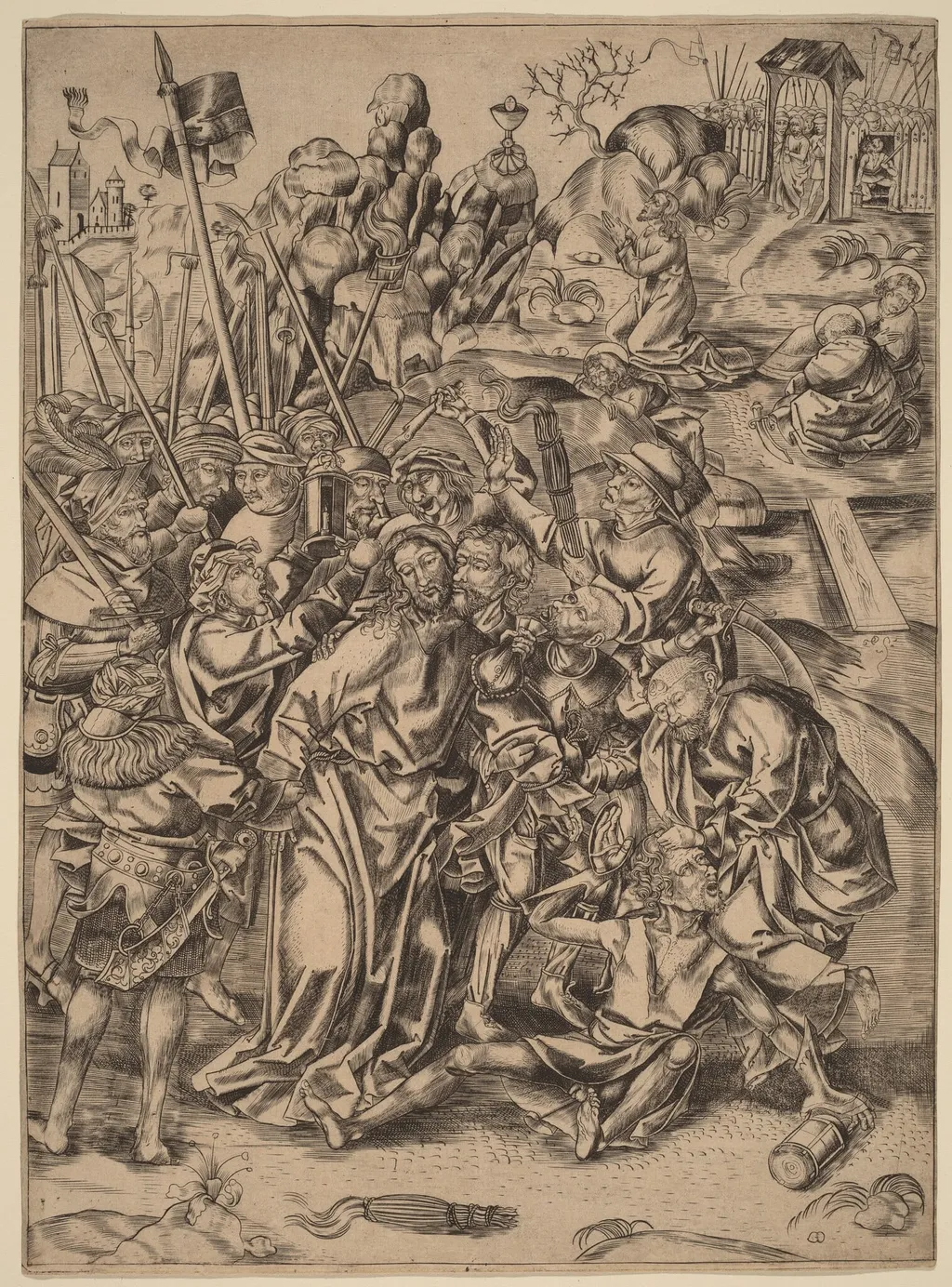
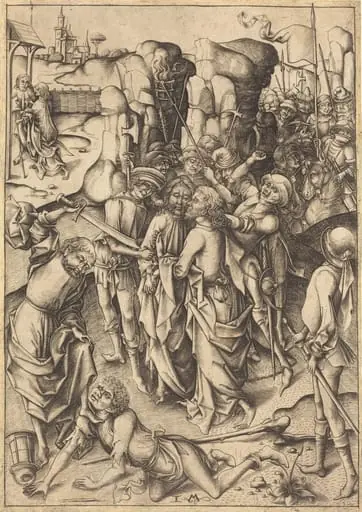
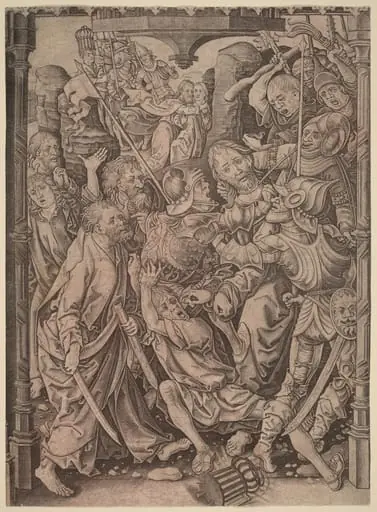
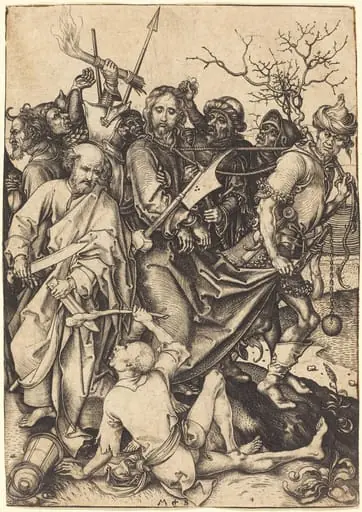
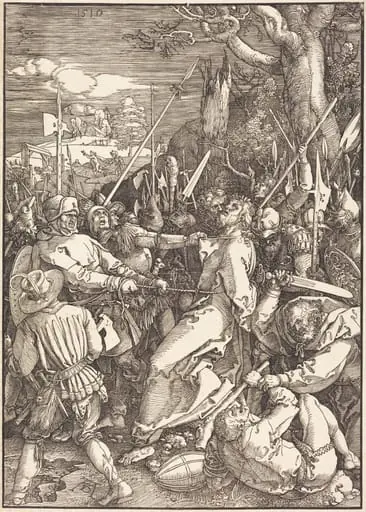
The Betrayal is an ink print by the Renaissance artist Netherlandish 15th Century. It dates from 1401 and is held in the collection of the National Gallery of Art.
About this work
Overview
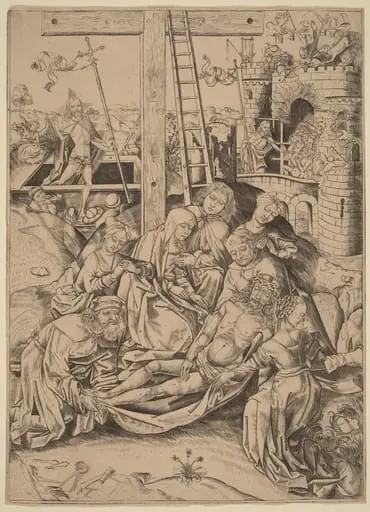
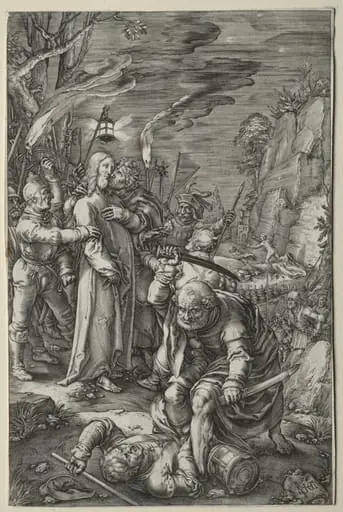
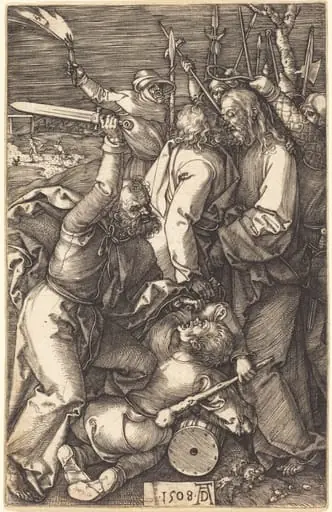
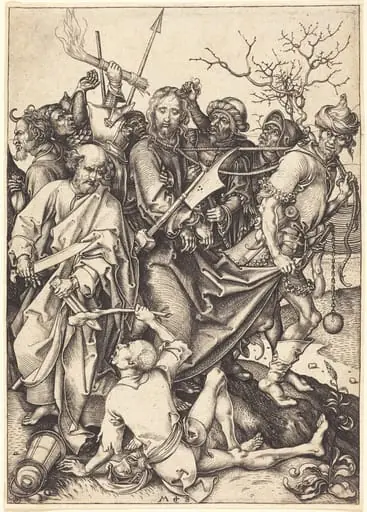
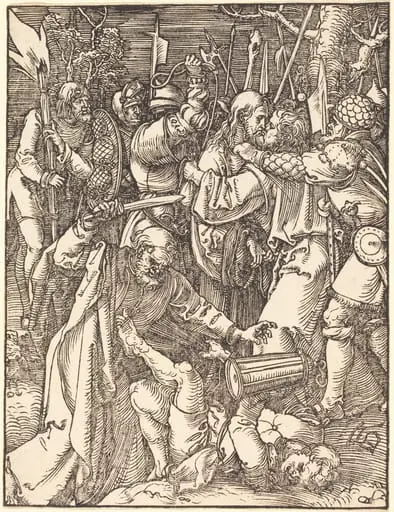
This engraving on laid paper depicts a densely packed scene of figures in motion, rendered with fine, intersecting lines that generate contrast and depth.
This engraving on laid paper depicts a densely packed scene of figures in motion, rendered with fine, intersecting lines that generate contrast and depth. The composition is crowded and dynamic, with no single focal point dominating the space. The technique relies on cross-hatching to model form and atmosphere, creating a sense of volume within a flat medium. The overall effect is one of tension and movement, inviting close inspection of individual expressions and gestures.
Subject & Meaning
The central figure, a bearded man in a robe, is encircled by a varied crowd wielding spears, holding objects, and playing instruments. Behind them, a cross and small structures suggest a religious or historical setting. Though the specific narrative is ambiguous, the arrangement implies a moment of confrontation or revelation. The varied gazes—some upward, others downward—heighten the emotional ambiguity, emphasizing drama over clarity.
Technique & Style
The artist employs precise cross-hatching to build shadow and texture, layering parallel lines at varying angles to modulate light and mass. The sharp, controlled lines create a sense of density without blur, characteristic of fine engraving. Facial expressions and clothing folds are defined through subtle gradations of line weight, demonstrating mastery over the medium’s limitations. The composition avoids open space, filling every inch with activity to sustain visual intensity.
History & Provenance
The work is a print, likely produced in the early modern period, when engraving was a primary method for disseminating narrative imagery. Its use of laid paper and detailed line work aligns with techniques common in 16th- or 17th-century European printmaking. While the artist’s identity and original commission remain unverified, the subject matter suggests a connection to biblical or liturgical traditions widely circulated in printed form.
Context
Engravings like this were often made for private devotion or scholarly study, allowing viewers to engage with complex religious scenes outside church settings. The chaotic grouping of figures reflects a broader trend in Northern Renaissance and Baroque printmaking to depict emotional intensity through crowded compositions. The inclusion of musical instruments and varied gestures may reference contemporary interpretations of betrayal narratives, blending scriptural themes with human drama.
Legacy
This print exemplifies how engravers translated narrative tension into linear form, influencing later generations of printmakers. Its reliance on cross-hatching for emotional and spatial depth became a standard in graphic arts. Though not widely reproduced today, it remains a representative example of how early modern artists used precision and density to convey psychological complexity without color or movement.
Artist & collection

Artist
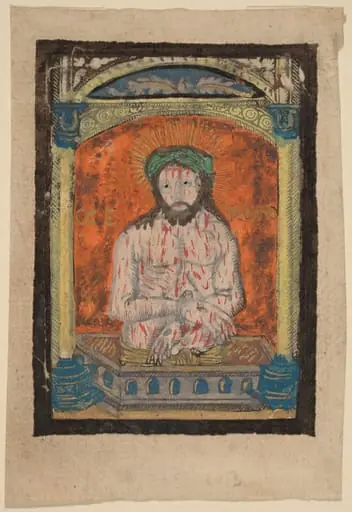
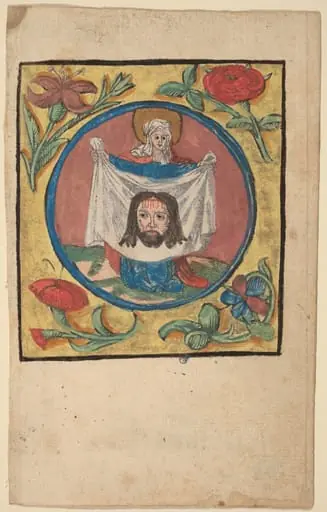
These prints show Christ’s suffering in bold, hand-colored images from 15th-century Northern Europe.