Artwork
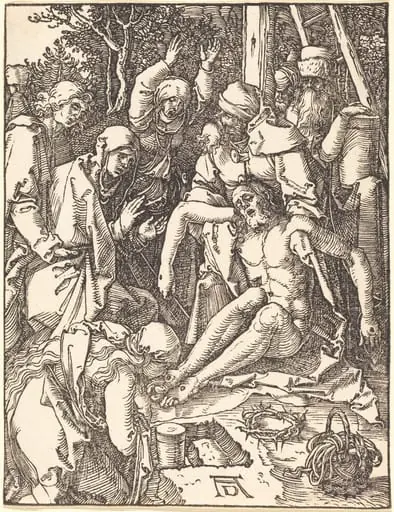
The Deposition
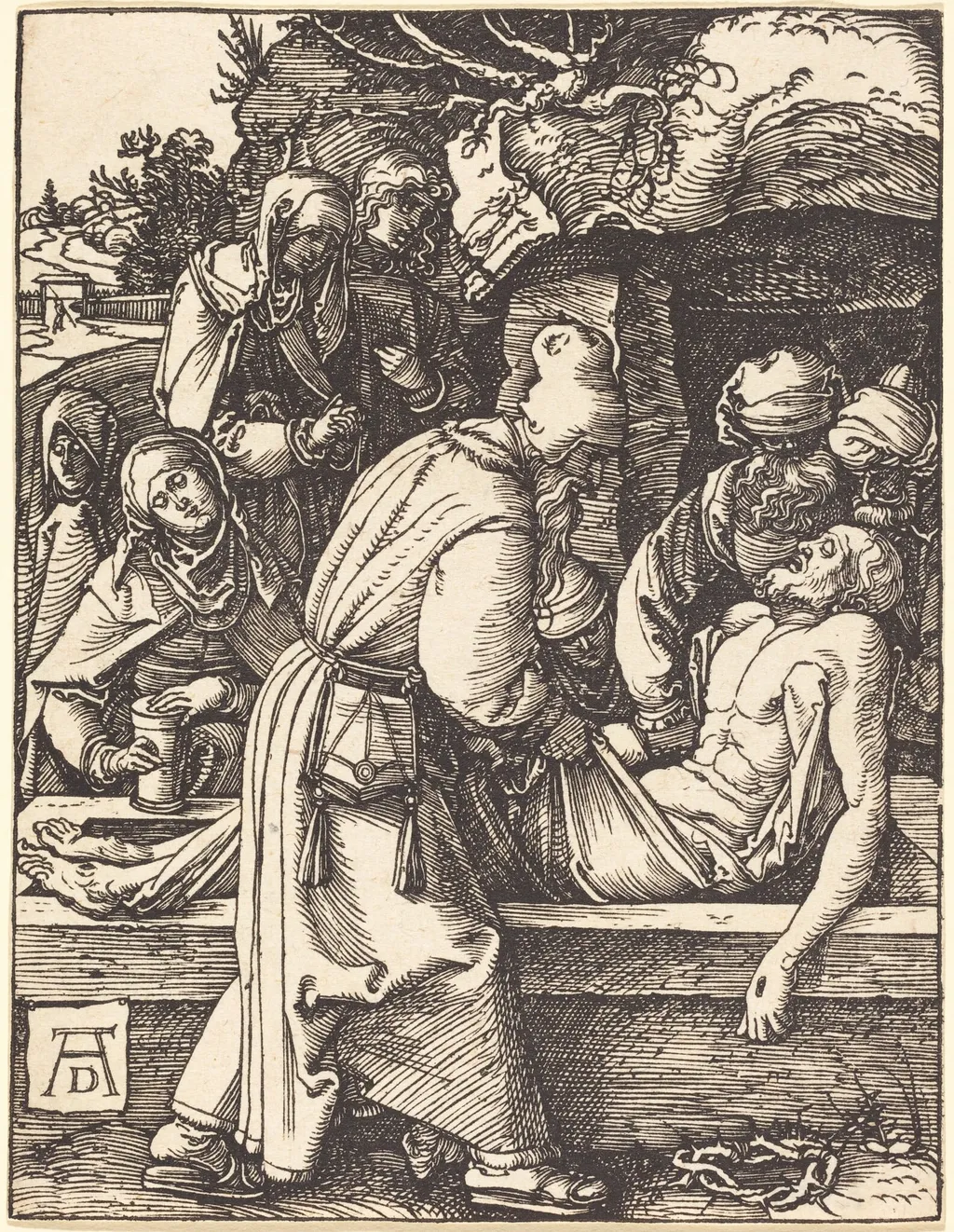
The Deposition is an ink print by the Northern Renaissance artist Albrecht Dürer. It dates from 1510 and is held in the collection of the British Museum.
About this work
Overview
Albrecht Dürer’s woodcut entitled *The Deposition* dates from around 1510. Executed on laid paper, the print presents the biblical moment when Christ’s body is lowered from the cross. The composition gathers several figures around the lifeless Christ, creating a solemn atmosphere that reflects the devotional concerns of early sixteenth‑century Northern Europe.
Subject & Meaning
The image captures the moment of Christ’s removal from the crucifixion site, a scene traditionally associated with mourning and the promise of resurrection. The mourners’ gestures and expressions convey grief and reverence, inviting viewers to contemplate the human cost of the Passion and the theological significance of Christ’s sacrifice.
Technique & Style
Dürer employed the woodcut medium, carving intricate lines into a wooden block to produce fine tonal variations on laid paper. The high level of detail—particularly in the folds of clothing and the faces of the figures—exemplifies the Northern Renaissance’s emphasis on realism and expressive nuance within the constraints of printmaking.
History & Provenance
Created circa 1510, the print belongs to Dürer’s mature period, when he was consolidating his reputation across Europe. While the original block no longer survives, several impressions have been preserved in museum collections, documenting the work’s circulation among both private collectors and devotional contexts during the early modern era.
Artist & collection
Artist
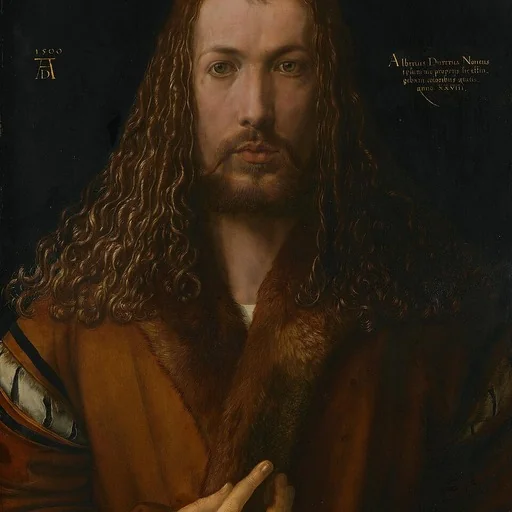
Albrecht Dürer spent his life in Nuremberg, a busy German city where artists traded prints like currency.

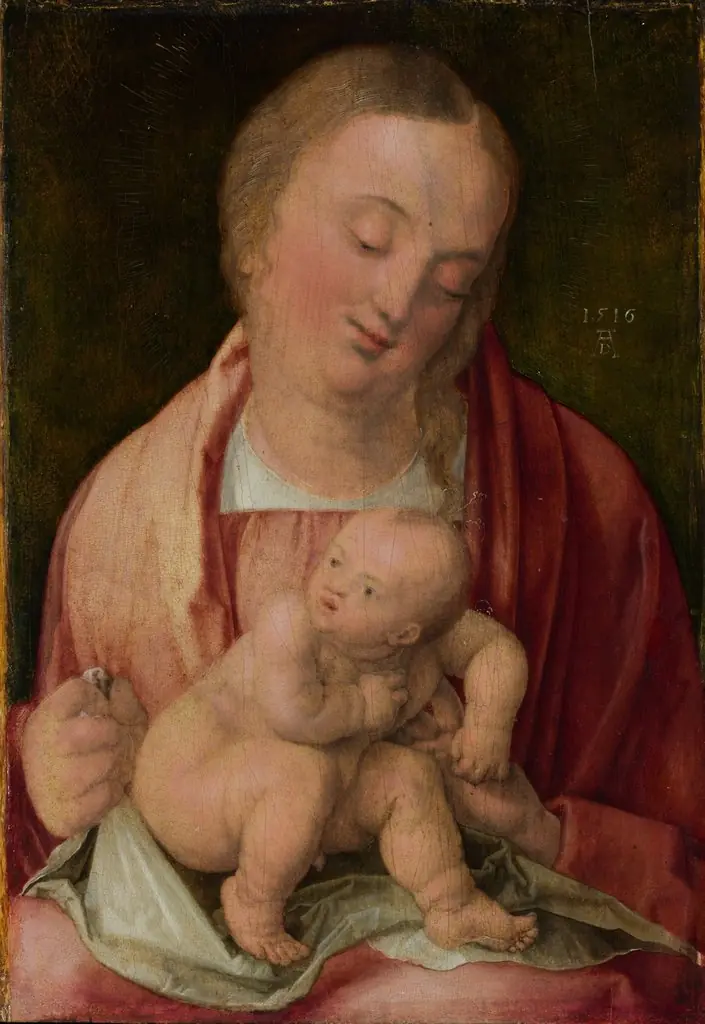
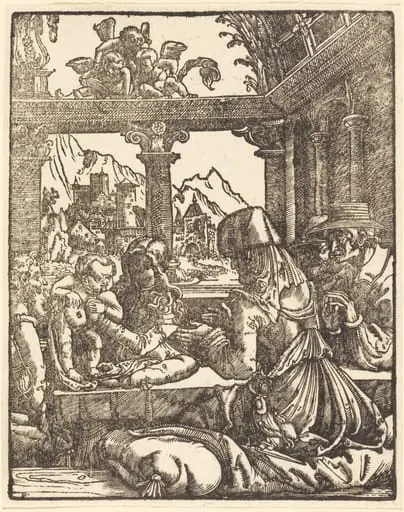
![Madonna and Child [obverse], by Albrecht Dürer](https://artifactworldgallery.com/img/albrecht-durer--madonna-and-child-obverse--d7b8ebf05d22ebe5-w320.webp)
![Lot and His Daughters [reverse], by Albrecht Dürer](https://artifactworldgallery.com/img/albrecht-durer--lot-and-his-daughters-reverse--b4ebf9b282faa17a-w320.webp)