Artwork
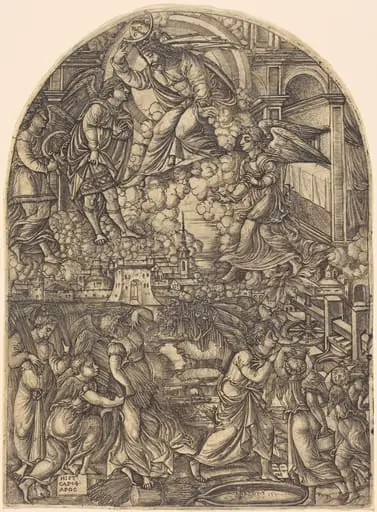
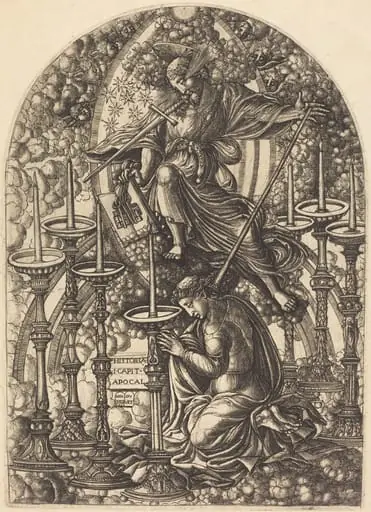
The Apocalypse: St. John Summoned to Heaven
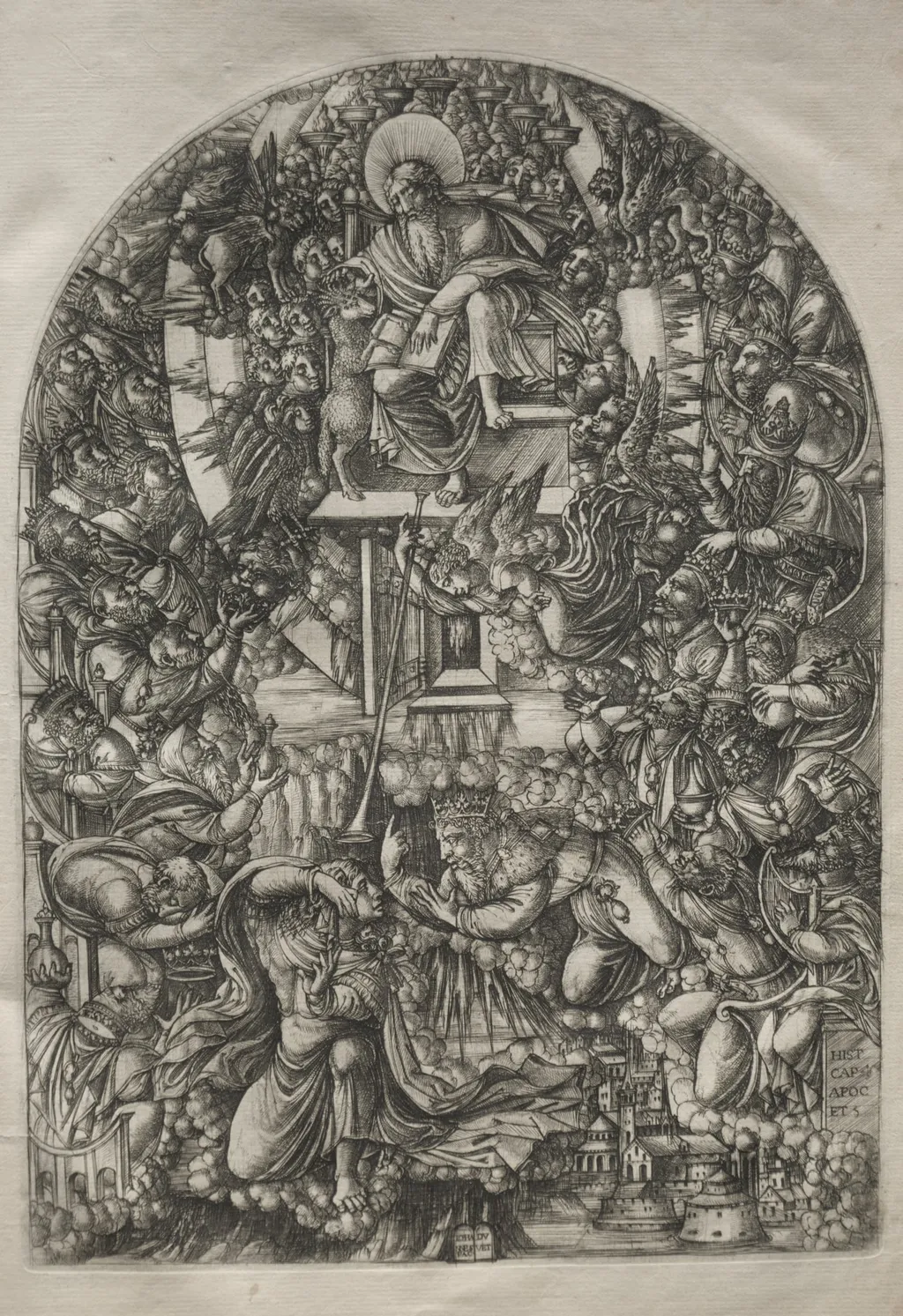
The Apocalypse: St. John Summoned to Heaven is a print by the Renaissance artist Jean Duvet. It dates from 1551 and is held in the collection of the Cleveland Museum of Art.
About this work
Overview
The engraving depicts the biblical moment when Saint John is called up to heaven, forming part of a larger series that visualises the Revelation of John. Executed as a print, the image is densely populated with figures and symbolic objects, characteristic of the artist’s intricate compositional approach.
Subject & Meaning
The scene illustrates the apocalyptic narrative from the New Testament, emphasizing the divine summons of the evangelist. The multitude of characters and iconographic details serve to convey the spiritual gravity and prophetic vision inherent in the Revelation text.
Technique & Style
Created by Jean Duvet, the work showcases his mastery of engraving, employing fine line work to render solidly modeled human forms. While the figures echo the anatomical precision of the Italian High Renaissance, Duvet’s arrangement abandons conventional perspective, favoring a crowded, ornamental surface that reflects his distinctive, highly artificial aesthetic.
History & Provenance
The print belongs to a bound collection of twenty‑three engravings that occupied Duvet for several years and represent his most ambitious project. The museum’s volume is one of only seven complete sets known to exist, underscoring its rarity and historical significance.
Context
Active in the provincial town of Langres, Duvet was among France’s earliest prominent printmakers. His exposure to Italian art arrived through imported prints, especially those by Marcantonio Raimondi, which informed his synthesis of French and Italian visual traditions in this series.
Artist & collection

Artist
Jean Duvet (1485 – after 1562) was a French Renaissance goldsmith and engraver, now best known for his engravings.

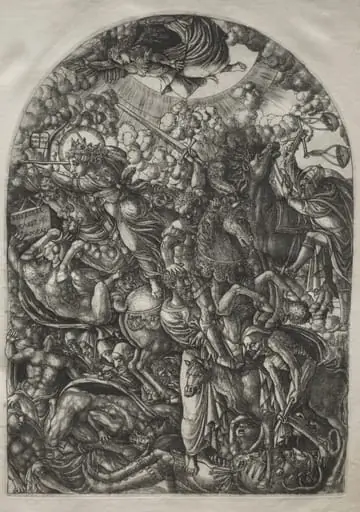 The Apocalypse: St. John Sees the Four Riders
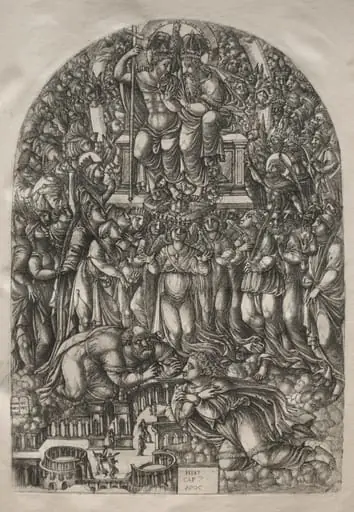 The Apocalypse: An Innumerable Multitude Which Stand before the Throne
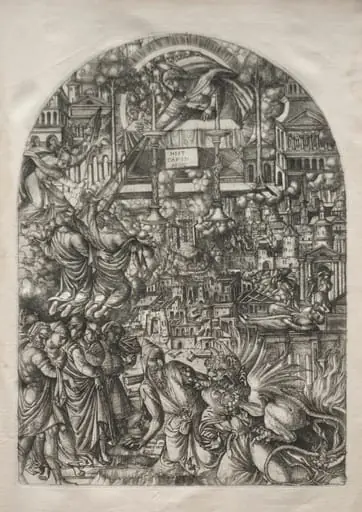 The Apocalypse: The Measurement of the Temple
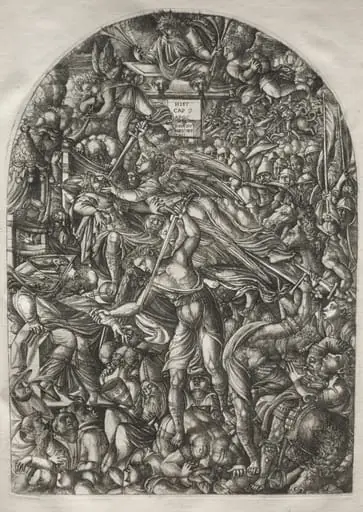 The Apocalypse: The Angel Sounding the Sixth Trumpet
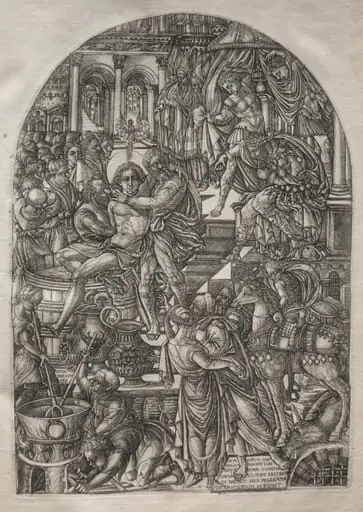 The Apocalypse: The Martyrdom of St. John the Evangelist
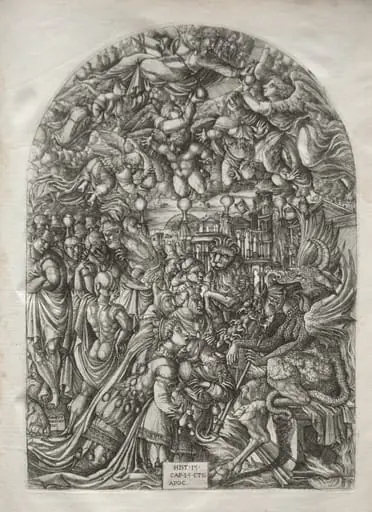 The Apocalypse: The Woman Clothed with the Sun
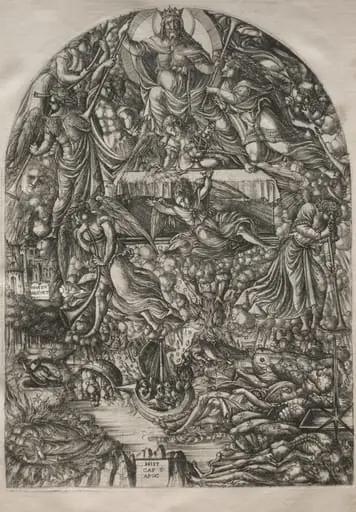 The Apocalypse: The Opening of the Seventh Seal
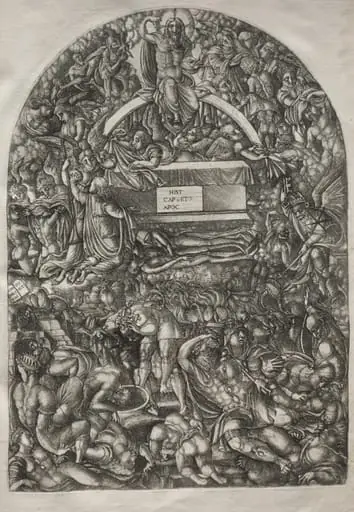 The Apocalypse: A Star Falls and Makes Hell to Open
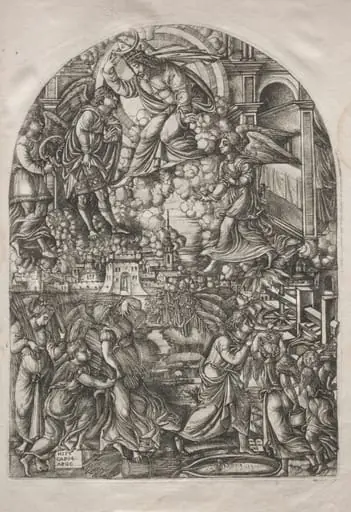 The Apocalypse: The Winepress of the Wrath of God
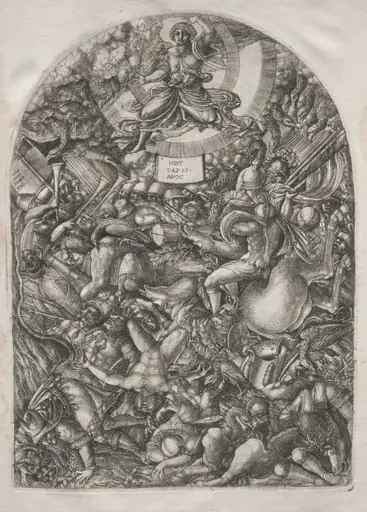 The Apocalypse: The Angel in the Sun Calling the Birds of Prey