Artwork
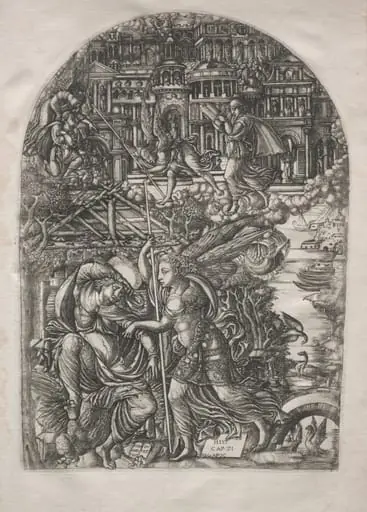
The Apocalypse: St. John Sees the Four Riders
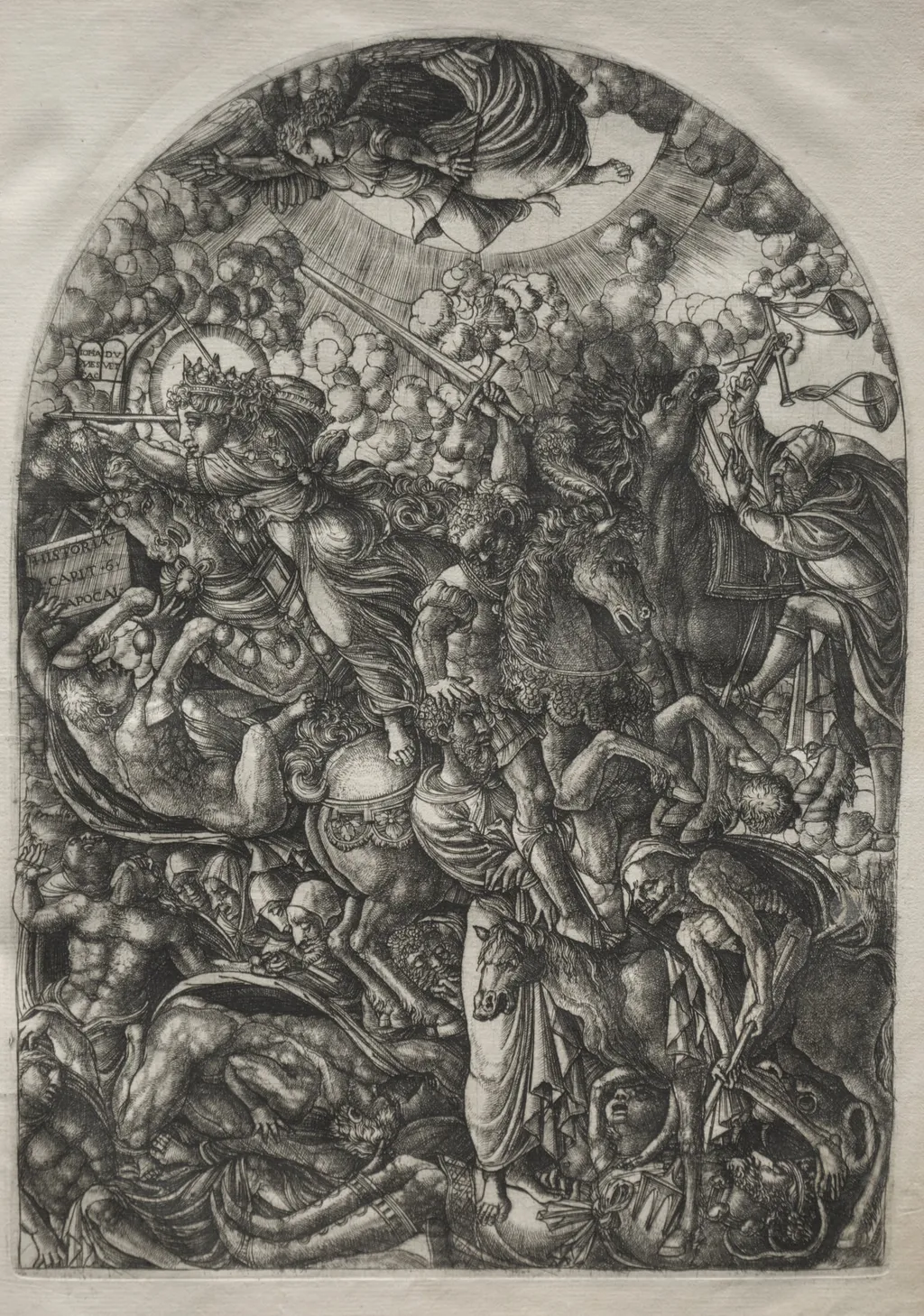
The Apocalypse: St. John Sees the Four Riders is a print by the Renaissance artist Jean Duvet. It dates from 1551 and is held in the collection of the Cleveland Museum of Art.
About this work
This painting shows a scene from the Bible's Book of Revelation.
It's an engraving with detailed figures and horses.
The artist worked on this series for years, which is interesting because it was a big project for him, and he was one of the first major printmakers in France.
You can learn more about this style by looking at the work of artist Jean Duvet (French, 1485–1561).
Overview
The engraving is one of a series of twenty‑three prints that visualise the narrative of the Apocalypse as described in the biblical Book of Revelation. Each plate presents a distinct episode; this particular image depicts Saint John’s vision of the four horsemen. The work forms part of a bound volume, of which only seven complete sets are known to survive.
Subject & Meaning
The scene illustrates the moment when the apostle John witnesses the four riders who herald conquest, war, famine and death, a central motif in apocalyptic literature. The figures and their steeds are rendered with meticulous detail, emphasizing the symbolic weight of each rider within the prophetic vision.
Technique & Style
Engraved on copper, the print demonstrates Duvet’s command of line and dense ornamentation. While the human forms show the influence of Italian High Renaissance modeling, the composition is deliberately crowded, abandoning conventional perspective in favour of intricate surface decoration that creates a highly artificial visual field.
History & Provenance
Created over several years by Jean Duvet (c.1485–1561), a pioneering French printmaker, the series reflects his long‑term engagement with the apocalyptic theme. The museum’s volume, one of only seven extant complete collections, testifies to the work’s rarity and the artist’s dedication to this ambitious project.
Context
Working primarily in the provincial town of Langres, Duvet accessed Italian artistic developments through imported prints, especially those of Marcantonio Raimondi. This cross‑cultural exchange informed his synthesis of French sensibility with Renaissance figural modeling, resulting in a distinctive, idiosyncratic style.
Artist & collection

Artist
Jean Duvet (1485 – after 1562) was a French Renaissance goldsmith and engraver, now best known for his engravings.

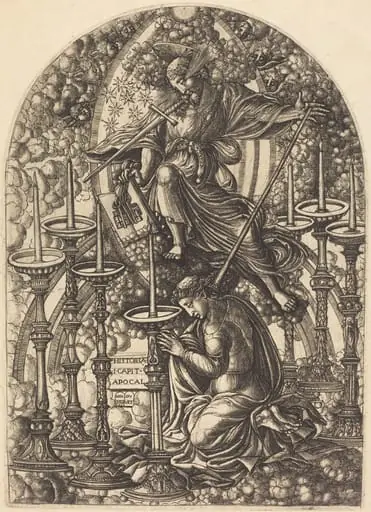
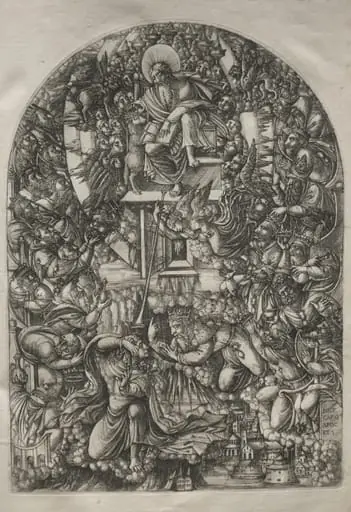 The Apocalypse: St. John Summoned to Heaven
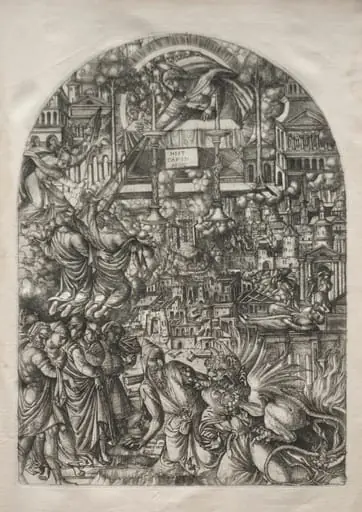 The Apocalypse: The Measurement of the Temple
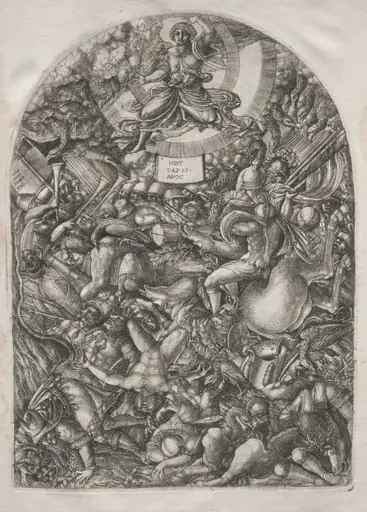 The Apocalypse: The Angel in the Sun Calling the Birds of Prey
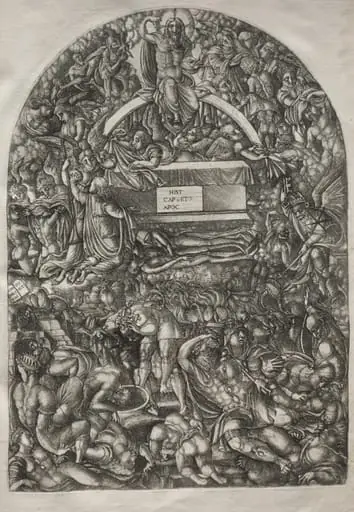 The Apocalypse: A Star Falls and Makes Hell to Open
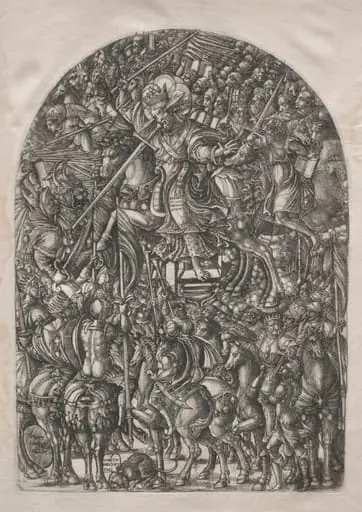 The Apocalypse: Christ Mounted on a White Horse
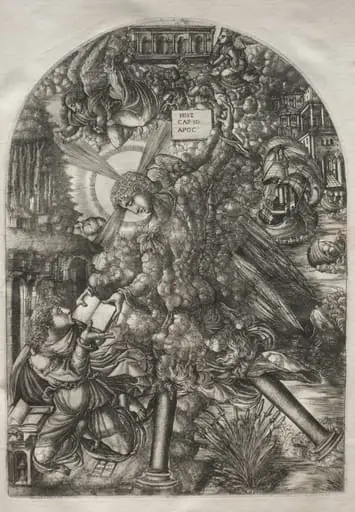 The Apocalypse: The Angel Gives St. John the Book to Eat
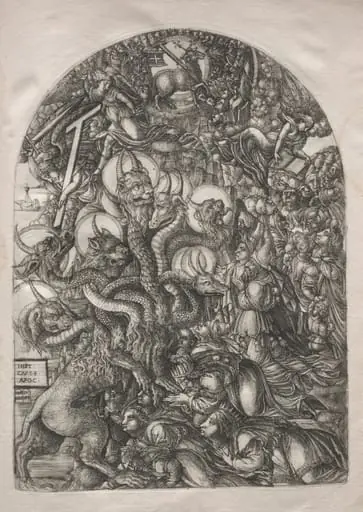 The Apocalypse: The Beast with Seven Heads and Ten Horns
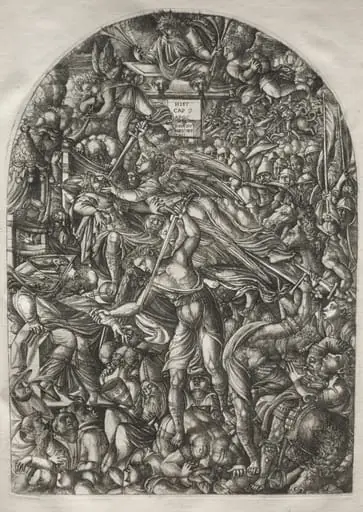 The Apocalypse: The Angel Sounding the Sixth Trumpet
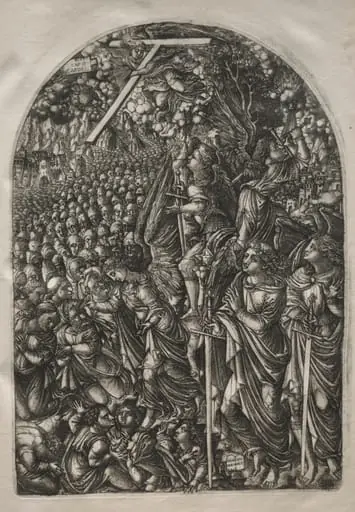 The Apocalypse: Four Angels Holding Back the Winds
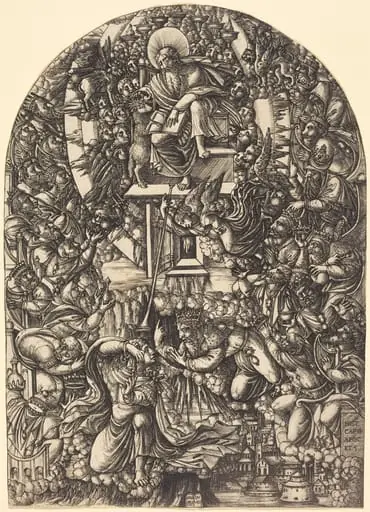
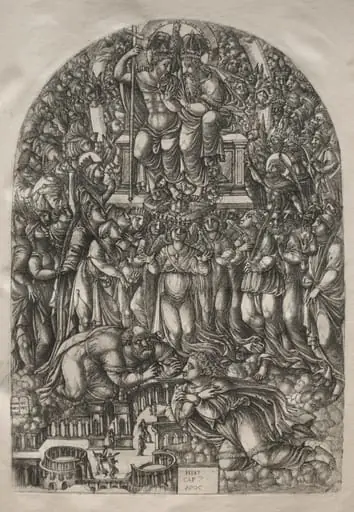 The Apocalypse: An Innumerable Multitude Which Stand before the Throne
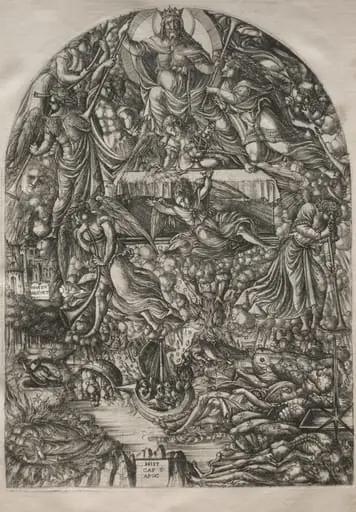 The Apocalypse: The Opening of the Seventh Seal
 The Apocalypse: The Angel Shows St. John the New Jerusalem