Artwork
The Martyrdom of the Ten Thousand
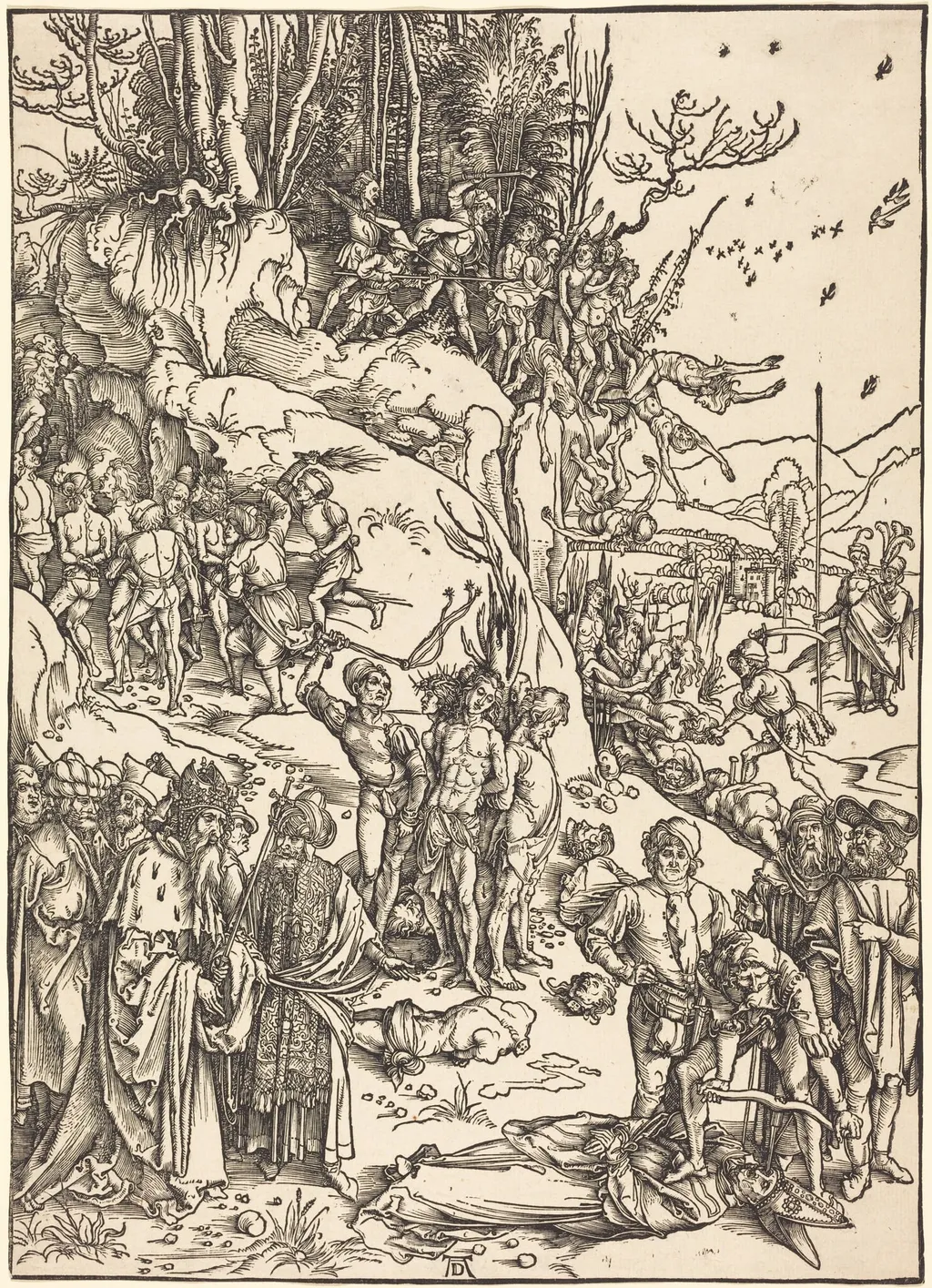
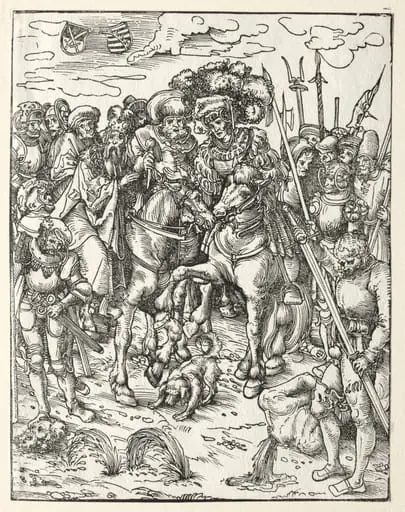
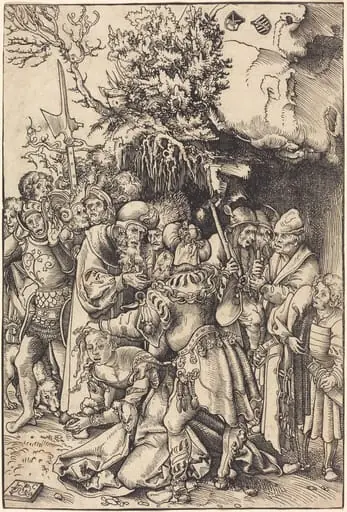
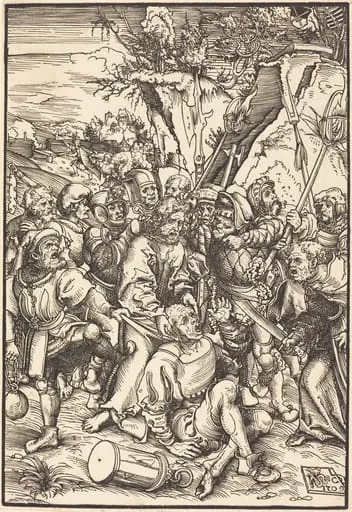
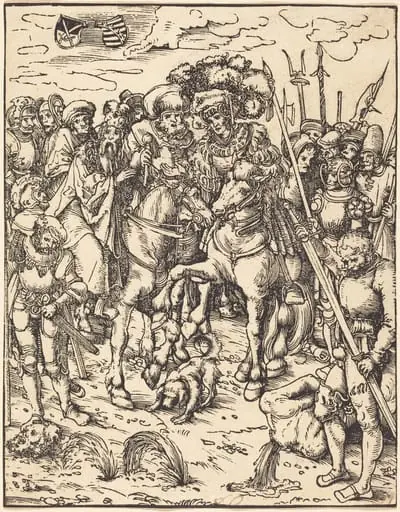
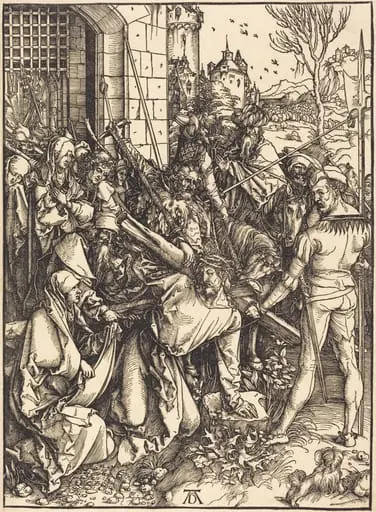
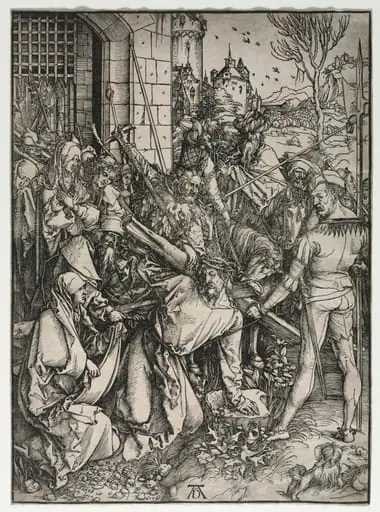
The Martyrdom of the Ten Thousand is an ink print by the Northern Renaissance artist Albrecht Dürer. It dates from 1496 and is held in the collection of the Metropolitan Museum of Art.
About this work
Overview
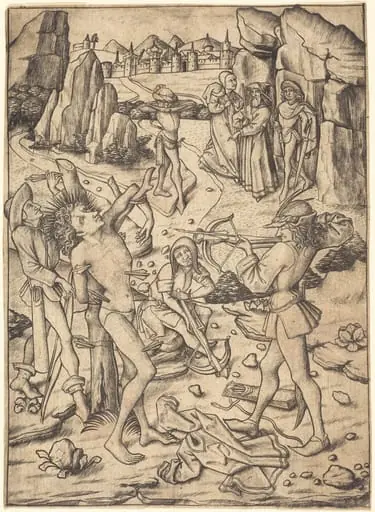
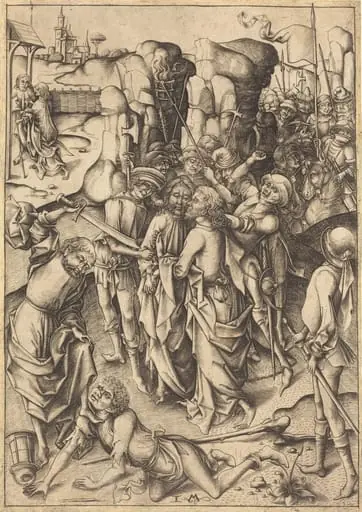
Albrecht Dürer’s woodcut, dated around 1496, presents a vivid portrayal of the legendary martyrdom of ten thousand Christians. Executed as a print, the image captures a tumultuous mountain setting where figures tumble and horses flee, conveying the intensity of the narrative. The work exemplifies Dürer’s early engagement with religious themes through the medium of woodcut.
Subject & Meaning
The composition illustrates the apocryphal story of ten thousand believers who suffered death on a steep slope, a motif common in late medieval devotional art. By emphasizing the chaotic descent of the martyrs and the panicked animals, the image underscores the collective sacrifice and the tumult of faith under persecution, inviting contemplation of collective suffering.
Technique & Style
Created through the traditional woodcut process, Dürer incised the design onto a wooden block, inked the relief surfaces, and pressed the image onto paper to produce multiple copies. The print displays his characteristic fine line work and attention to detail, while the crowded arrangement of figures and dynamic movement reflect a sophisticated handling of space uncommon for the period.
History & Provenance
The print emerged in Dürer’s early career, shortly after his apprenticeship in Nuremberg, and was likely intended for devotional circulation among the faithful. Surviving impressions are held in several European collections, indicating that the image was reproduced and distributed widely enough to enter the inventories of private collectors and religious institutions in the 16th century.
Context
Produced during the transition from medieval to Renaissance artistic sensibilities, the woodcut aligns with contemporary interests in biblical and hagiographic subjects. Its dramatic visual language mirrors the heightened emotionalism found in late Gothic manuscript illumination, while Dürer’s precise line work anticipates the more naturalistic approaches that would define his later oeuvre.
Artist & collection
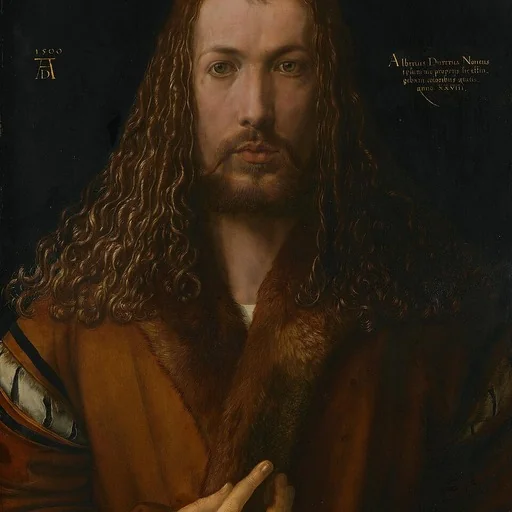
Artist
Albrecht Dürer spent his life in Nuremberg, a busy German city where artists traded prints like currency.

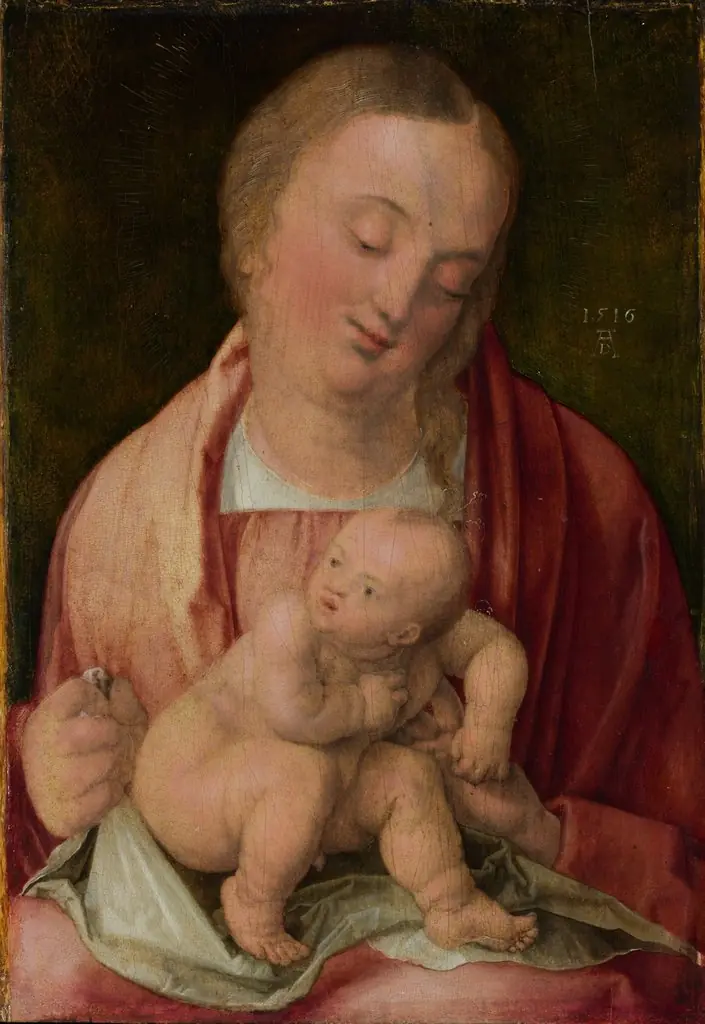
![Madonna and Child [obverse], by Albrecht Dürer](https://artifactworldgallery.com/img/albrecht-durer--madonna-and-child-obverse--d7b8ebf05d22ebe5-w320.webp)
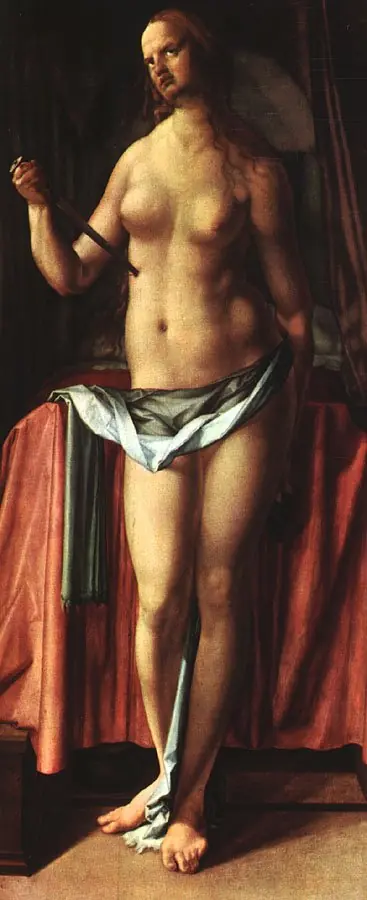
![Lot and His Daughters [reverse], by Albrecht Dürer](https://artifactworldgallery.com/img/albrecht-durer--lot-and-his-daughters-reverse--b4ebf9b282faa17a-w320.webp)