Artwork
Tuft of Cowslips
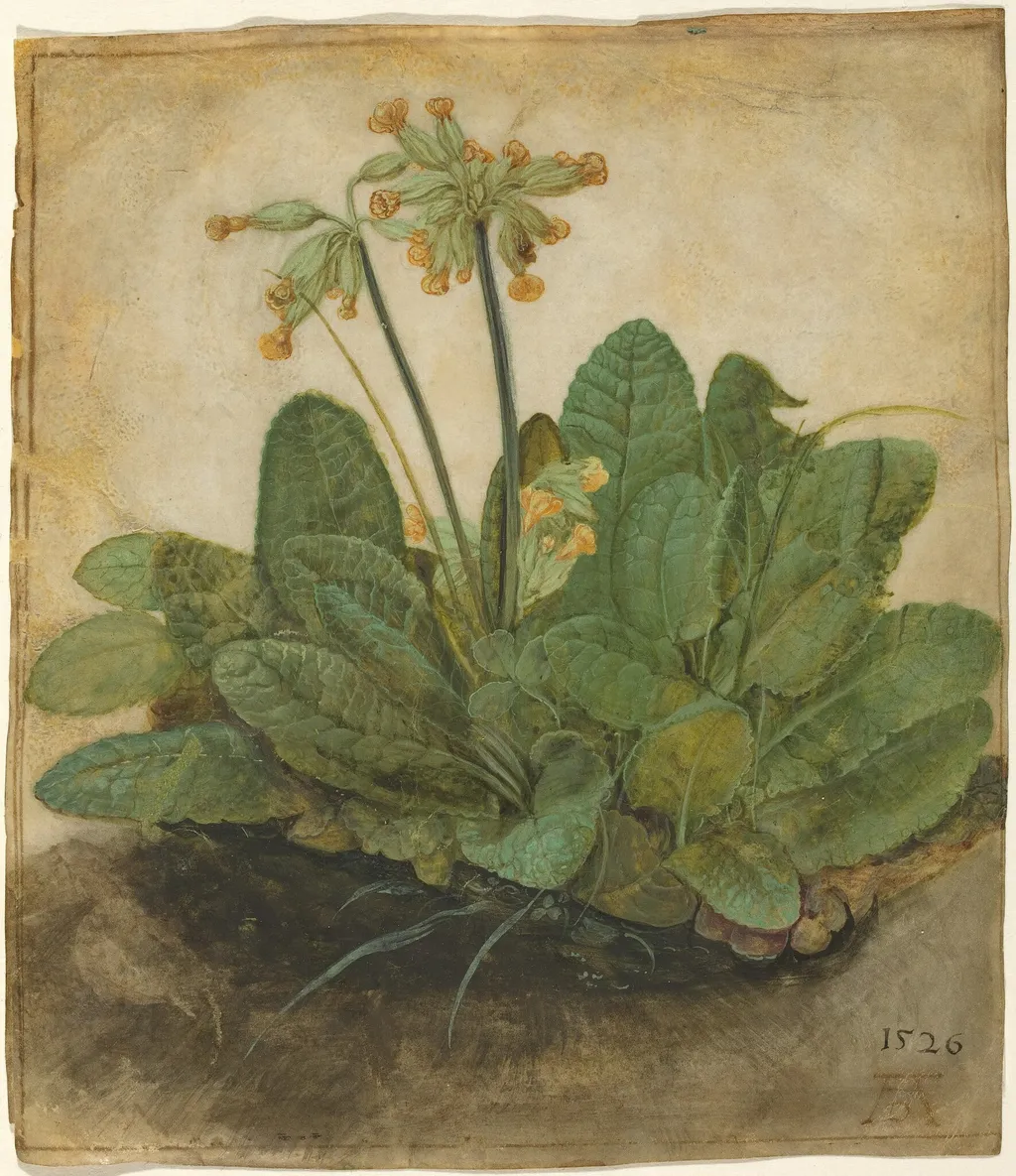
Tuft of Cowslips is a gouache drawing by the Northern Renaissance artist Albrecht Dürer. It dates from 1526 and is held in the collection of the National Gallery of Art.
About this work
Overview
Created in 1526, Tuft of Cowslips is a small botanical study executed in gouache on parchment. The work captures a modest cluster of cowslips rising from dark earth, rendered with meticulous attention to natural form. Its simplicity and focus on a single subject reflect Dürer’s interest in the precision of observed nature, rather than idealized composition.
Subject & Meaning
The painting presents a humble grouping of cowslips—wildflowers common in European meadows—growing directly from soil without symbolic embellishment. There is no allegory or human presence; the subject is treated as a specimen worthy of study in its own right. This reflects a shift toward empirical observation in Renaissance naturalism, valuing the plant for its physical reality.
Technique & Style
Dürer employed gouache, an opaque water-based pigment, to build subtle layers of color on parchment. The paint’s matte finish and soft translucency allowed for delicate gradations in the petals and leaves, while fine brushwork captured individual stamens and veined foliage. The light background isolates the subject, enhancing its tactile presence without distraction.
History & Provenance
The work was likely made during Dürer’s later years, possibly as part of a personal study or scientific record. It remained in private collections for centuries before entering a public institution. The parchment shows signs of aging—minor discoloration and surface wear—consistent with careful but prolonged handling and storage.
Context
In early 16th-century Europe, detailed botanical drawings were gaining currency among scholars and artists interested in natural philosophy. Dürer’s work aligns with this trend, paralleling contemporary herbals and naturalist manuscripts. Unlike decorative floral arrangements, this piece prioritizes accuracy over ornament, reflecting the growing influence of empirical science.
Legacy
Tuft of Cowslips stands as an early example of botanical illustration elevated to the status of fine art. Its quiet precision influenced later naturalists and artists who sought to document flora with scientific rigor. Though modest in scale, it exemplifies how close observation of the ordinary could yield enduring visual insight.
Own this work as a print
Artist & collection
Artist
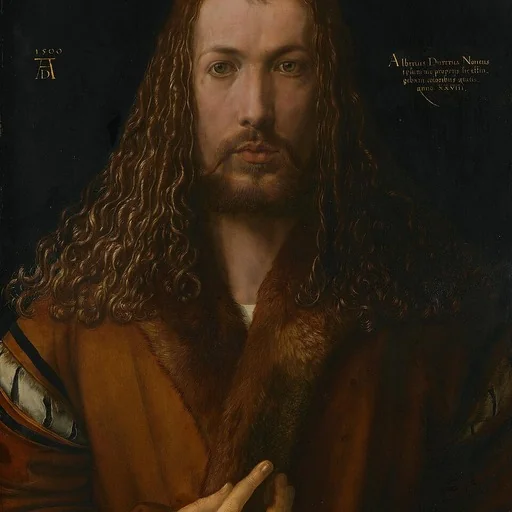
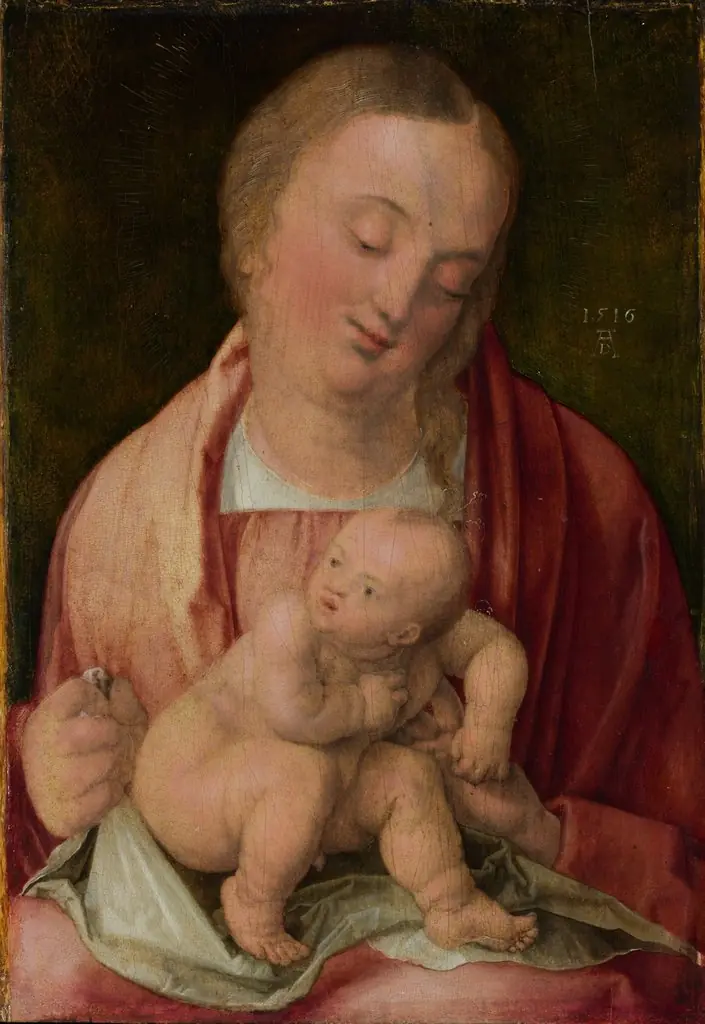
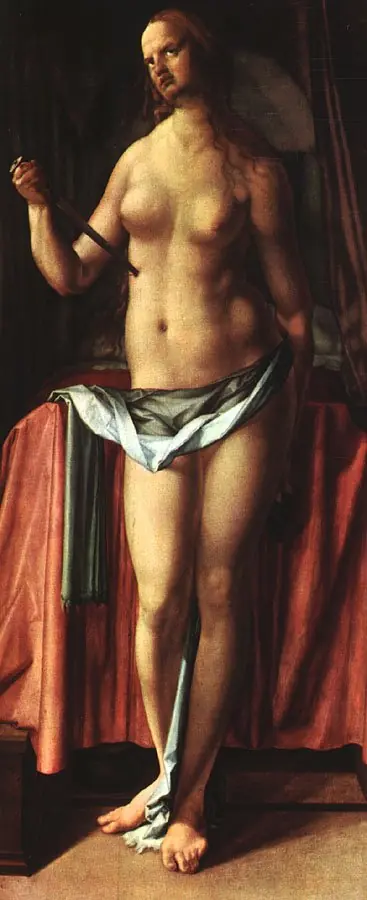
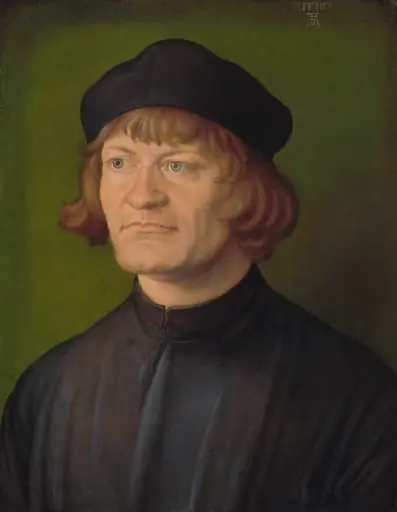
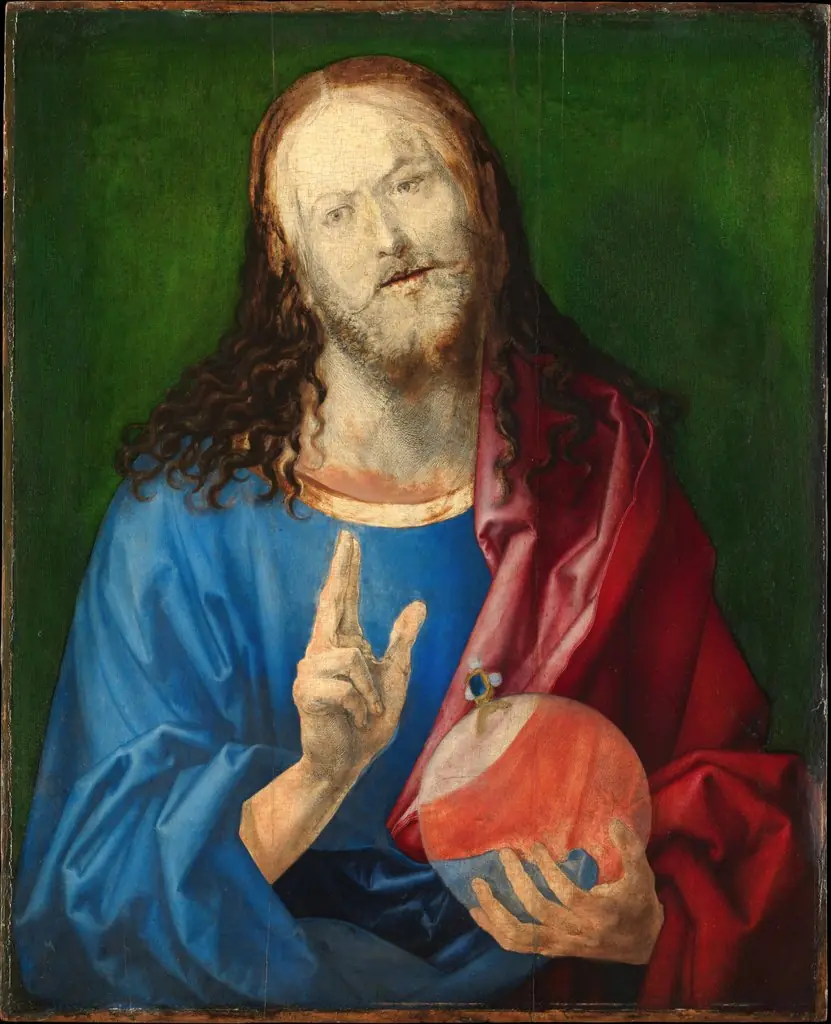
Albrecht Dürer spent his life in Nuremberg, a busy German city where artists traded prints like currency.

![Madonna and Child [obverse], by Albrecht Dürer](https://artifactworldgallery.com/img/albrecht-durer--madonna-and-child-obverse--d7b8ebf05d22ebe5-w320.webp)
![Lot and His Daughters [reverse], by Albrecht Dürer](https://artifactworldgallery.com/img/albrecht-durer--lot-and-his-daughters-reverse--b4ebf9b282faa17a-w320.webp)
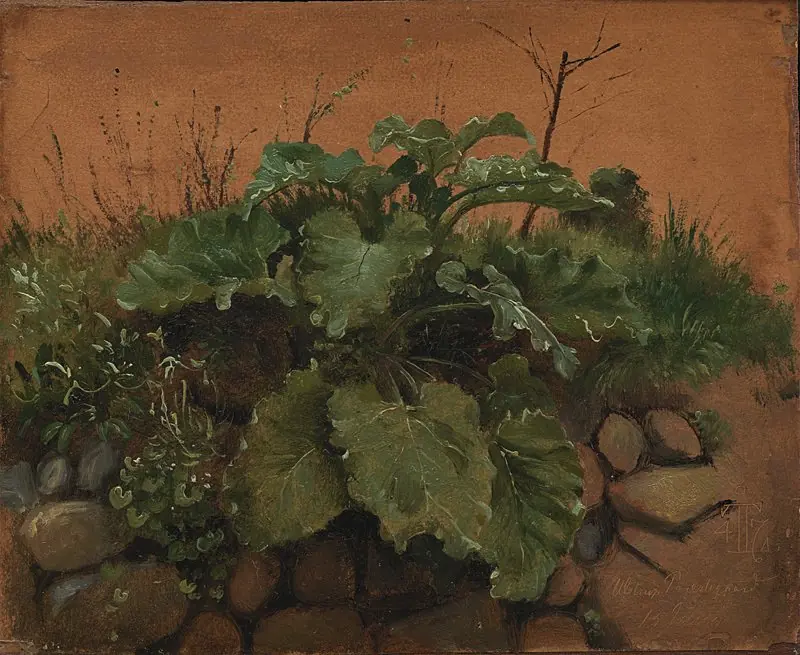 A Burdock and Other Plants on a Stone Wall
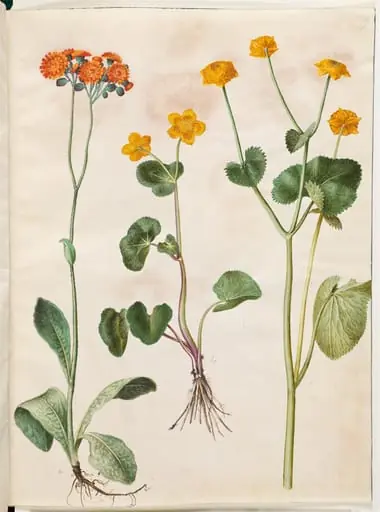 Pilosella aurantiaca (pomerans-høgeurt); Caltha palustris (eng-kabbeleje)
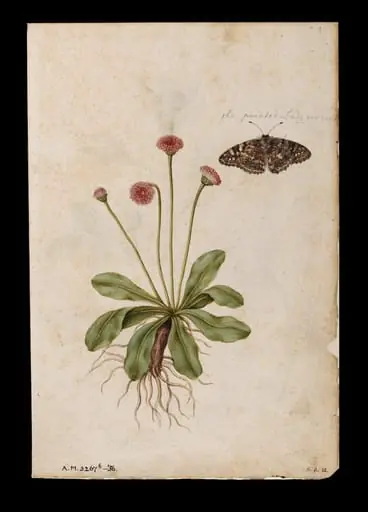 Daisies and lady butterfly; Roses
 A Burdock and Other Plants on a Stone Wall
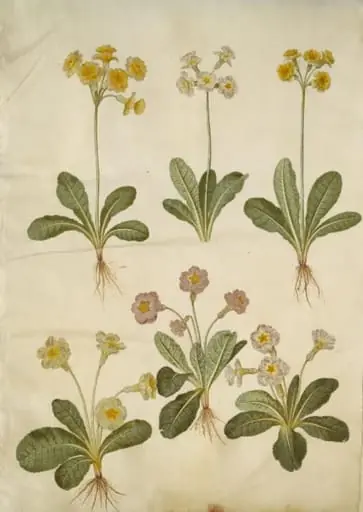 Primula veris (hybrid af hulkravet kodriver); Primula vulgaris (hybrid af storblomstret kodriver)
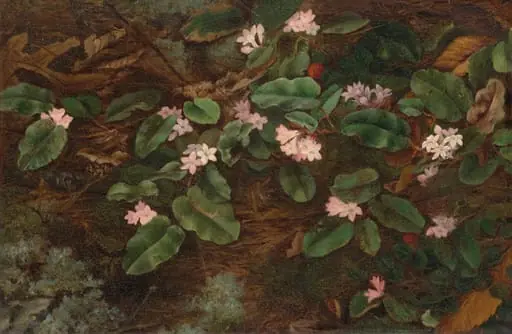 Trailing Arbutus
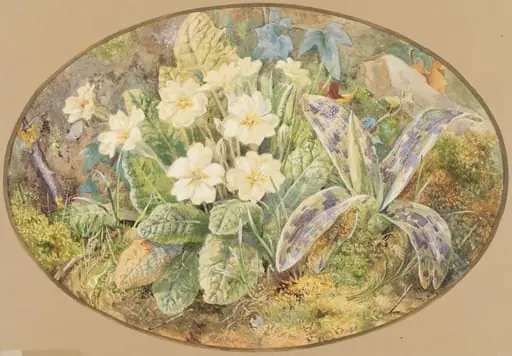 Primrose and Orchids
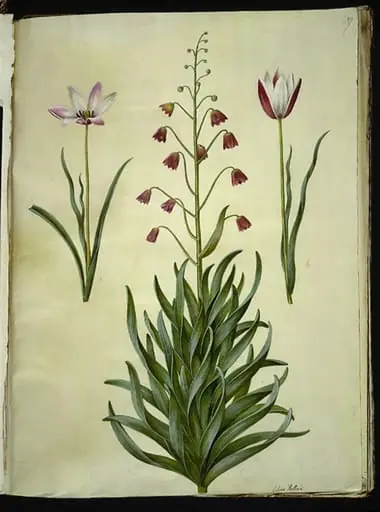 Tulipa clusiana (clusius-tulipan); Fritillaria persica (persisk fritillaria)
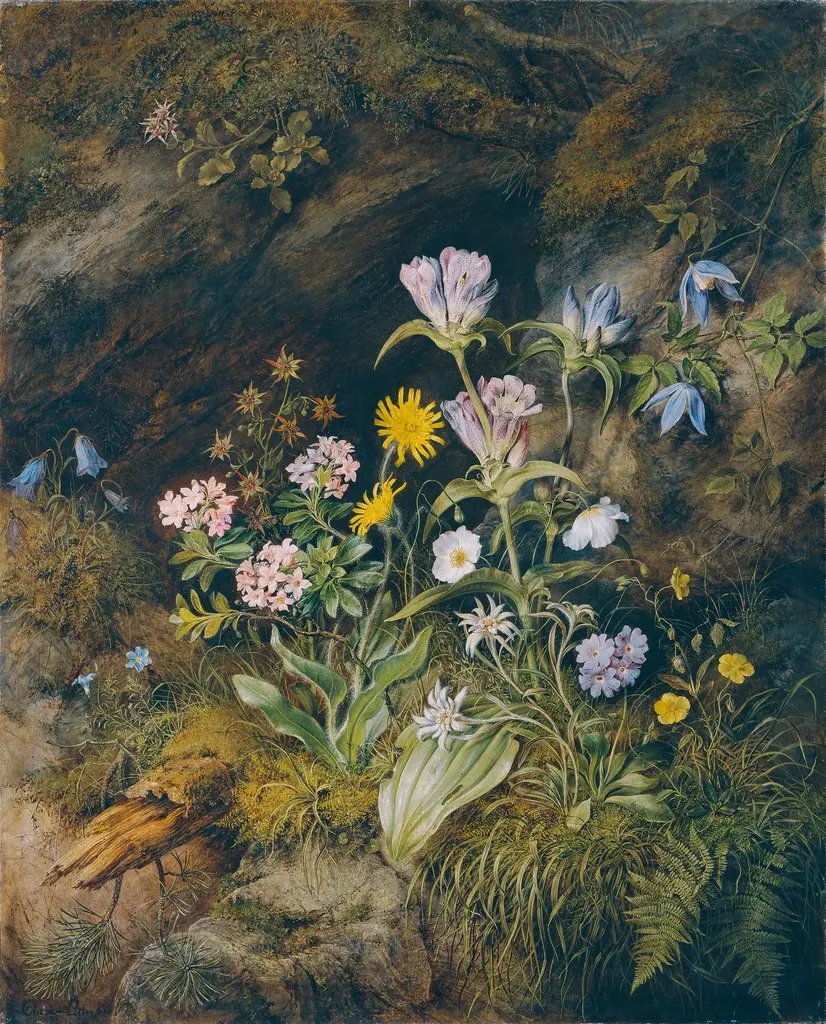 Alpine Flora
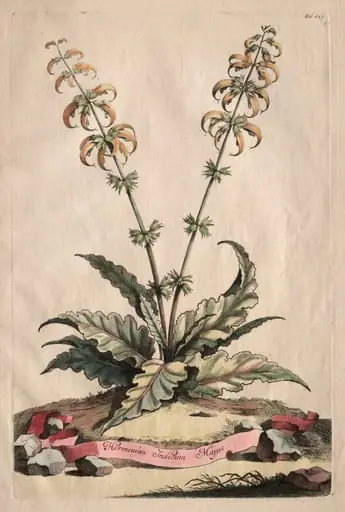 Phytographia Curiosa: Horminum Indicum Majus
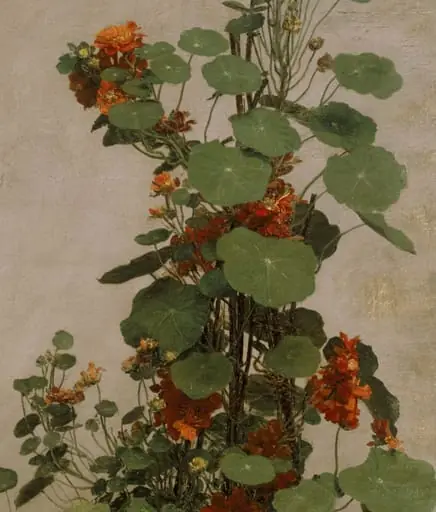 Nasturtiums
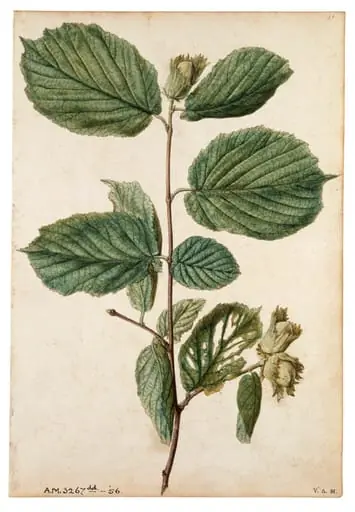 Cob-nut