Artwork
Daisies and lady butterfly; Roses
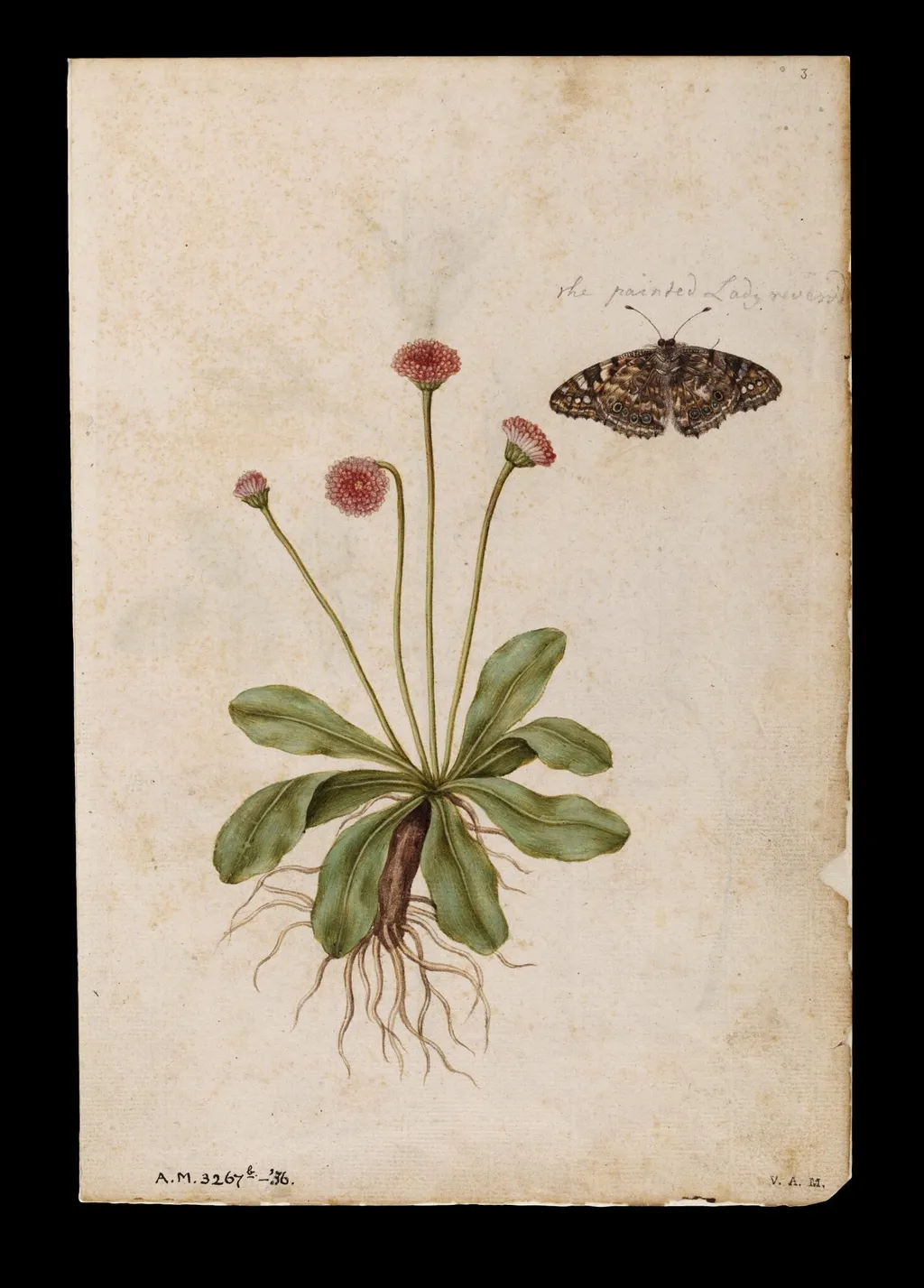
Daisies and lady butterfly; Roses is a watercolor work on paper by the Byzantine icon painting artist Jacques Le Moyne de Morgues. It dates from 1568 and is held in the collection of the Victoria and Albert Museum.
About this work
Overview
The album, once overlooked, was rediscovered in the early 1900s and repositioned Lemoyne as a significant early practitioner of naturalistic plant illustration.
This watercolour is one of fifty-nine botanical studies in a bound album attributed to Jacques Lemoyne de Morgues, a Huguenot artist active in the late 16th century. Created around 1575, the sheet is double-sided: the recto depicts a daisy accompanied by a ladybird, while the verso displays a cluster of pink roses. The album, once overlooked, was rediscovered in the early 1900s and repositioned Lemoyne as a significant early practitioner of naturalistic plant illustration.
Subject & Meaning
The composition pairs a common daisy with a ladybird, suggesting an interest in ordinary flora and fauna rather than exotic specimens. The inclusion of the insect implies a close observation of nature’s interdependencies. On the reverse, pink roses appear without ornamentation, emphasizing botanical accuracy over symbolic meaning. Together, the two sides reflect a methodical documentation of plant and insect life, consistent with Renaissance empirical inquiry.
Technique & Style
Executed in watercolour on paper, the work displays delicate washes and fine linework characteristic of precise botanical illustration. Lemoyne avoids dramatic shading, favoring flat tones and clear outlines to distinguish petals, leaves, and insect wings. The absence of background or perspective reinforces the focus on form and structure, aligning with the scientific aims of the period rather than decorative intent.
History & Provenance
The album remained largely unknown until its rediscovery in the early 20th century, when scholars recognized its significance among early European botanical records. Prior to this, Lemoyne was primarily noted for rudimentary woodcut designs. The watercolours’ survival in private hands and eventual institutional acquisition allowed for reassessment of his role in the development of natural history illustration during the Renaissance.
Context
Created during a period of expanding botanical study in Europe, Lemoyne’s work coincides with the rise of herbaria and illustrated plant manuals. While many contemporaries focused on medicinal or exotic species, his choice of common flowers and insects suggests a personal, observational approach. His illustrations predate the more systematic works of later naturalists but share their commitment to visual accuracy over artistic embellishment.
Legacy
Lemoyne’s album helped redefine his artistic legacy, shifting attention from his minor print designs to his nuanced watercolours. The album is now regarded as an important early example of non-idealized plant study in Northern Europe. Its survival offers insight into how private collectors and artists engaged with natural science before the formalization of botanical illustration as a discipline.
Artist & collection
Artist
Jacques Le Moyne de Morgues (French pronunciation: ; c. 1533–1588) was a French artist and member of Jean Ribault's expedition to the New World. His depictions of Native American life and culture, colonial life, and…

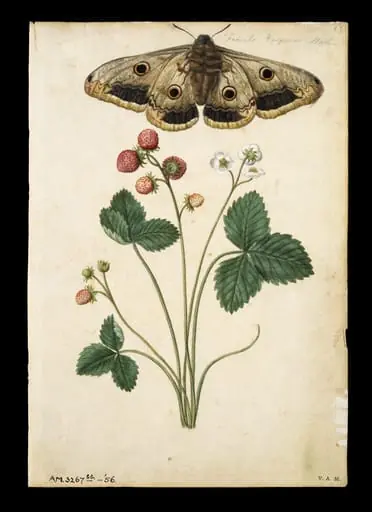 Strawberry and emperor moth
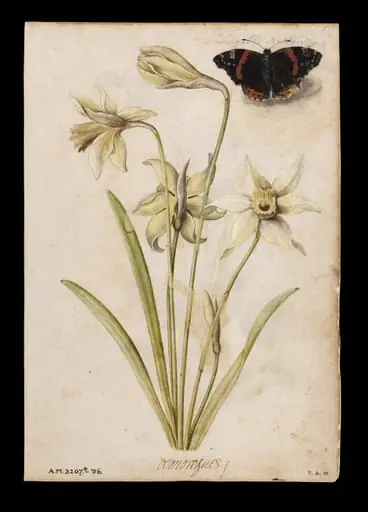 Daffodils and red admiral butterfly; Violets and red admiral butterfly
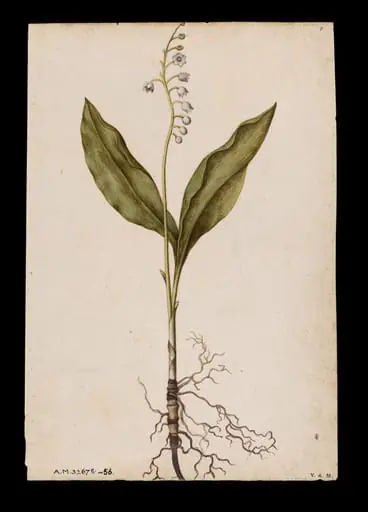 Lily of the valley; Pinks
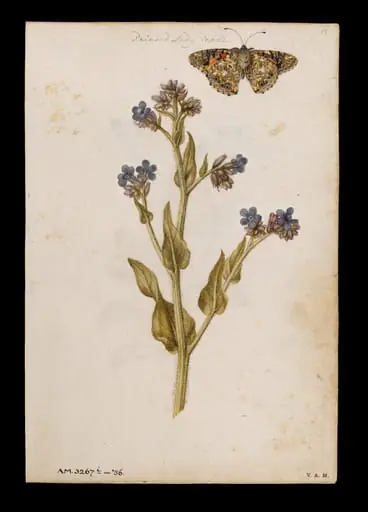 Bugloss and painted lady butterfly; Heartsease or wild pansy
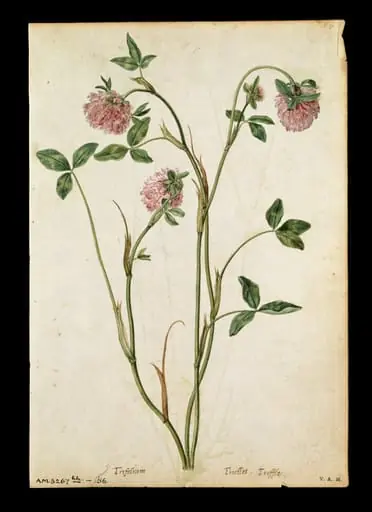 A red clover; a field scabious
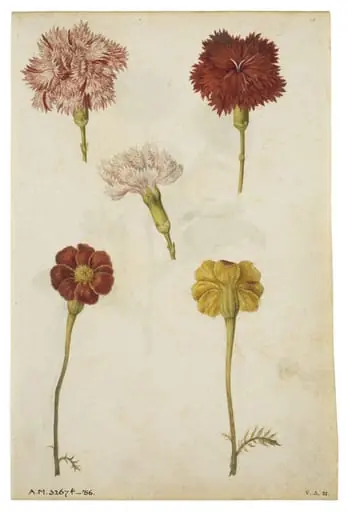 Clove pinks and marigold; Marigold
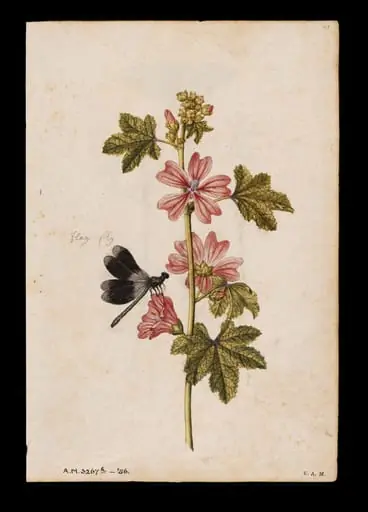 A common mallow and a damselfly; a snowdrop and a lady butterfly
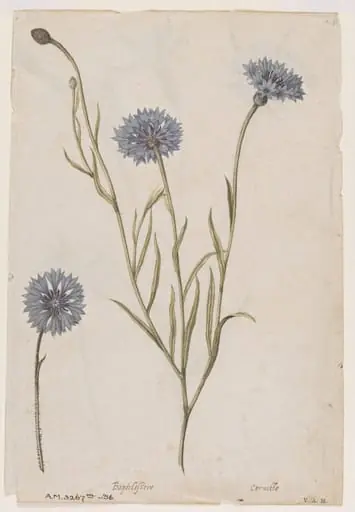 Cornflower; Corn cockle
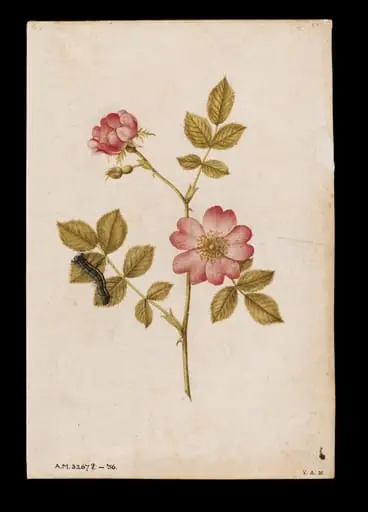 Two dog roses and a lackey moth caterpillar
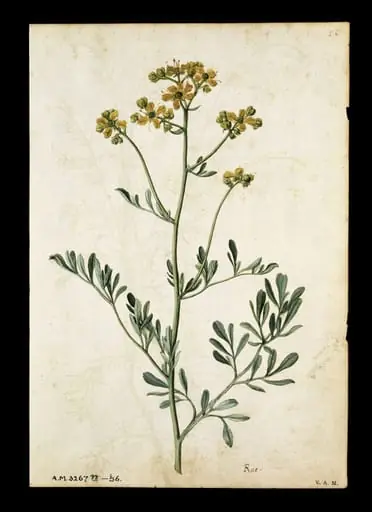 Rue; Camomile